Green bouquets range from a handful of fern fronds tied with twine to a long cascade of pale green flowers that needs a skilled florist, and the right one depends on how much time and confidence you have for building it yourself.
If you are doing it by hand, eucalyptus, ferns and a pearl-wrapped handle bundle easily; if you are hiring out, the cascading light green flowers and the white peonies with lush foliage are worth paying for.
1. Ferns
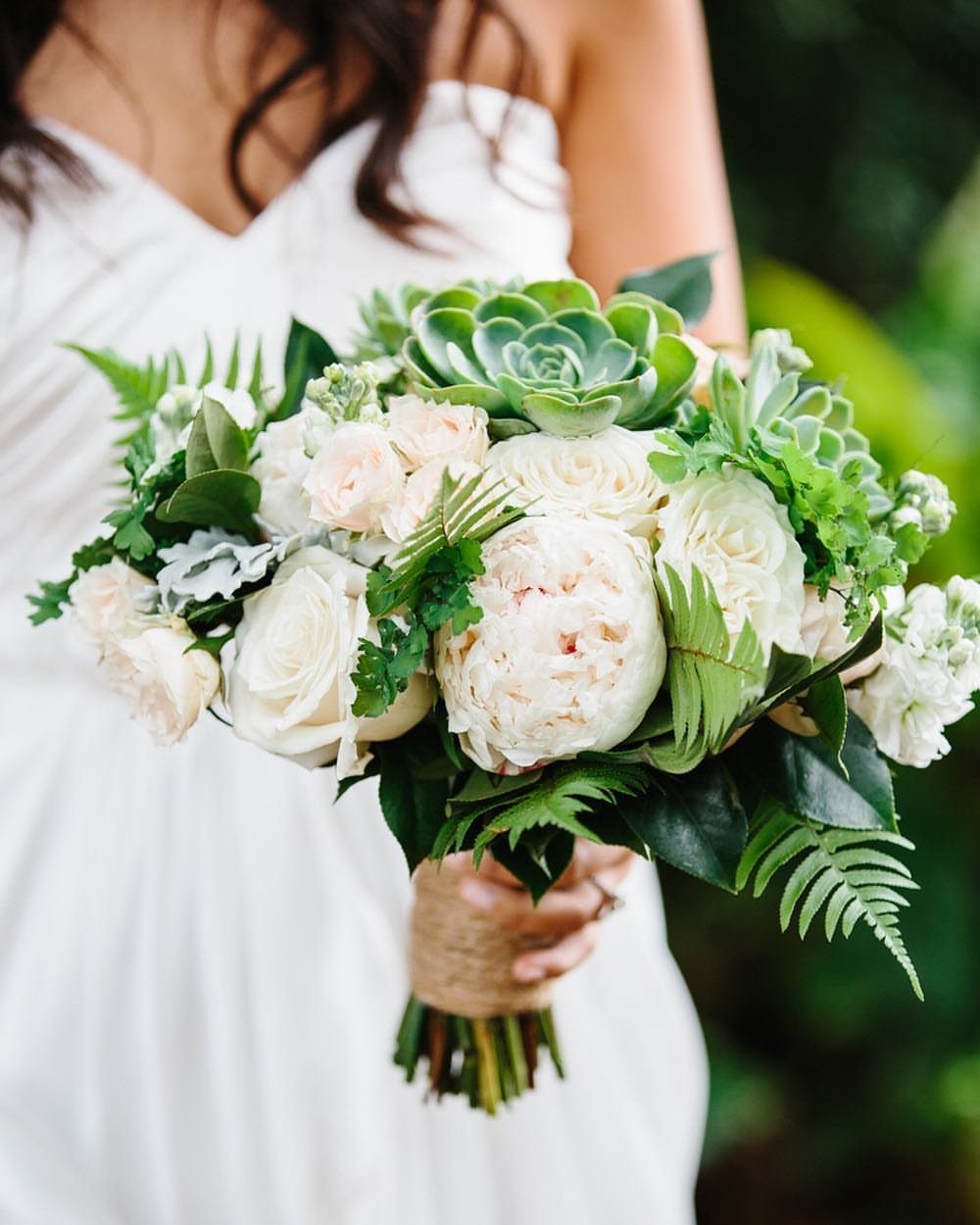
Fern fronds do the quiet work in a bouquet like this one: they frame white roses and peonies with texture, so the whole thing never looks too polished.
Twine at the stem wrap suits that organic feel and costs almost nothing.
For a budget, I would let the fern carry the volume and buy fewer focal blooms. Tuck fronds around the edge as a collar, and limit the succulents to a few so the bouquet stays light in the hand.
2. Dusty Miller
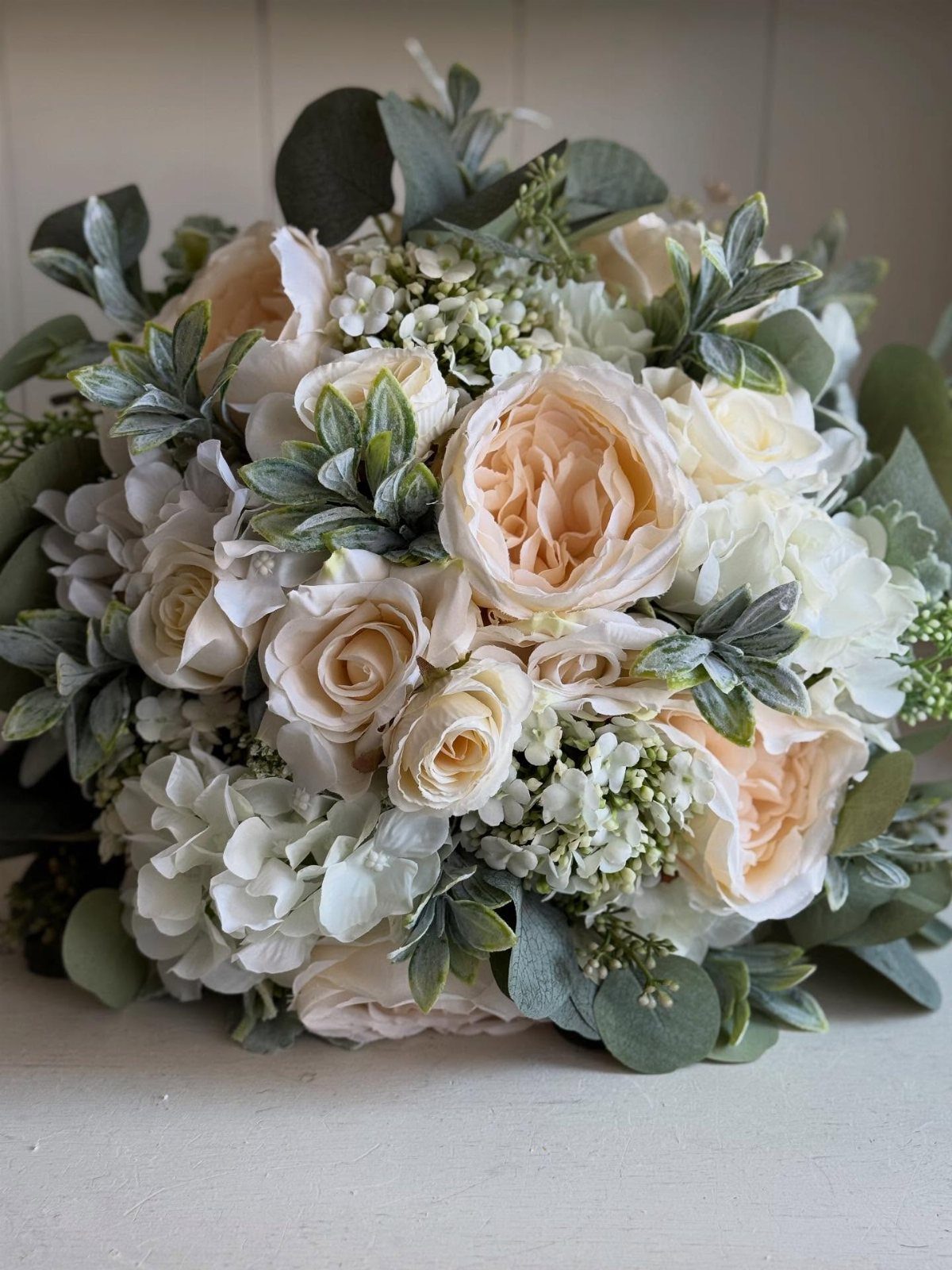
Silvery Dusty Miller softens a bouquet of peach roses and white hydrangeas, cooling the warm tones so they read as pale rather than sugary. Its felt-like leaves look good against a white dress.
Pick it when you want greenery that is gentler than glossy leaves.
I would use it as a ring around the blooms rather than scattered through, since the contrast shows best at the edge. Ask a florist or a grocery-store bunch seller what is on hand.
3. Succulents
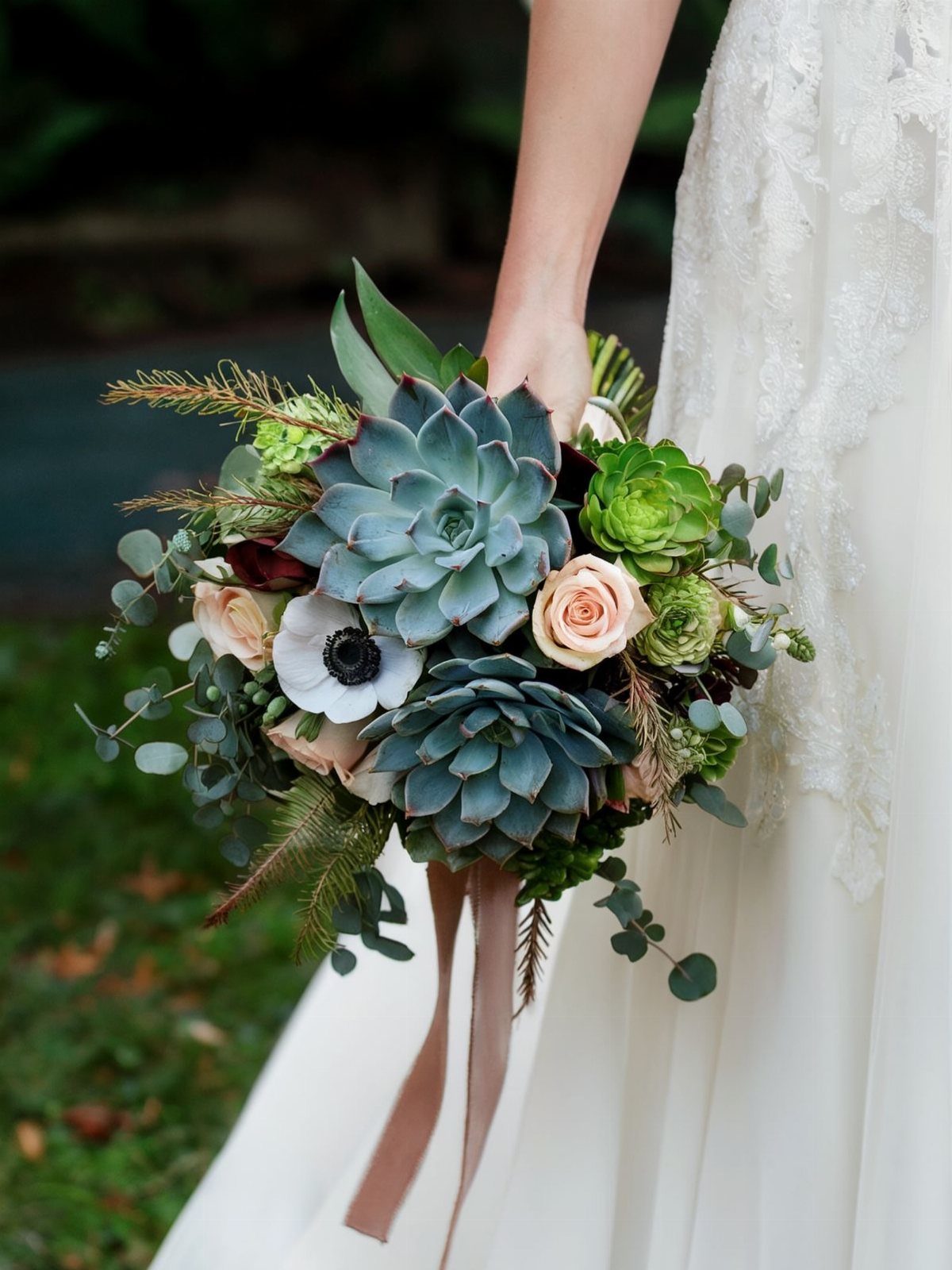
A few large blue-green succulents give a bouquet of white anemones and peach roses a sculptural, memorable center; pick 2 or 3 with firm, wide leaves and wire them in so they sit snug against the blooms.
They are sculptural, so one or two sitting low in the center give weight without needing many stems.
They are a trend, and I would keep the rest of the bouquet simple so the look does not feel crowded. Because they set the color, match your bridesmaids’ flowers to the peach and white, not to the succulent.
4. Eucalyptus
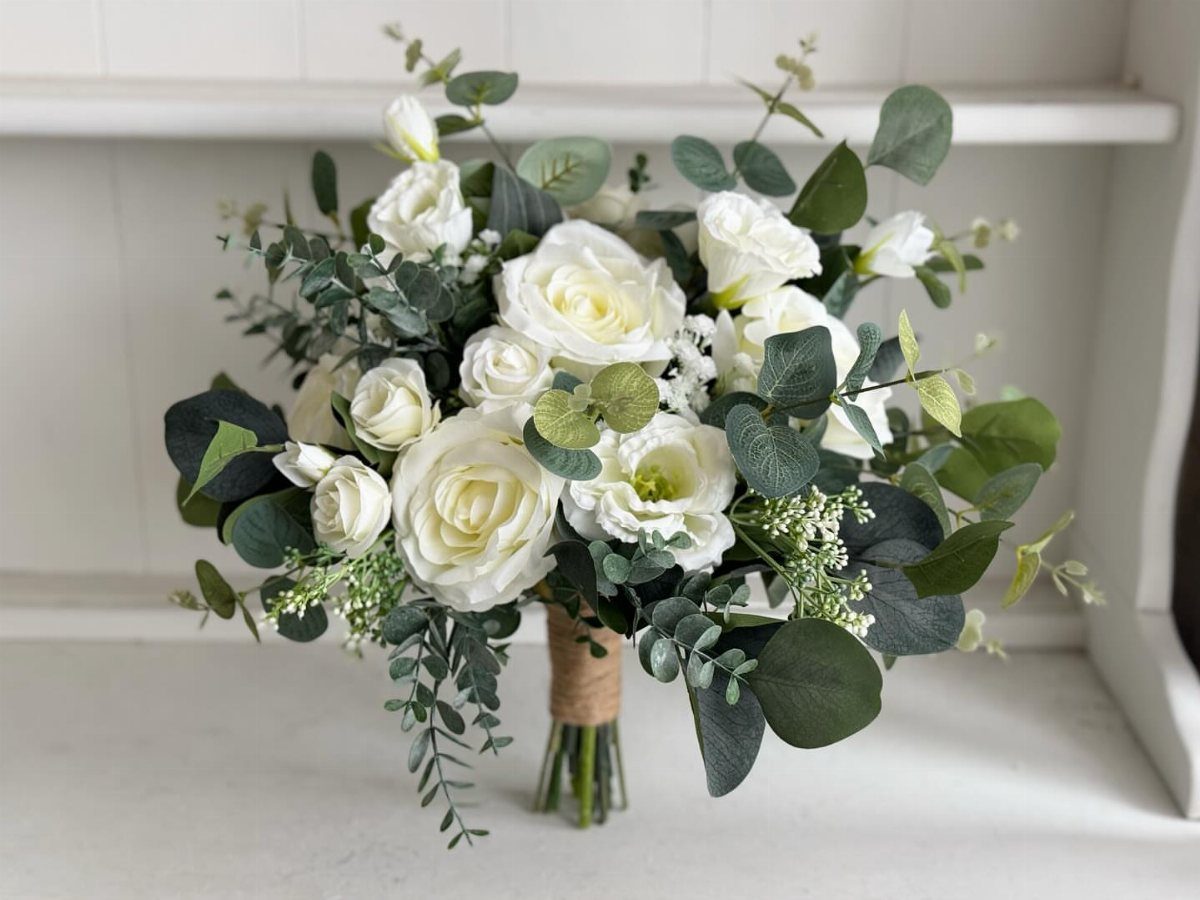
Silver dollar and seeded eucalyptus give a rose bouquet its gray-green backbone, and twine wrapping keeps the finish casual. The round silver dollar leaves read as a soft, flat shape against white roses, while seeded stems add small, airy clusters.
Mixing the 2 is my pick for a bouquet that looks full without many flowers. It is a good DIY choice, since the stems are easy to trim and bundle by hand.
5. Greenery with White Callas
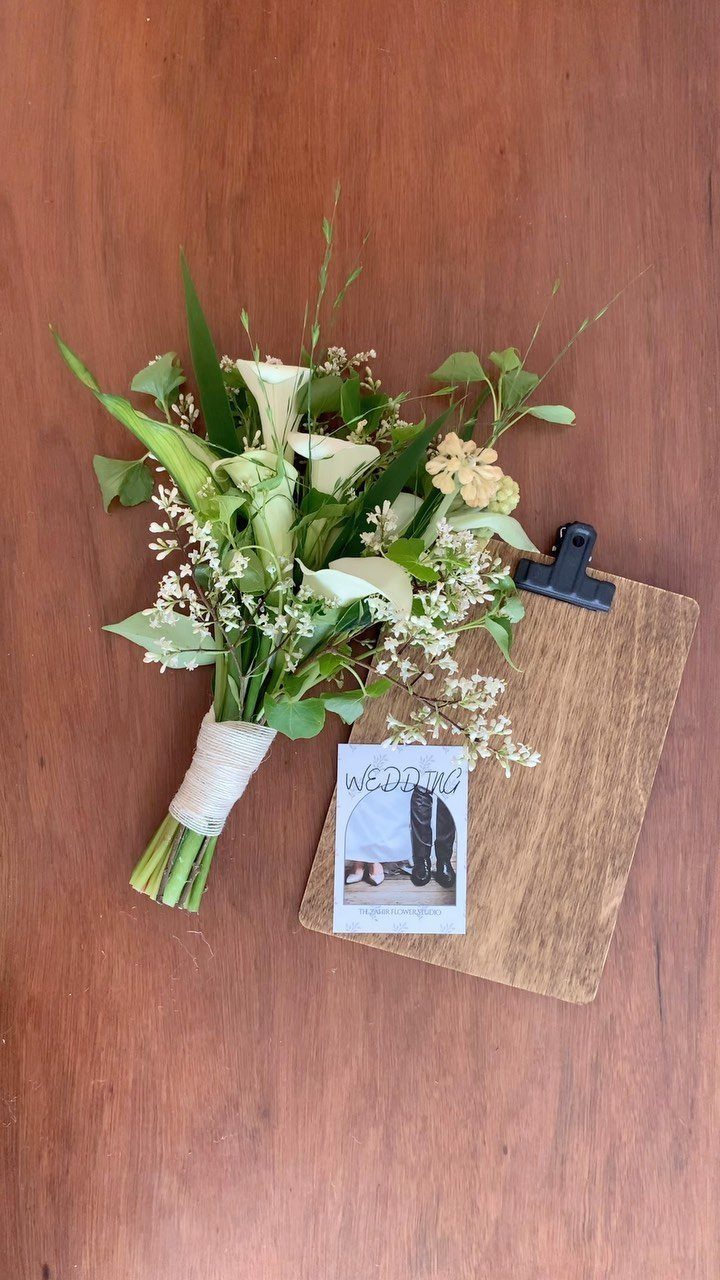
White callas have a clean, architectural line, and baby’s breath fills the gaps with a fine, cloudlike texture. Green foliage gathered around them keeps the bouquet from looking stark.
Callas look best with simple, short bundles, so I would keep the stems tight and the arrangement small. Baby’s breath is an inexpensive filler, which helps a modest budget go further and still look intentional.
6. Cascading Light Green Flowers
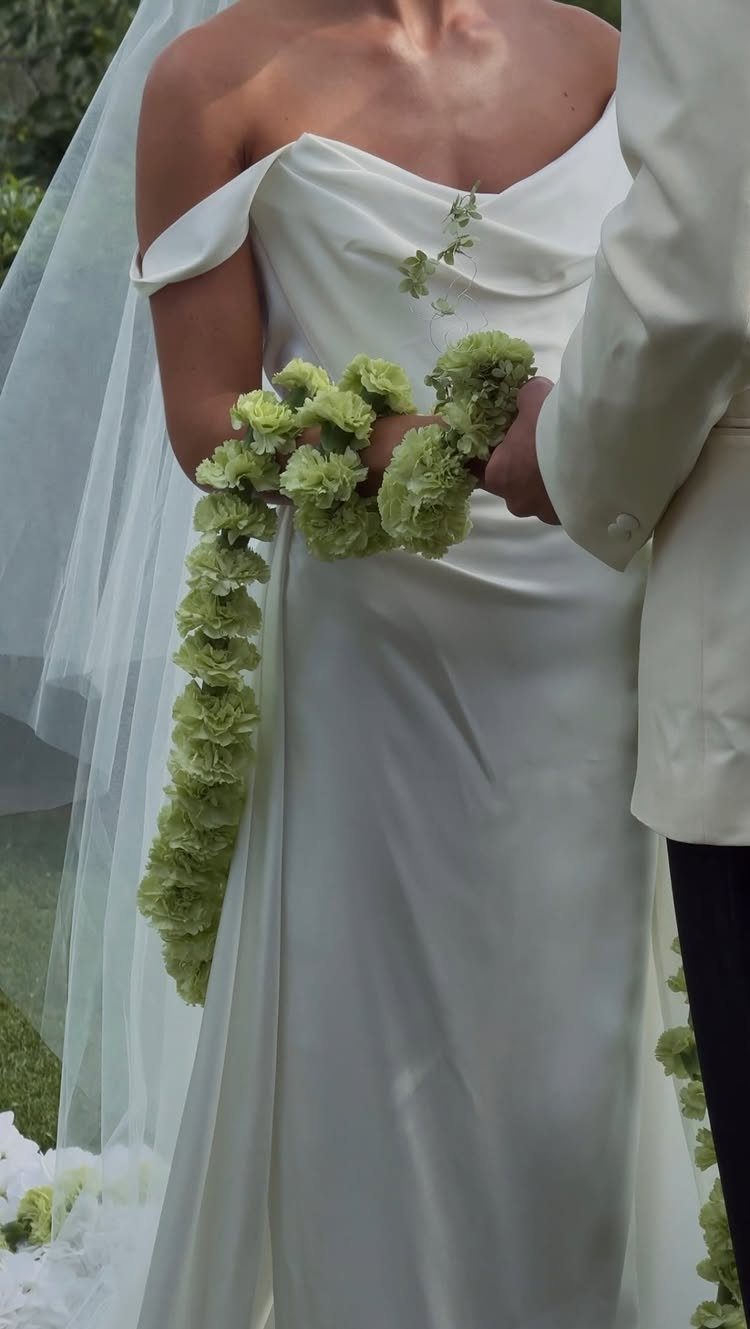
A cascading bouquet in pale green flowers hangs long and loose, drawing the eye down the front of an off-the-shoulder gown. Because the color is so soft, the shape does the talking.
I would choose it for a simple dress, where the trailing length can be the statement.
Hold it low at the waist, not up at the ribs, so the flowers can fall in a line. Expect it to take a skilled florist, so it is less of a DIY project.
7. White Peonies and Lush Foliage
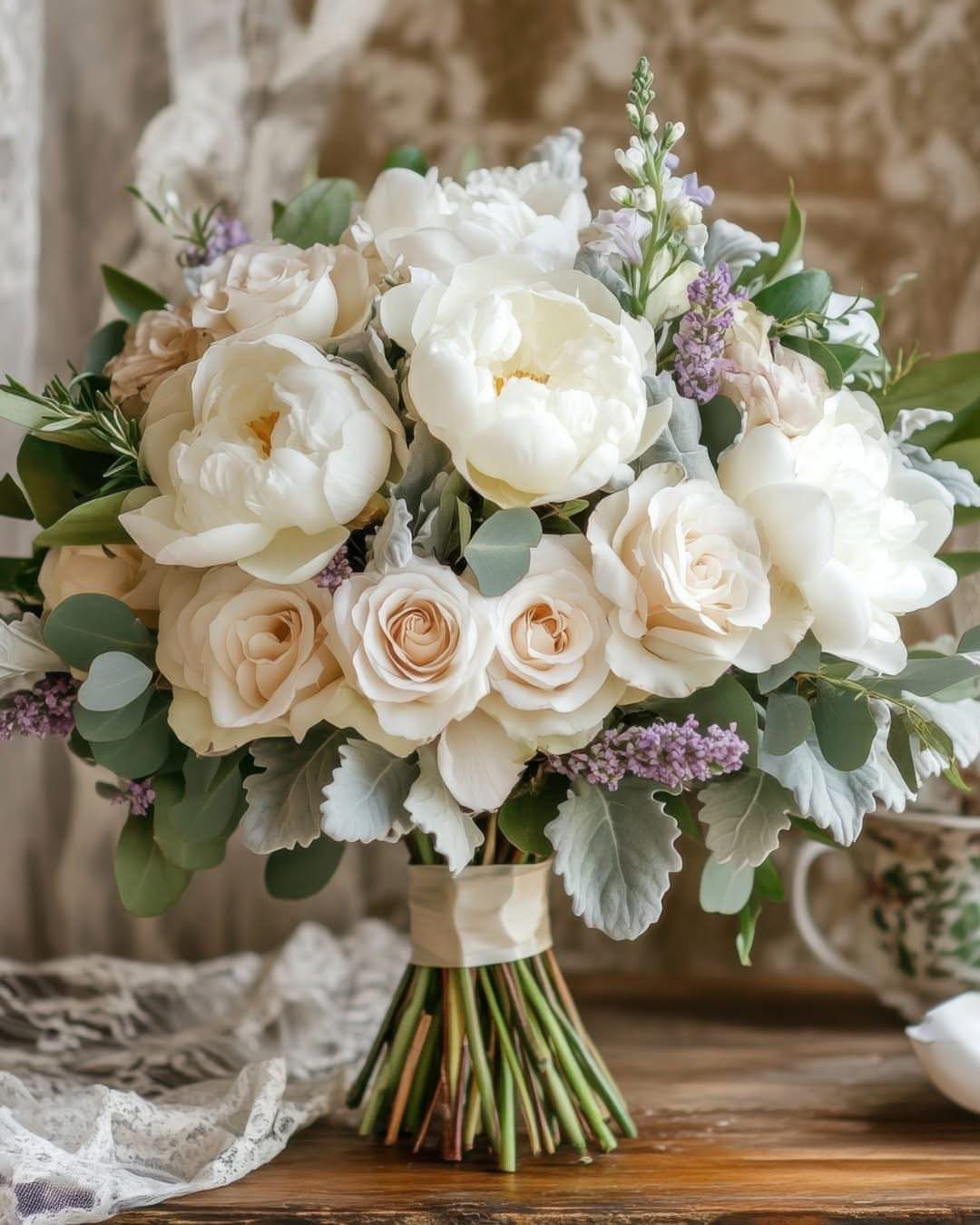
Peonies are the reason this bouquet reads as full: a few large white heads, cream roses beside them, and leafy foliage to fill the gaps. Ribbon at the handle keeps the finish soft.
For a budget, I would spend on the peonies and let the foliage do the bulk. Greenery runs a fraction of what blooms do, so a wide ring of leaves makes the bouquet look generous with fewer flowers.
Since peonies are seasonal and pricing follows availability, check with your florist about what is in stock for your date.
8. White Dahlias and Pearl Wrap
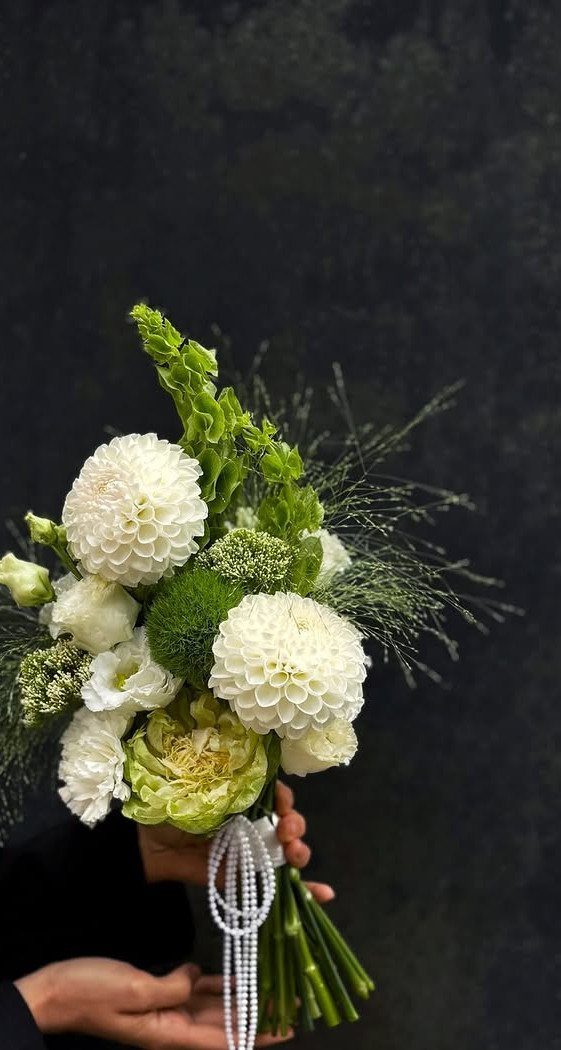
Strings of white pearls wrapped down the stems turn the handle into a feature, and they pair well with white dahlias, whose layered petals already have a tidy, rounded look.
I like this for a DIY project, because the wrap is the only extra step. Bind the stems first, then coil the pearl strand from the top down and secure both ends with a pin.
Keep the greens and green blooms textured so the white stays interesting. A pearl wrap can stand in for ribbon, so you skip one more purchase.
Budget-friendly Options
Start with the greenery and add flowers only where you want a focal point.
An all-greenery bouquet is also a real option, not a fallback. Styled well, it stands out against a white dress.
Bridesmaids are the easiest place to save. If you want flowers in your own bouquet, have their bouquets made entirely of greenery.
Styling Tips
Scale changes the whole mood. Go oversized for drama, or size down for a daintier bouquet.
Ferns, eucalyptus, lamb’s ear and ivy are all workable, and herbs like rosemary, thyme and sage add scent. Tropical leaves, succulents and air plants suit a bolder look.
Keep any flowers small and airy, like waxflower, baby’s breath or Queen Anne’s lace, so the leaves still do the talking.
Building the bouquet takes confidence and time, so be honest about how much of each you have.
Allergy Considerations
Greenery is a good route if you or your partner have allergies, since you can still carry a bouquet without the usual blooms.
Keep in mind that plants differ, and a sensitivity to one leaf is possible.
Buy one small bunch ahead of time and hold it for 10 minutes or so; if your eyes itch or your nose runs, you’ll know before the full order goes in.
Baby blue eucalyptus has a clean, menthol scent and a soft, dusty gray-green tone. It is fairly rigid, so it suits big, structured shapes better than soft, loose ones.
Frequently Asked Questions
What are some common types of greenery used in bouquets?
Eucalyptus and ferns are the two I reach for most. For a gray-green base, silver dollar or seeded eucalyptus does the structural work, and a few fern fronds tucked around the outside add a softer, feathery texture.
How much should you spend on flowers for your wedding?
I can’t give a dollar figure that fits every couple, but the lever is the same on any budget: use more greenery and fewer blooms.
Foliage runs far cheaper per stem than blooms, so a wide collar of leaves around a few flowers makes the bouquet look full without raising the bill.
Spend on a few focal flowers, and have bridesmaids carry all-greenery bouquets to save the most.
What is the 3-5-8 rule for wedding bouquets?
It’s a rule of thumb calling for 3 types of greenery, 5 types of flowers and 8 stems total.
It keeps a bouquet from getting crowded by limiting how many varieties you mix. Treat it as a starting point, since a bouquet built mostly on greenery can follow a simpler recipe.