The bouquets here run from a ribbon-trailed mix of textured blooms with hand-dyed ribbons to burgundy with trailing berries, classic white roses with greenery, white roses with gold berries, and white orchids with pink roses, and the trail itself is the part that changes most.
Your dress and the room should decide the pick: a sleek gown suits the clean lines of white orchids, a white or ivory gown lets the burgundy and trailing berries be the one strong note, and a busy venue calls for the calmer look of classic white roses with greenery.
Whichever you choose, a cascade is a professional florist’s job, because the stems add real weight.
1. Cascading Bouquet
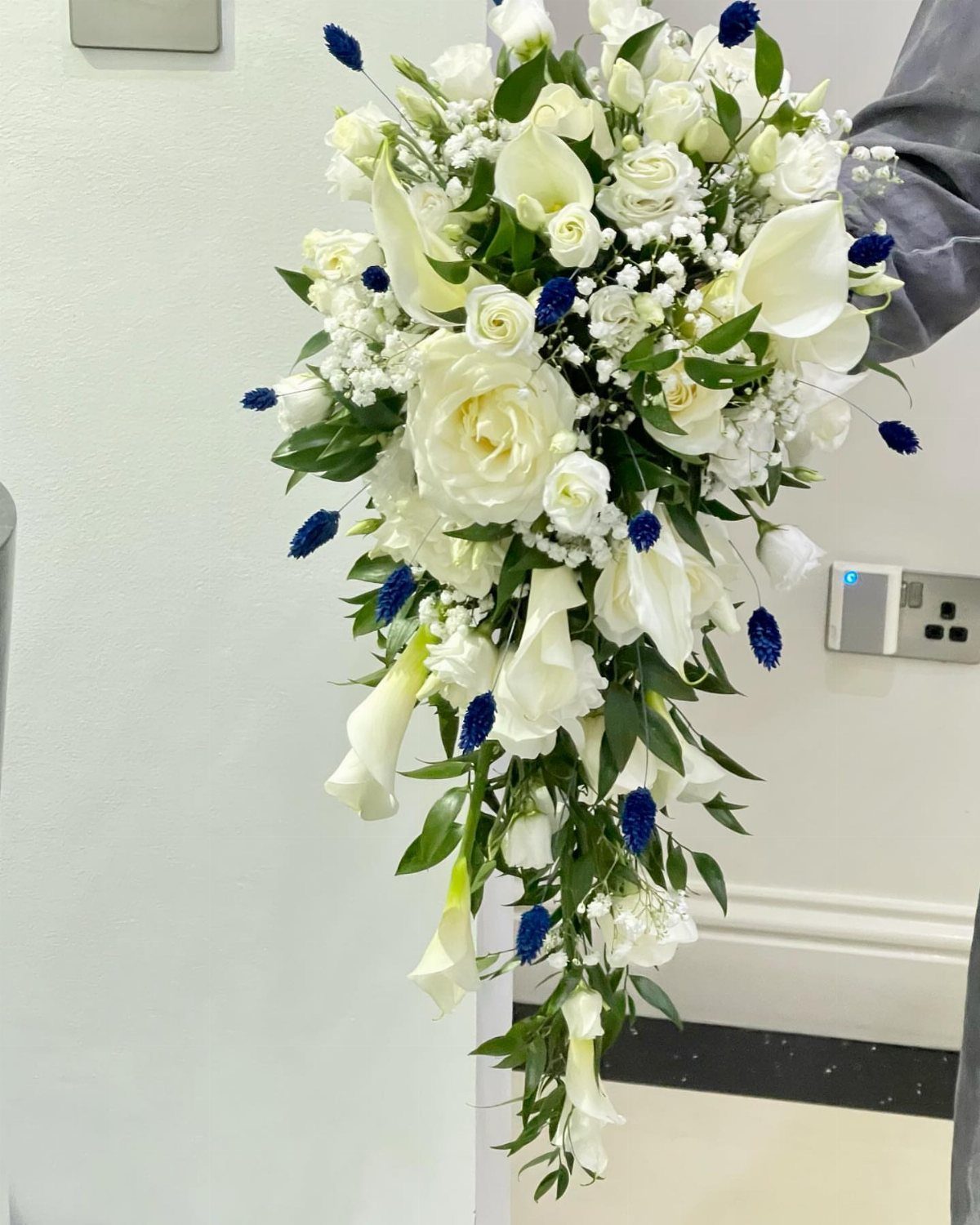
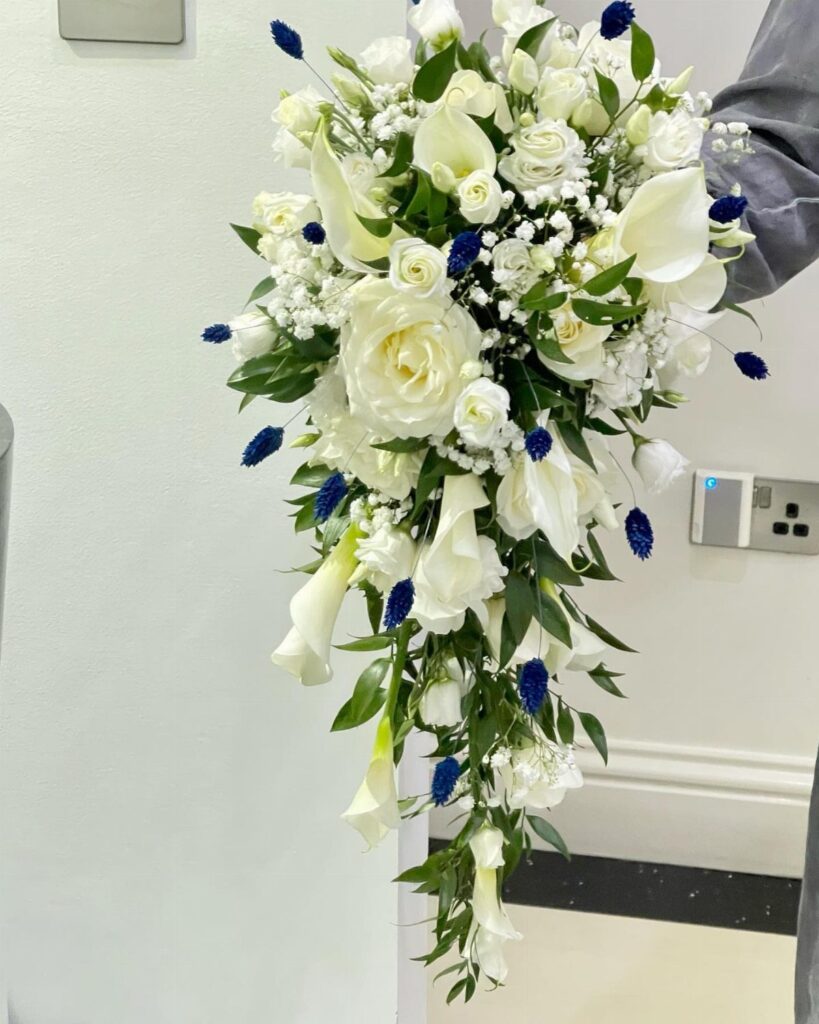
A cascade works because the eye follows the line down, and white roses with calla lilies give that line a clean, sculpted edge. The small blue accents keep it from reading as all white.
Calla lilies are long and smooth, so they suit a sleeker dress better than a heavily beaded one. Pick one accent color and keep it small, as blue does here; two or three competing accents would crowd the trailing shape.
2. Textured Bouquet with Hand-dyed Ribbons
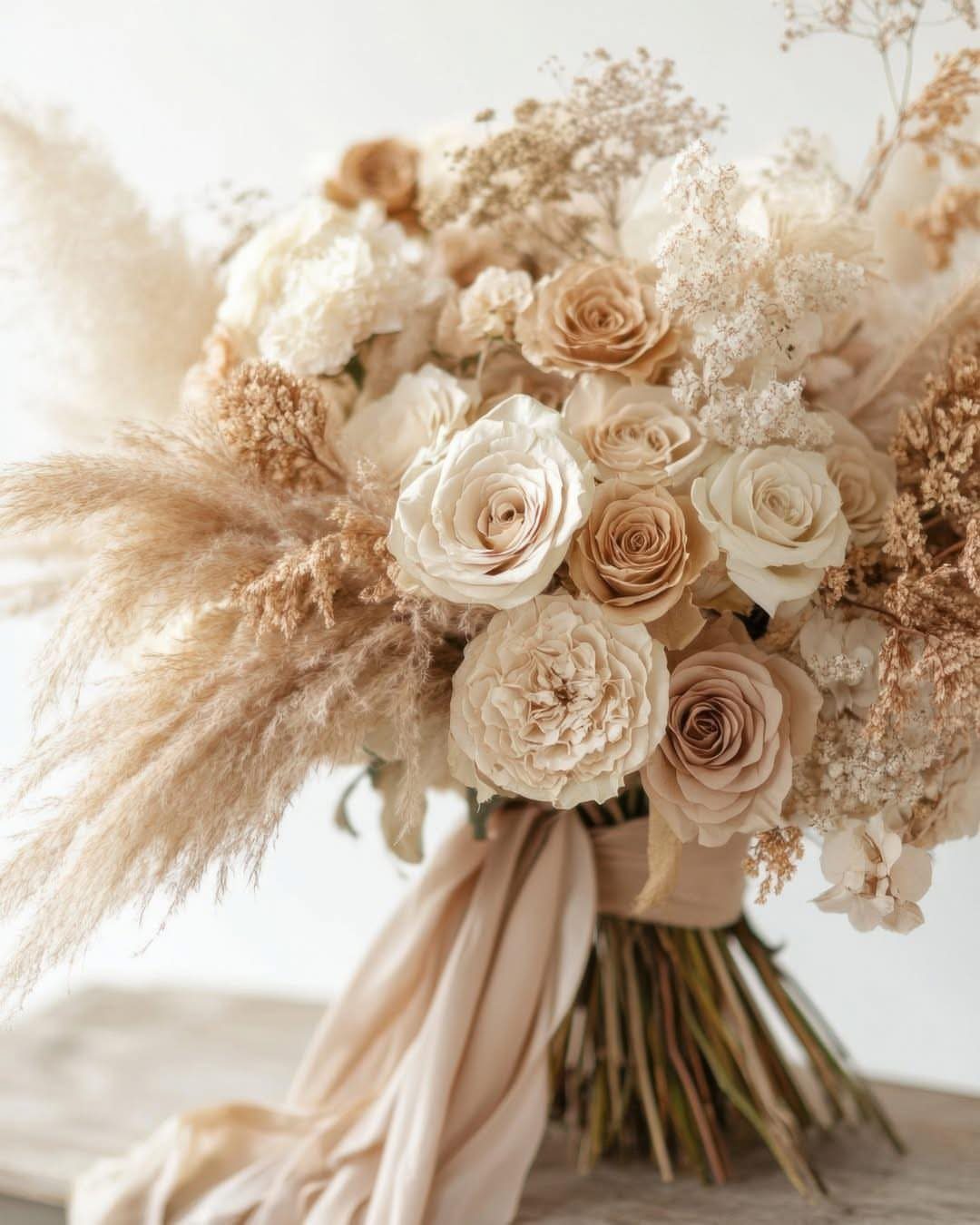
Pampas grass, dried flowers and beige roses make a bouquet that is all texture and almost no color contrast.
That is the appeal: cream, tan and champagne sit together quietly, and the feathery grass catches light the way a petal cannot.
The long hand-dyed ribbons do the trailing here instead of flowers.
I like that choice for brides who want movement without a heavy drop of stems. Have the florist match the ribbon shade to your bridesmaid dresses or your linens, so the bouquet ties into the room.
3. Burgundy Bouquet with Trailing Berries
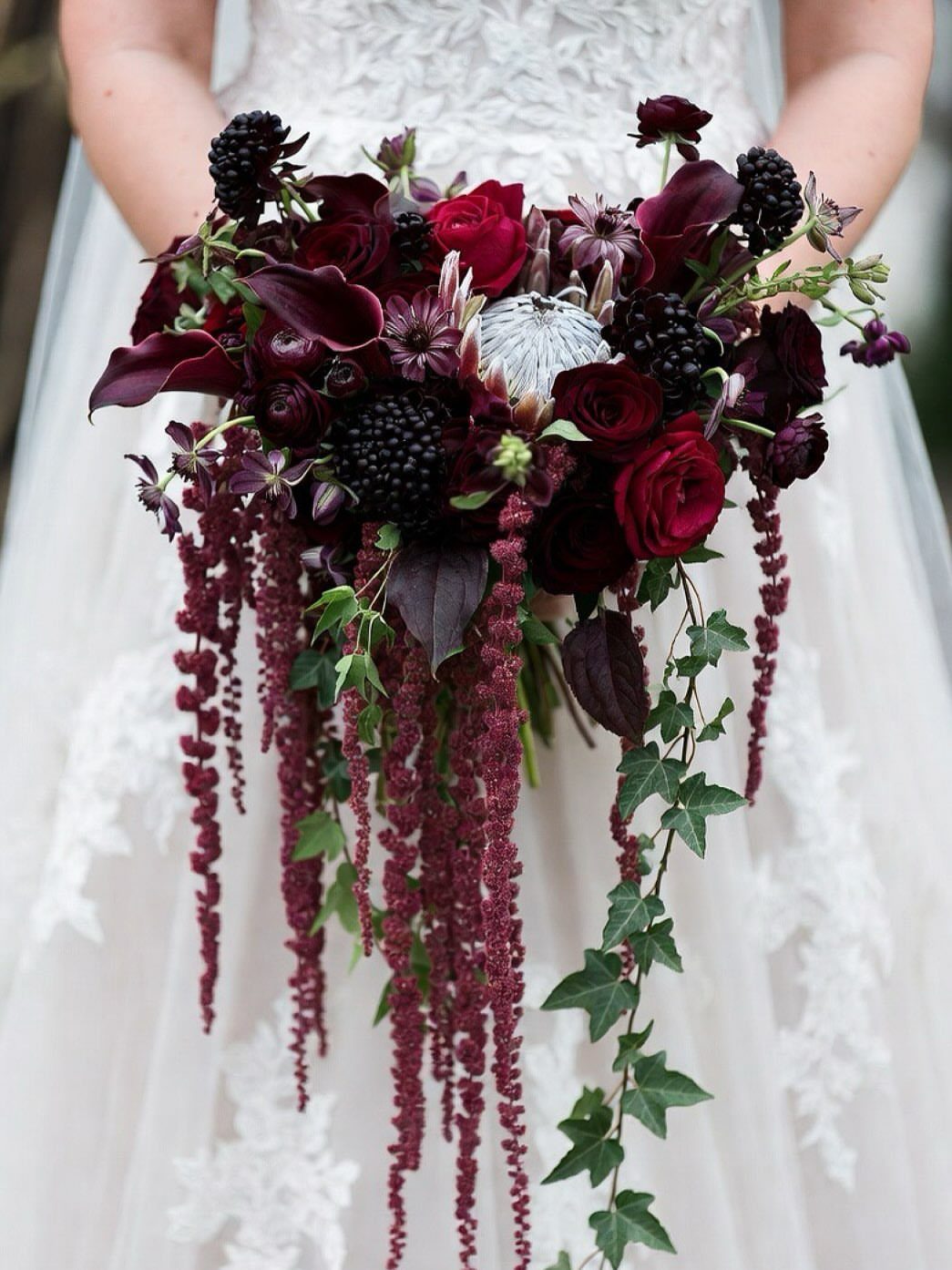
Dark roses, berries and trailing amaranthus vines give burgundy a moody, almost wild shape. Berries add small round forms among the larger petals, which breaks up the bouquet and makes the color look deeper.
This works best against a white or ivory gown, where the burgundy reads as the one strong note.
Amaranthus is the right choice for the trail, since its ropy tassels hang with real weight. Echo the color in a few table arrangements and you can skip a bigger decor budget.
4. Classic White Roses and Greenery
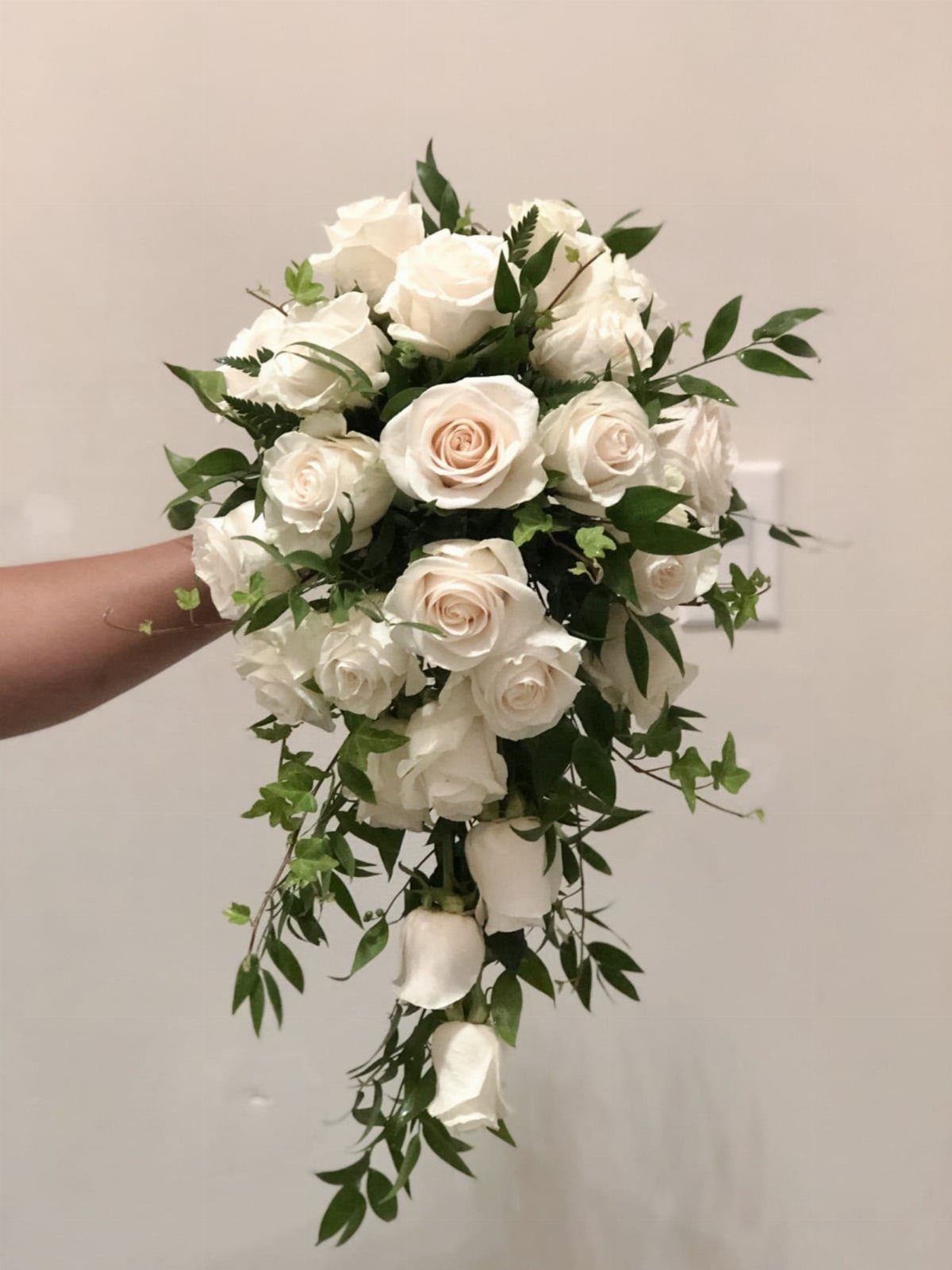
White and cream roses with trailing greenery is the version I would hand to a bride who wants a cascade she will never tire of in photos. Nothing in it dates, and the green keeps the white from looking flat.
Mixing two or three shades of white and cream adds depth without adding a new color.
Ask for foliage with a long, soft trail so the line reads as intentional. It also pairs easily with almost any palette, which helps when your bridesmaids’ colors are still undecided.
5. White Roses with Gold Berries
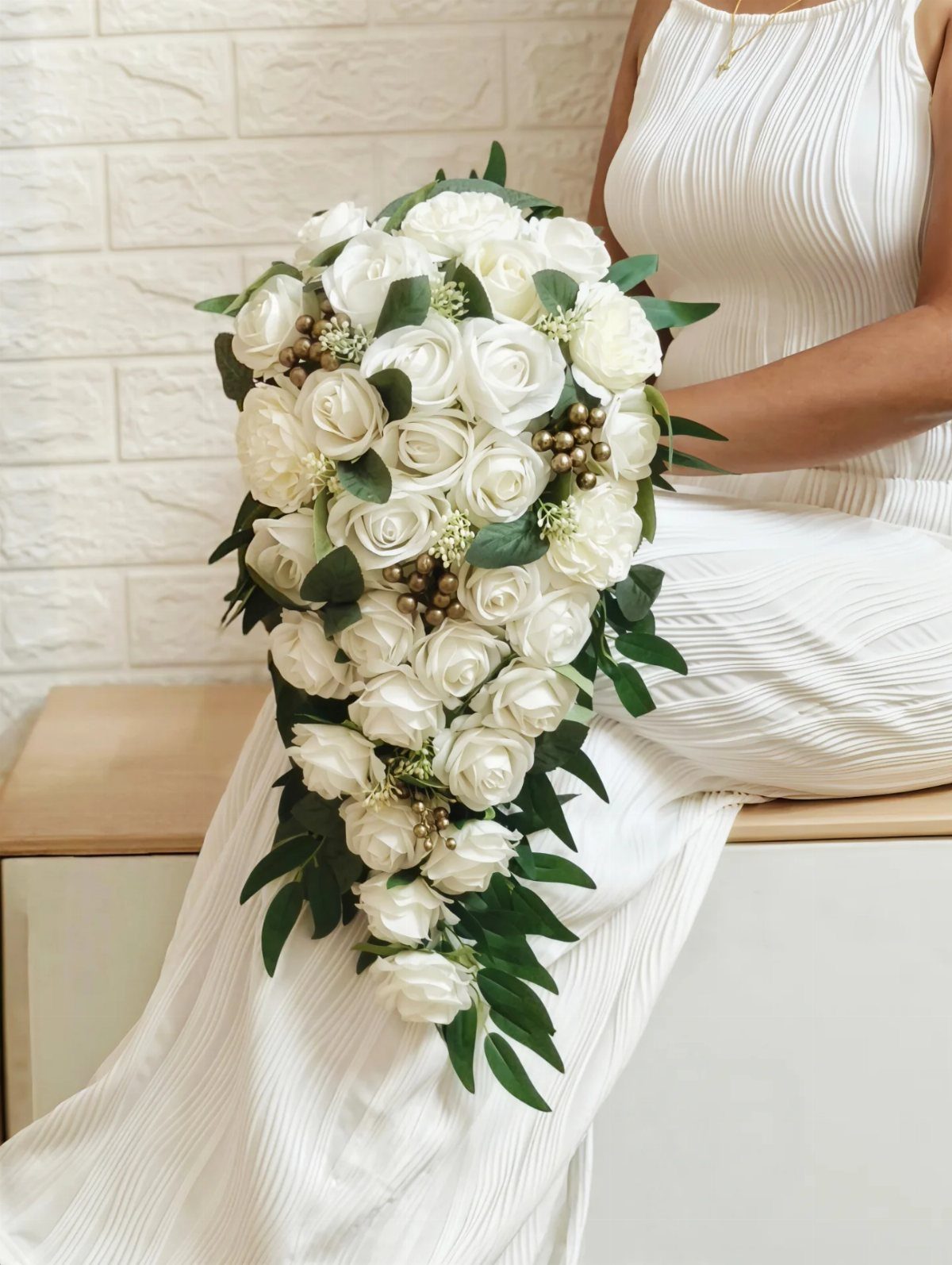
Small gold berries scattered through white roses and lush greenery add a glint that plain foliage lacks. They read as warm detail up close and as a soft shimmer from a distance.
Keep the berries sparse so they accent the roses and never outweigh them.
This suits a bride already using gold in her décor, such as flatware, candleholders or table numbers, because the bouquet then looks part of the plan. Choose it over a fully metallic bouquet if you want a natural finish.
6. White Orchids and Pink Roses
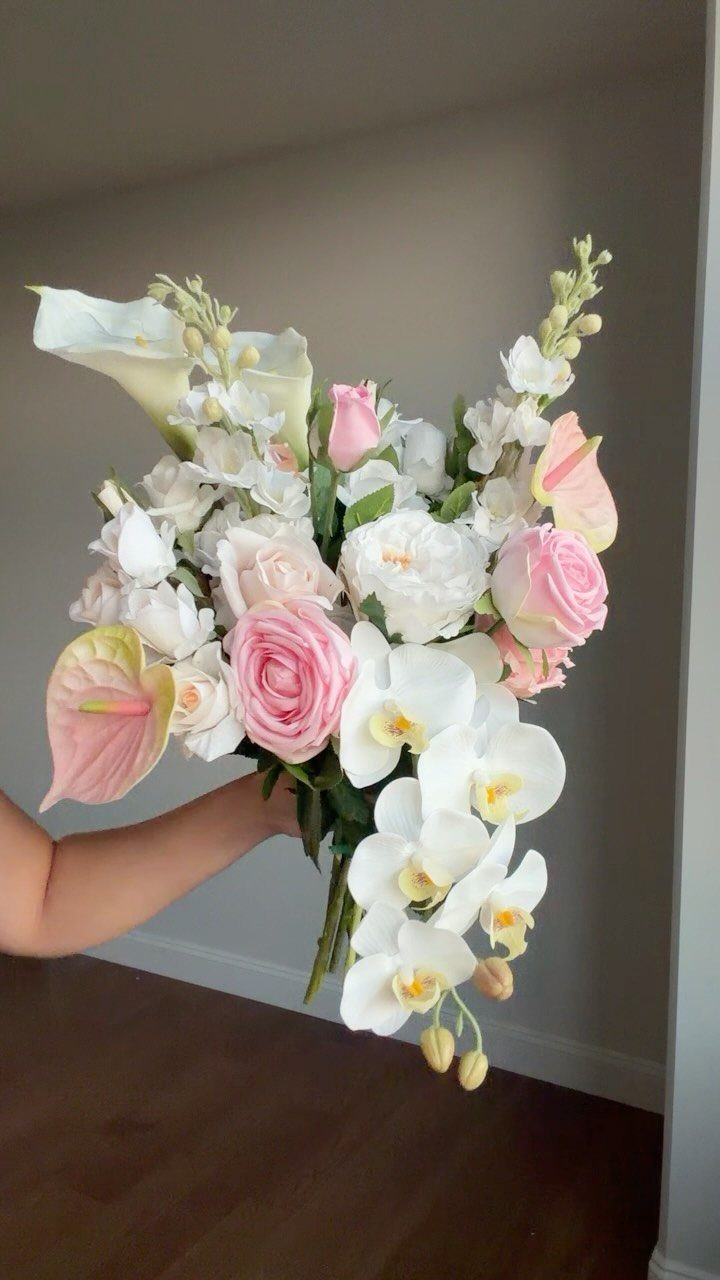
Orchids, pink roses and white calla lilies make the most graceful of these six, since orchids and callas both have long, elegant lines. The pink roses soften them and add a blush note.
Because the shapes are so distinct, I would keep the palette tight: white and one pink, nothing else.
This is a good match for a bride wanting something polished and a little formal. Show your florist the exact pink you want, since roses vary widely from pale blush to deep rose.
Cascading Bouquet Advice
Hire a professional florist for a cascade; this is not a bouquet for the DIY list.
The shape is intricate and the stems add real weight, so a loose build can sag or come apart on the walk down the aisle.
Flower choice sets the size and the length of the trail: ivy, jasmine vine, or orchids spill much farther than roses or peonies, which stay fuller and shorter.
For a full, dramatic drop, go with large, lush blooms such as peonies and roses.
For something quieter, use a single variety of flower and add soft jasmine and trailing ivy. I would choose this route if your dress or venue is already busy.
Whether dramatic or low key an important factor to note is that your cascading bouquet should not be part of your things to DIY list. Cascading bouquets can be quite intricate and heavy so they must be put together by a professional florist.
Cascading Bouquet Popularity
A cascade looks more natural than a tight, tailored bouquet.
Loose does not have to mean messy. Your florist secures the stems so the drape looks undone while staying firmly in place, so tell them you want relaxed rather than sloppy.
You also have wide freedom with flowers: garden roses, dahlias, anemones and orchids all work in a cascade.
Historical Significance
Princess Diana carried a cascading bouquet on her wedding day, and she is often credited with starting the trend. That history is part of why the style feels familiar and safe rather than like a passing fad.
If you want the look to feel classic, ask for a soft, flowing drape instead of a stiff, geometric one. Cascades are also called shower bouquets, a handy term to use when you search florist portfolios.
Frequently Asked Questions
Can I make a cascading bridal bouquet at home?
I would not DIY this one. Cascades look light but carry a surprising amount of weight in the hand, and a loosely wired build will droop or come apart halfway down the aisle.
What is the wedding bouquet called?
A cascading bouquet is also called a shower bouquet. Use both terms when you search florist portfolios, since some florists list the style under one name and some under the other.
What is the difference between a cascade bouquet and a teardrop bouquet?
I can only speak to the cascade here: it is a bouquet with a trailing line of flowers, greenery or even ribbon that falls below the hand.
How long that trail runs depends on the flowers. Trailing materials like ivy, jasmine vine and orchids can hang a foot or more past the hand, while roses and peonies stay compact and keep the shape rounder.