The rule that picks one is how many guests are in line and how formal the room is: self-serve keeps staffing low, while an attended station keeps a long line tidy.
Whatever you choose, queso is the line to protect, so plan double the standard amount per guest.
1. Wedding Nacho Bar Decor
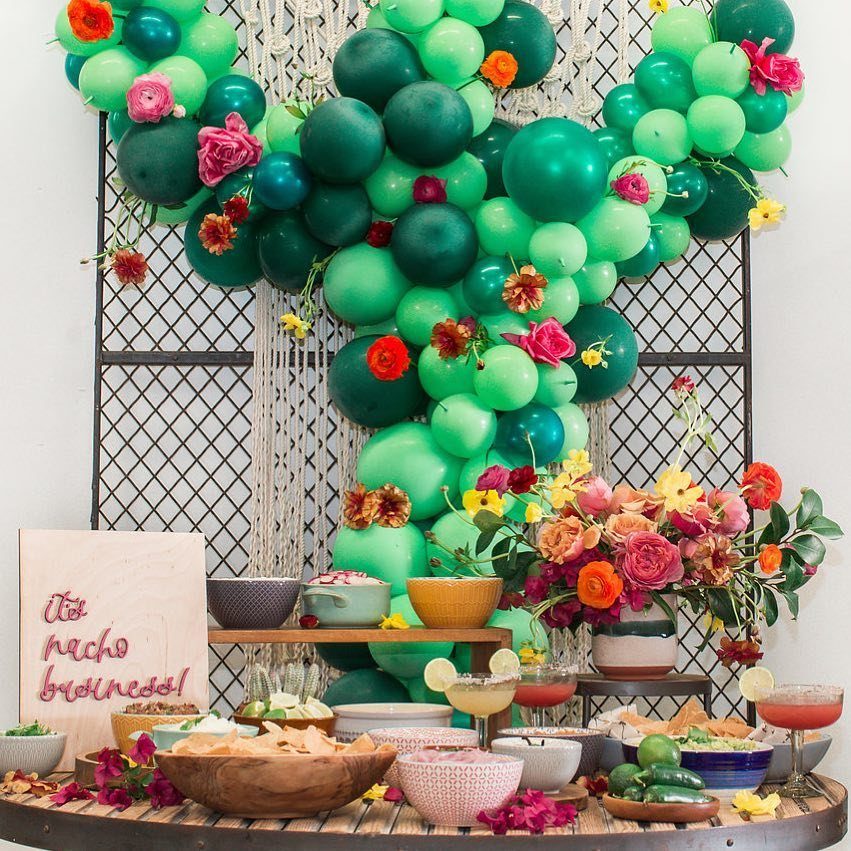
Pick one color for the balloons and let the flowers echo it.
A punny sign like "it’s nacho business!" costs little and gets photographed. Keep the toppings bowls plain so the backdrop stays the star.
2. Nacho Bar Signage
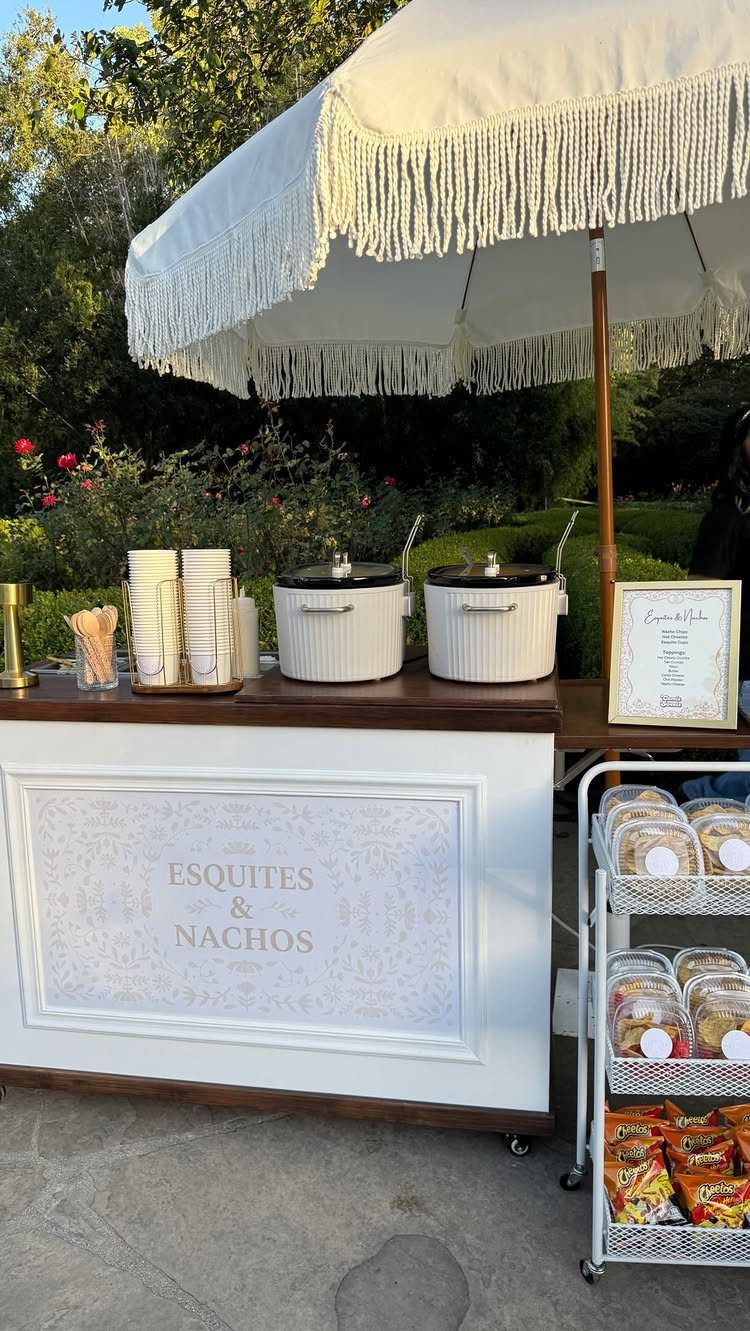
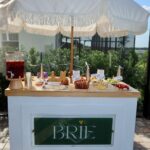
Guests will queue at a nacho station without knowing what it is unless something tells them. A white counter sign reading "ESQUITES & NACHOS" names both dishes at a glance, and that settles the question before anyone asks.
I like a sign this simple: one line, large lettering, placed at eye level on the front of the counter. Add small labels at the toppings if you want to guide the build order.
3. Salsa Varieties
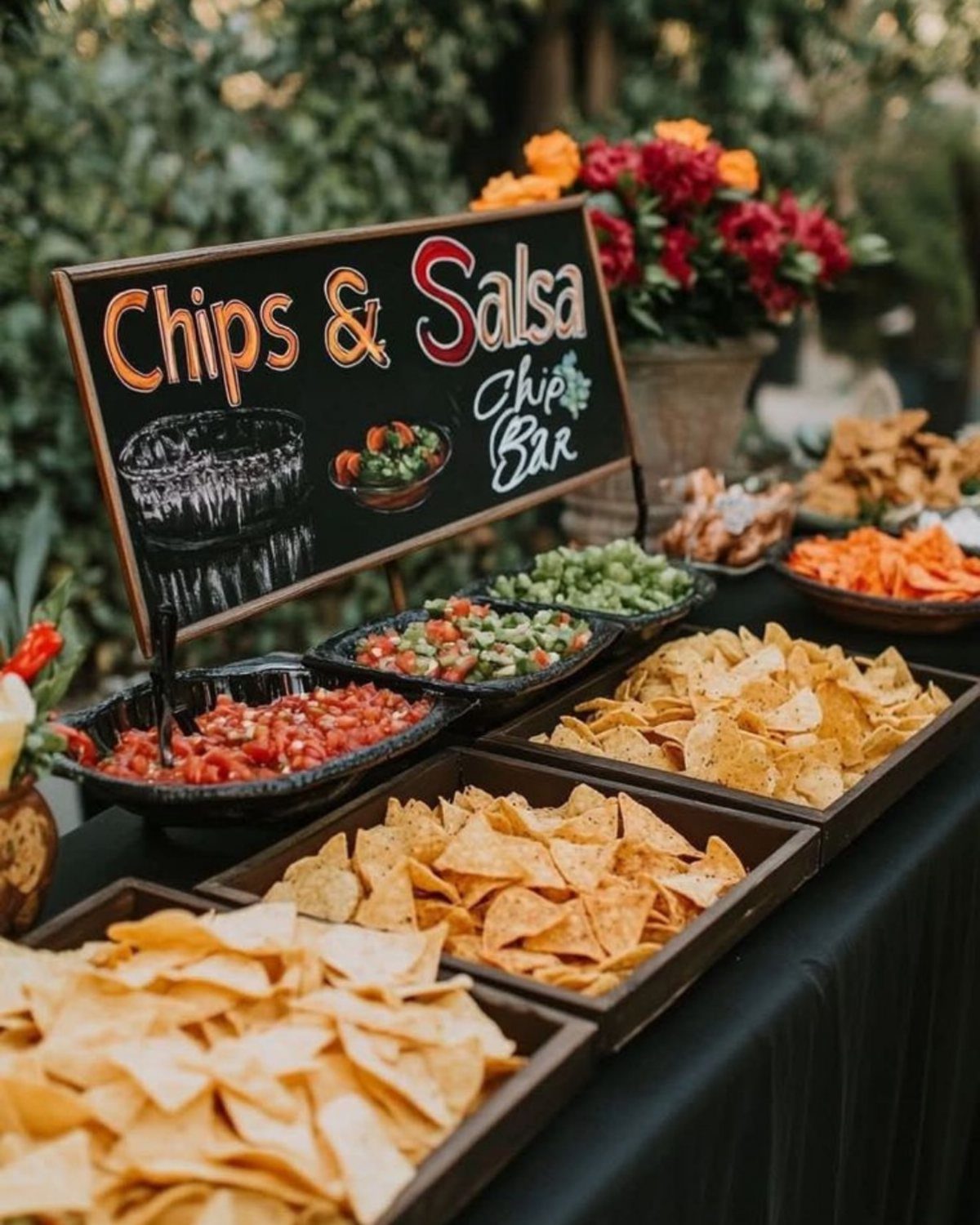
A chalkboard reading "Chips & Salsa Chip Bar" tells guests this table is about choices. Put out several salsas, each in its own bowl, and give every bowl a small label so nobody has to guess.
A mix of mild and hot keeps most tastes covered. Chalkboard signs are cheap and easy to write by hand, which helps when the budget is tight.
4. Nacho Cheese Machine
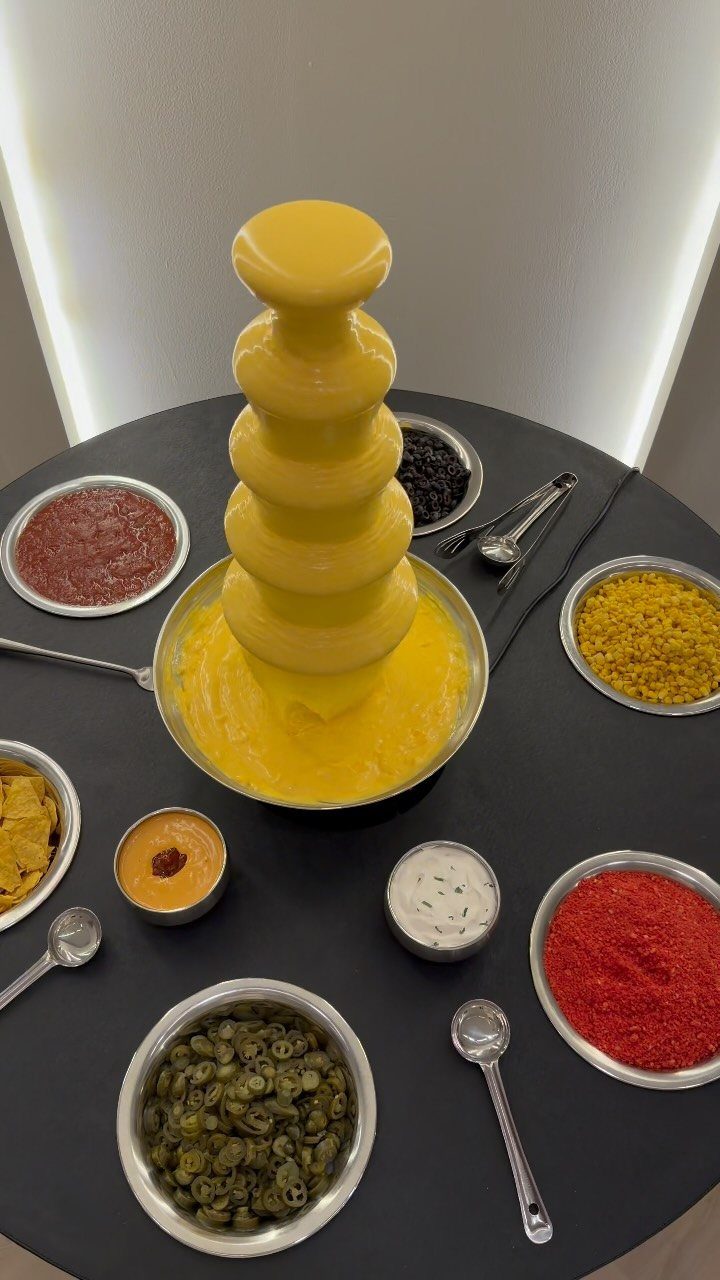
Renting a nacho cheese machine means warm, pourable cheese on demand, which a tray of baked nachos cannot offer at a long reception.
Ask the rental company what the machine costs and what it needs for power, and get both answers before you sign anything. A black tablecloth makes the yellow cheese stand out.
5. Fresh Herbs
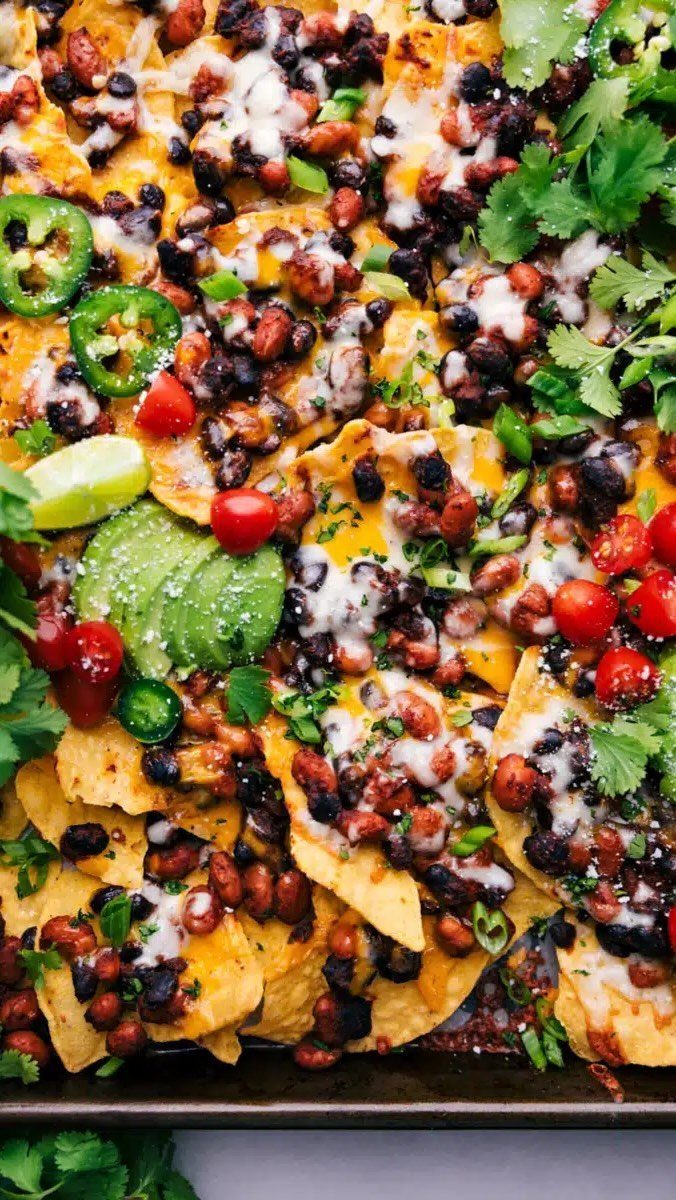
Cilantro scattered over finished nachos adds a green note that bright tomatoes and melted cheese cannot give on their own. Set out a bowl of leaves with a small spoon, or garnish the trays yourself right before serving.
Fresh herbs are a cheap way to make a basic pan of beans, cheese and jalapeños look finished. Chop them close to serving time so they stay bright.
6. Self-Serve Buffet Station
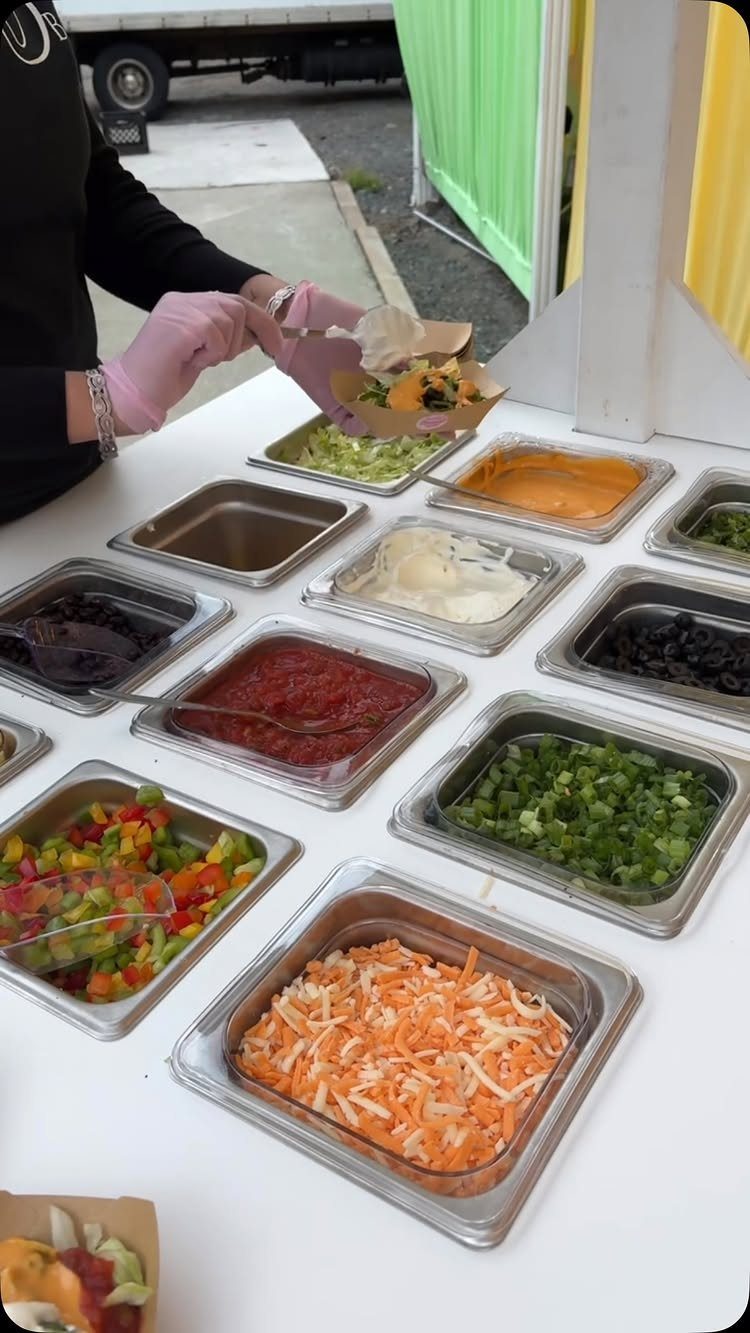
Metal containers of shredded cheese, peppers, salsa, olives and sour cream, plus a warm cheese sauce, let guests build their own plate.
Lay them out in the order you want people to build: chips first, cheese sauce next, cold toppings last.
Self-serve keeps staffing low, and everyone can skip what they dislike. Put serving spoons in every container and a stack of trays at the start.
7. Wicker Basket Chip Display
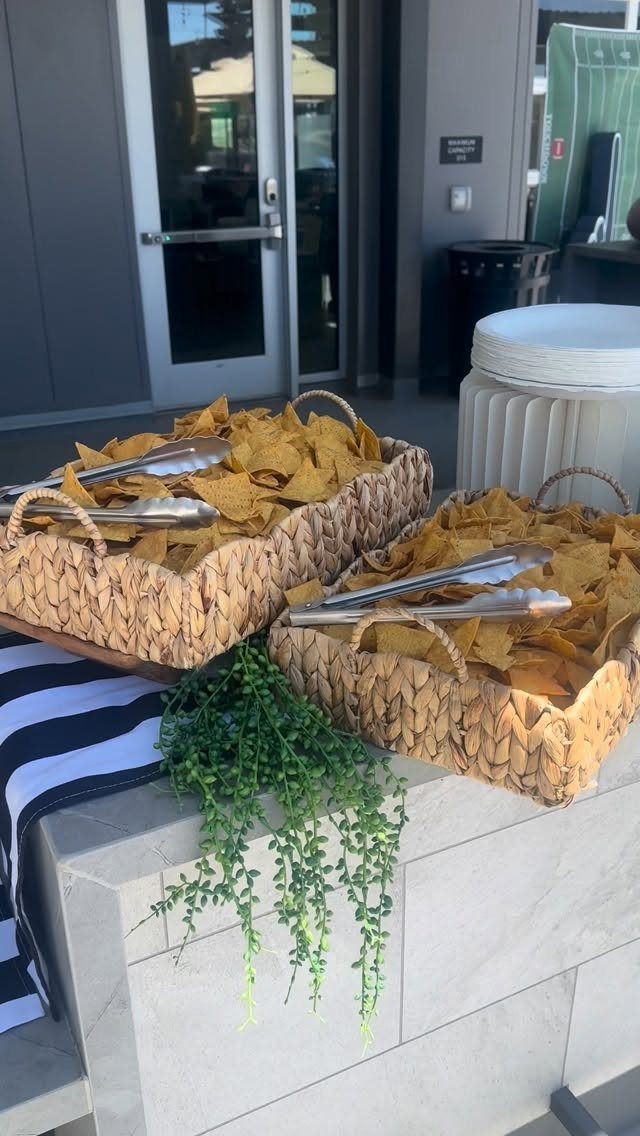
Woven wicker baskets give plain tortilla chips a rustic look for almost no money.
Line each basket with a cloth or parchment so crumbs stay out of the weave, and set tongs in every basket so guests never reach in by hand.
Two baskets side by side let the line split in two. A trailing plant such as pothos or ivy tucked beside the baskets adds green without costing any table space.
8. Attended Nacho Bar Station
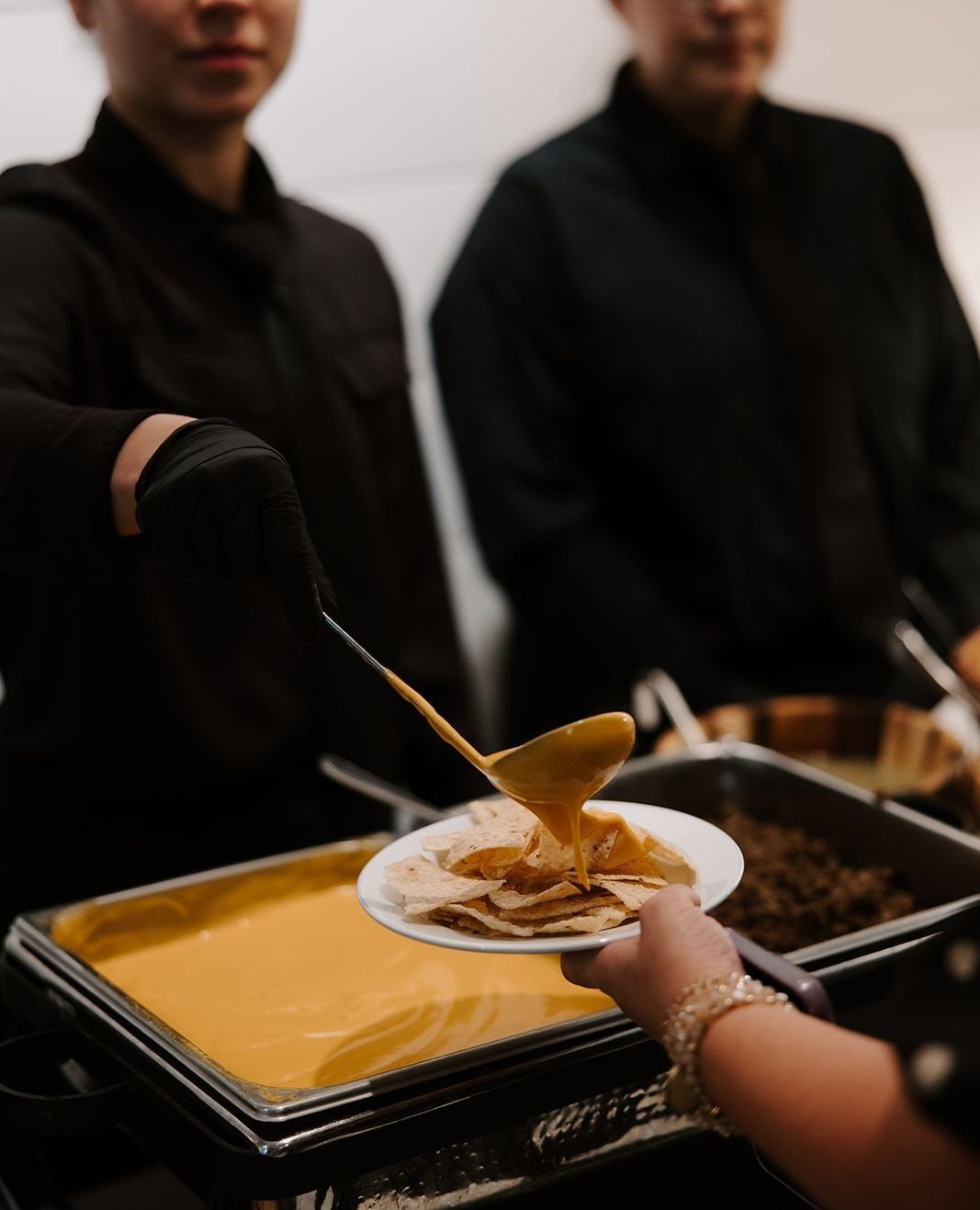
A server in uniform ladling cheese sauce onto each plate is the polished version of a nacho bar, and I would choose it when the line needs to move fast and look tidy.
Staff control the portions and keep sauce off the floor and the guests’ sleeves.
The cost is labor, so ask your caterer how many servers one station needs and what each adds to the bill. Self-serve costs less, but a staffed station suits a formal room better.
9. Cardboard Boats for Serving
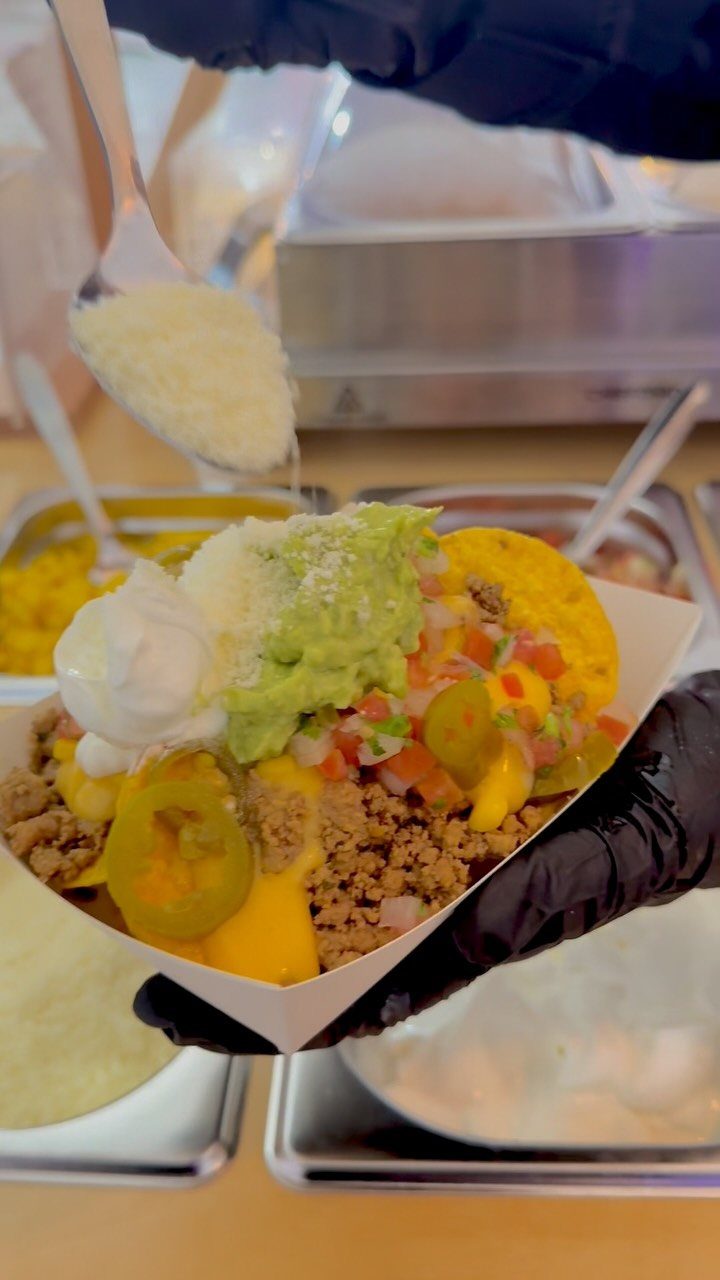
Cardboard boats turn nachos into a handheld dish, so guests can eat standing, mingling or walking to the dance floor. Build each boat to order: chips, meat, then guacamole, sour cream and grated cheese on top.
Disposable boats mean no dish return and easy cleanup, which keeps the rental and labor lines small when every dollar is spoken for. Pair them with napkins and forks, since loaded chips get messy fast.
10. Layered Nacho Dip Tower
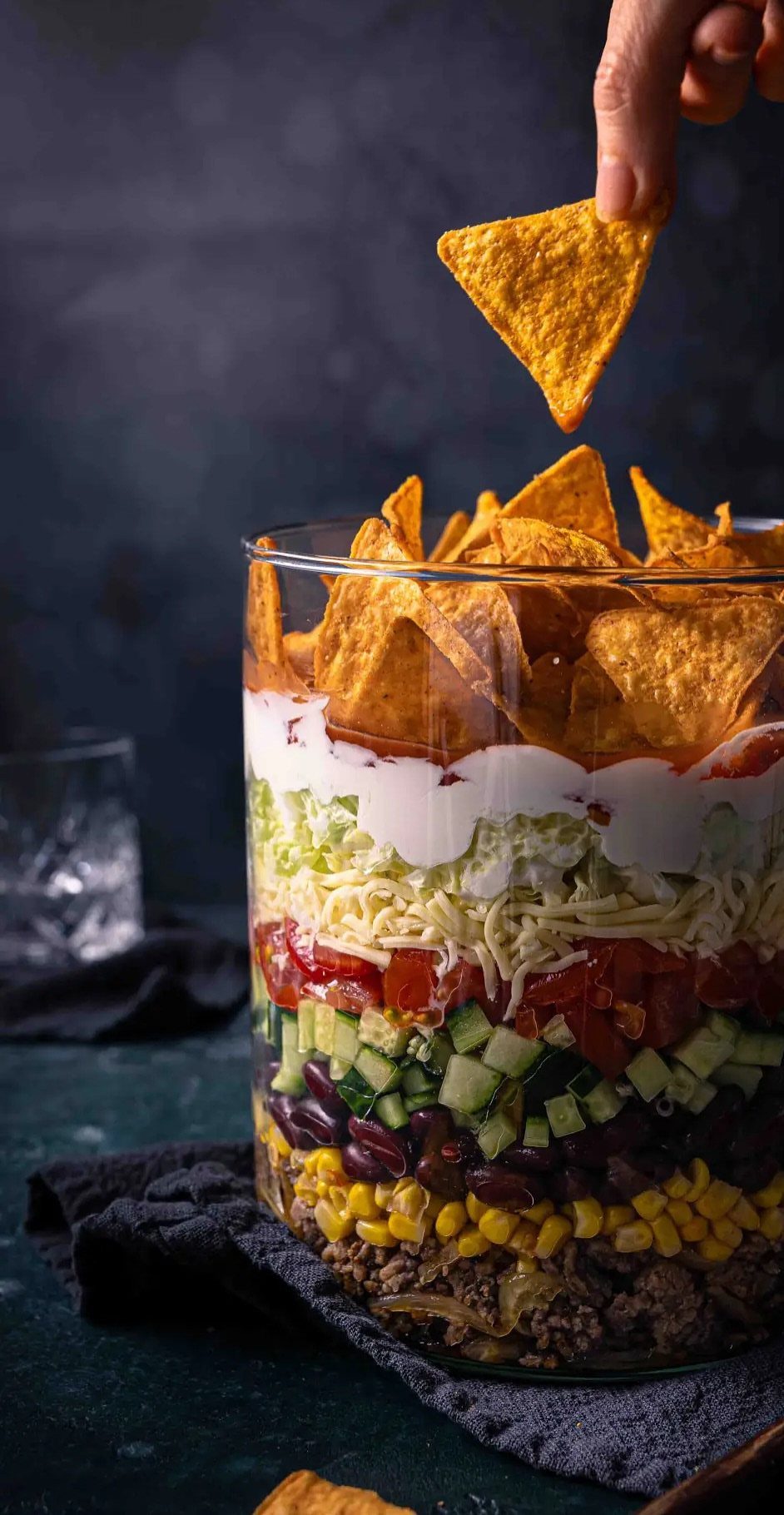
A tall glass cylinder of layered dip works as decor and food at once. Stack ground meat, beans, corn, tomatoes, cheese and sour cream so each layer shows through the glass, then crown it with chips.
Guests dip straight down through every layer, so keep the top wide enough for a chip to fit. I would put a stack of extra chips in a bowl beside it, because the tower empties quickly.
11. Festive Mexican Serape Runner Setup
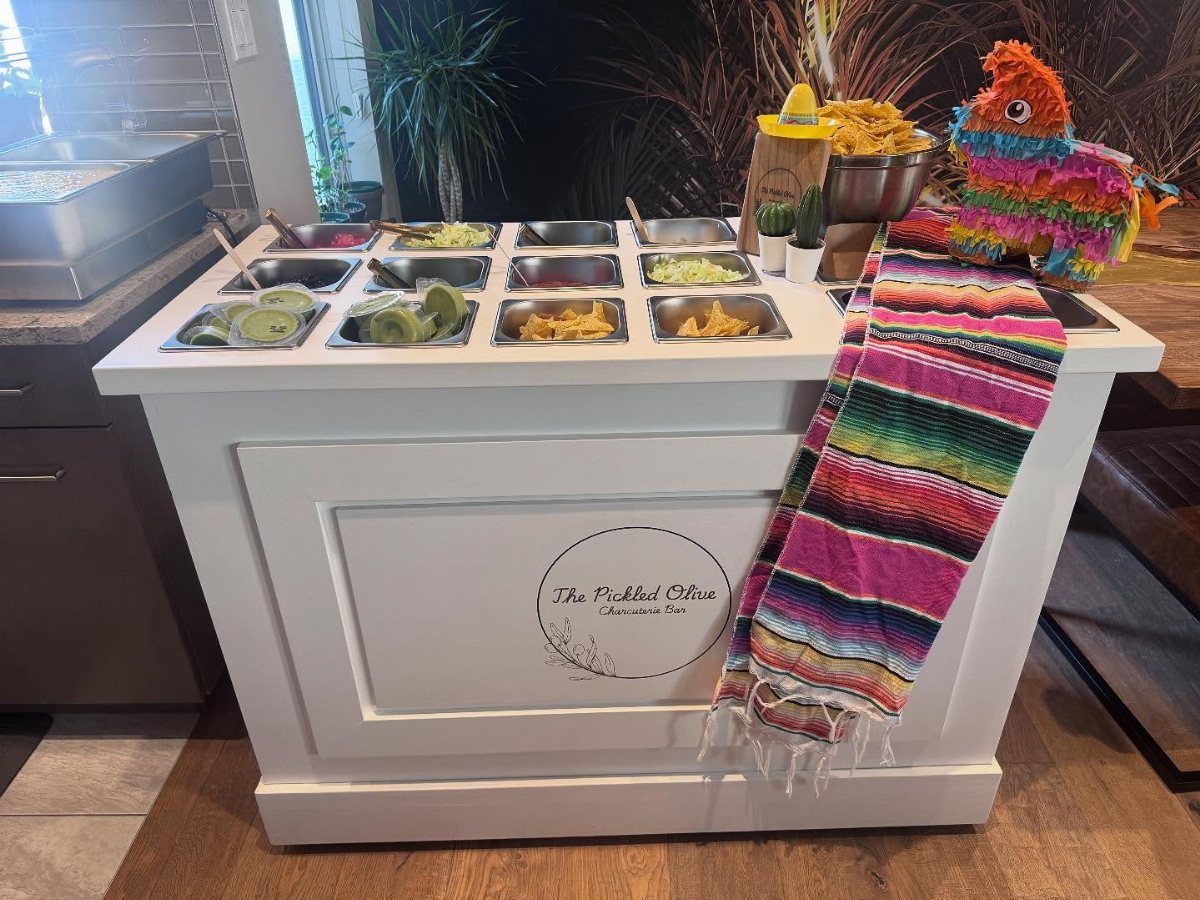
A bright serape runner down a white buffet tells guests the theme before they read a sign. It costs far less than renting linens, and it hides spills well.
Add a piñata nearby and keep the toppings in metal trays so the colors in the textile stay the star. Lay the runner flat and tuck the ends so nobody snags it while loading a plate.
12. Outdoor Pergola Buffet Table
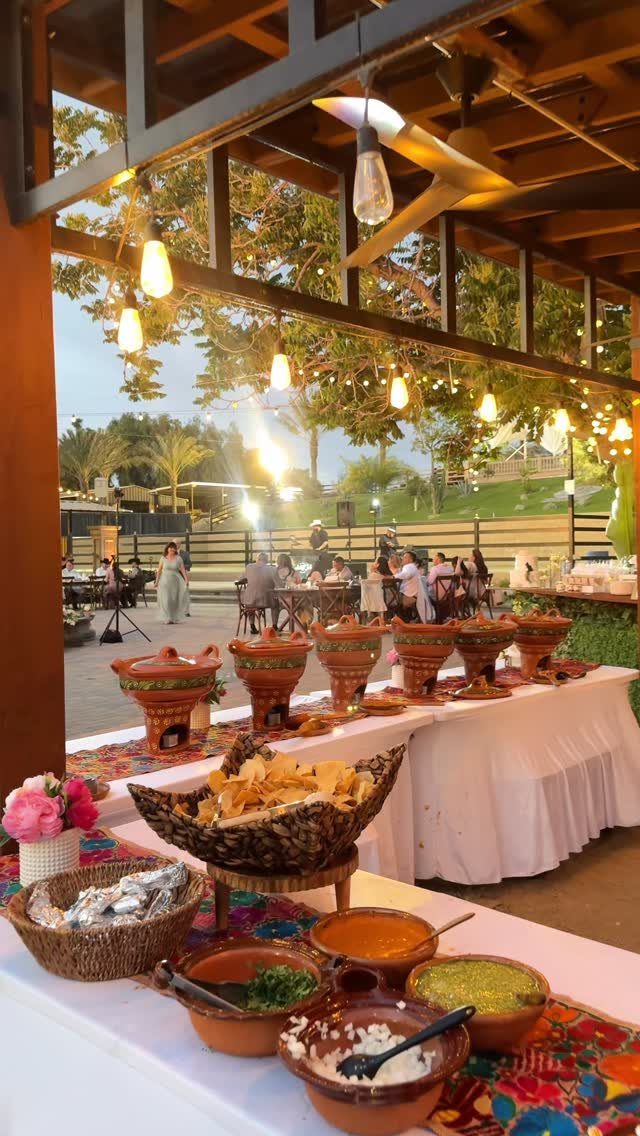
String lights overhead and clay pots on the table give a pergola buffet its warmth by evening. Fill small clay pots with salsas and set chips in wide bowls beside them, each pot with its own spoon.
A wooden pergola already frames the table, so decor can stay minimal, which saves money. Test the lights before the day, and keep the table near an outlet or plan a battery option.
13. Pre-Portioned Dip Catering Cups
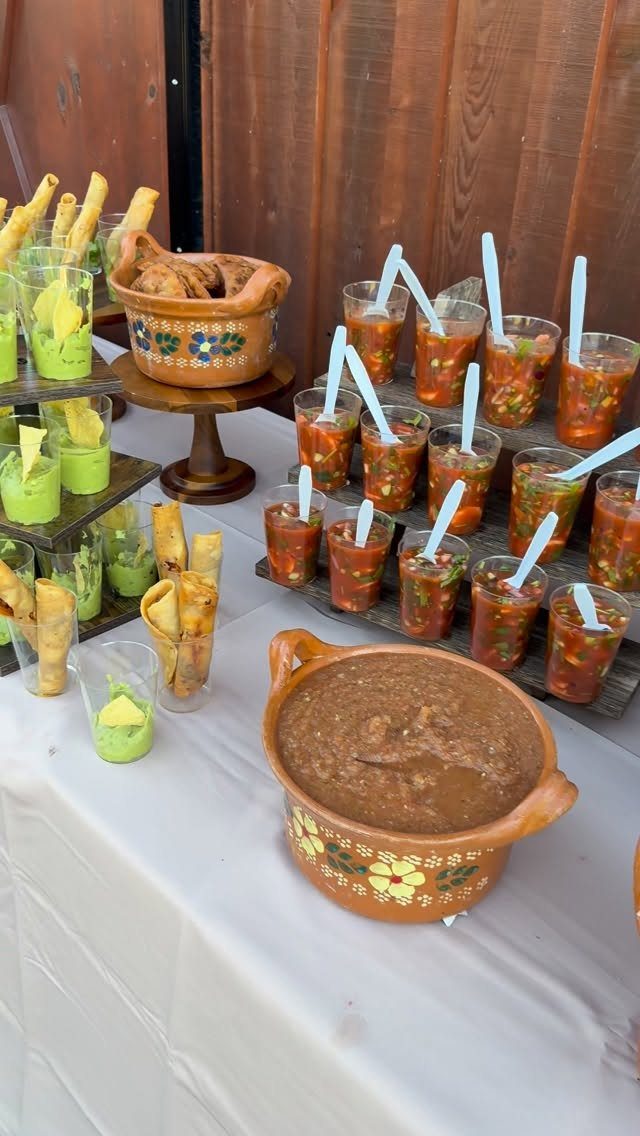
Single-serve cups of guacamole and salsa set beside baskets of chips keep every guest’s dip untouched by anyone else’s chip, and the table stays tidy because nothing gets scooped from a shared bowl.
Cups cost more per guest than a bowl does, so I would portion only the dips that vanish fastest and keep the bean dip in a bowl with a spoon.
Set the cups in rows by flavor so the line moves.
Put a basket of chips at each end of the table so guests can grab a cup and a handful and keep walking.
Keeping Nachos Warm
Queso and proteins are the 2 things that need heat all evening. Queso holds its texture in a small slow cooker on low, and chafing dishes or warming trays do the same for grilled chicken, carne asada, or pulled pork.
Chicken sitting in a foil pan stays safe and moist in an oven set between 200°F and 250°F. Once food has waited in the oven past 15–20 minutes, I check that it still reads at least 140°F with a thermometer before it goes out to the table.
Cheese sauce made from processed cheese is simple to batch. Slice the cheese into a microwavable bowl, add a can of undrained diced tomatoes and green chilies, and microwave 2–3 minutes.
To rescue queso that has firmed up, stir it, then reheat in short 1–2 minute bursts, stirring between each, until it runs smooth again.
Give every topping its own utensil so flavors stay separate and several guests can build at once.
Put a trash can or bin within easy reach of the nacho table, and stack up far more napkins than you think you’ll need.
Portion Planning
Chip quantity depends on what else is being served.
With a full meal, plan 2.5–3 ounces of chips per guest. If nachos are the only food, plan at least 5 ounces per guest.
Queso and guacamole go fastest, roughly 3 times as quickly as sour cream and jalapeños. I would buy extra of both and treat queso more like a drink than a condiment: plan double the standard amount per guest.
A nacho bar with no queso is just a chip table, so that is the last line to cut when trimming the budget. Sour cream and jalapeños can run leaner.
For a big crowd, run two lines on opposite sides of the room and assign someone to restock each one.
Pairing nachos with a taco station lets both draw on the same prepped toppings, so the kitchen does less work and each guest costs less.
Interactive Experience
A nacho bar works best when guests are in charge of the result. Hand guests a pile of warm chips first, then let them layer on melted cheese, a protein, and fresh toppings however they like.
That choice gives people something to talk about in line. Strangers compare builds, and someone always asks what you piled on.
Offer enough variety that no two plates match: at least two proteins, a few cold toppings, and a couple of sauces. Keep a vegetarian protein on the table so those guests can build something as generous as everyone else’s.
Space the toppings far enough apart that several guests can build at once without bumping into each other.
Frequently Asked Questions
What kind of meat for nacho bar?
Seasoned ground beef, shredded chicken, and chili are the usual picks, and grilled chicken, carne asada, or pulled pork also work well.
Offer at least 2 proteins so plates differ, and keep a vegetarian protein on the table so those guests can build something as generous as everyone else’s. Keep the meats hot in chafing dishes or warming trays through the evening.
What is the cheapest way to feed 100 people at a wedding?
A self-serve nacho bar is a budget-friendly choice, since guests build their own plates and staffing stays low.
Disposable cardboard boats cut dish rental and cleanup too. Pairing nachos with a taco station lets both draw on the same prepped toppings, so the kitchen does less work and each guest costs less.
How much food do you need for a nacho bar at a wedding?
With a full meal, plan 2.5–3 ounces of chips per guest; if nachos are the only food, plan at least 5 ounces.
Queso and guacamole disappear roughly 3 times as fast as sour cream and jalapeños, so buy extra of both and plan double the standard queso amount per guest.
For a big crowd, run 2 lines on opposite sides of the room with someone restocking each.
How do you keep nacho toppings warm at a wedding?
Queso and proteins are what need heat all evening. Hold queso in a small slow cooker on low, and use chafing dishes or warming trays for the meats.
Chicken in a foil pan stays moist in a 200°F–250°F oven, and after 15–20 minutes of waiting, check that it still reads at least 140°F before it goes out.