The ideas here run from a boutonniere pinned on one lapel to a floral arch that is the single biggest flower order in most ceremonies, and the price follows how much space the flowers have to fill.
Hair flowers, corsages and boutonnieres are small orders, so they are the easy places to buy real blooms, while centerpieces, ceremony flowers and arches are where fewer, fuller arrangements beat many sparse ones.
1. Wedding Centerpieces
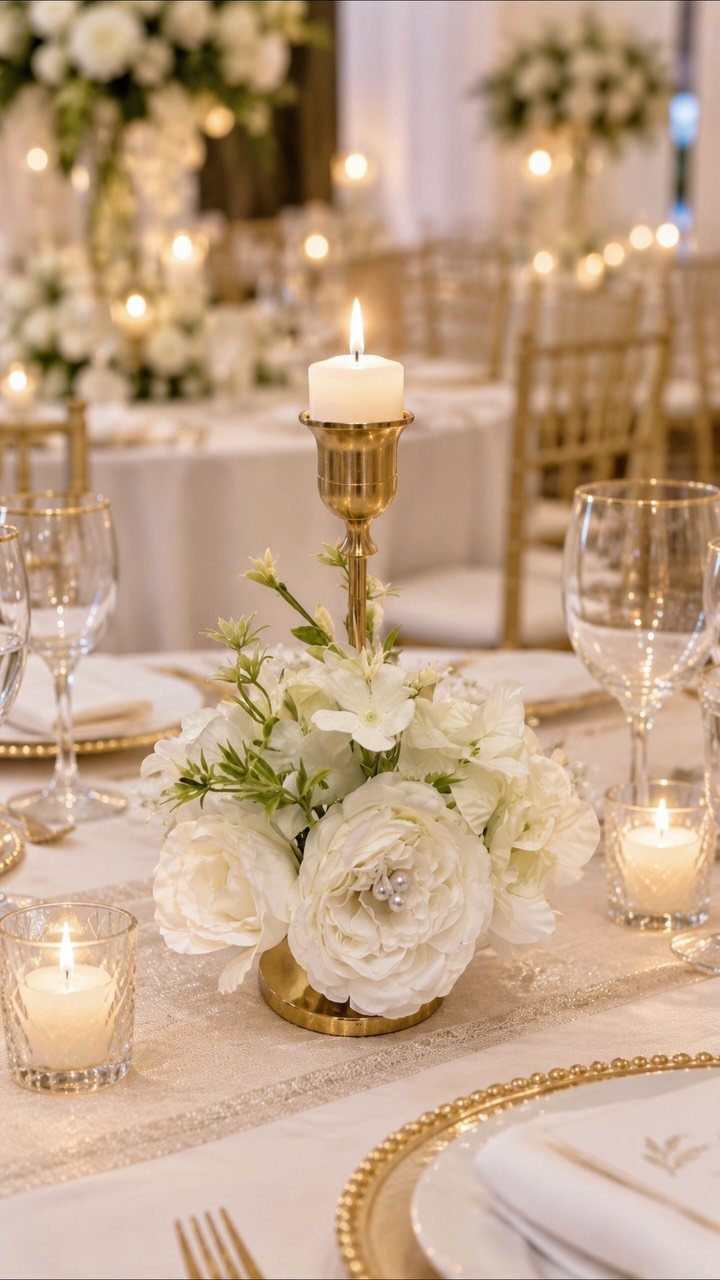
Gold candlesticks with white candles and low white florals give a banquet table 2 heights to work with: flame above, flowers below.
That pairing keeps sight lines open across the table, so guests can talk without leaning around a tall vase.
Small votives fill the gaps between the arrangement and the gold plates. Pick one flower color and let the metal do the contrasting, which keeps the look cohesive and the florist’s list short.
2. Ceremony Flowers
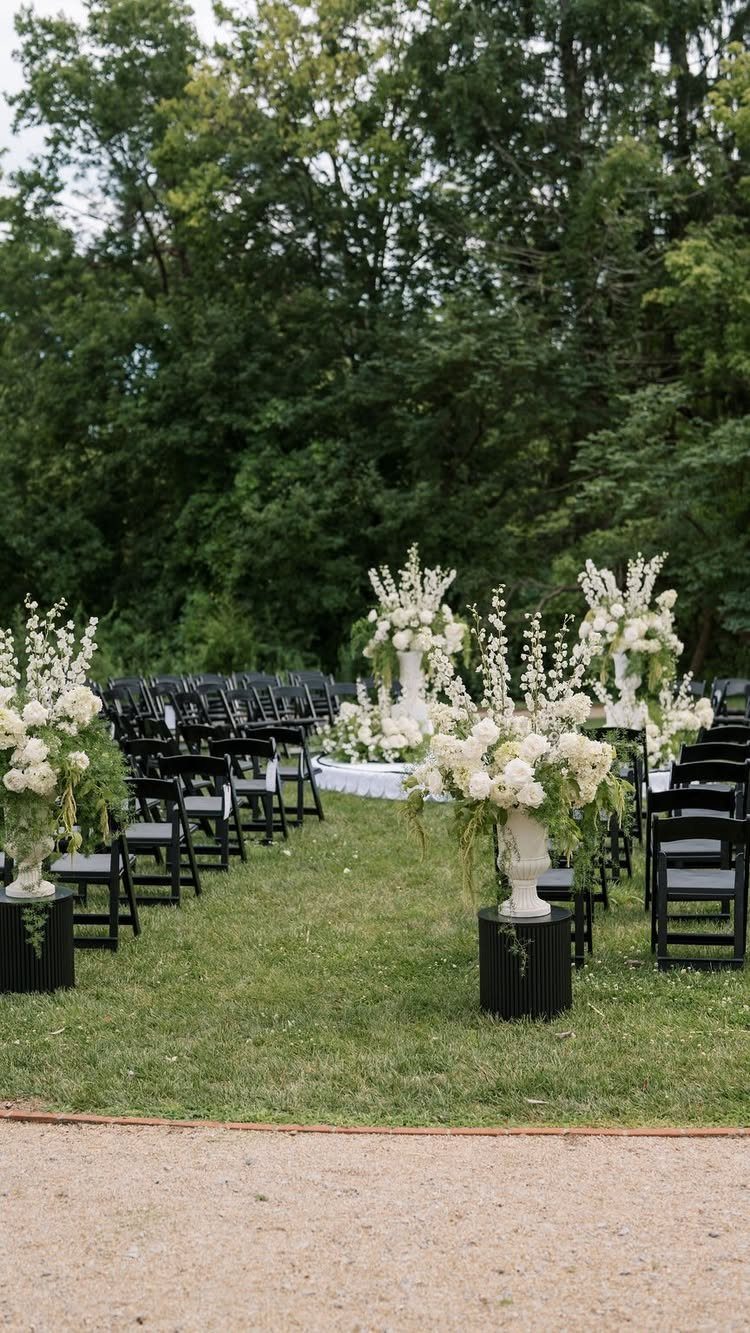
Large white arrangements on black pedestals do the work of an aisle runner without a single petal on the ground.
Matching pairs down both sides read as a deliberate line, and the dark stands keep the white blooms sharp against green trees.
If the budget is tight, I would put the money into fewer, fuller arrangements rather than many sparse ones. Four generous vases beat eight thin ones.
Ask your florist whether the pedestals can be rented, since buying them rarely makes sense.
3. Floral Arches
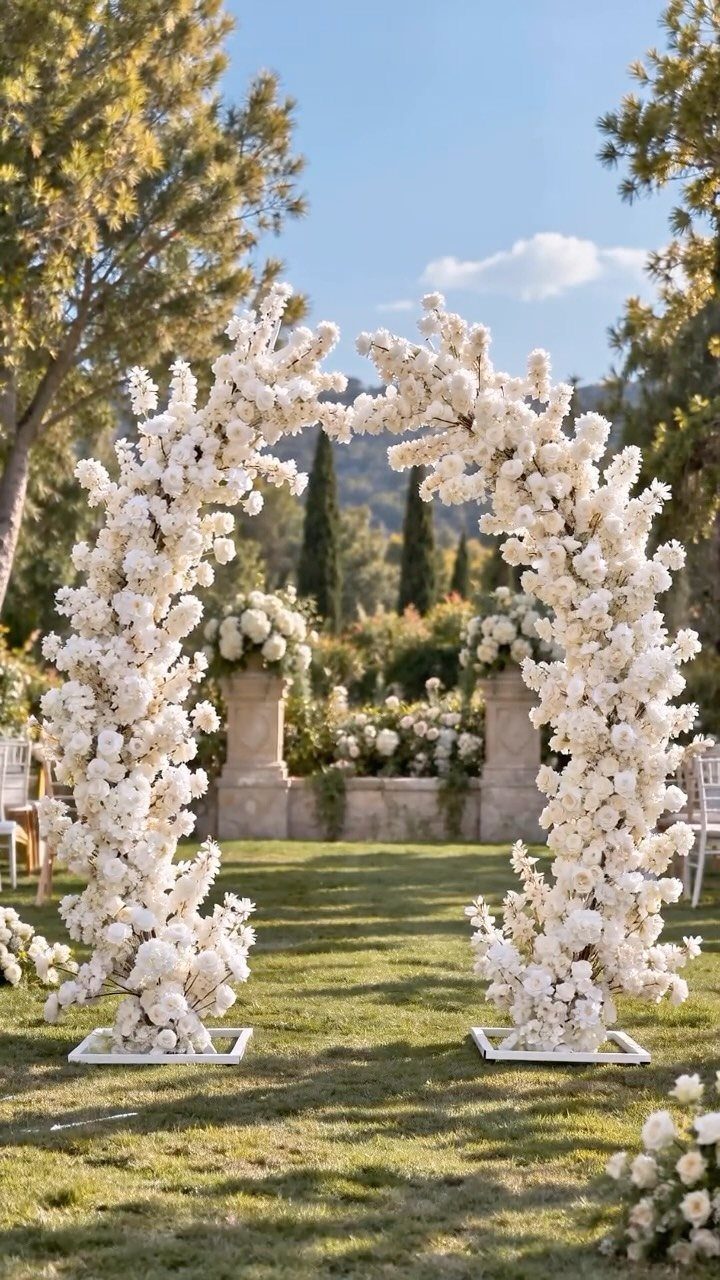
A floral arch covered in white blossoms is the single biggest flower order in most ceremonies, and it shows. It frames the couple for every photo, so full coverage matters more than variety of bloom.
On a lawn, a one-color arch looks cleaner than a mixed one, and white against green is hard to beat.
Ask your florist whether the structure is included or rented separately, and whether the flowers can be moved to the reception afterward.
4. Wedding Cake Flowers
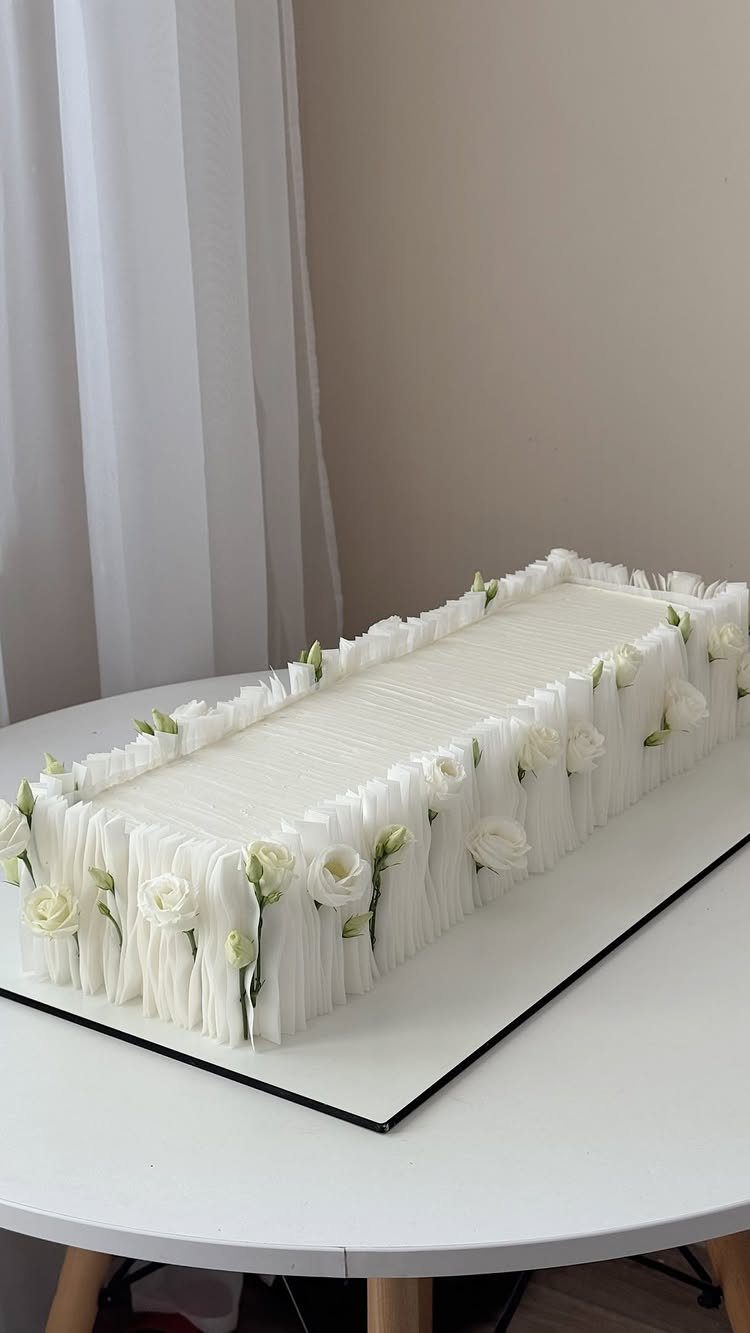
Small white roses on a white cake read as quiet, almost tailored. Pleated frosting already supplies the texture, so a restrained scatter of blooms is enough.
Ask the baker to place the flowers, or have your florist deliver them to the baker, so the stems never touch the frosting. Wrap the stems in floral tape, and confirm the flowers are pesticide-free and safe near food.
Fresh blooms cost far less than sugar flowers, which is a real saving on a modest budget.
5. Wedding Bouquet
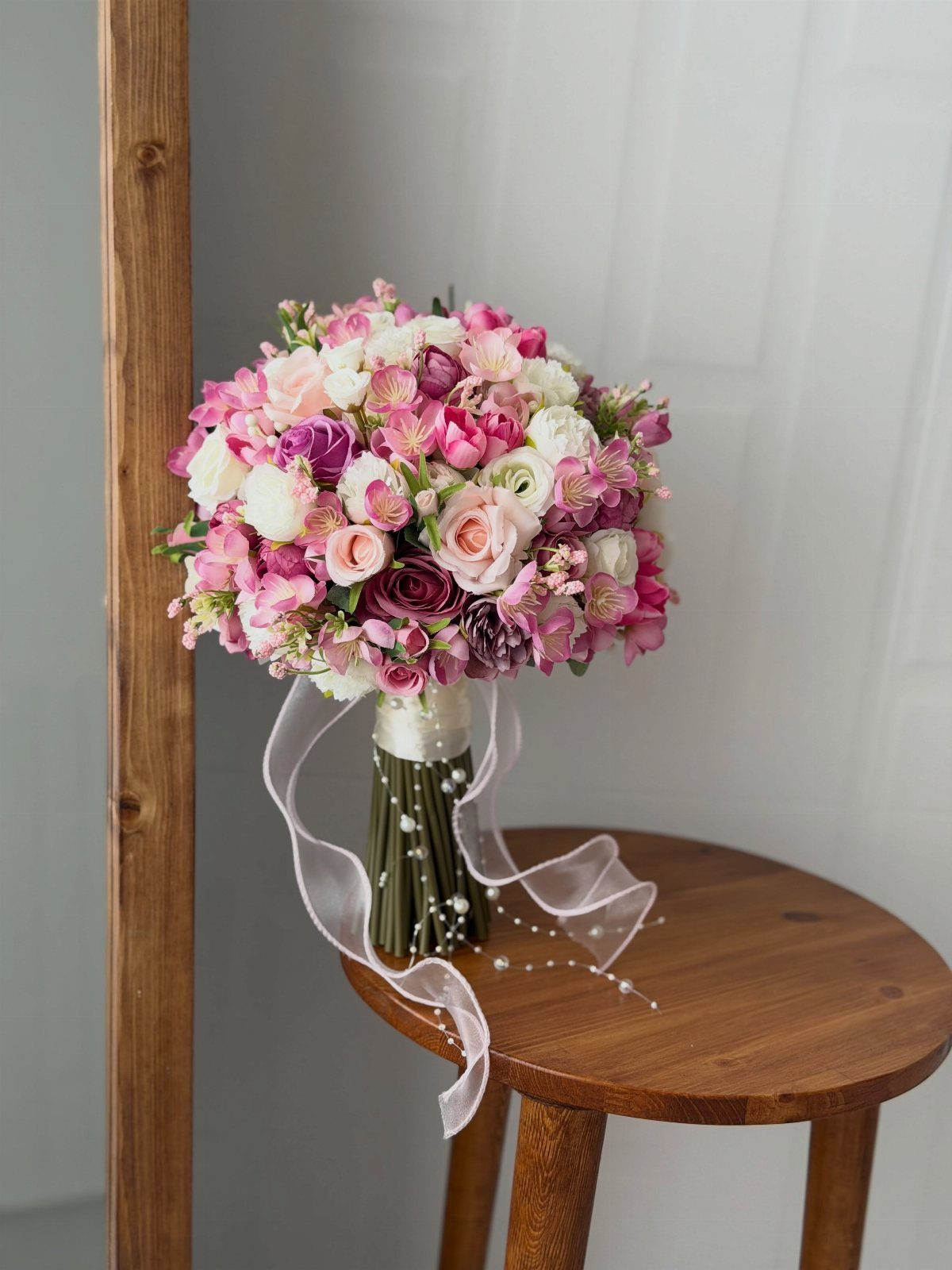
A round bouquet of pink and white flowers, wrapped at the stems in white ribbon and pinned with pearls, reads as soft rather than showy.
Pearls are an easy add-on: a few pins in the ribbon cost little and photograph well.
Keep the palette to 2 colors so the shape stays clean. Match the ribbon to the dress fabric or to the white in the flowers.
Hold it at your waist, not your chest, so it doesn’t hide the bodice.
6. Boutonniere
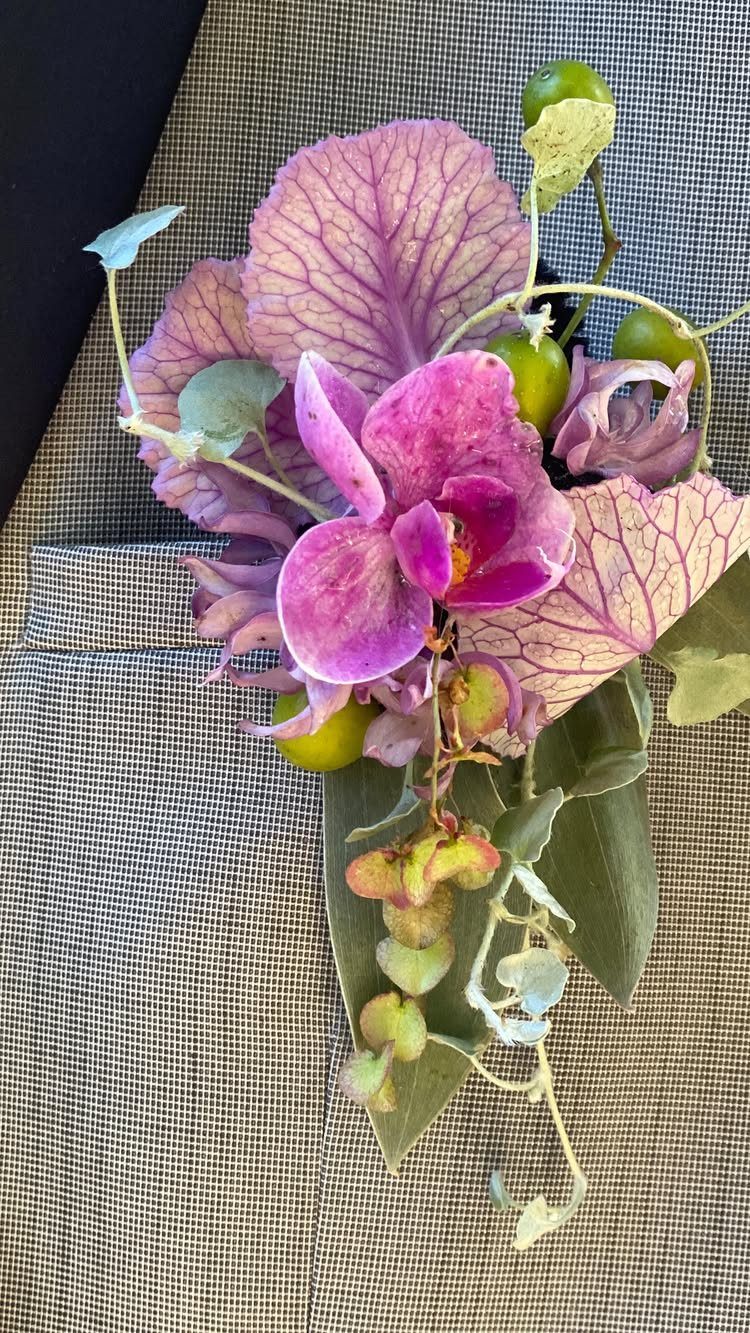
A purple orchid paired with ornamental cabbage, green berries and eucalyptus gives a boutonniere real texture, far from the usual single rose.
Let the foliage do the heavy lifting: a ring of green around the purple bloom makes it stand out against a suit.
Choose a bloom color that picks up something in the bouquet, and have the groomsmen wear a simpler version of the same recipe. That way the groom’s stays distinct without clashing.
Pin it on the left lapel, angled slightly up.
7. Hair Flowers
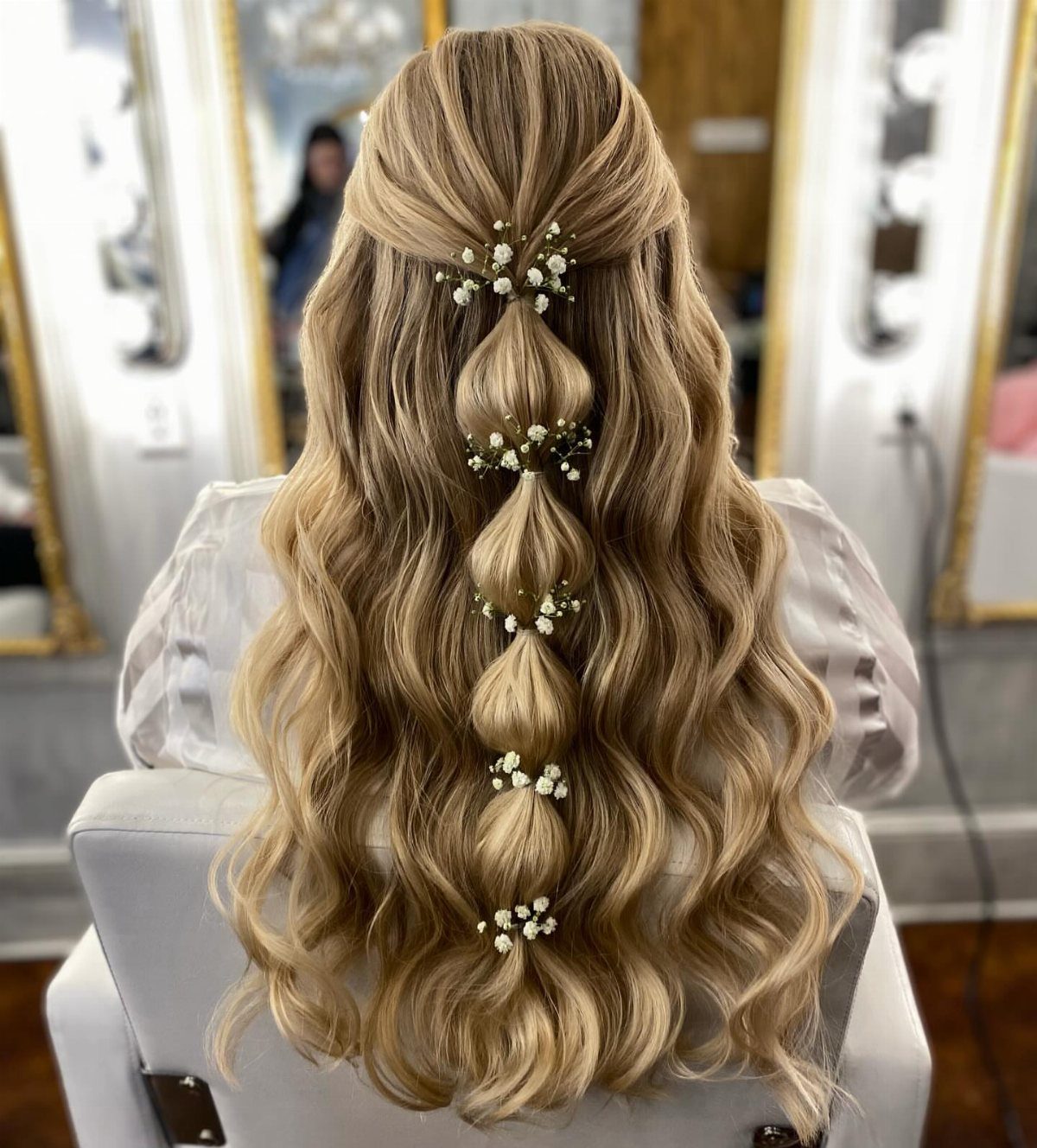
Small white flowers worked into a braided section of a half-updo stay put better than a loose crown, because the braid gives each stem something to grip.
Keep them small and spaced out so the waves still get to be the main event.
Ask your stylist to place the flowers last, after the braid is set, and bring a few extras for touch-ups. Hair flowers are a tiny order, so this is an easy place to spend a little on real blooms.
8. Corsage
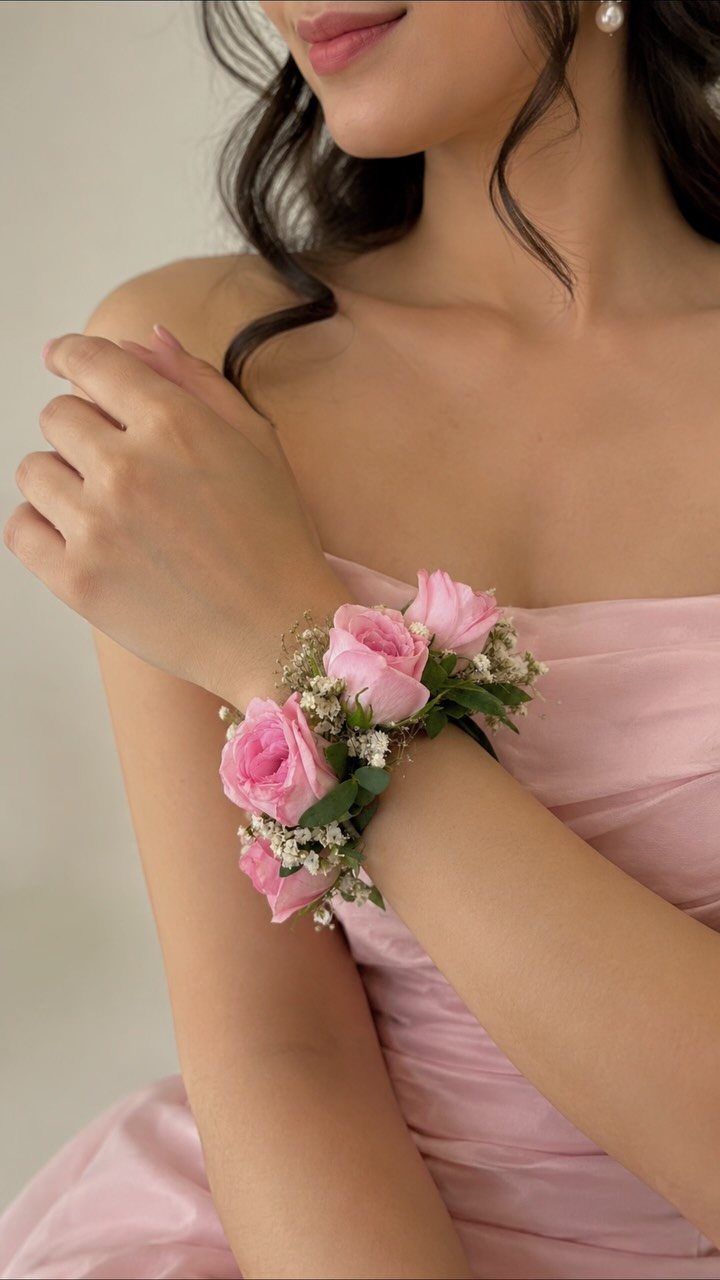
A pink rose with baby’s breath on the wrist works well with a strapless dress, since bare shoulders leave the wrist as the one spot for a little color.
Match the pink to the dress and the corsage looks planned rather than added.
For a modest budget, order a few of these for mothers and grandmothers and skip the rest.
The maker of this one says each piece is handmade and customized to your colors, flowers and style, so ask any florist the same.
9. Bar Decor
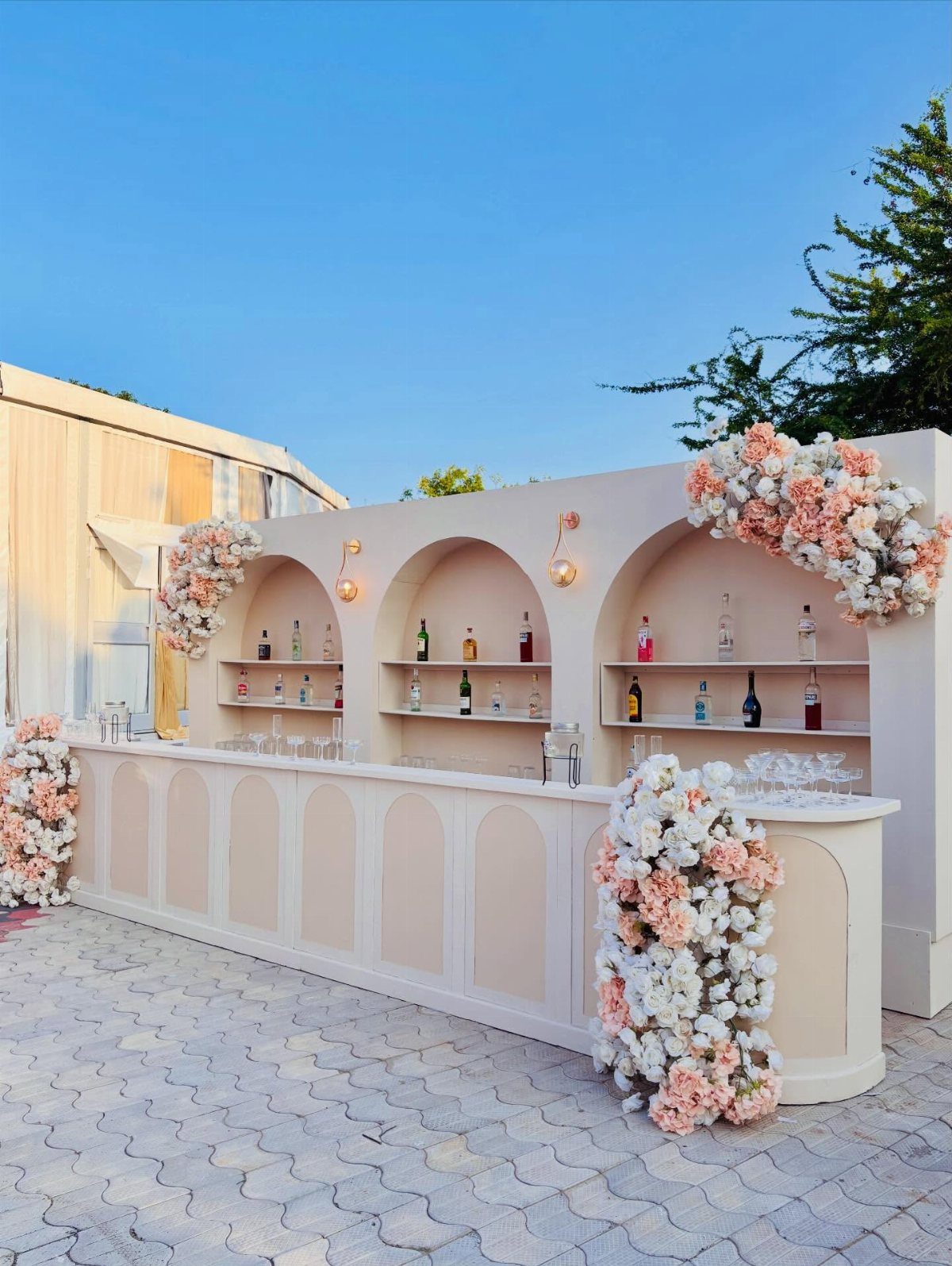
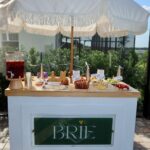
Two or three arrangements are enough; the shelves should stay readable.
Keep the flowers clear of where the bartender works, so nobody is reaching around stems. Pull the rose colors from your bouquet and the bar looks like part of the same plan.
10. Welcome and Dessert Table Flowers
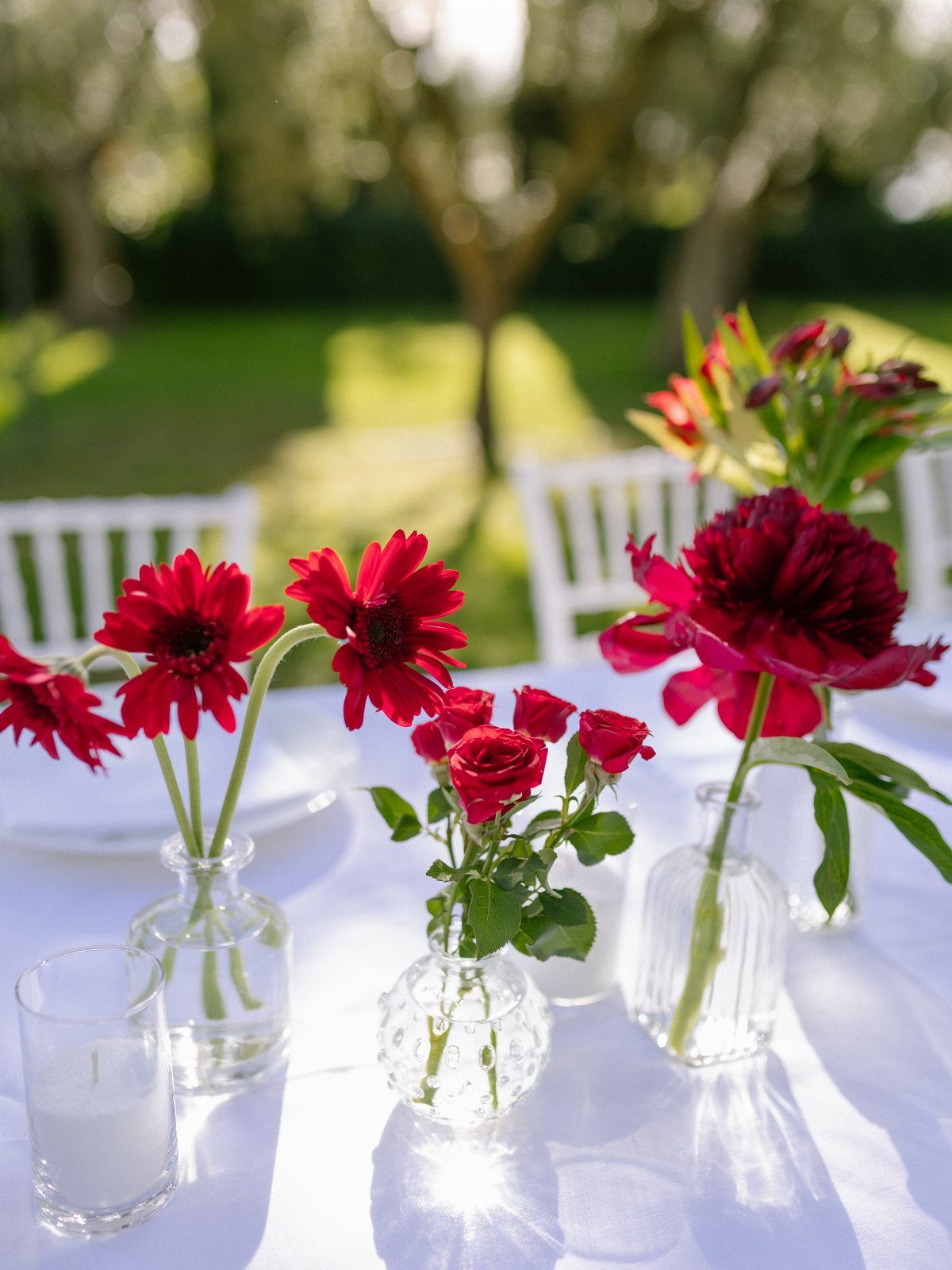
Three small glass vases in a row cover a welcome or dessert table for less than one big arrangement, and the repeated red reads as intentional. Clear glass keeps the focus on the blooms.
Use odd numbers, and keep the vases low so they never block the desserts or the sign.
Small vases are also easy to carry to another spot afterward, so ask a friend to move them to the reception when the ceremony ends.
How Much Do Wedding Flowers Cost?
Set aside roughly a tenth to a seventh of your total budget for flowers and decor, and count greenery inside that amount.
Decide what the space should look like before you ask for a quote. Bloom type, quantity and how complicated the arrangements are all move the price, and so does whether a specific flower is in season.
Tell your florist your number up front. A good one will suggest cheaper stand-ins for the flowers you love, and that conversation goes better when the cap is on the table.
When to Book Your Florist?
Book your florist 6–12 months ahead.
Earlier gives you more room to adjust, and some florists let you hold the date with a deposit, then spread the balance over monthly payments. One published example is a $249 deposit.
Ask about change policies before you sign. Some studios let you change colors, flowers, arrangements and quantities freely up to 60 days out, so treat that first proposal as a draft you can keep reworking.
Also ask about minimums. The typical share of a wedding budget that couples spend on flowers is a useful benchmark when you compare quotes from florists.
Choosing Seasonal Flowers
Pick flowers for the season, because the wrong bloom wilts or irritates guests. Heat wilts hydrangeas and gardenias fast, so I would leave both off the list for a summer date.
Freesia has a strong scent, so if anyone in your group has allergies, keep it out of the centerpieces.
Some flowers also suit certain jobs. Small, sturdy blooms like baby’s breath, ranunculus, calla lilies and spray roses suit boutonnieres, and I save peonies, anemones and garden roses for the bouquets.
Let your palette, theme and taste lead, then ask your florist which versions of those blooms hold up on your date.
Frequently Asked Questions
What flowers are needed for a wedding?
Start with the bouquet, boutonnieres, ceremony arrangements and centerpieces, then add extras like hair flowers, corsages and cake flowers if the budget allows.
Start from your palette and the season of your date, then choose blooms that are actually in season, since they cost less and look fresher. Heat wilts hydrangeas and gardenias, and freesia’s strong scent can bother guests with allergies.
Can I change my flowers after booking?
Often yes. Many studios allow changes to colors, flower varieties, arrangements and quantities until about 60 days out, and after that the order is usually locked.
Is there a minimum order for wedding flowers?
Florists can set minimums, so ask about them before you compare quotes. Minimums vary by studio, so ask for the number in writing before you start comparing quotes.
A useful benchmark is the share of a total budget couples typically spend on flowers, roughly a tenth to a seventh, with greenery counted inside that amount.