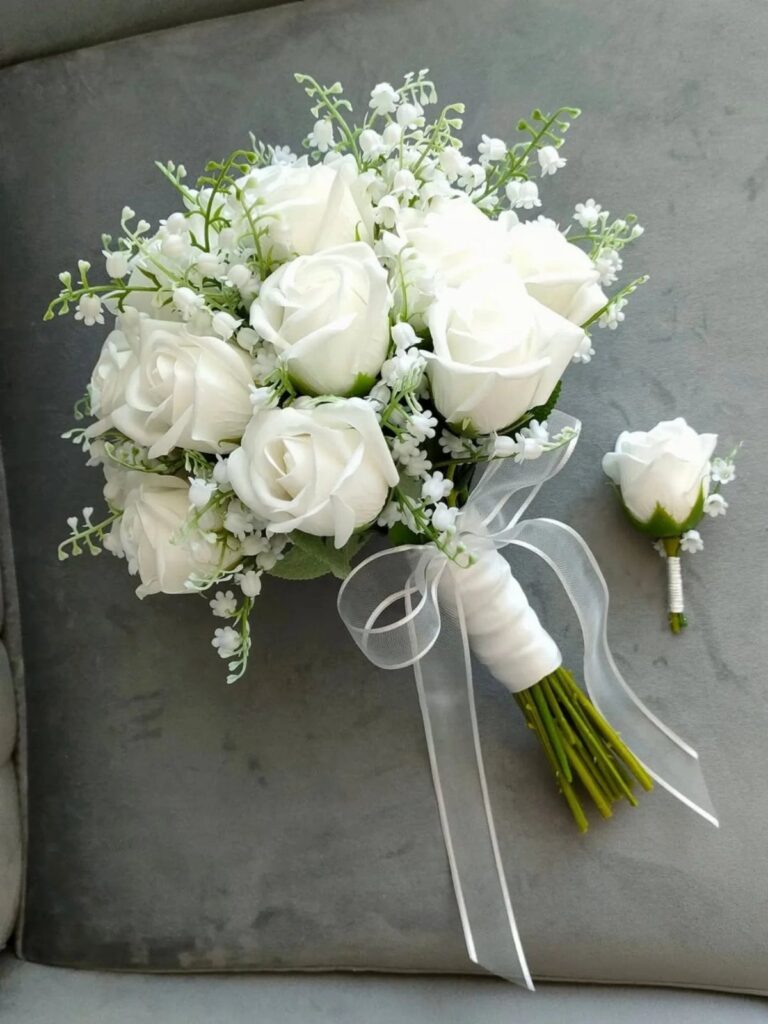
The 12 flowers here run from soft, layered ranunculus and ruffled lisianthus to big-headed hydrangea, a trumpet-shaped calla lily, and arching phalaenopsis and dendrobium orchids, with peony, dahlia, anemones, tulips, gardenia and silver dollar eucalyptus filling in the rest.
Your dress and your room should pick the flower: a warm ivory gown calls for ivory mixed in beside the white, a minimalist gown suits the clean line of a calla lily, and a long table gets the fullness of hydrangea.
One small detail decides how pure the palette reads, which is that Tibet roses and Princess Miyuki garden roses stay truly white when you ask for them by name.
1. Ranunculus
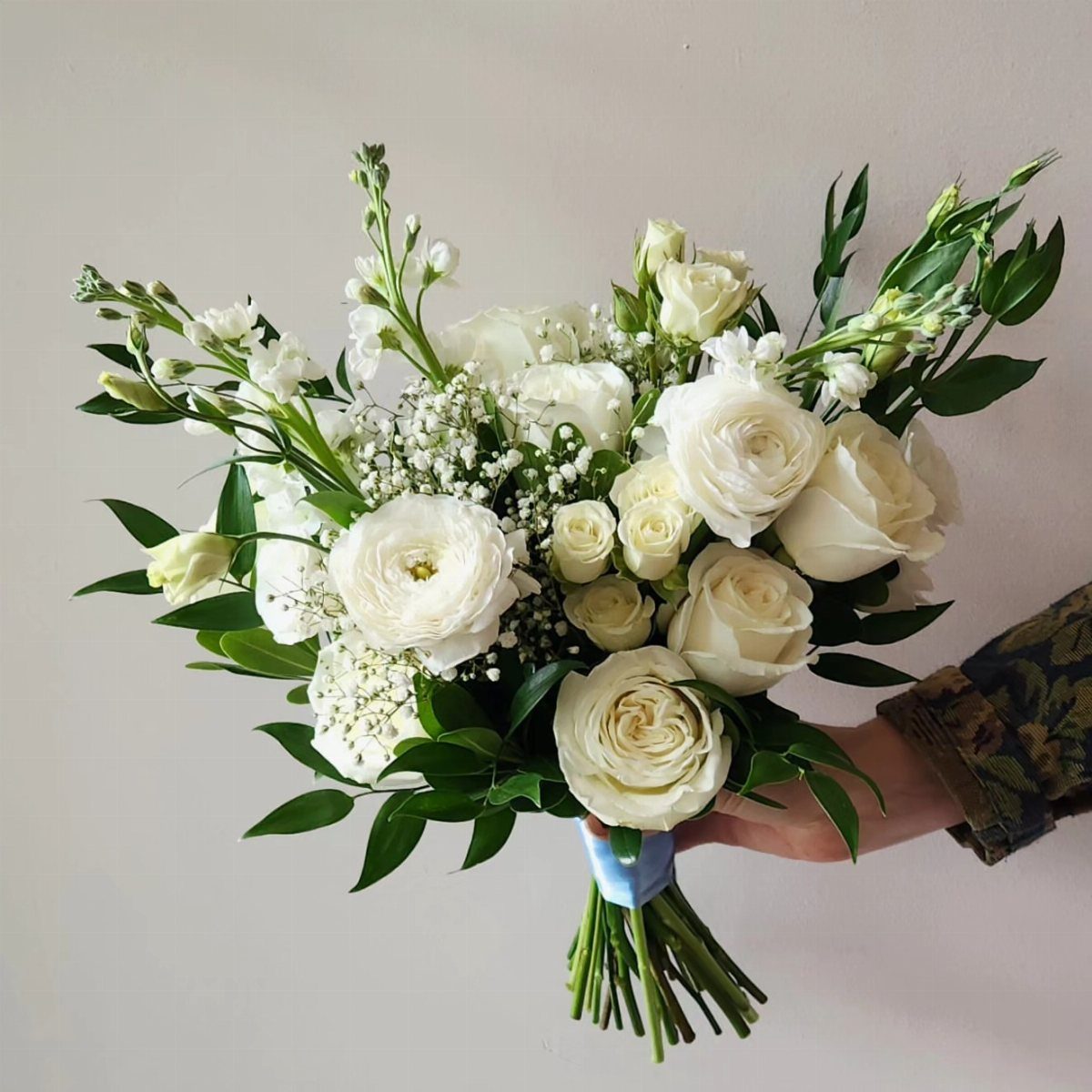
Layered, round petals make ranunculus read like a rose with more patience.
In a white bouquet, ranunculus pairs well with roses and baby’s breath, because the three share a soft, rounded shape and the baby’s breath fills gaps without adding color.
Green foliage keeps an all-white bunch from looking flat. A few extra stems are worth requesting from the florist, since the layered petals bruise easily and some heads always open unevenly.
2. Lisianthus
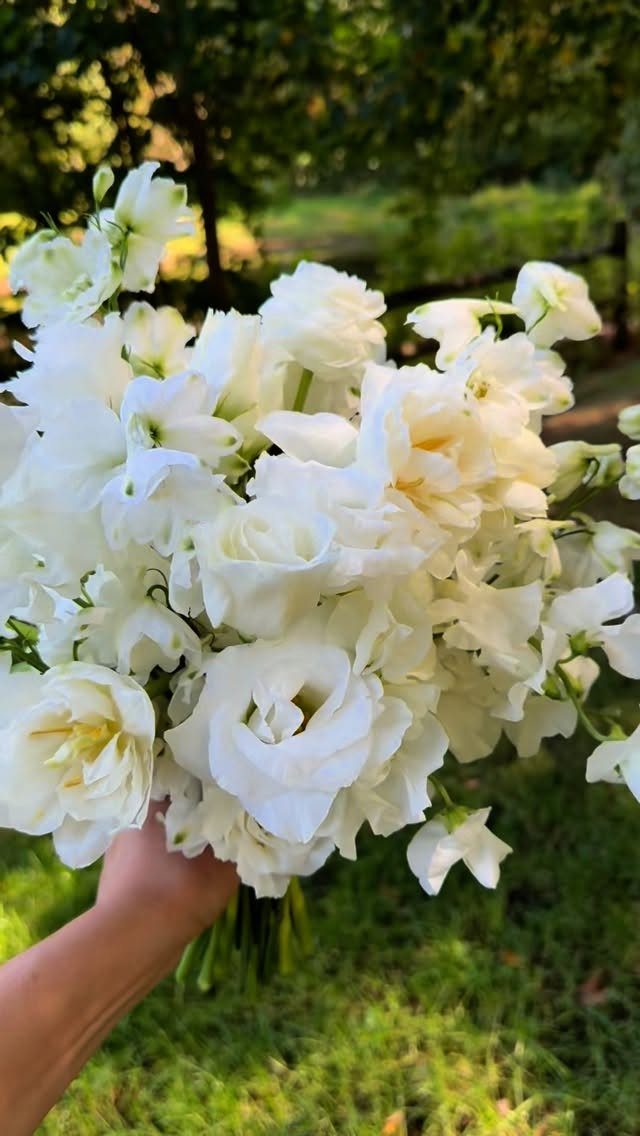
Ruffled petals give lisianthus the look of a softer, looser rose, which makes it a smart pick for a couple who wants that romance without defaulting to roses.
A bouquet of white lisianthus alone looks full and a little wild. I would keep the wrap simple so the ruffles carry the design, with greenery only if you want contrast.
3. Hydrangea
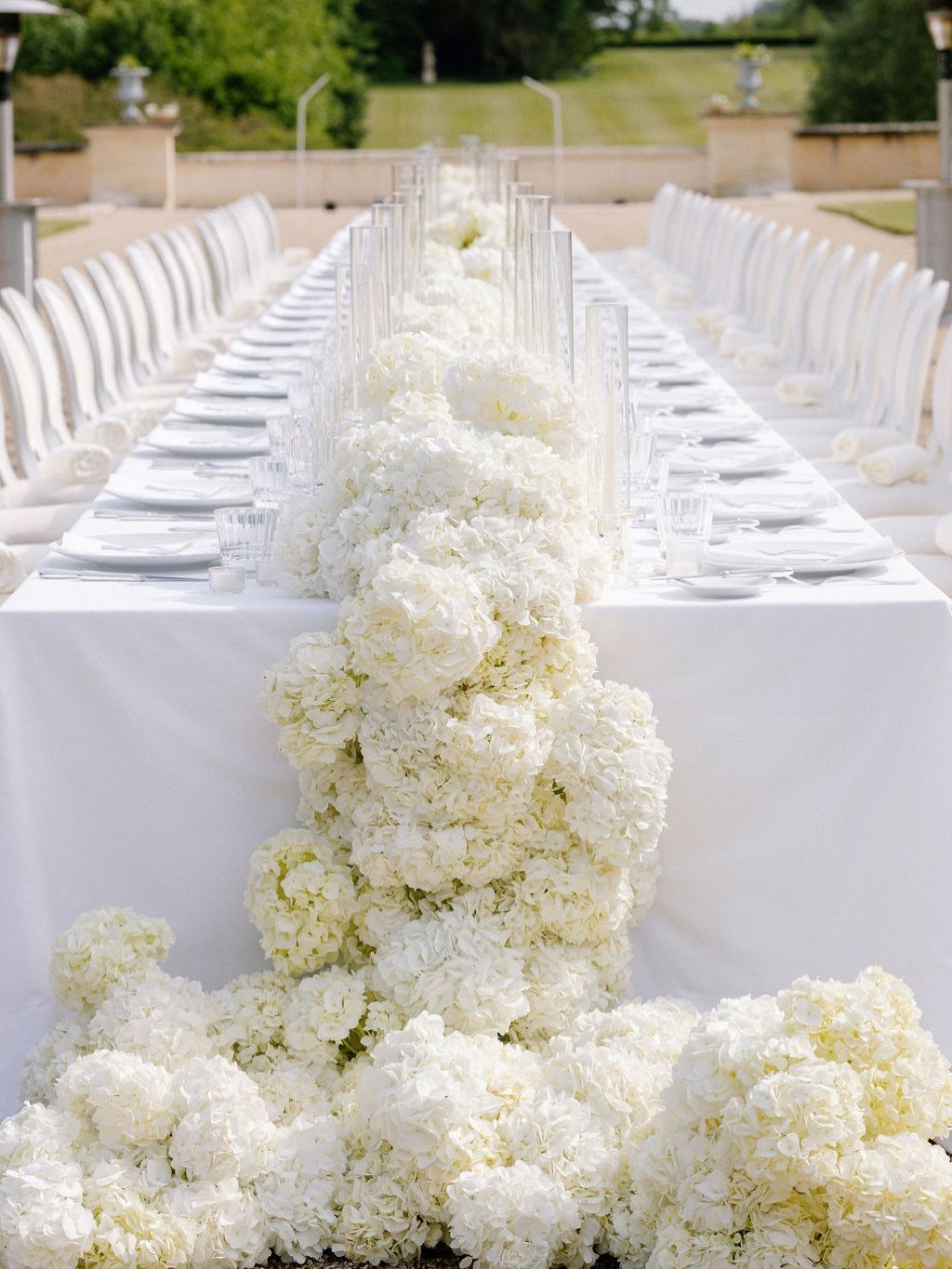
A thick runner of white hydrangea down the middle of a long table covers more length than almost any other single flower, because each head looks full and cloud-like.
That makes it a good fit for a budget where you need big visual impact across many feet of linen.
Keep the runner low so guests can see each other across the table. White chairs and white linens, as above, let the flowers be the only texture.
4. Gardenia
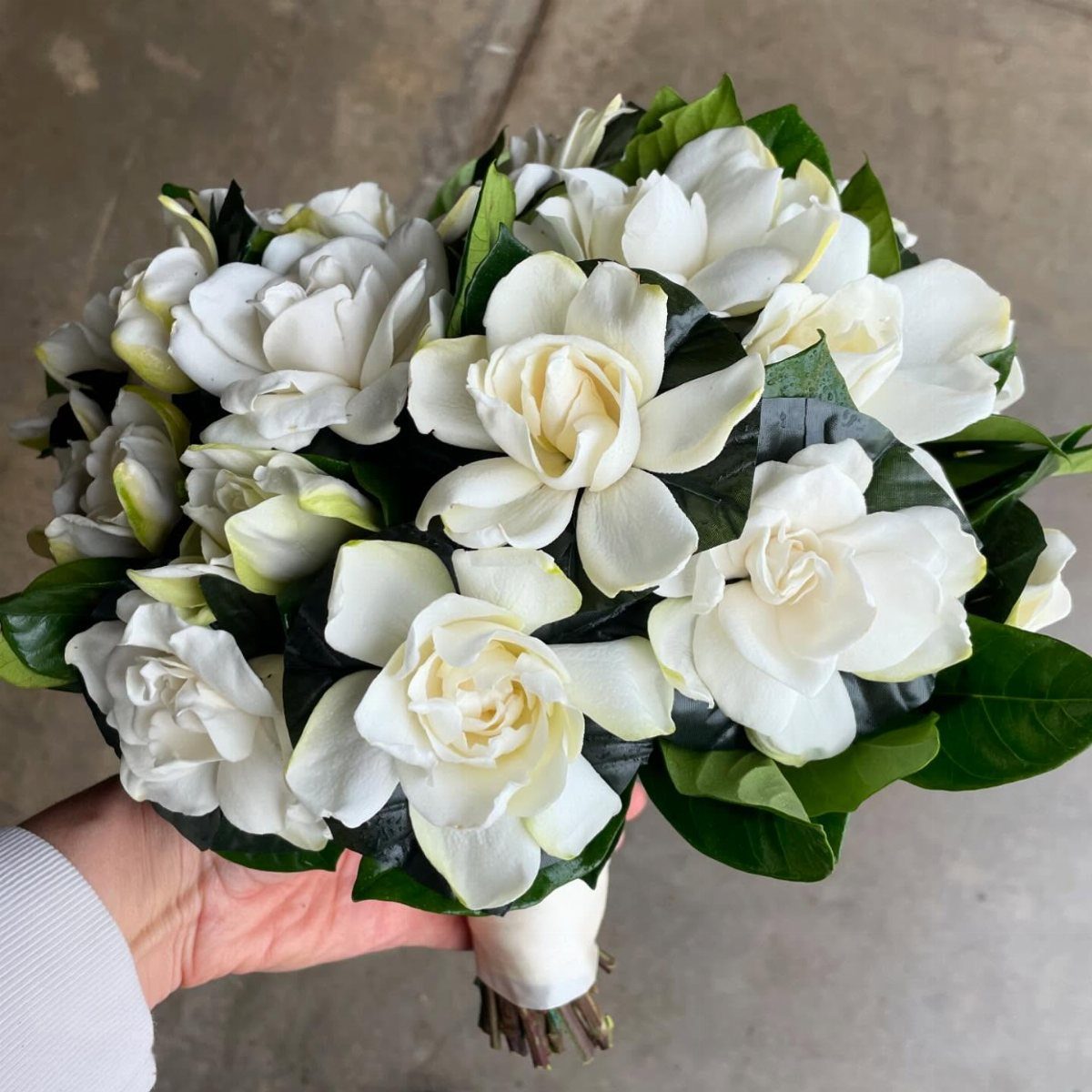
Gardenia brings fragrance and a creamy, not stark, white. Against glossy green leaves, that warm tone looks rich, and I would choose it over bright white blooms when you want a bouquet that feels a little vintage.
Because the scent is strong, a small bouquet does plenty. Have the florist keep the leaves in, since they frame the petals well.
5. Tulips
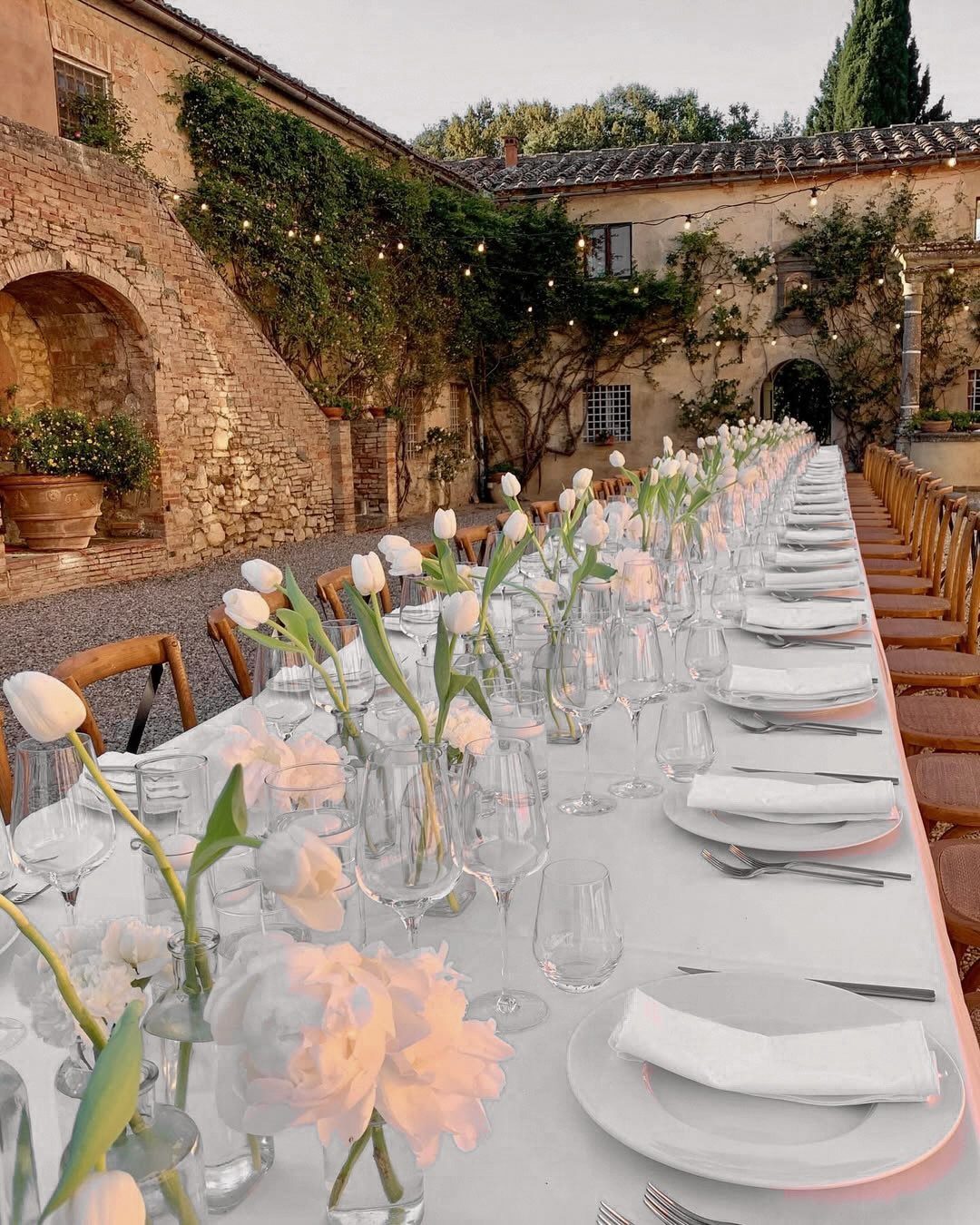
White tulips give a table a clean, modern line. Set them in small glass vases and run the vases down the center, as above, and you get a tidy rhythm that needs no filler.
This is an easy way to keep costs down: one flower type, simple vessels, and no elaborate arranging. Plain white plates and linens suit it best, so skip busy patterns.
6. Peony
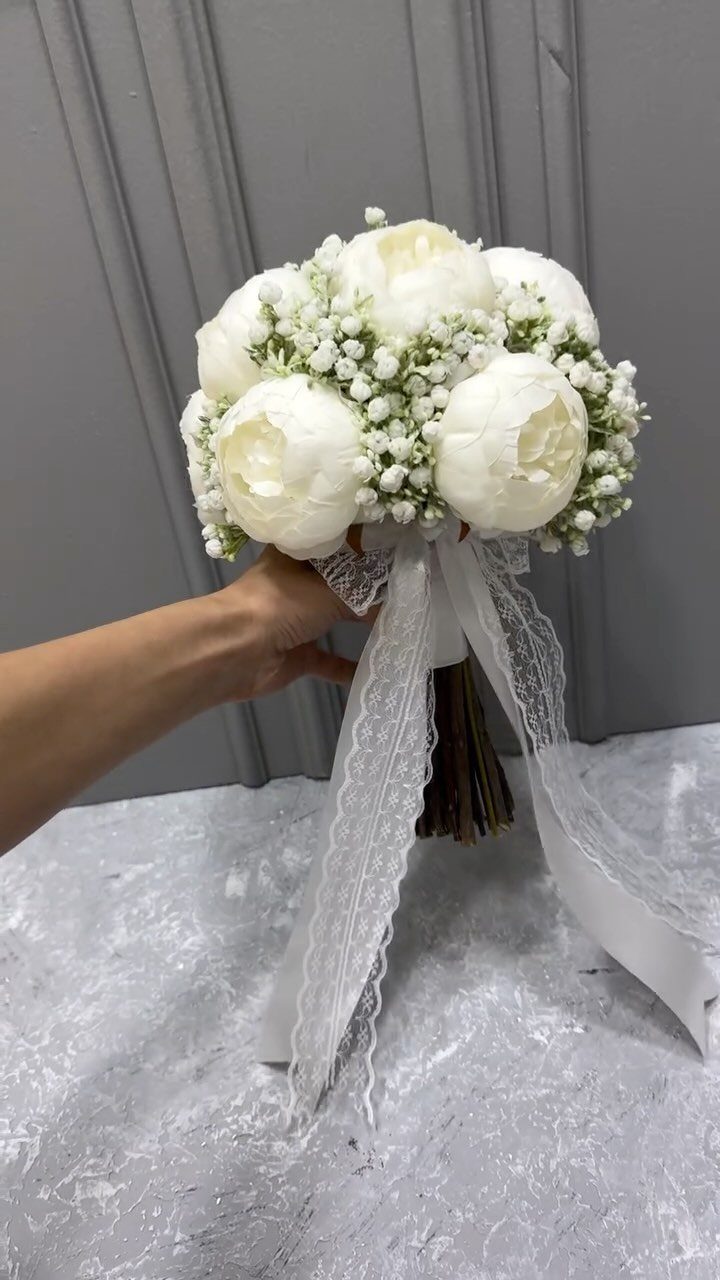
Peony is the classic spring bloom, and a bouquet of white peonies with baby’s breath feels romantic without much else added.
Tying the stems with lace and ribbon, as above, finishes it in a way that looks personal and costs little.
Choose a ribbon in white or ivory so the handle blends with the flowers.
7. Silver Dollar Eucalyptus with White Flowers
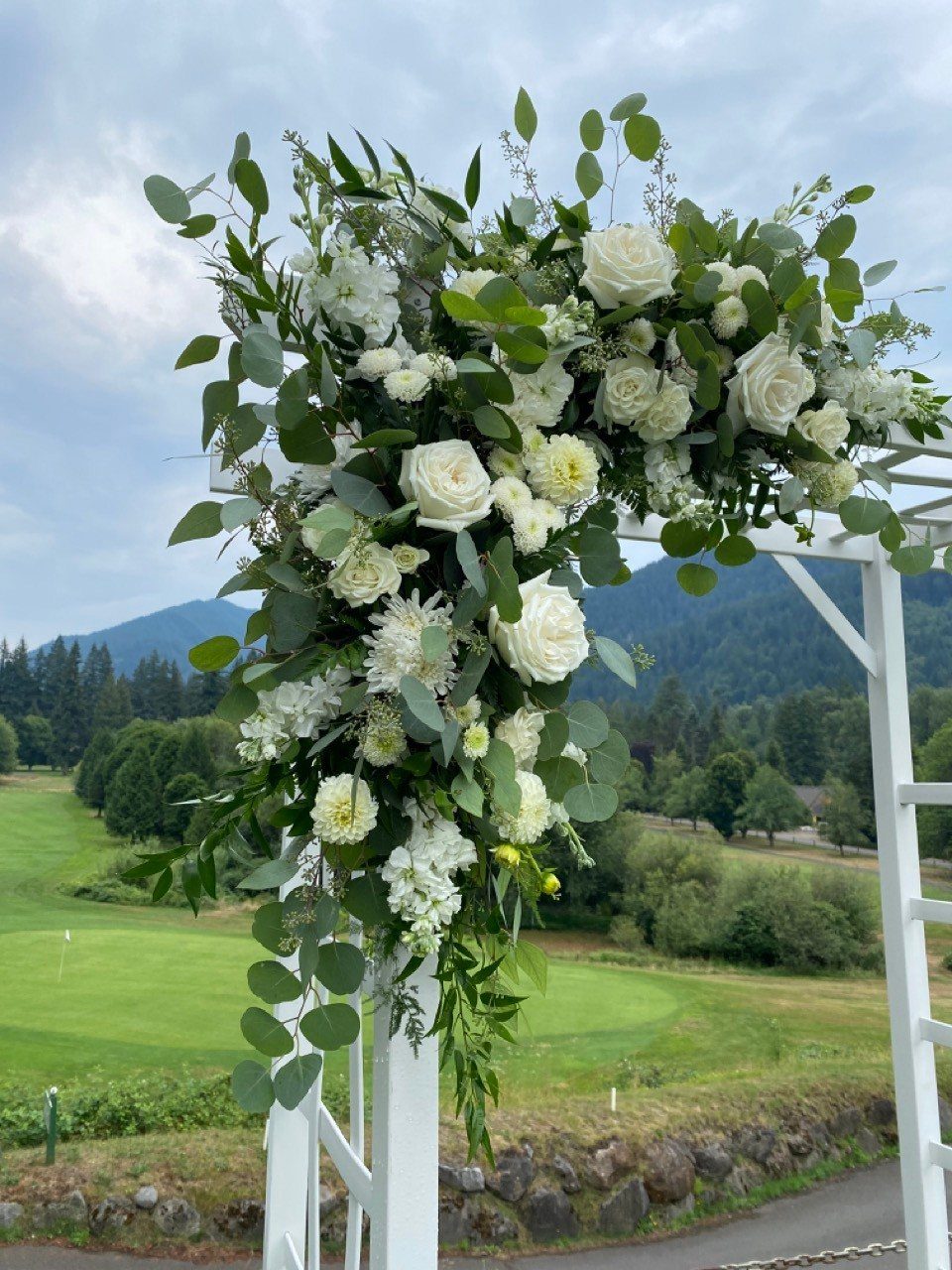
Silver dollar eucalyptus has round, dusty green leaves that sit well against white roses, and on a white arch the pairing reads as soft and natural.
Keep the white to one flower type, as above, and give the second texture to the foliage.
Ask the florist to run the eucalyptus long on one side so the arch looks weighted, not symmetrical. Against green hills, I would choose it over a bright leaf that competes with the view.
8. Phalaenopsis Orchids
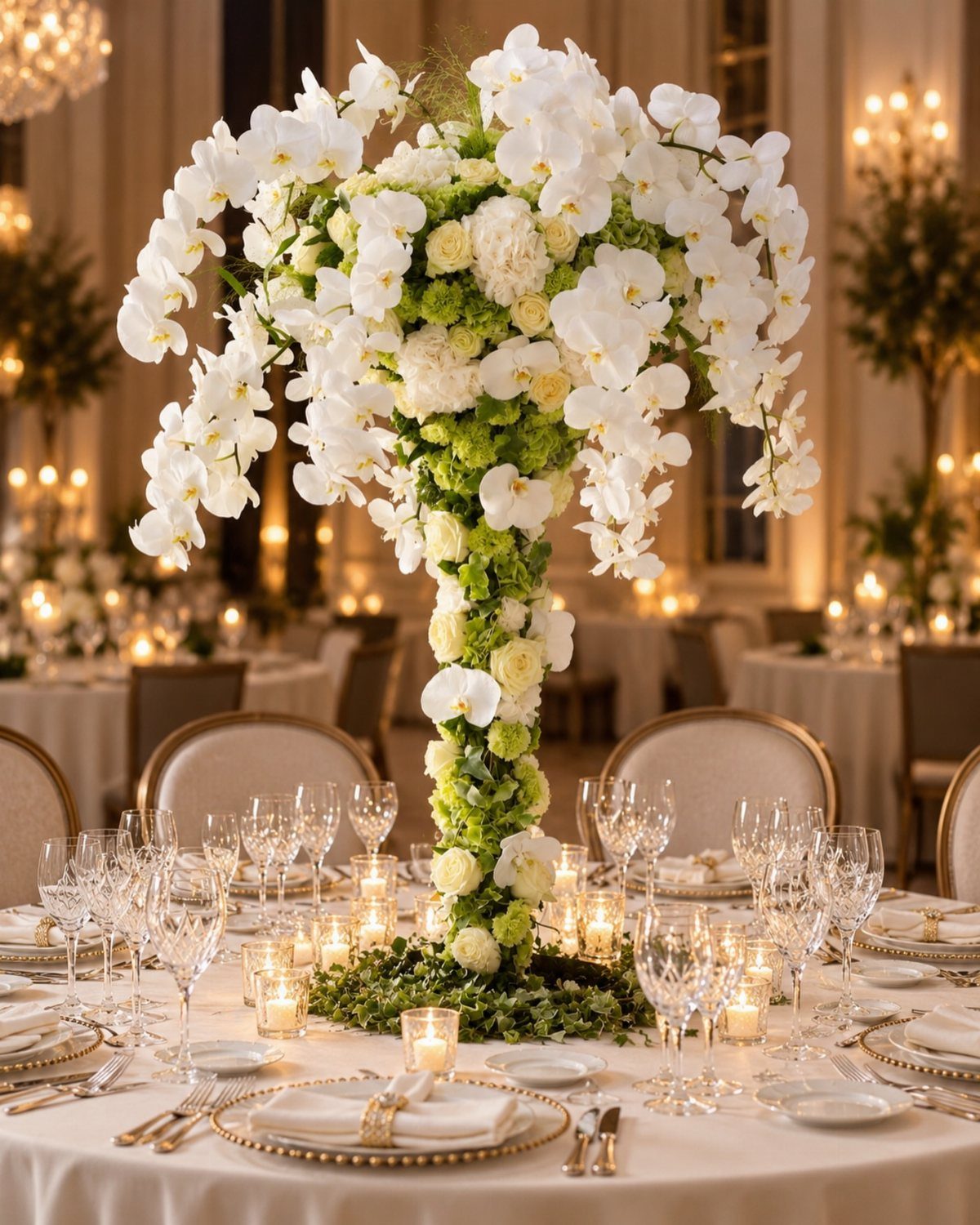
Cascading phalaenopsis orchids turn a tall centerpiece into the most formal thing on the table. Pure white blooms paired with hydrangea, as above, give height and fullness without any color to manage.
This is a splurge, so I would use it on fewer tables: head table, family tables, or a few at the center of the room.
Pair it with simple glassware and plain plates, and the flowers do the dramatic work alone.
9. Dendrobium Orchids
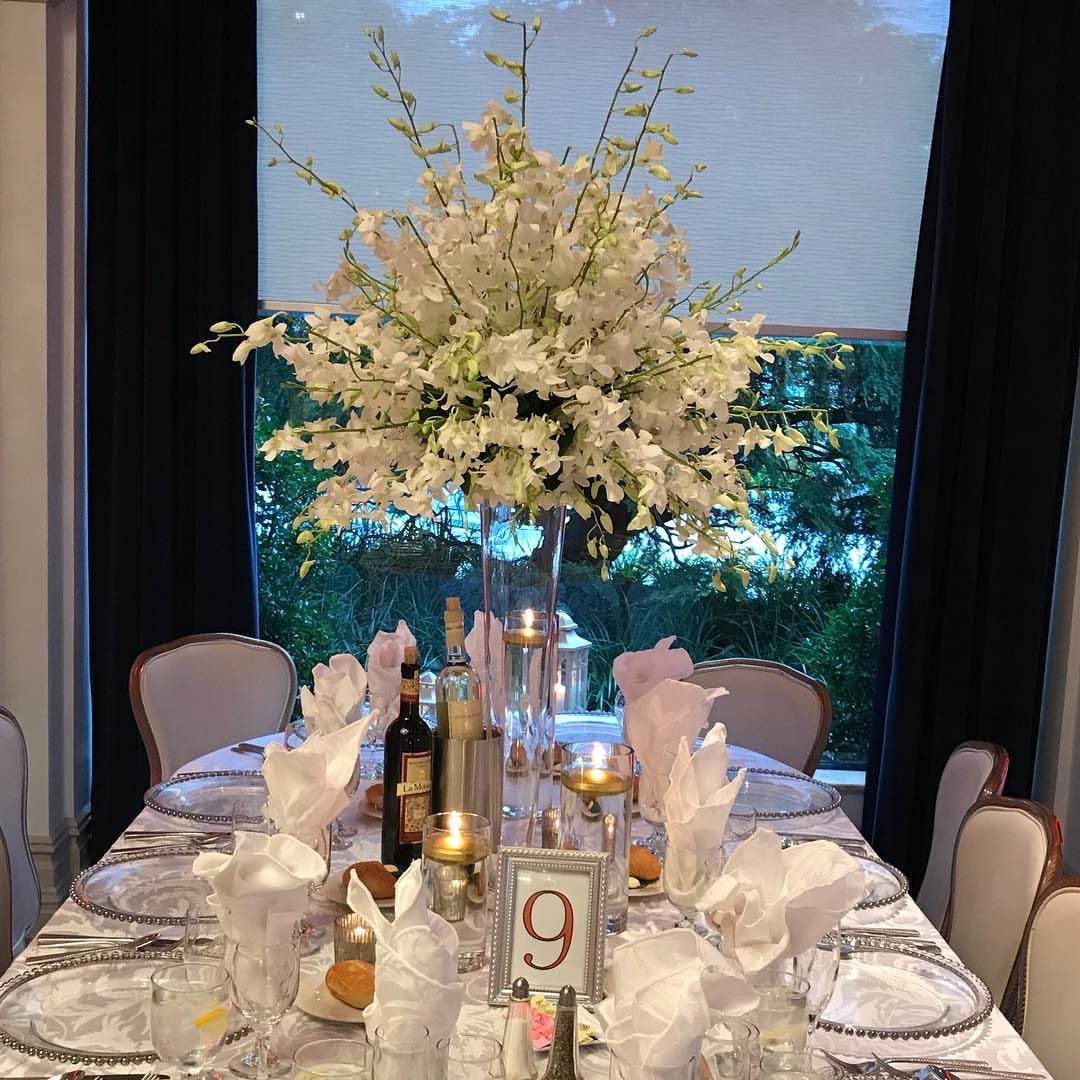
Dendrobium orchids give a tall, narrow line that works in a plain glass vase. Their stems stand upright and carry many small blooms, so one arrangement fills vertical space without crowding the plates.
Candles and wine glasses can sit around it, as above, since the footprint stays small. For a tight budget, I would pick this over a wide, low arrangement when table space is limited.
10. Anemones
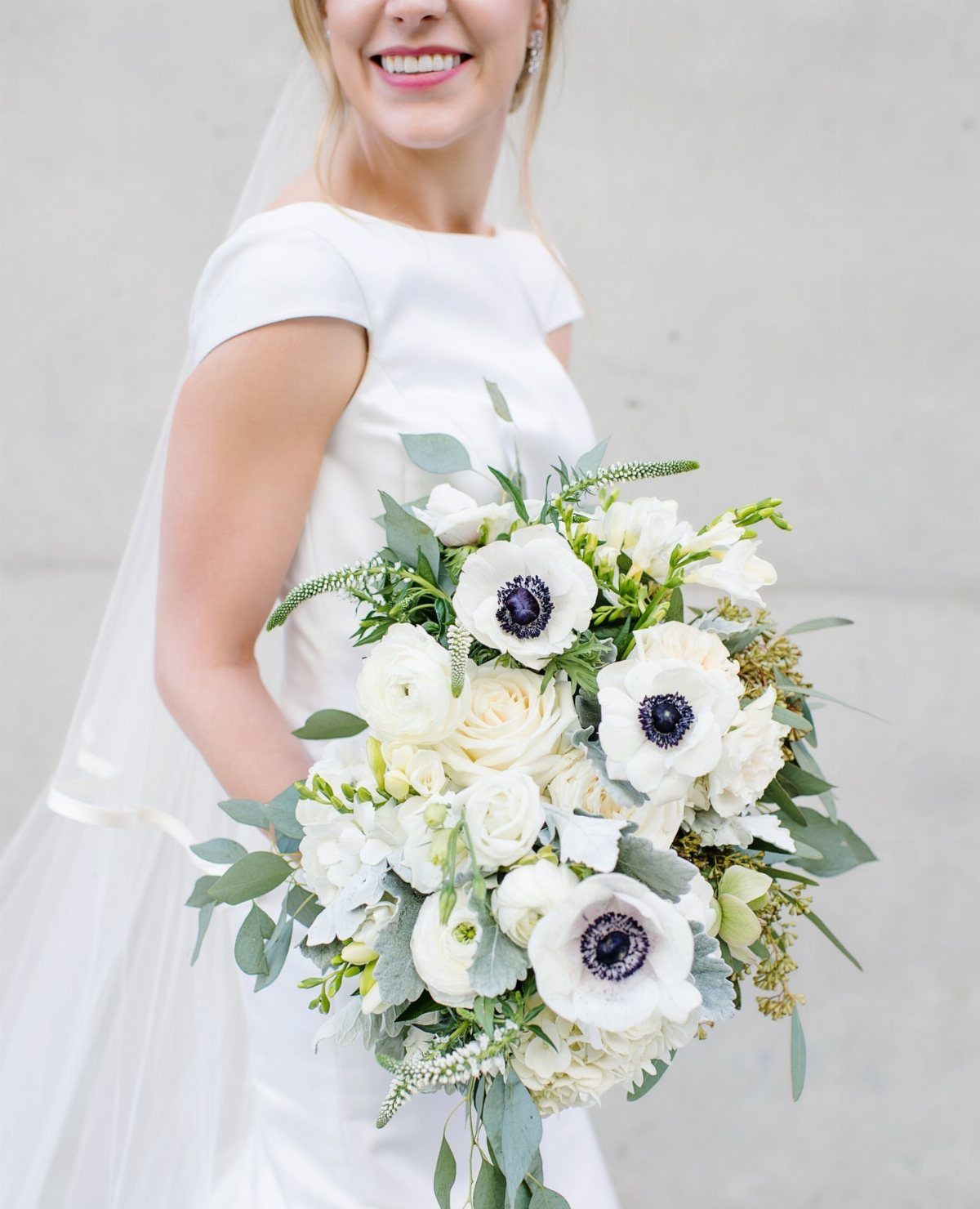
Anemones bring a dark center to an all-white bouquet, and that small black eye gives the bunch contrast that no extra color could.
White roses and eucalyptus leaves make good partners for anemones, since the green keeps the dark centers from looking heavy.
I like this for a couple who finds all-white a little plain. Ask your florist to mix the heads at different heights so the centers scatter across the bouquet.
11. Dahlia
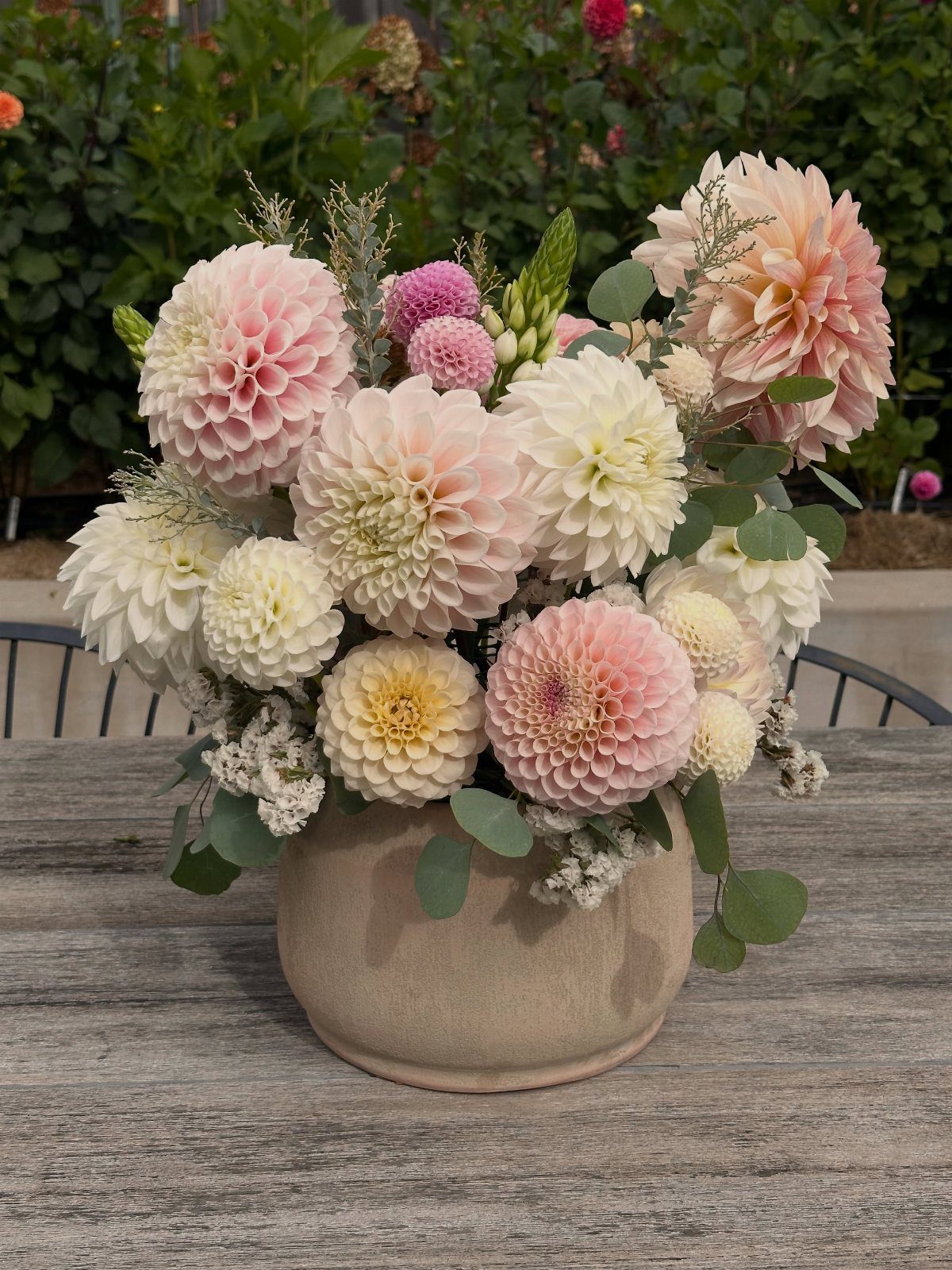
Big, textured dahlia heads fill a vase fast, so a handful of stems does the work of many smaller flowers. White and cream dahlias with a few pink ones, as above, keep the palette soft while adding depth.
A round ceramic vase in a neutral shade suits them well. Use this on a rustic table, a welcome sign or a ceremony display where you want fullness without a large flower count.
12. Calla Lily
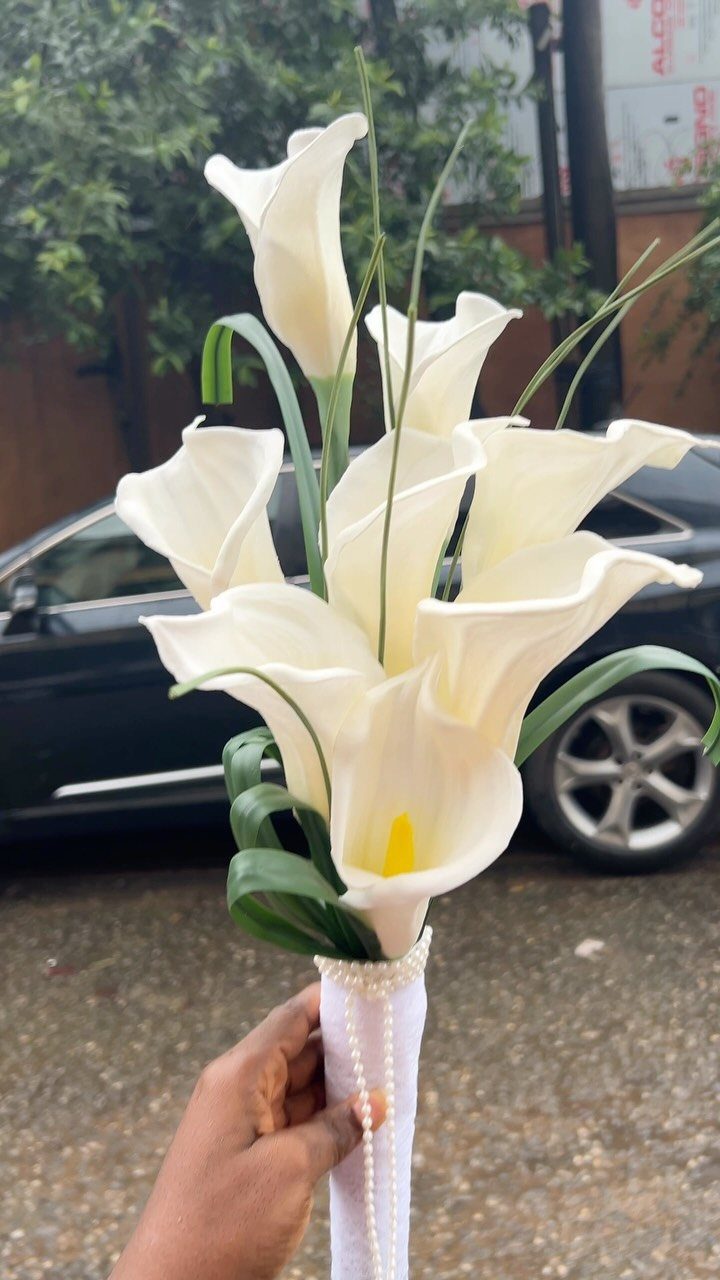
Calla lilies have one smooth, trumpet-shaped bloom per stem, so a bouquet of them looks sleek and modern with almost no styling. Keep the stems bundled tight and the wrap plain.
A white ribbon with a few pearl accents on the handle, as above, adds polish and costs little. I would pick this for a minimalist dress, where a fuller, ruffled bouquet would fight the clean lines.
Choosing the Right White Flowers
Bright white, soft white and ivory-leaning white are three different looks, so decide which one you want before you order. Bright white reads crisp and clean, soft white feels romantic and natural, and ivory-leaning white adds warmth and depth.
Ask your florist which varieties come in truly white that season, and let availability steer the final list. Whites that look identical online can arrive a shade off.
Also match the flowers to the room. Before you settle on a recipe, check 3 things: how high the ceiling is, how big the tables are, and whether the same arrangements have to travel from the ceremony to the reception.
To keep an all-white palette from going flat, vary flower sizes, petal textures and foliage tones. Silver-green foliage and branching stems give white blooms an outline, so they stay readable across a room and in photos.
Mixing White and Ivory Flowers
Cream, beige, blush, peach and green all sit comfortably beside white. A few warmer neutrals in the mix add depth, and the palette still looks calm instead of busy.
If your dress leans warm, ivory beside white is a smart move, because the contrast makes each bloom stand out. A pure white bouquet against an ivory gown can look cold.
Pure white takes more work, so plan on your florist being picky about which stems make the cut.
Lisianthus, stock, tulips, orchids and anemones run cooler. Ask for Tibet roses or Princess Miyuki garden roses by name.
Then pick a shape.
One variety, like garden roses or peonies, gives a rounder, tighter, more luxurious bouquet. A mix of shapes and greens gives a looser bouquet with more texture.
An alabaster color scheme is certainly considered one of the more classic palettes for brides, but it is also embraced in weddings of all styles: modern, rustic, glamorous, and even boho-chic.
Photographing White Flowers
How white flowers look on camera depends on their texture, the light they sit in and what surrounds them.
Harsh sun tends to flatten white petals and bleach out their texture. In open shade or soft indoor light, the same petals show more depth and a gentler edge.
Warm bulbs, candles and amber uplighting push white toward cream.
Flash simplifies white arrangements, so mention it to your photographer. A mix such as white roses, stock, ranunculus and greenery will photograph better than one white flower repeated in every arrangement.
Frequently Asked Questions
What are some popular white wedding flowers?
Roses, peonies, hydrangeas and tulips top most lists, with ranunculus, lisianthus and garden roses close behind.
For stretching a budget down a long table, hydrangea is my pick: one stem gives a full, cloud-like head that fills space a rose would leave bare.
Peonies are the classic spring pick, and tulips give a clean, modern line in small glass vases.
What are the most luxurious flowers?
Phalaenopsis orchids are the splurge pick. A tall arrangement of trailing white blooms with hydrangea tucked in reads as the most formal piece in the room.
Use them on fewer tables, such as the head table, family tables or a few at the center of the room, to keep the cost in check.
What are those small white flowers in bouquets called?
Most often it is baby’s breath, which fills gaps between larger blooms without adding color.
Spray roses are another option: they carry several small blooms per stem and suit boutonnieres and bridesmaid bouquets. Baby’s breath pairs especially well with ranunculus and roses because they share a soft, rounded shape.
What is the difference between white, ivory, and cream flowers?
White reads brighter and cleaner, ivory sits warmer and softer, and cream leans more yellow. They can share a bouquet, though they look different in person and in photos.
A warm-toned dress looks best with ivory blooms mixed in among the whites, because stark white flowers next to an ivory gown can make the fabric look yellowed.