The ideas here run from passed appetizers and food stations to live entertainment and a dessert martini bar, so the cost swings from nearly free to a real line item.
Your photographer’s portrait list decides how much cocktail hour you need: if portraits are done before the ceremony, you can trim the hour, and a long family photo list pushes it longer.
Spend first on whatever guests touch as soon as they walk in, the drinks and the passed bites, and let the rest follow the budget.
1. Passed Appetizers
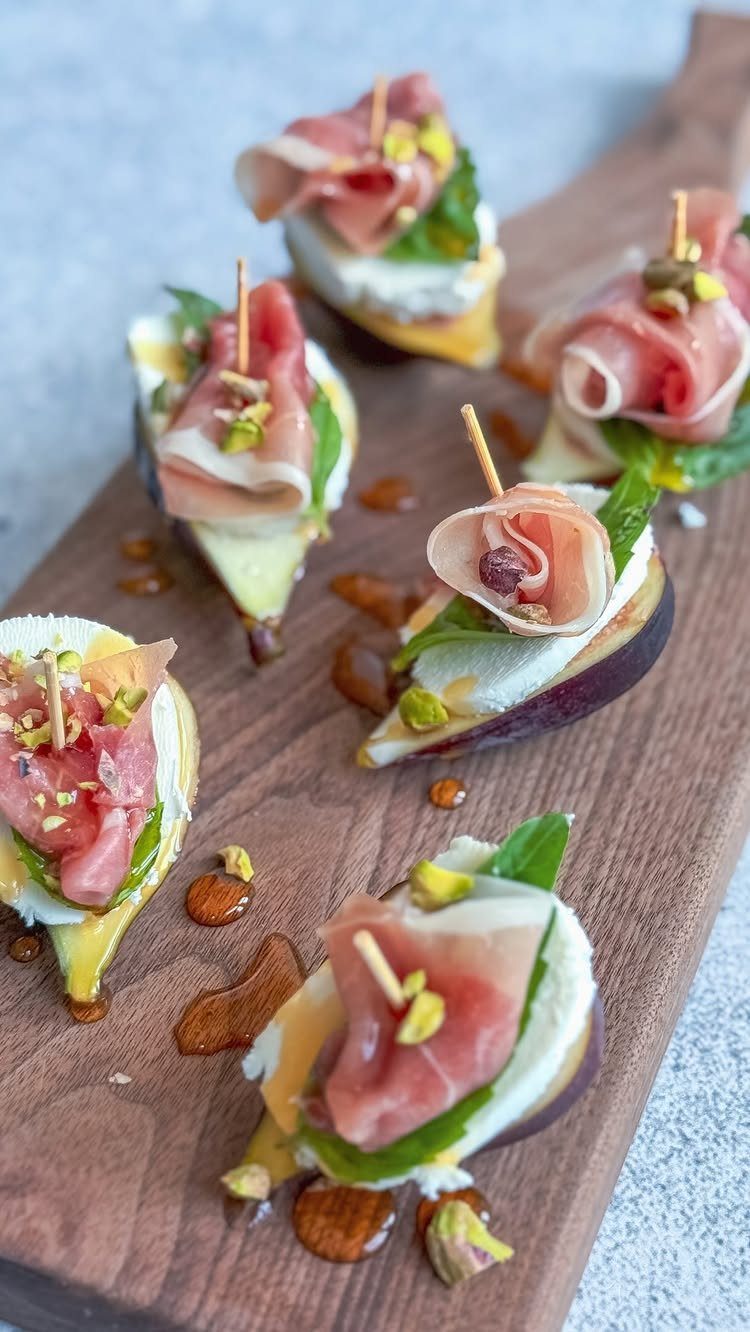
Fig halves wrapped in prosciutto, topped with cheese, honey and pistachios, are a good model for passed food: one bite, no fork, no napkin gymnastics. Guests with a drink in one hand need exactly that.
Pick bites that hold their shape and taste fine at room temperature, since trays travel a while before reaching the back of the crowd. Sweet and salty together, as on this board, keeps people reaching for a second one.
Ask the caterer to pass a few different kinds so no one feels stuck with a single option.
2. High-Top and Lower Tables
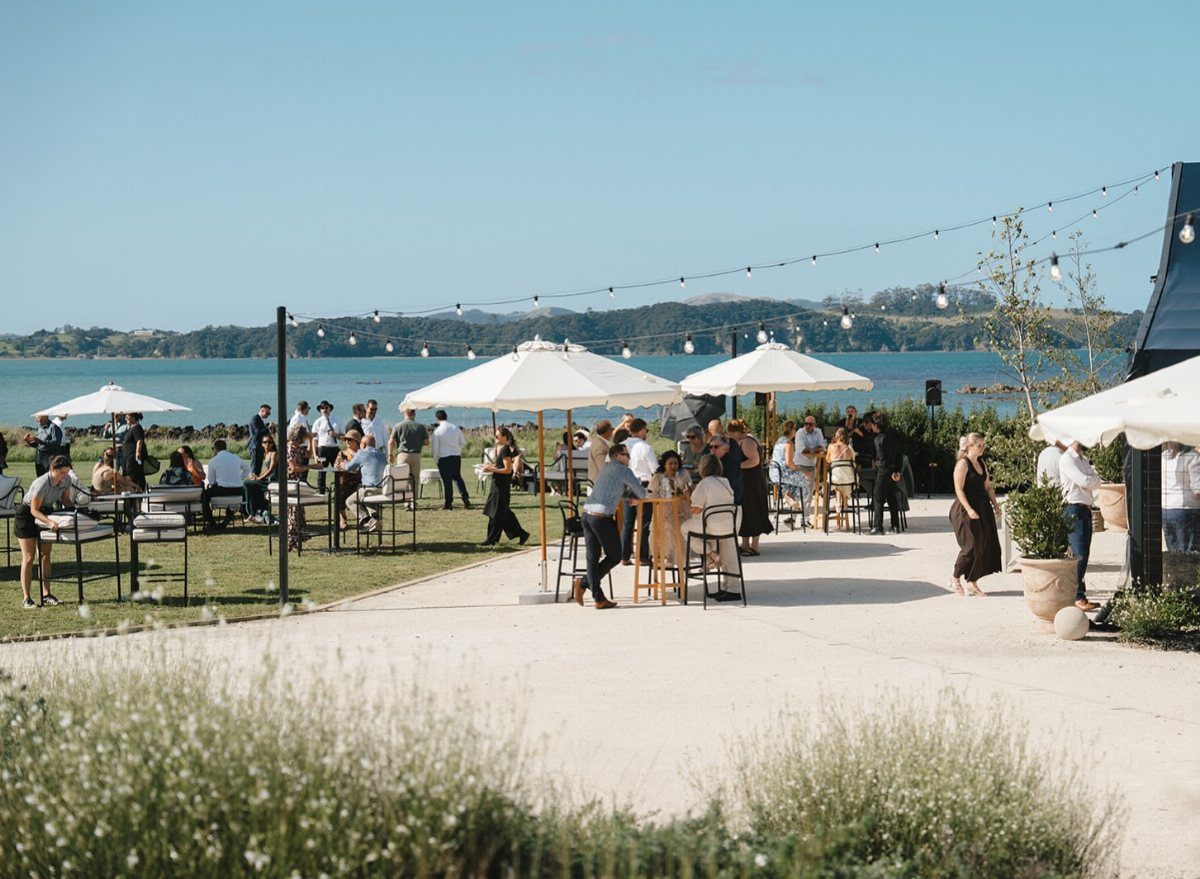
Mixing tall bistro tables with lower seating gives a cocktail hour 2 speeds. Guests who want to stand and mingle gather at the high-tops, and anyone in heels or with a plate to finish can settle into the lower areas.
Spread the high-tops through the space rather than lining them up, so people drift between groups instead of clustering at one spot.
Seating for everyone is not required, but a few low spots are kind to older relatives.
3. Food Stations
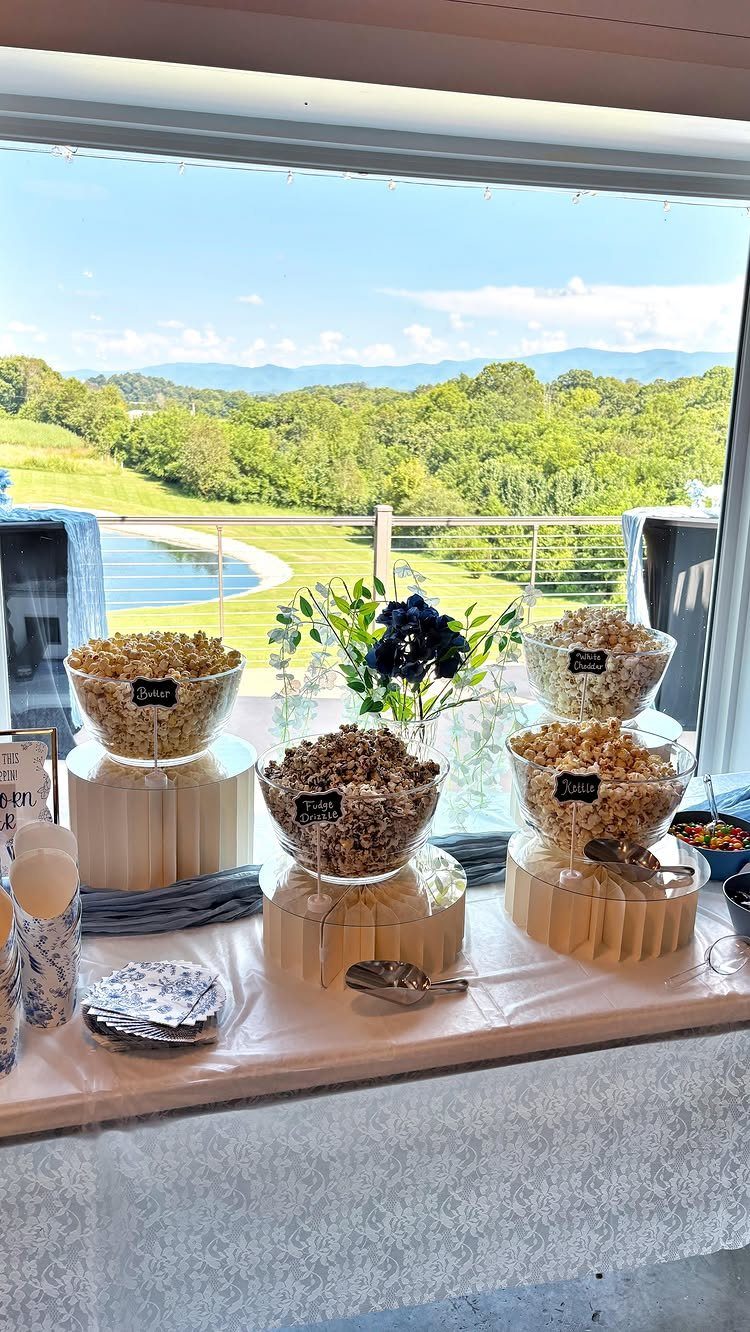
A popcorn bar is a good model for a food station: cheap, fun and easy to personalize with a few seasonings and toppings.
Three flavors, Butter, Kettle and Truffle Parmesan, let guests choose their own bowl instead of accepting one dish.
Label every bowl clearly, as this one does, so nobody has to ask what is inside. Keep the flavors distinct from one another: one plain, one sweet-salty, one fancy.
For a modest budget, a snack station like this costs far less than a carving table, and it still feels like an event.
4. Live Entertainment
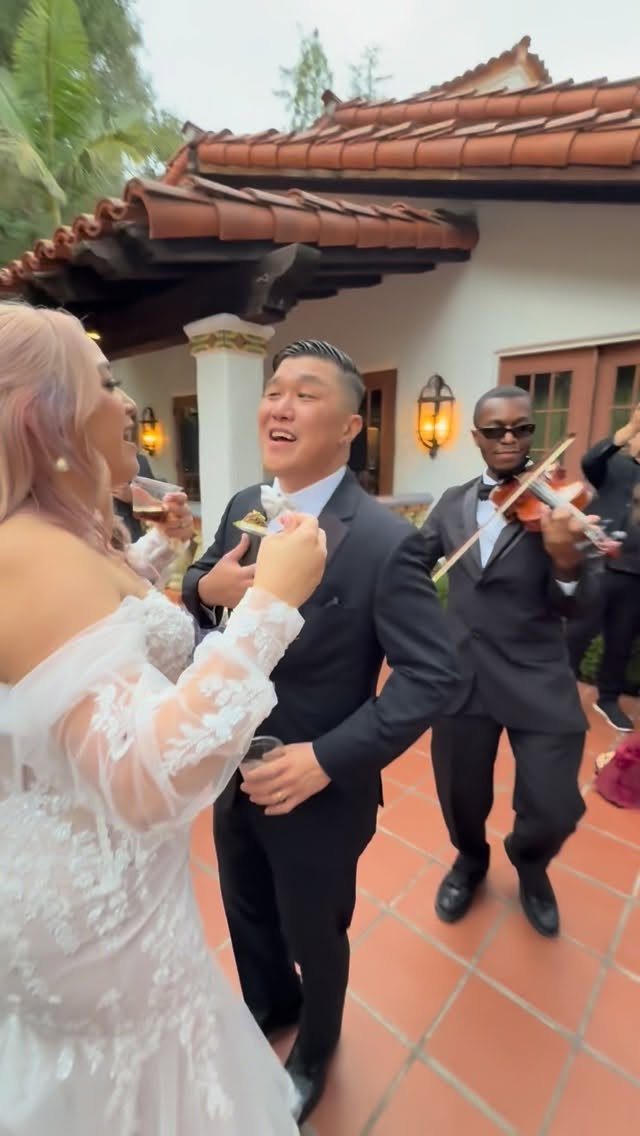
Live music makes a cocktail hour feel like an occasion, and a solo violinist is the simplest version. One player needs little space, no stage and a single patch of tile or lawn.
Place the musician where guests arrive or mingle, not tucked in a corner, so the sound reaches the crowd without drowning conversation. Ask for a mix of classical pieces and instrumental covers of songs you love.
A soloist also costs less than a full band, which matters when the budget is tight.
5. Photo Booth
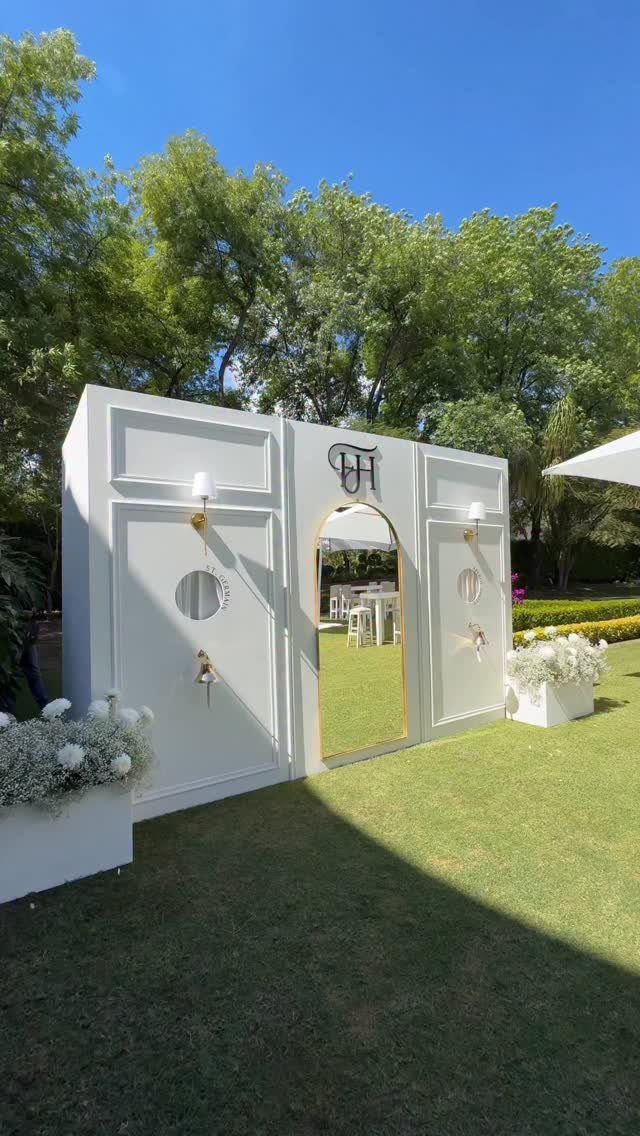
A photo booth backdrop built from white paneled walls, a gold-framed mirror and flower boxes at the base looks like part of the garden rather than a rented gimmick.
Setting it on open lawn, away from the bar line, keeps guests from queuing in the main traffic path.
Put a logo or your initials on the mirror for a personal touch.
If you want prints, hire an attendant; if the budget is tight, a simple backdrop with a friend’s camera still gives guests a place to pose.
6. Background Music
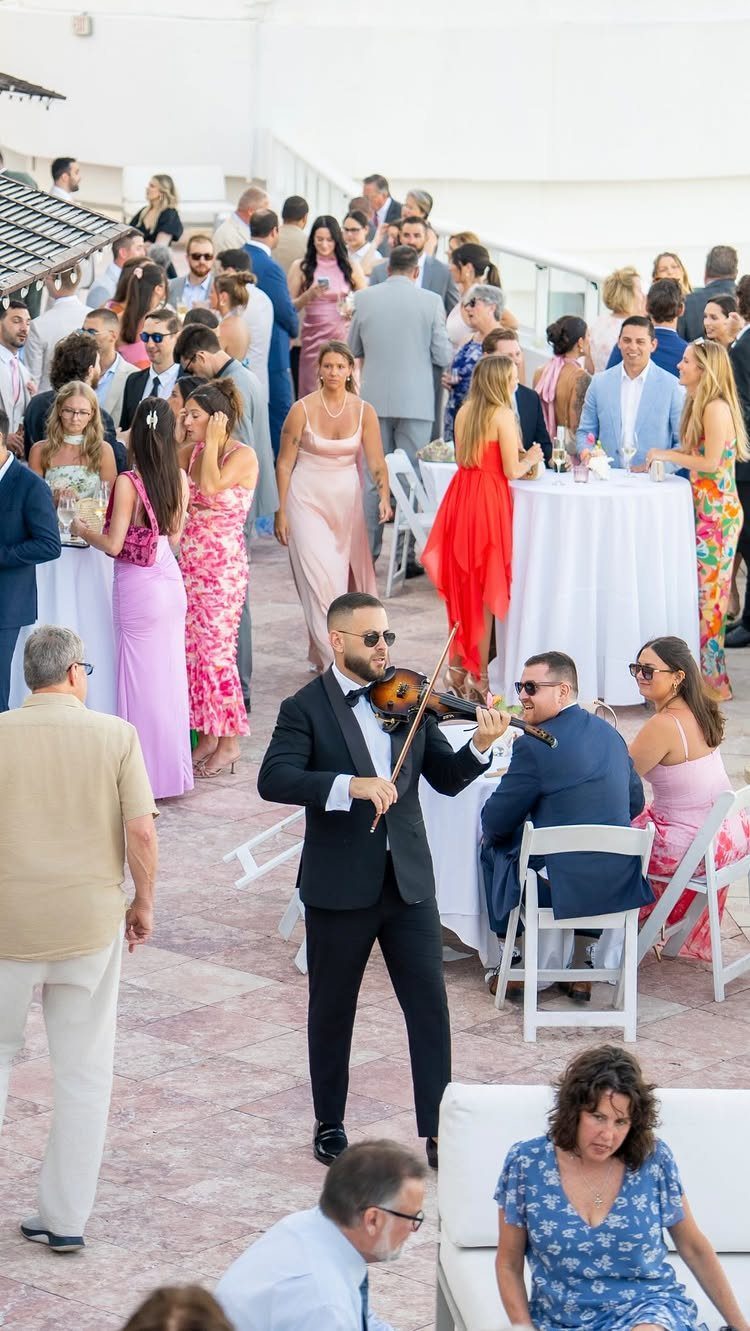
Background music should sit under the conversation, so a solo violinist or a small string group works well for a daytime crowd. Acoustic sound carries across an open space without speakers, and it suits guests dressed formally.
Keep the volume low enough that people at a table can talk without leaning in. Choose a playlist of gentle, familiar tunes rather than anything that demands attention.
If live music is out of reach, a playlist through 2 small speakers does the same job for much less.
7. Signature Drinks
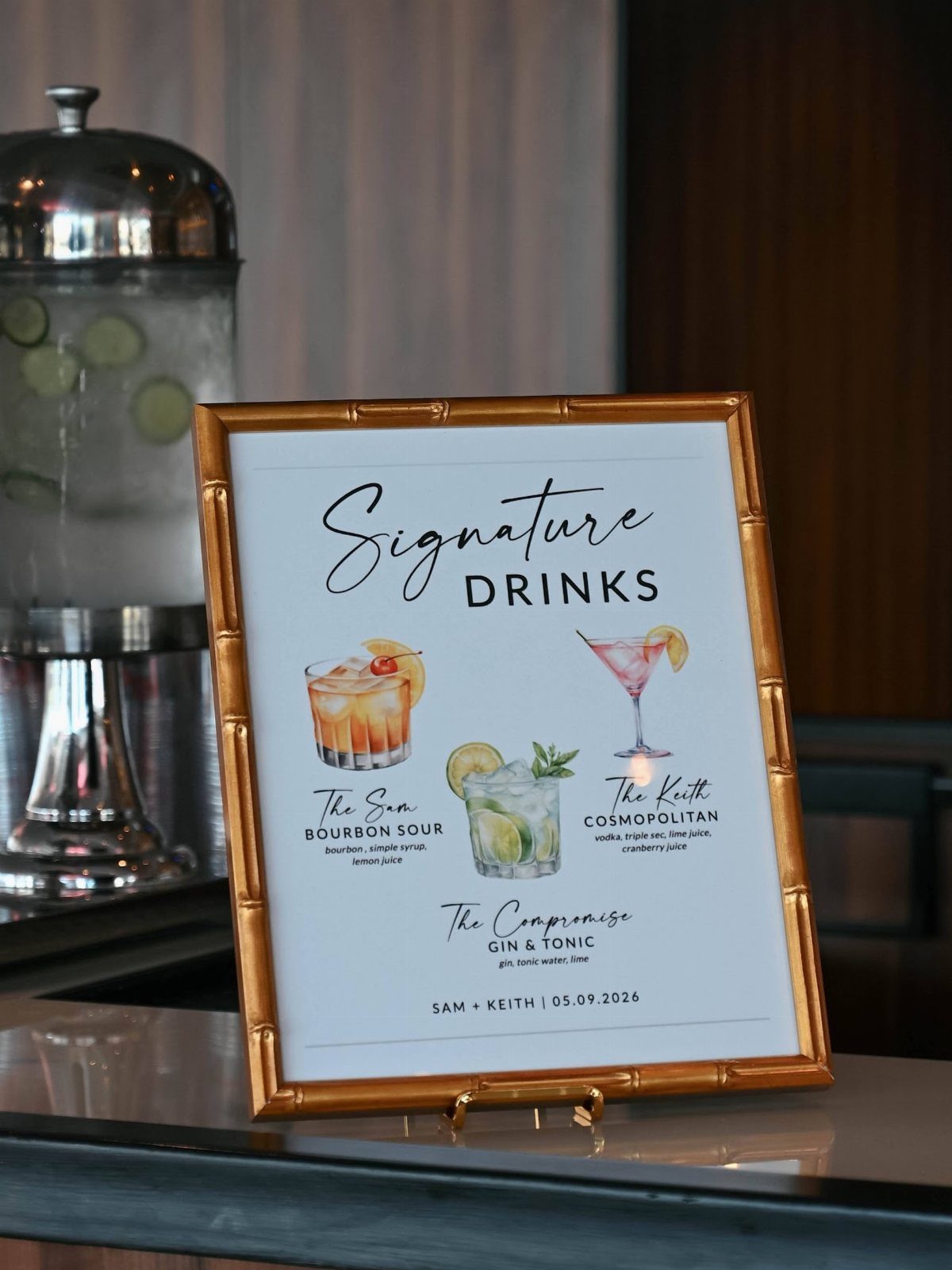
Naming each cocktail after a person turns a drink menu into a piece of the couple’s story.
"The Sam," "The Keith" and "The Compromise" tell guests who made the choice before they take a sip, and the third name is the funniest, since it implies a drink both of you could live with.
Keep the list to three. Each drink should taste different from the others, so one might be a spirit-forward pour and another something light and sweet.
A framed sign beside the dispenser answers the "what’s in it?" question without a bartender repeating it all night. List the main ingredients under each name.
8. Outdoor Spaces
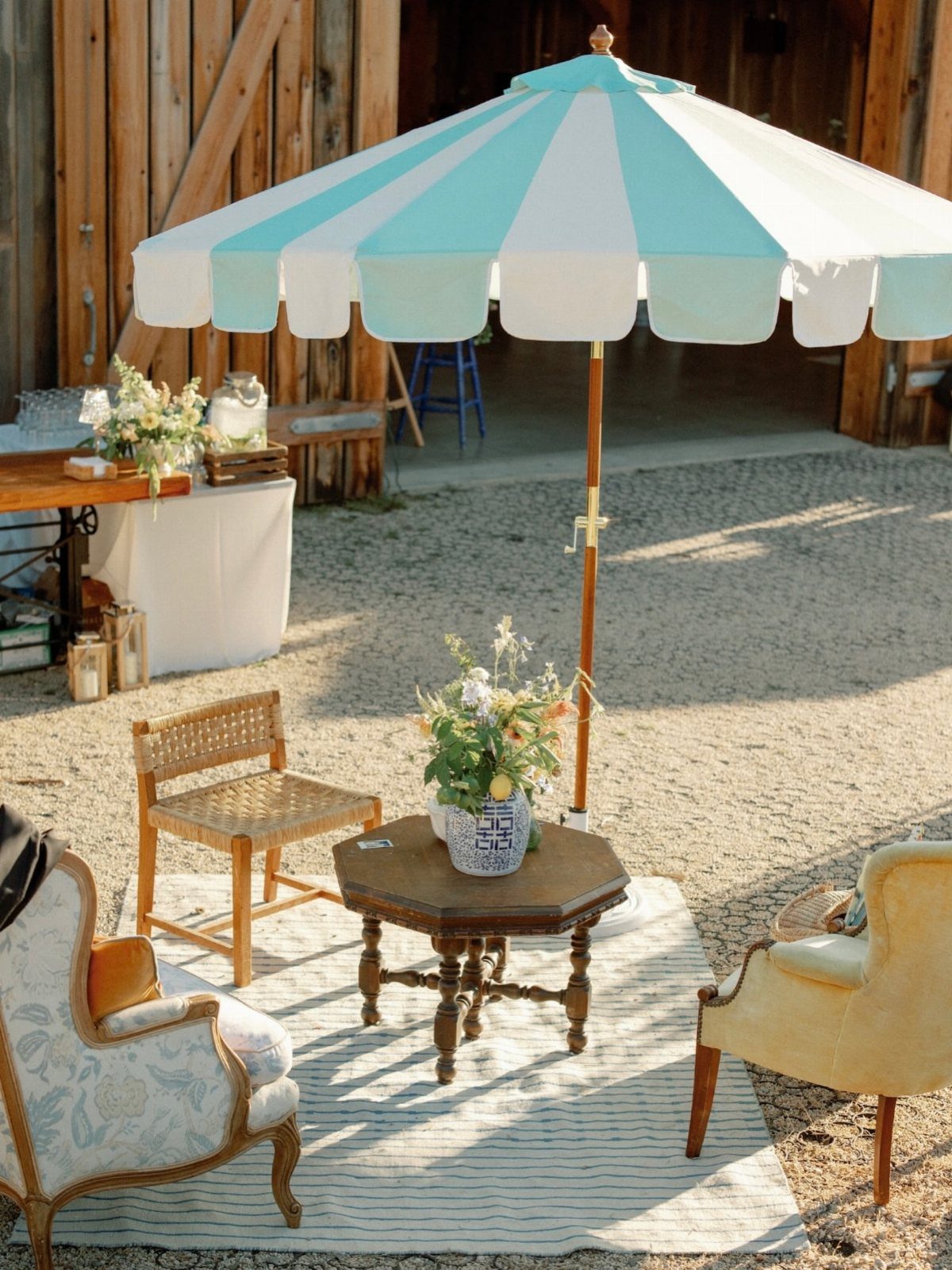
A corner of the lawn set up like a small living room gives guests somewhere to retreat from the crowd.
An umbrella adds shade and a pop of color, so place the seating where it will not block the walk to the bar.
For a modest budget, borrow or rent a few mismatched chairs instead of buying anything. Mismatched pieces look collected rather than ordered, which I prefer.
9. Dessert Martini Bar
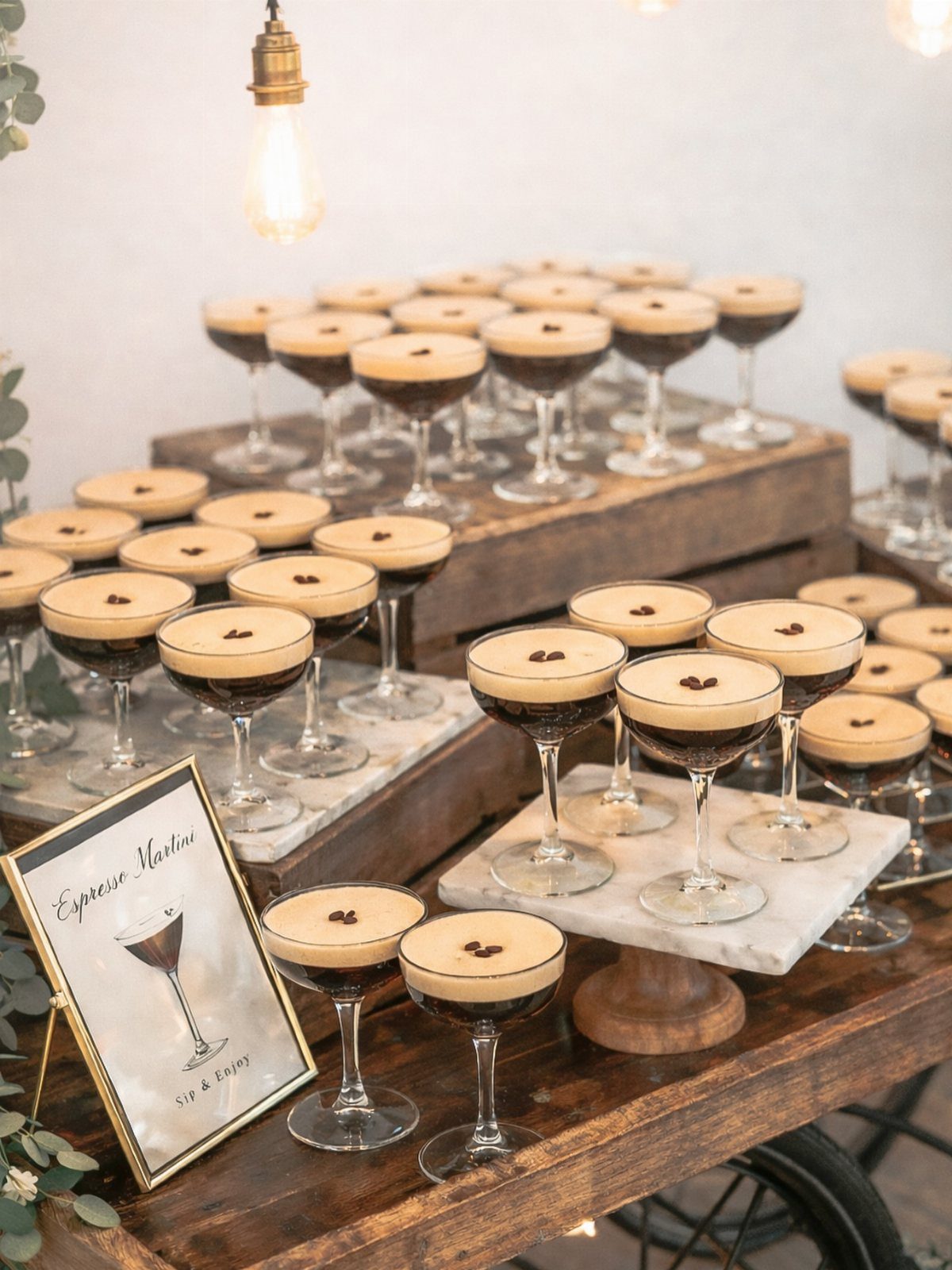
Espresso martinis work as a dessert course you can hold: coffee, a foamy top and 3 beans as garnish.
Pour a batch ahead so guests can take a glass without waiting for a bartender. A small sign, like the "Sip & Enjoy" one here, tells people they are free to help themselves.
Offer a decaf or non-alcoholic option nearby for guests who skip caffeine or liquor.
Importance of Cocktail Hour
An hour between ceremony and dinner covers 3 scheduling gaps at the same time.
The photographer can shoot portraits without watching the clock, guests get a drink and something to eat instead of sitting through dead time, and the venue staff can turn the room from ceremony to dinner.
You can shorten it or skip it in specific cases. You can trim the buffer if you did a first look and wrapped the portraits before the ceremony, or if both events happen in one space that needs no changeover.
Even then, I would keep a window of 30–45 minutes, because hungry guests with nowhere to gather are what couples most often regret.
Guests are already wandering around at this point, so it’s a good moment to set out the guest book, place cards or seating chart.
A guest book that fits your tastes, like a tray for your kitchen or custom cornhole boards, gives people something to do.
Timing for Cocktail Hour
I’d start with 60 minutes, which is the usual length. That’s enough for guests to arrive at the party, grab a drink and a bite, and talk to each other, and it leaves your photographer room to work without hurrying.
Go to 75 or 90 minutes when the wedding party is big, the family photo list is long, or the venue has plenty of grounds for guests to roam.
Stop at 90. Any longer and people run out of steam and begin wondering when dinner will be served.
Build the timeline backward from dinner, and confirm with your photographer how long portraits and family formals need before you lock the number in.
Communicating with Guests
Tell guests what to expect before the day. Your wedding website is the easiest place: say that a cocktail hour follows the ceremony, and that drinks and food will be there while you take photos.
This matters most for anyone who might arrive hungry or wonder where to go after the ceremony. A line or two about timing lets them plan around it.
Reserve a table with seats for a beloved elderly guest and let that guest or their family know it is theirs. It costs nothing and guarantees their comfort.
Keep table decor minimal so there is room for plates and glasses.
Frequently Asked Questions
How do you do a cocktail wedding reception?
Build it around standing and mingling: tall bistro tables spread through the space, a few lower seats for older relatives, and drinks plus food that need no fork.
Plan on 3 or 4 kinds of bite-size appetizers passed on trays, put out one self-serve snack table, and keep table decor low and small so guests have somewhere to set a plate and a glass.
Live acoustic music, such as a solo violinist, sets the tone without speakers.
What is cocktail hour at a wedding?
It is the stretch between the ceremony and dinner when guests get drinks and small bites while they mingle.
Do you actually need a cocktail hour?
For most weddings, yes. It covers 3 gaps at once: portrait time, food and drink for guests who would otherwise sit idle, and room changeover for the venue.
If you did a first look or both events share one space, you can shorten it, but I would still keep 30–45 minutes so guests have somewhere to gather.
What are the top signature cocktails for weddings?
The best signature drinks are personal ones: name each after a person, a pet, a vacation or an inside joke.
Keep the list to 3 and make each taste different, say one spirit-forward and one light and sweet. A framed sign listing the main ingredients saves a bartender from explaining them all night.