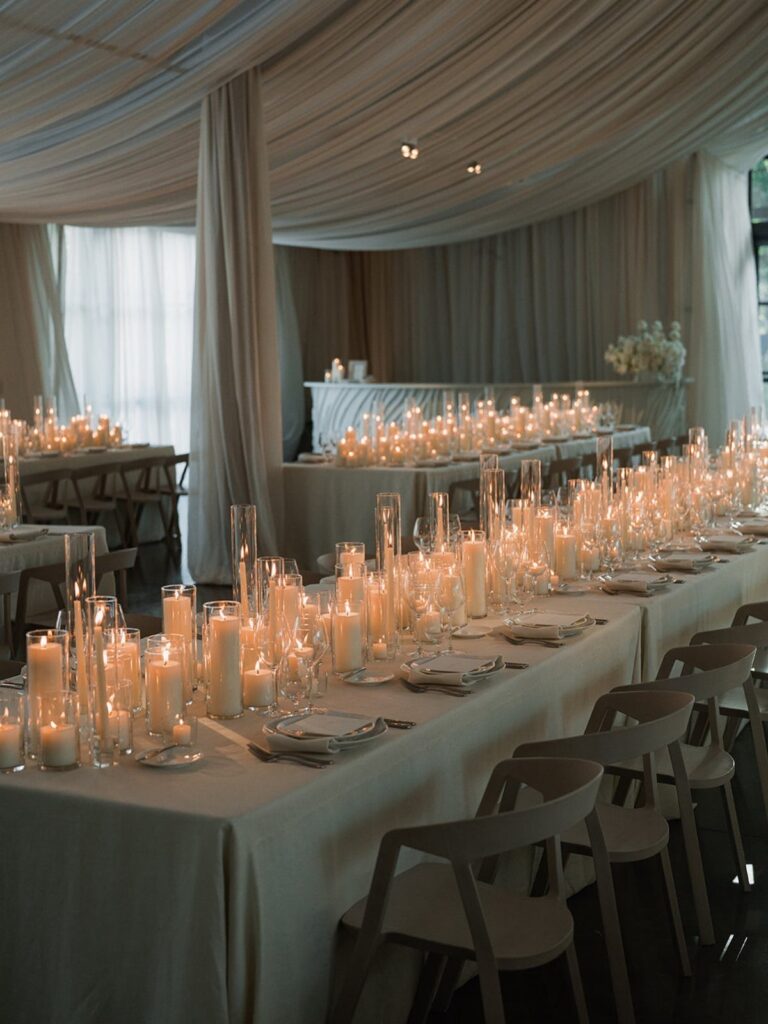
The ideas here run from a few candles in place of flowers and a single scattering of petals to a tent hung with ceiling draping and chandeliers, so the cost and effort differ enormously.
What picks yours is the space you already have: a venue with beautiful grounds needs only small additions, while a plain tent or an empty room needs the tulle, the fairy lights or the tent draping to do the work.
Spend where every guest looks first, usually the spot where you say your vows, whether that means a floral backdrop, a simple altar arrangement or a tulle canopy.
1. Use Candles Instead of Flowers
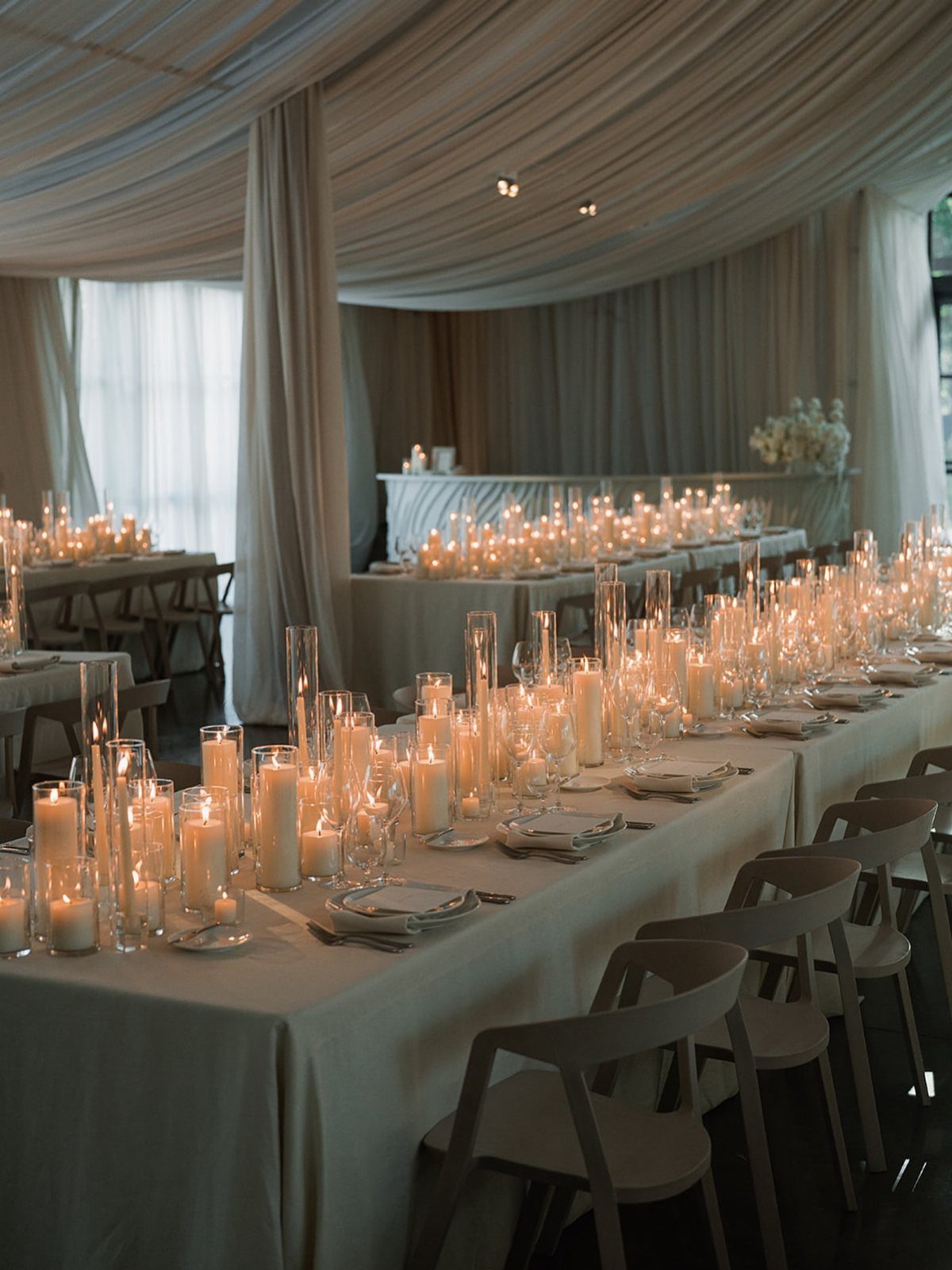
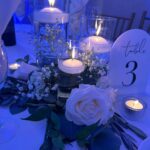
Candles in varying heights do the work that a flower budget usually does: they give the table a focal point and a warm, romantic glow. Mixing pillars with tapers keeps the line of the table from going flat.
Set the pillars in glass cylinders so the flame stays shielded, and run them down the center of a long table in clusters rather than one tidy row.
Groups of uneven heights look fuller for less money. Add a few sprigs of greenery at the base only if you want something soft.
2. Potted Plants
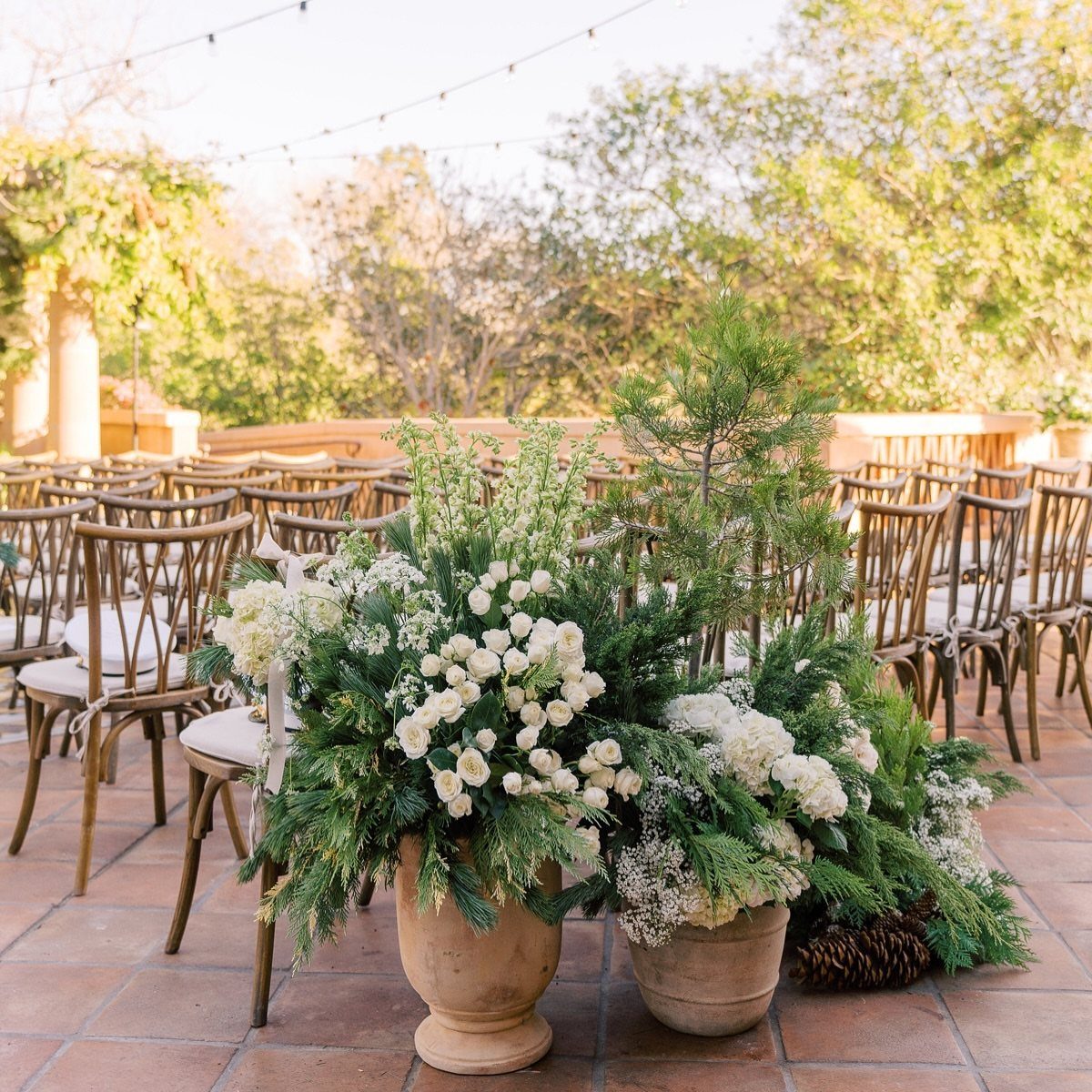
2 big pots flanking the seating area can frame an outdoor ceremony without a single cut stem. Greenery gives the space structure, and white blooms keep it formal.
I like pairing them at the head of the rows, where they read as a gateway.
Pots are also easy to reuse: after the ceremony, move them to the reception entrance or the cake table. Check that the pots are heavy enough to stay put in wind, and you can skip hauling in an arch.
3. Flower Petals
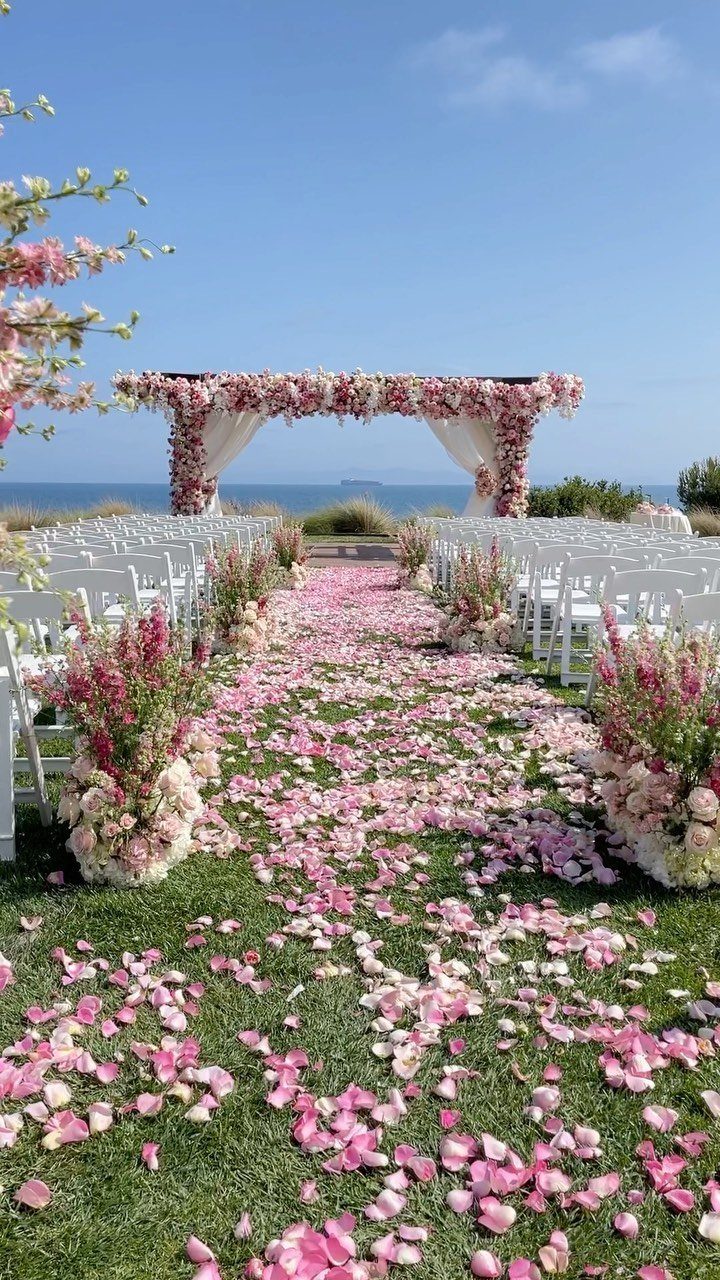
Scattered petals turn a plain grass aisle into a path, and pink against green is easy to see from the back row.
Spread them in a loose, even layer instead of a thick carpet, so they read as intentional and not as a pile.
Petals run well under the price of full aisle arrangements, and a floral arch at the end gives them somewhere to lead. Ask a friend to scatter them shortly before guests sit, since wind and foot traffic thin them quickly.
4. Hanging Centerpiece
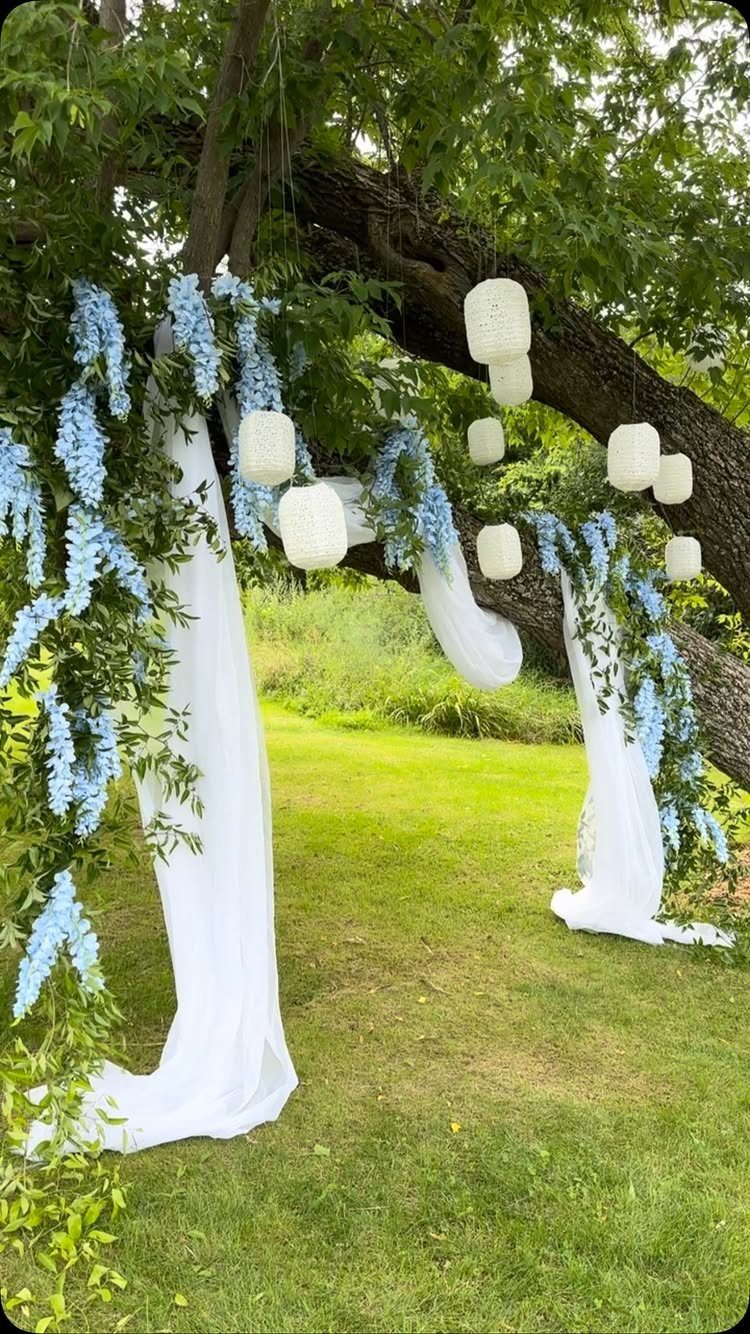
Look up first, ahead of any tabletop purchase.
White lanterns are light and cheap, and a single accent color in the garlands, like blue, ties the look together.
Hang items at different lengths for depth. Test every attachment point before the day, because weight and wind are the limits here.
5. Fairy Lights
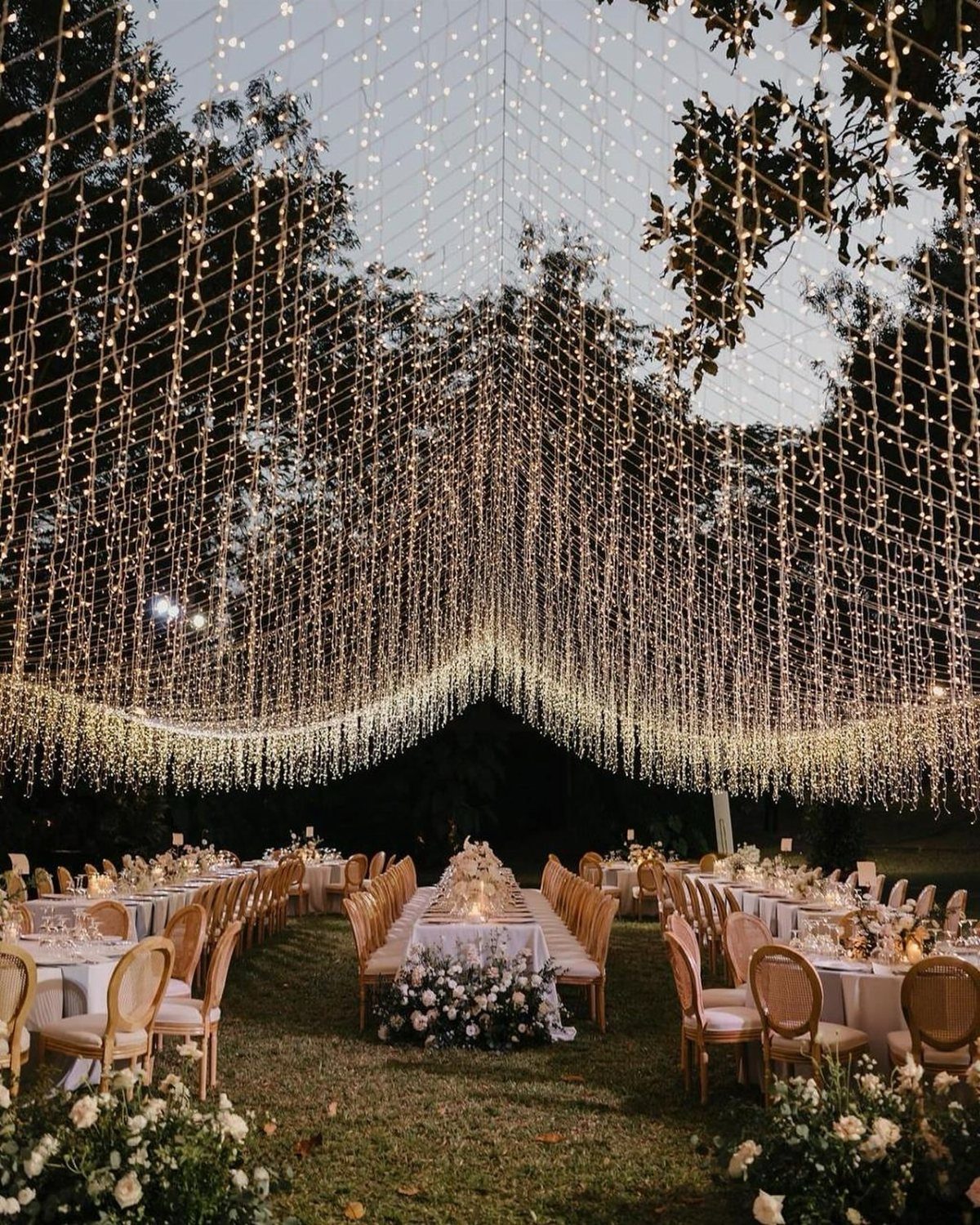
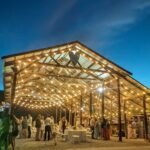
A dense canopy of warm white string lights is what makes a dusk reception feel finished, and it needs very little else. The more strands you hang, the more it reads as a ceiling instead of scattered dots.
Run them overhead above the tables and chairs, and keep them at one color so the glow stays consistent.
Plan for a power source near the space. I would rather spend on extra strands than on more flowers.
6. Simple Altar Arrangement
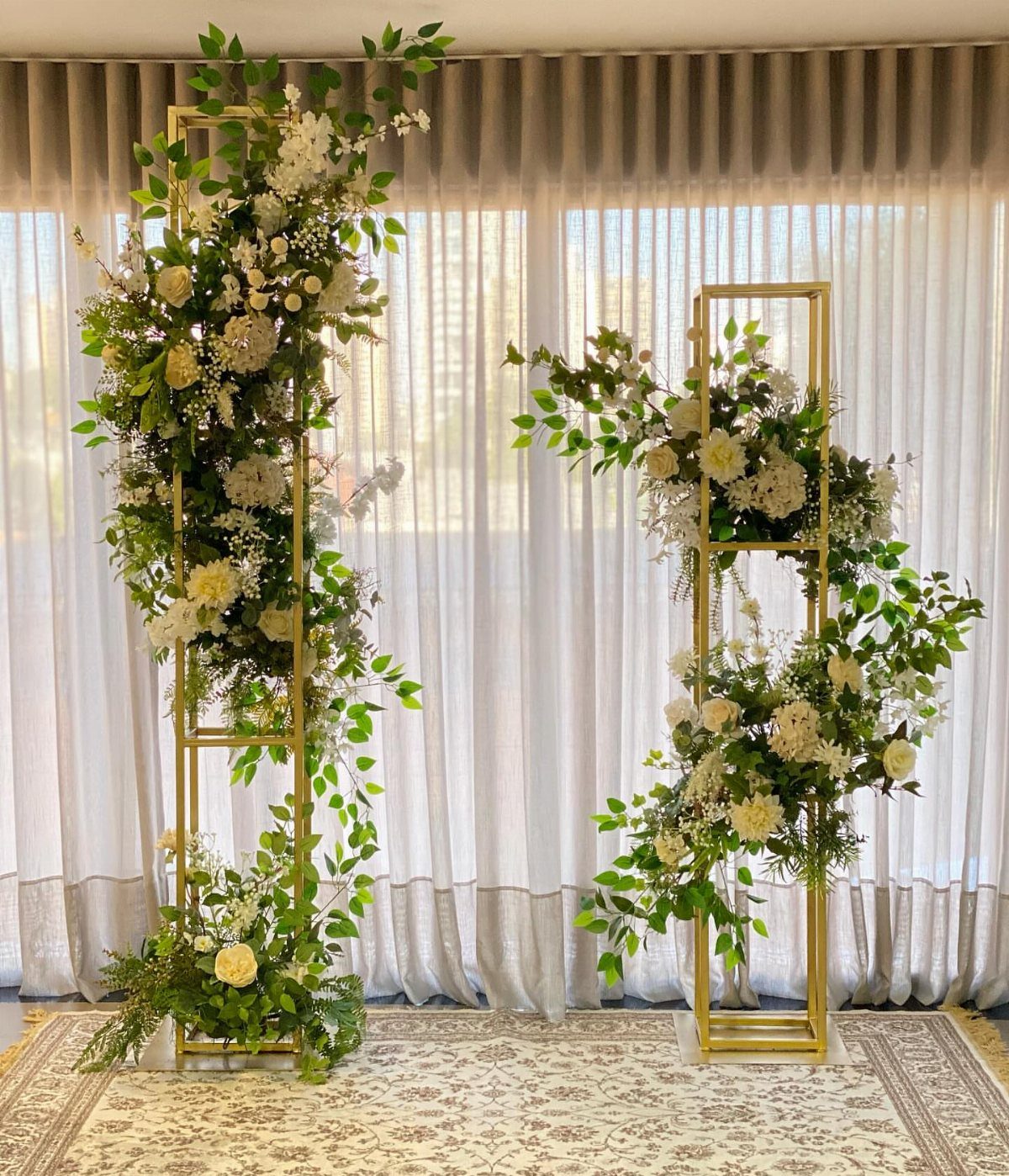
Freestanding frames stand in for an arch and take fewer blooms to fill.
Cluster the flowers on one corner or edge of each frame so the gold stays visible. If the budget is tight, this is the version I would pick: minimal, balanced and quick to assemble.
7. Tulle Canopy Effect
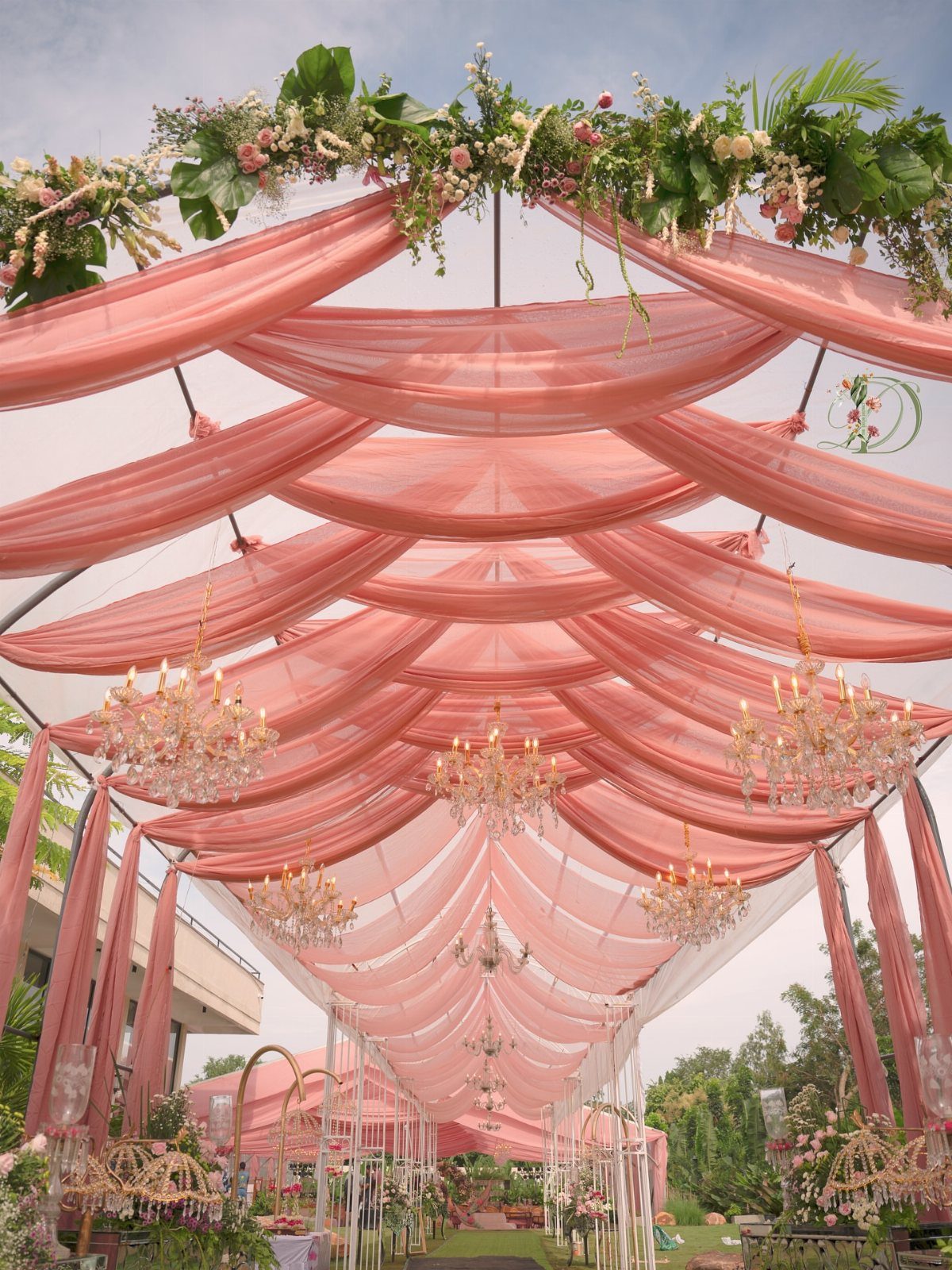
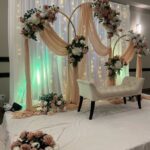
Tulle is one of the least expensive ways I know to put a soft ceiling over a ceremony, and pink or peach fabric gathered across a frame gives the space a blush tone that flowers alone rarely do.
Drape it loosely with plenty of slack, because tight tulle looks like a bedsheet. If money is tight, I would put the budget into yards of fabric and use small florals.
8. Floral Backdrops
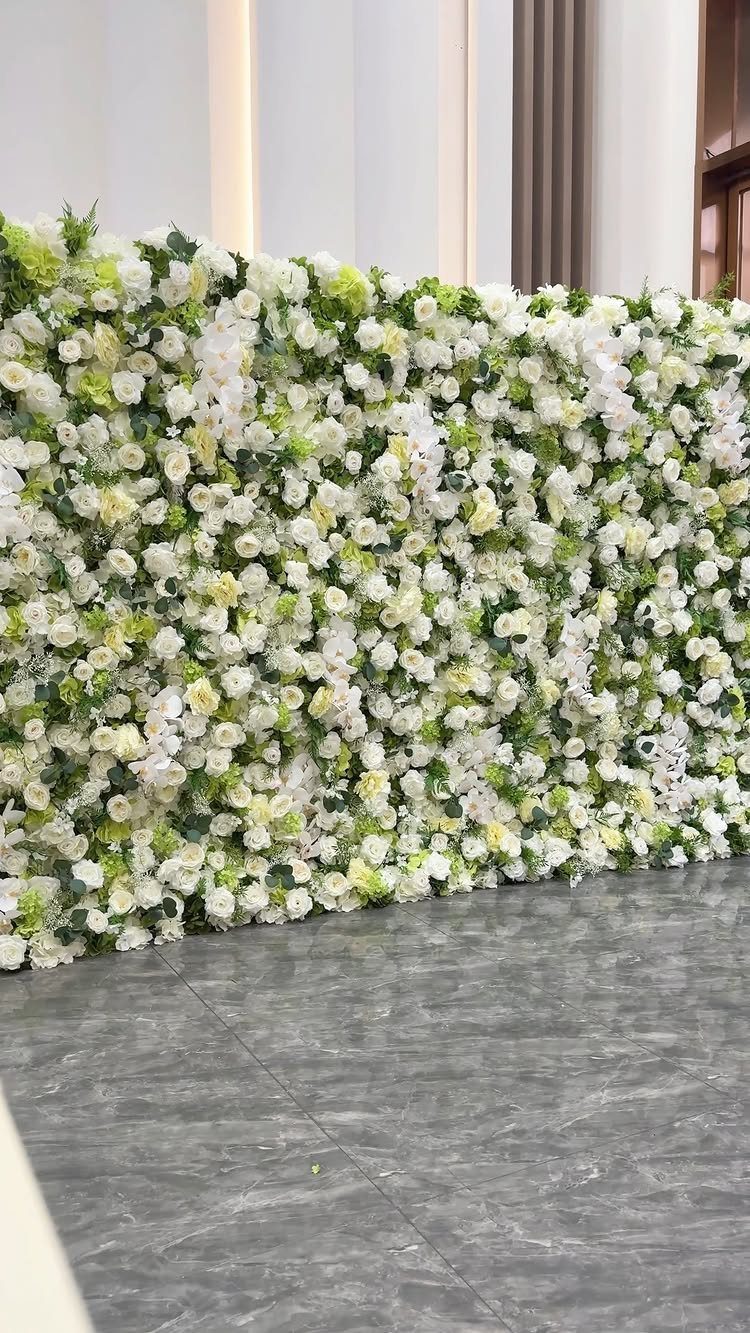
A wall of white and cream blooms with green leaves behind the couple turns a plain room into a ceremony. Of all the options here, this one is the loudest, so I would save it for a single spot.
Artificial flowers can be assembled ahead of time and cost less than a fresh wall of the same size.
Mix cream with white and pack the foliage densely so no backing shows through. Put it where the photos will be taken, since that is where it earns its money.
9. Baby’s Breath Pew Markers
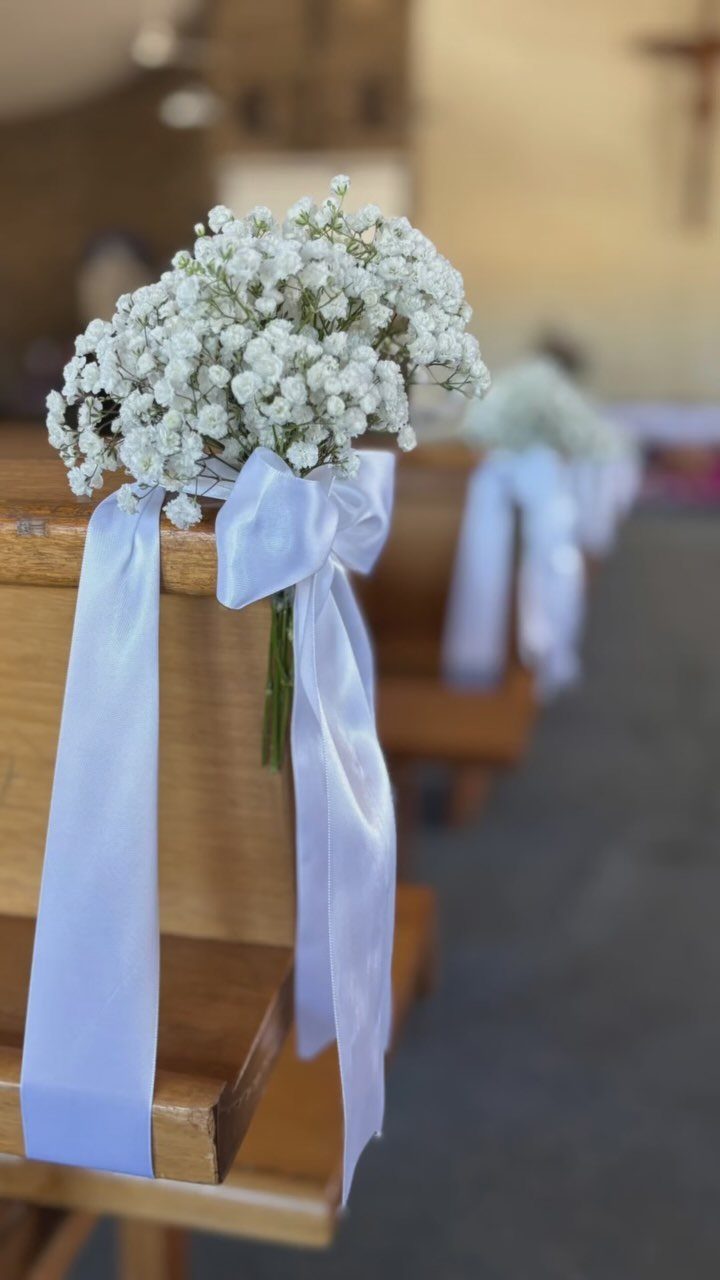
Small bunches of baby’s breath tied to pew ends with wide white satin ribbon mark the aisle for very little money. Baby’s breath is a filler flower, so one bunch looks full without many stems.
Choose ribbon wide enough to read from a few rows away, and tie every bow the same way so the repeat looks deliberate.
Make the bunches yourself the day before, and store the stems in water until you tie them on. Wooden pews give the white a good contrast.
10. Tent Ceiling Draping and Chandeliers
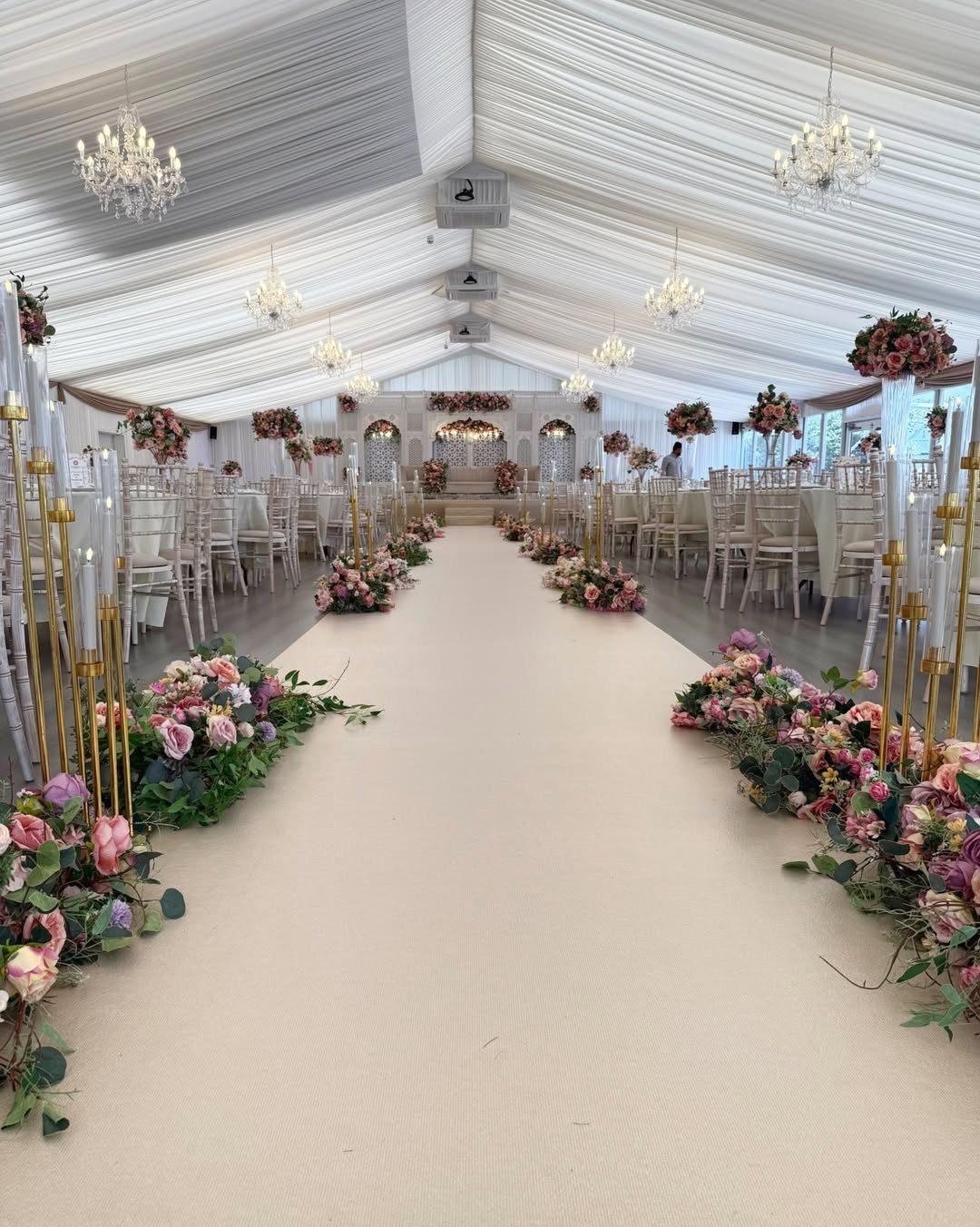
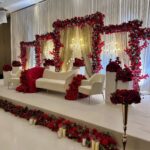
White ceiling draping with crystal chandeliers makes a tent feel like a finished room. Pink rose arrangements down the aisle then add color without cluttering the space.
This is the high-effort version on the list, and I would not attempt every piece on a tight budget. Pick the one that matters most: draping hides a plain tent roof, while chandeliers give the glow.
A white aisle runner keeps the eye moving toward the floral altar. Ask your tent vendor what they can hang before you buy anything.
Budget-friendly Decoration Tips
Simple, well-placed decor beats a lot of scattered decor. Choose one or two spots where every guest will look, usually the place where you stand to say your vows and the entrance, and spend there first.
Whatever the venue already has counts as decor you don’t pay for. Architecture, trees, windows, stone and old wood all give the eye something to land on, so let them do the work and keep your additions small.
Creativity costs less than quantity. A few well-chosen pieces repeated with care look planned, while many different items look busy and cost more.
Choosing the Right Venue
A venue can carry a lot of your decor budget if you choose it with that in mind. Manicured gardens, historical churches, rustic barns, museums and well-maintained parks all arrive looking finished.
Planner Tiffany Rivera of Simply Breathe Events says a scenic setting steers guests’ eyes away from what you don’t have and toward what is already there.
I find that a useful test on a tour: if you stand where the ceremony will happen and feel nothing is missing, you can put the money elsewhere.
Ask to see the space at the time of day you plan to marry, because light changes how a place looks.
Lighting for Ambiance
Indoor rooms give you the most control over mood, and gobo projectors are the tool I would look at first.
They shine text or an image onto a dark surface, and you can rent a few or use the ones your venue already has.
Dim the room lights, then aim a projector to create a focal point.
A projected monogram of your initials can sit on the dance floor or on the wall behind the reception table, and a gobo light that throws it usually rents for far less than custom signage.
A pattern lifted from your invitation suite, such as a floral border or a crest, can be projected onto the aisle floor and stand in for a fabric runner.
Flower or tree patterns on a wall or low ceiling can stand in for real blooms, and a projected backdrop behind the couple turns their shadows into part of the scene.
Frequently Asked Questions
How do I decorate for a bride to be?
Pick one or two spots where every guest will look, such as the place where you stand to say your vows and the entrance, and spend there first.
Keep additions small and let the venue’s own architecture, trees, windows or old wood do the rest.
Repeating a few good pieces reads as a plan. A scatter of different items reads as clutter, and the total climbs faster.
How can I decorate a ceremony without fresh flowers?
Candles, potted plants and string lights all fill the job without a cut stem. 2 large pots of greenery with white blooms can frame an outdoor ceremony, and they can move to the reception afterward.
A gobo projector is one more option. It casts a floral border or a monogram onto a wall or the aisle floor, and renting one usually costs well under custom signage.