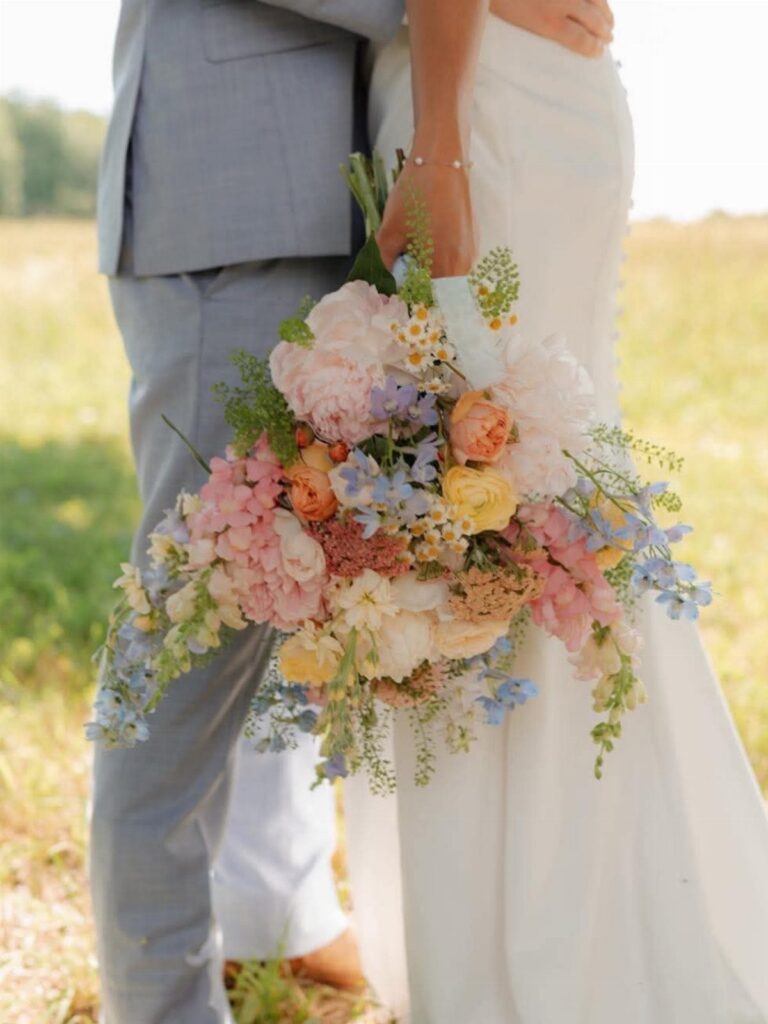
Styles here run from a bright sunflower bouquet to a cascade of blush roses with light green vines, and a pearl-wrapped bridal bouquet sits in the mix too; the stem count behind each shape sets the price more than the flowers’ names do.
Your date picks the bouquet: tulips are a spring flower, so the cascading tulip bouquet means asking the florist early what can be had in summer, while hydrangea and sunflowers are large enough to fill a bouquet with fewer stems.
Match the style to what is in season and cheap that week.
1. Vibrant Summer Blooms Wedding Bouquet
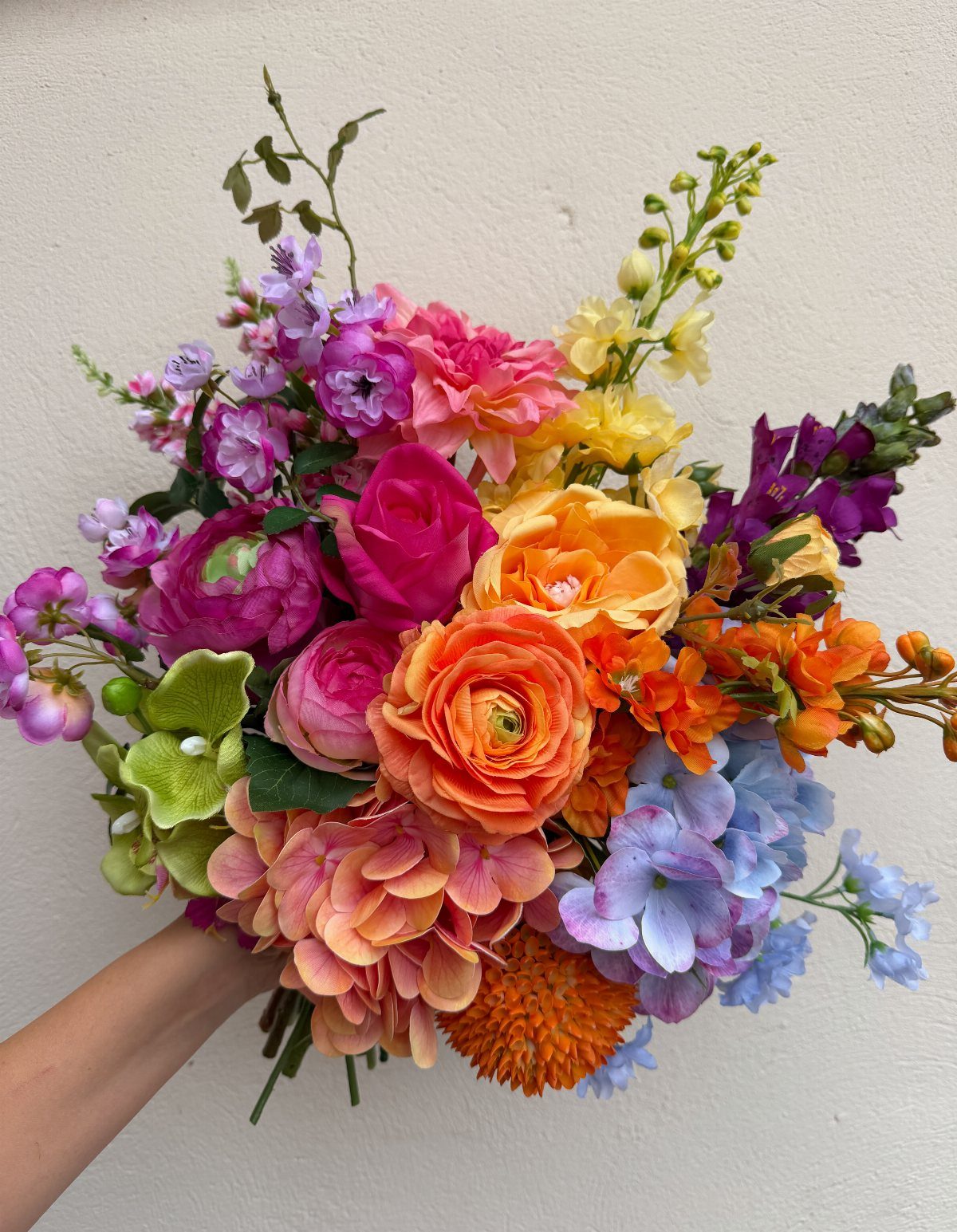
A bouquet built from pink, orange, yellow and blue blooms works because summer flowers already come in those colors, so the mix looks gathered rather than forced.
For a bride working against a budget, this is a forgiving style: no single stem has to be the star, and the color does the talking.
Keep the palette to a short list of hues, and leave the exact varieties to the florist, who will pick whatever is in season and cheapest that week.
2. Sunflower Wedding Bouquet
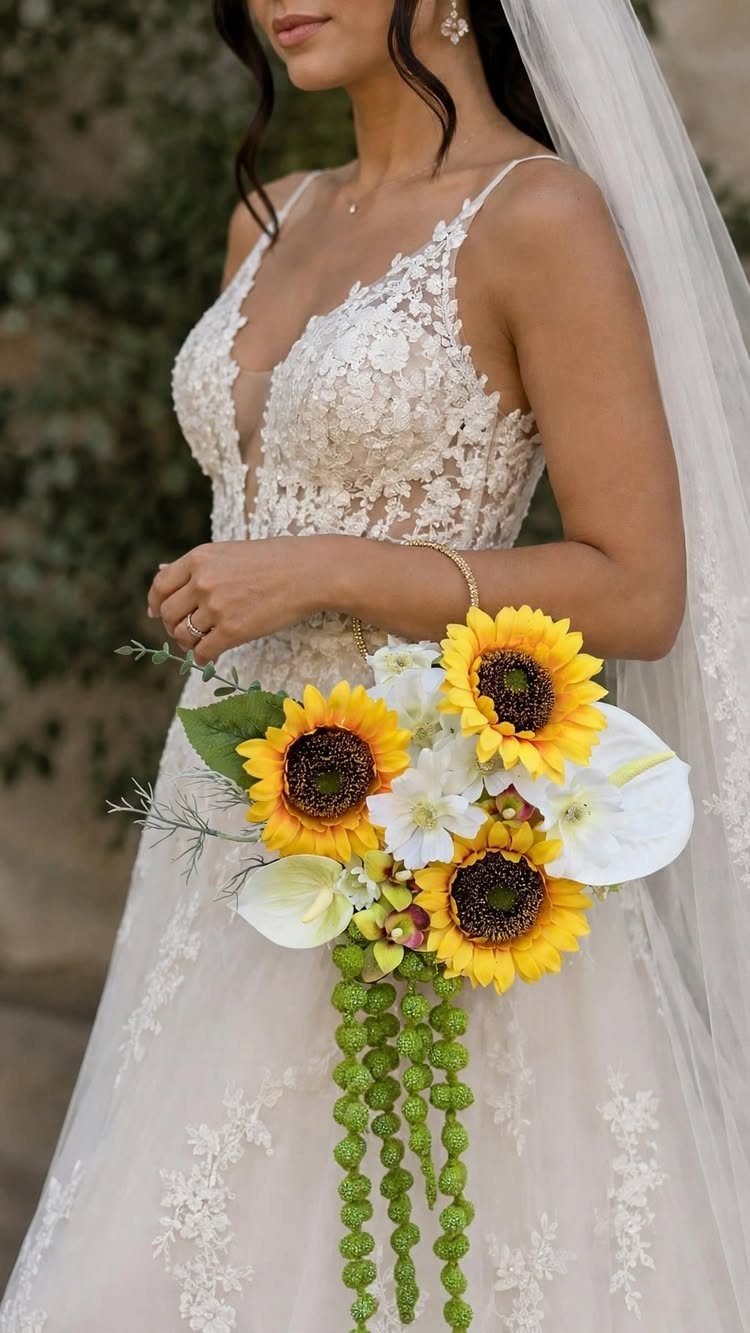
Sunflowers bring summer in one stem, and I like them best with white lilies and green amaranthus trailing below, which softens the yellow so it reads as a bouquet and not a field.
Against a lace gown, the bright centers give the whole look some weight. Sunflowers are large, so a bouquet needs fewer stems than most, which keeps the cost down for couples watching every dollar.
Pick the amaranthus for movement; it keeps the shape from looking stiff.
3. Orchid Summer Wedding Bouquets
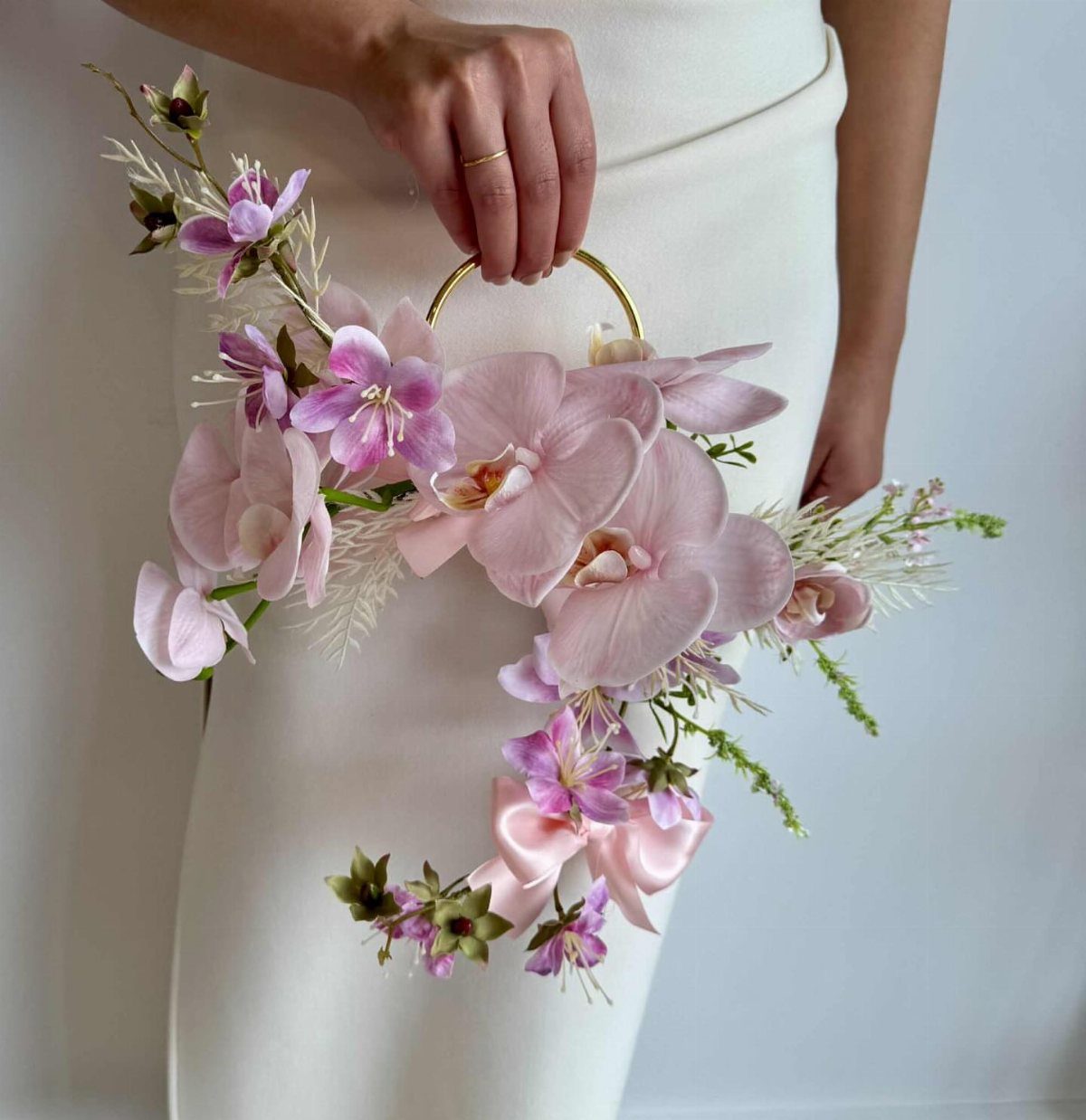
Orchids carry a bouquet by themselves, and a gold hoop handle with ribbon turns the whole thing into an accessory rather than a bunch of flowers.
Pink and purple orchids with greenery along the ring keep the shape light, which suits a hot day. I would choose the hoop over a standard hand-tied bundle if the dress is simple, since the gold becomes the jewelry.
Get a price for a hoop and for a hand-tied bouquet side by side, because the frame and the labor change the total.
4. Pastel Blush Bouquet
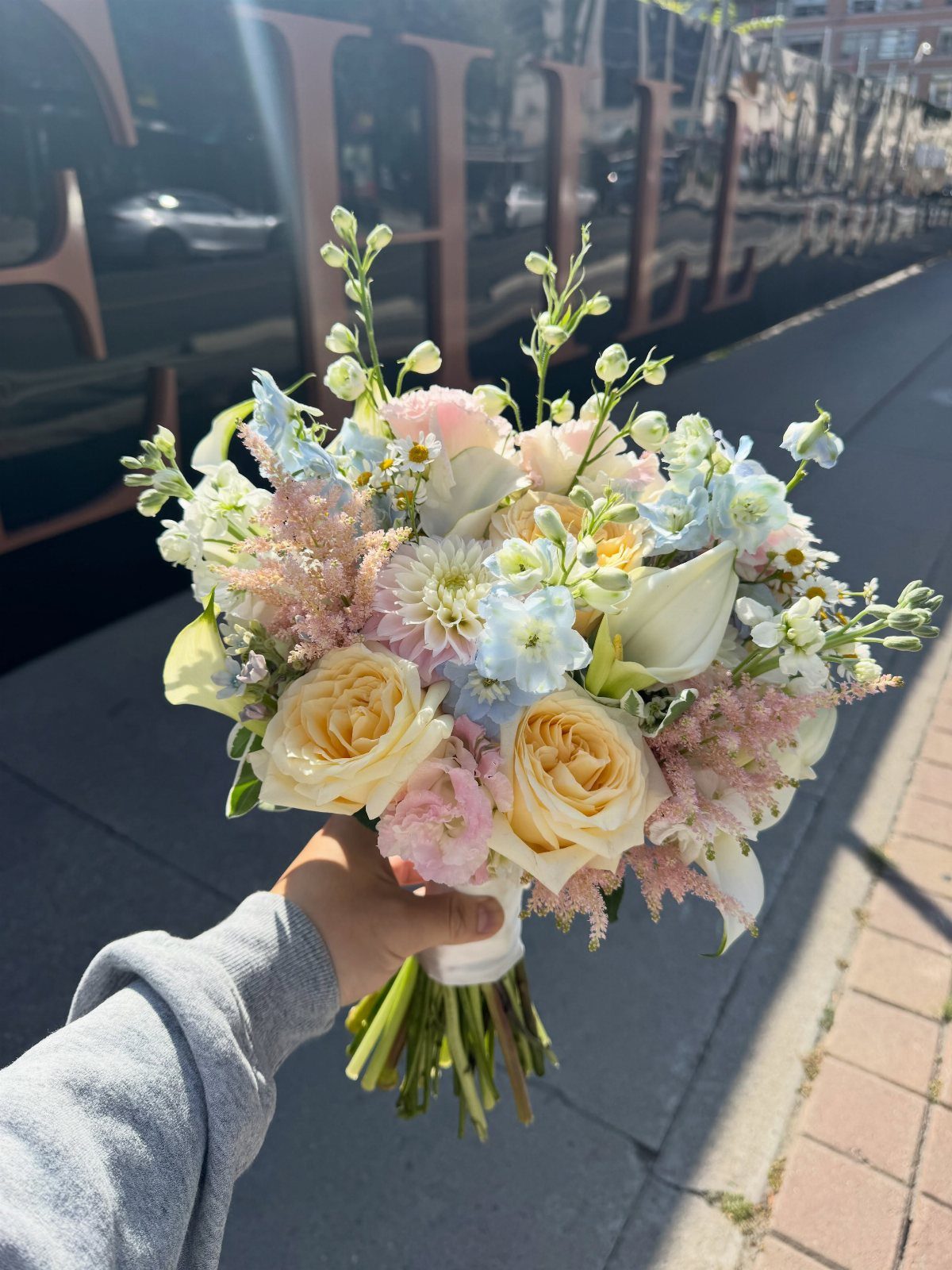
Pale yellow roses, light blue flowers and white calla lilies give a bouquet that soft, old-fashioned feel without leaning on lace or pearls.
The colors sit close in tone, so the shapes do the work: round roses against the clean lines of the callas. I would keep the blue to a few accents so it does not turn the palette cool.
This suits a bride who wants romance but finds saturated summer color too loud.
5. Blue and White Summer Wedding Flowers
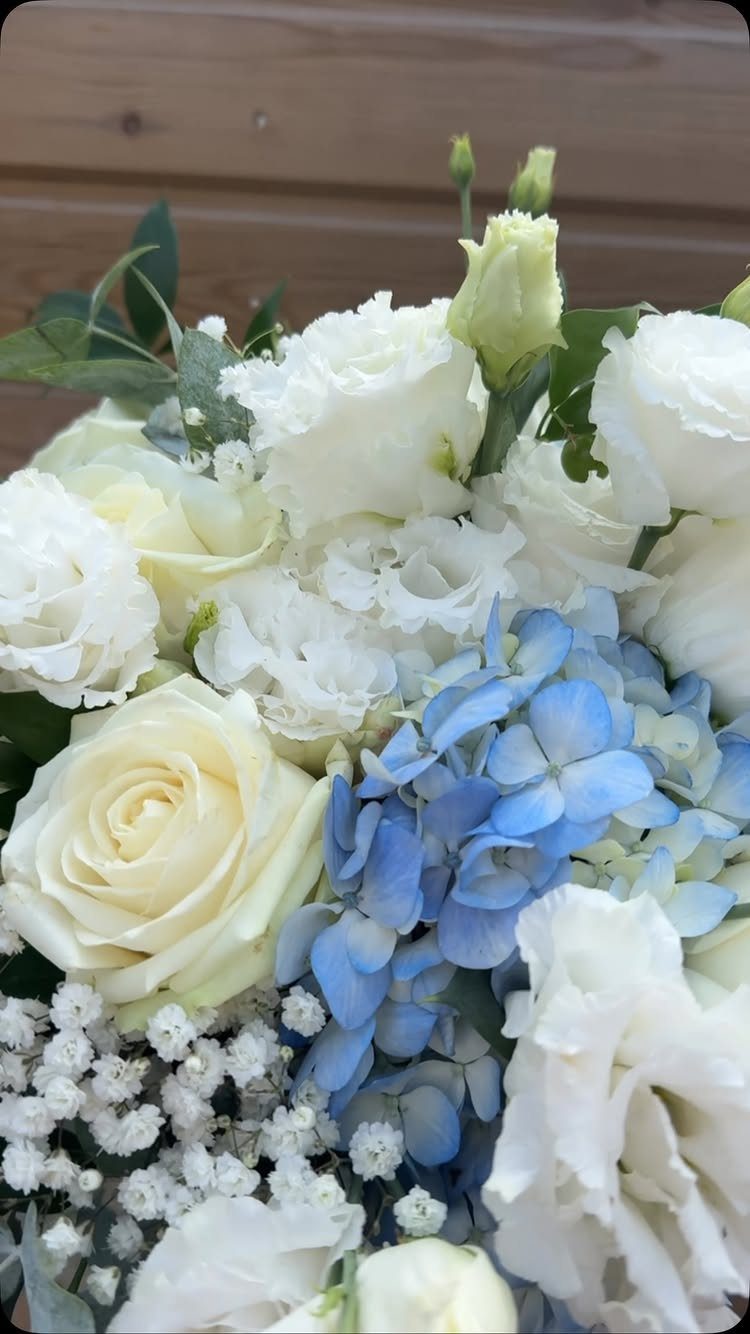
White roses, white lisianthus and blue hydrangea, finished with baby’s breath, make a bouquet that stays crisp and clean in summer color terms.
Hydrangea is a big, full flower, so it fills the bouquet quickly and keeps the stem count down, which helps the budget. Use the baby’s breath sparingly, as filler between the heavier blooms.
For a Maryland wedding, the blue and white palette fits the setting, and it pairs with almost any bridesmaid dress color.
6. Fiery Corals and Bold Pinks Summer Wedding Bouquet
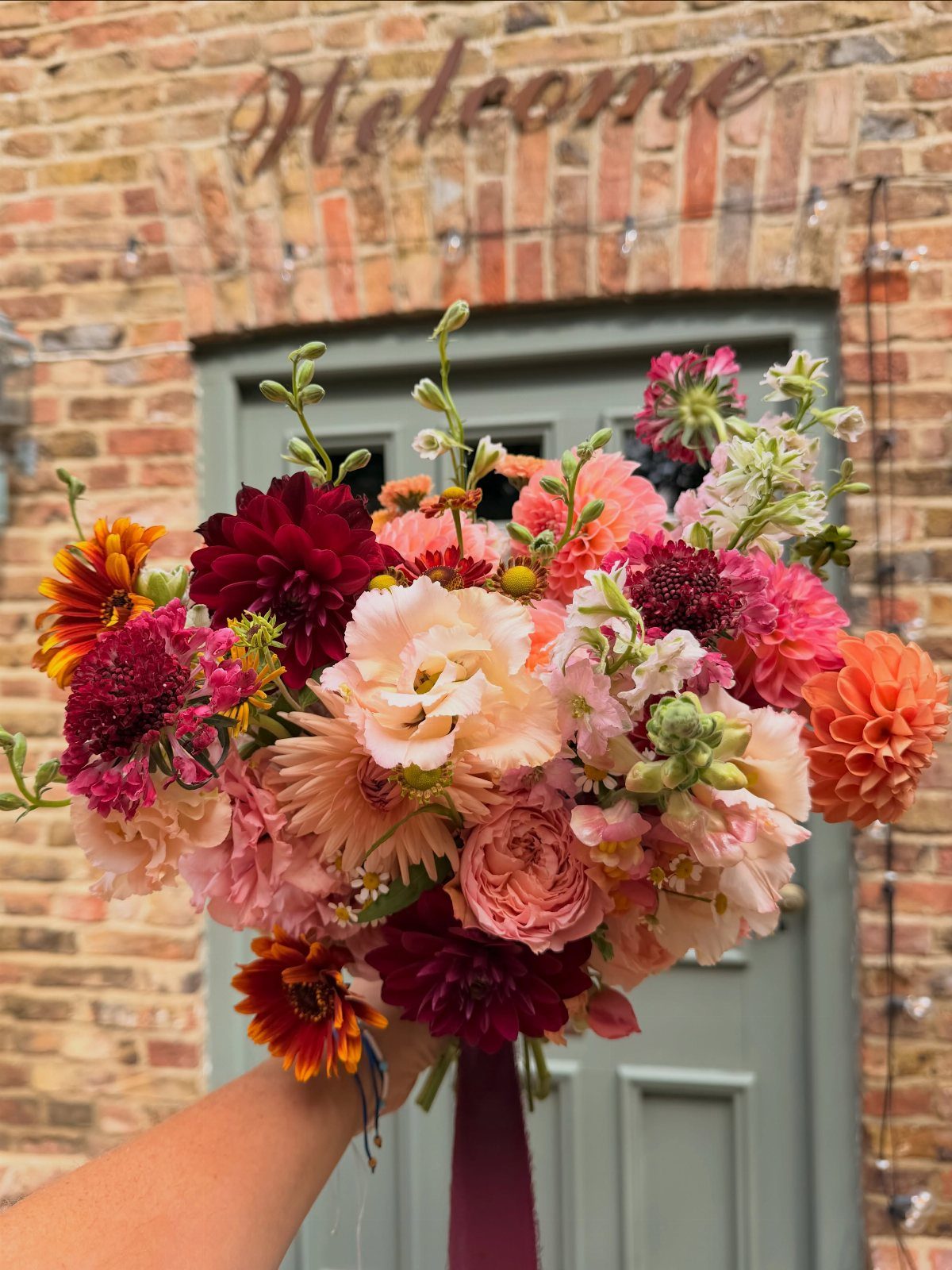
Coral, bold pink and burgundy dahlias bring the heat of July into your hands, and the burgundy gives the brights some depth so they do not blur together.
Summer offers plenty of flowers in these shades, which makes the palette easier to build and cheaper to adjust than a rarer color. I would let the burgundy stay the smallest share, using it as shadow.
Share a color swatch with your florist rather than only naming the colors, since coral varies widely.
7. Lush Wedding Bouquet
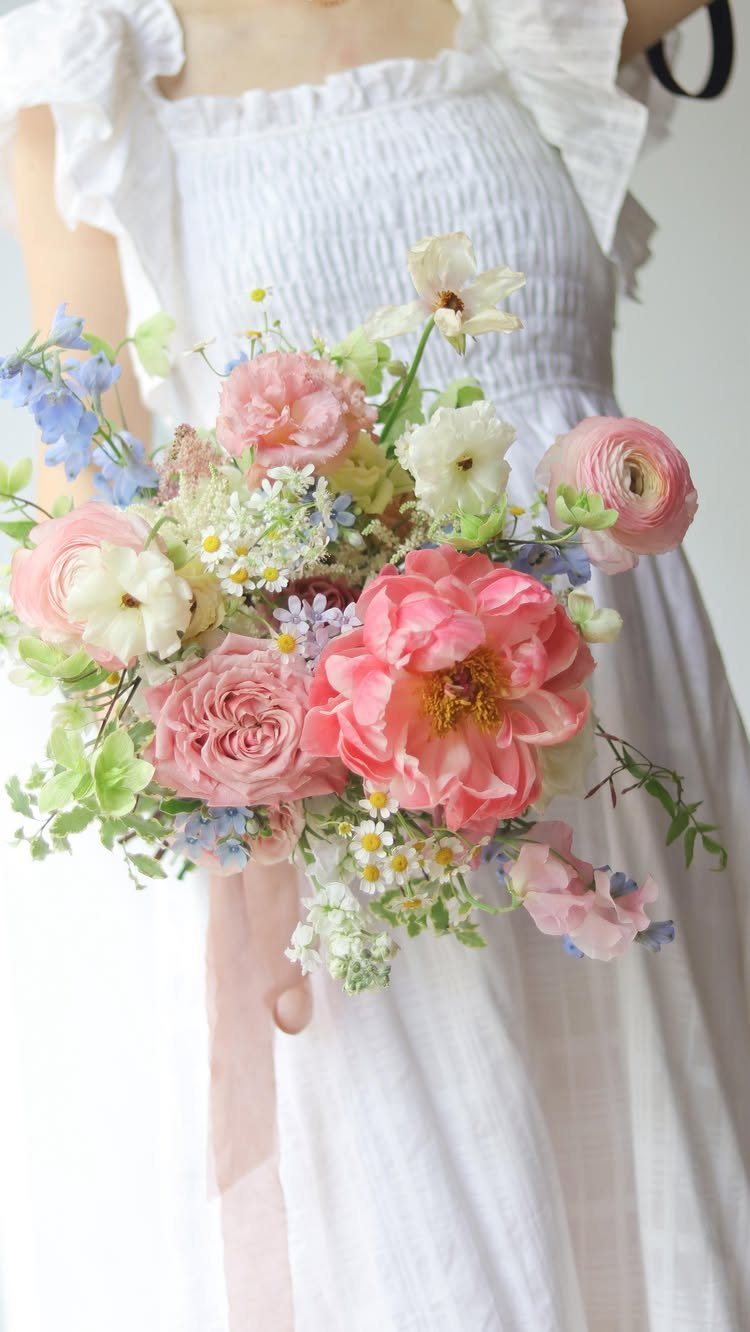
An extra large, wild bouquet suits summer because the season is already abundant, and a boho shape lets the flowers spill out rather than sit in a tight dome.
Peonies and ranunculus give the soft, layered center, while the blue wildflowers keep it loose.
Coral charm peony is the variety in this piece, and it has a short season, so check with the florist early on whether it can be had for your date.
Big bouquets cost more in stems, so have a smaller version priced for your bridesmaids.
8. Hydrangea Summer Wedding Bouquet
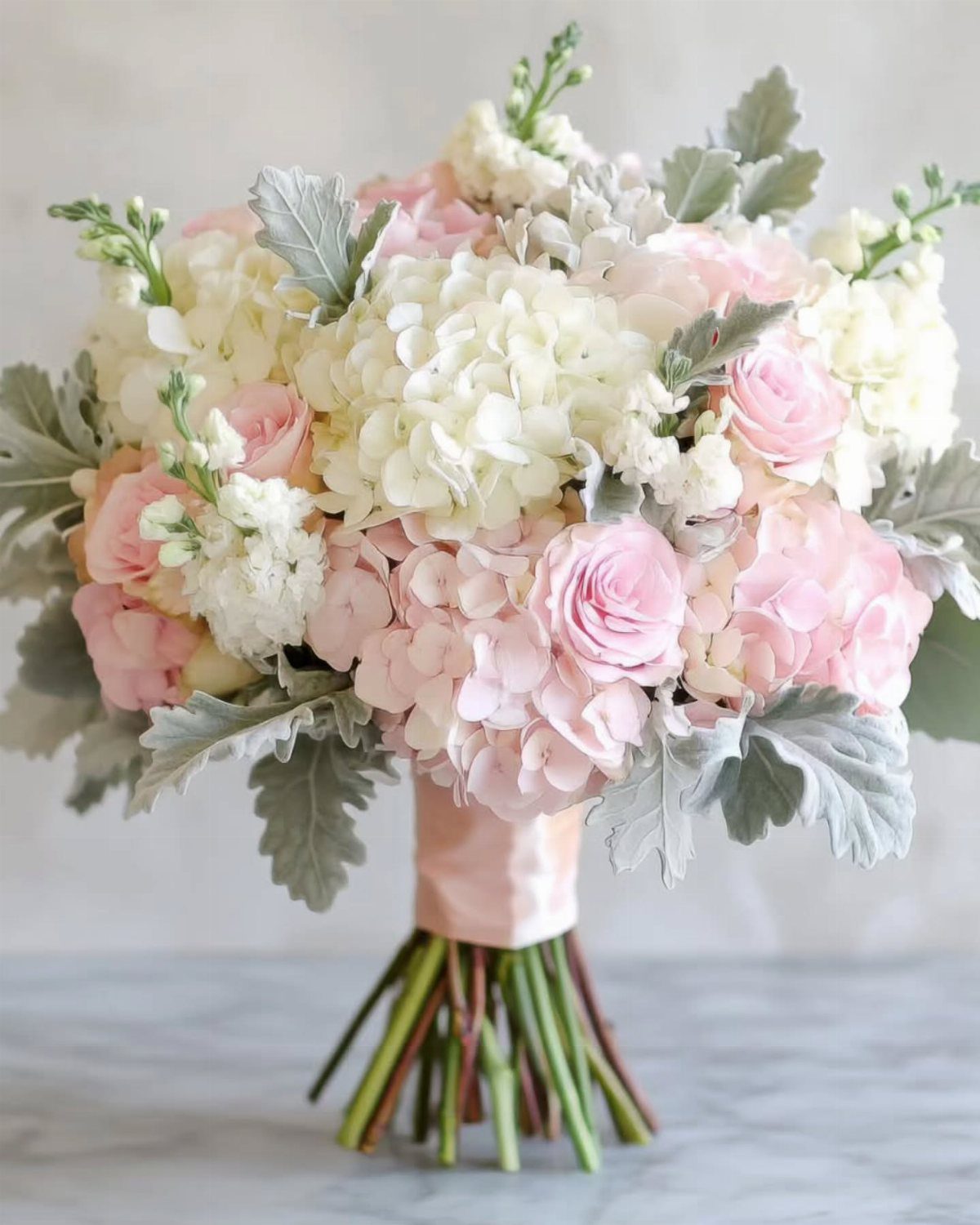
Hydrangea gives a bouquet its cloud shape fast, since each head is large and full.
I like the pink ribbon tie, which finishes the handle without adding more flowers. For a Nashville summer wedding, this is an easy style to ask a florist to build.
9. Peach Dahlias and Garden Roses Wedding Bouquet
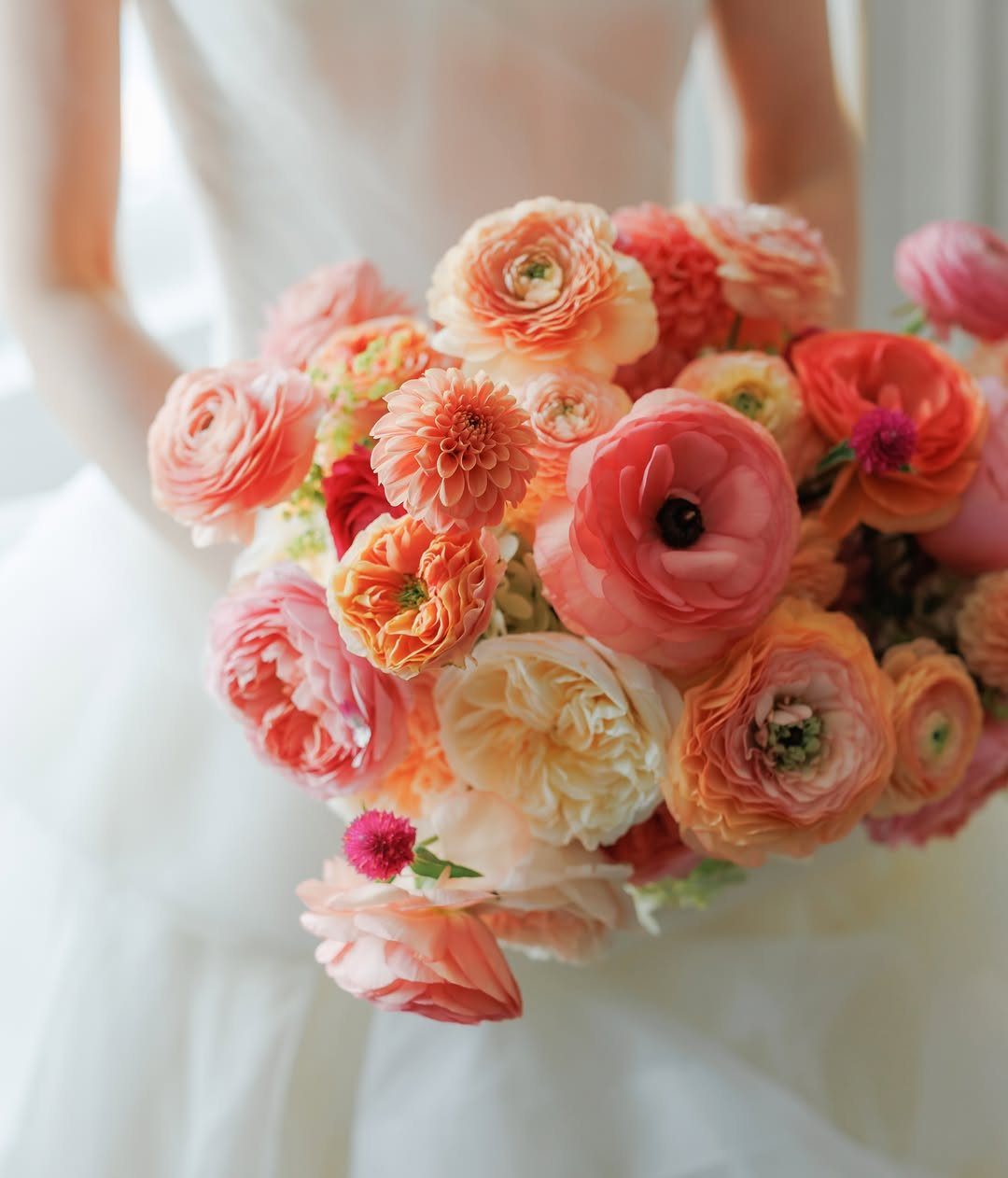
Peach, orange and pink in one bouquet reads as warm without turning loud, because the shades sit next to each other on the color wheel.
Ranunculus, dahlias and garden roses all have layered petals, so the textures match even when the colors shift.
Peach should carry the bouquet as the main tone, with orange and pink kept to smaller touches. Show your florist a swatch, since peach can drift toward pink or orange.
10. Freeform Wildflowers Wedding Bouquet
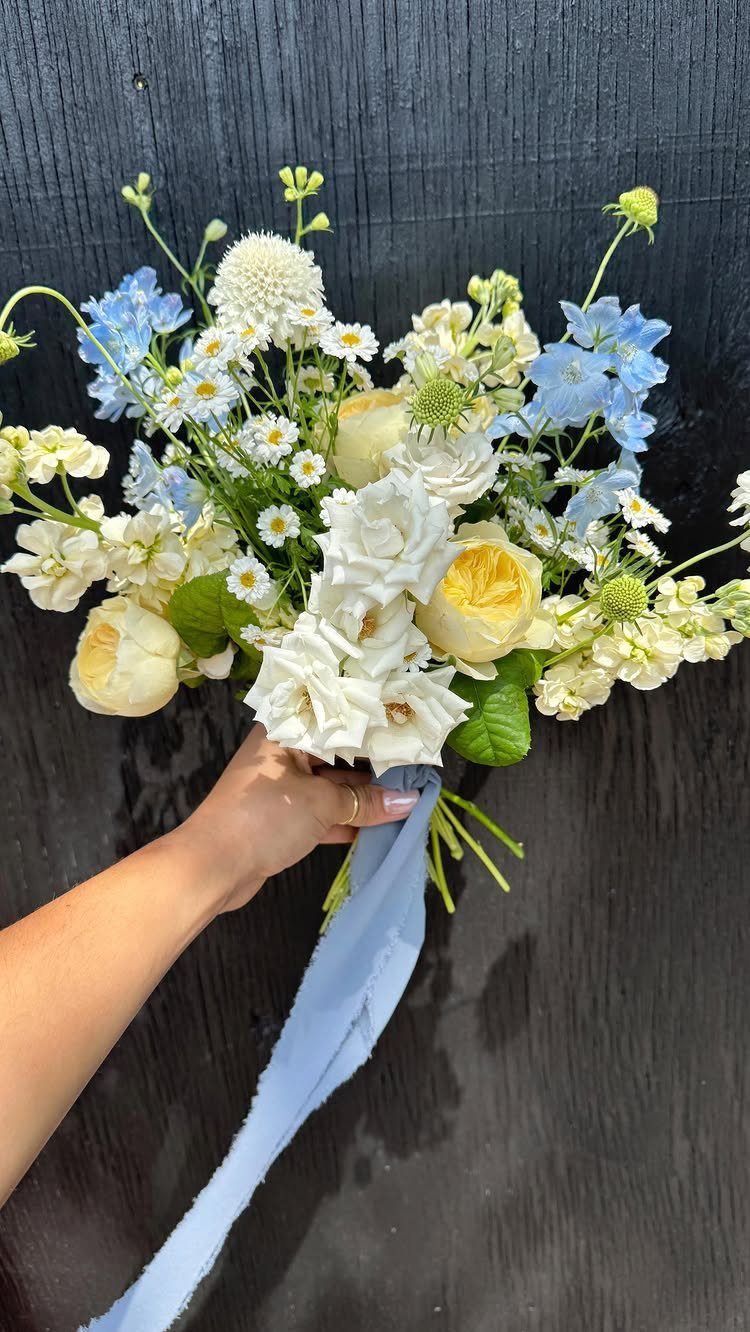
White roses with blue wildflowers make a loose, freeform bouquet that looks picked rather than arranged. The roses give it a bit of structure, and the blue keeps it from feeling plain.
For an unfussy look, ask for stems cut and set at varied lengths so the shape stays loose.
11. Blush Roses and Light Green Vines Cascading Bouquet
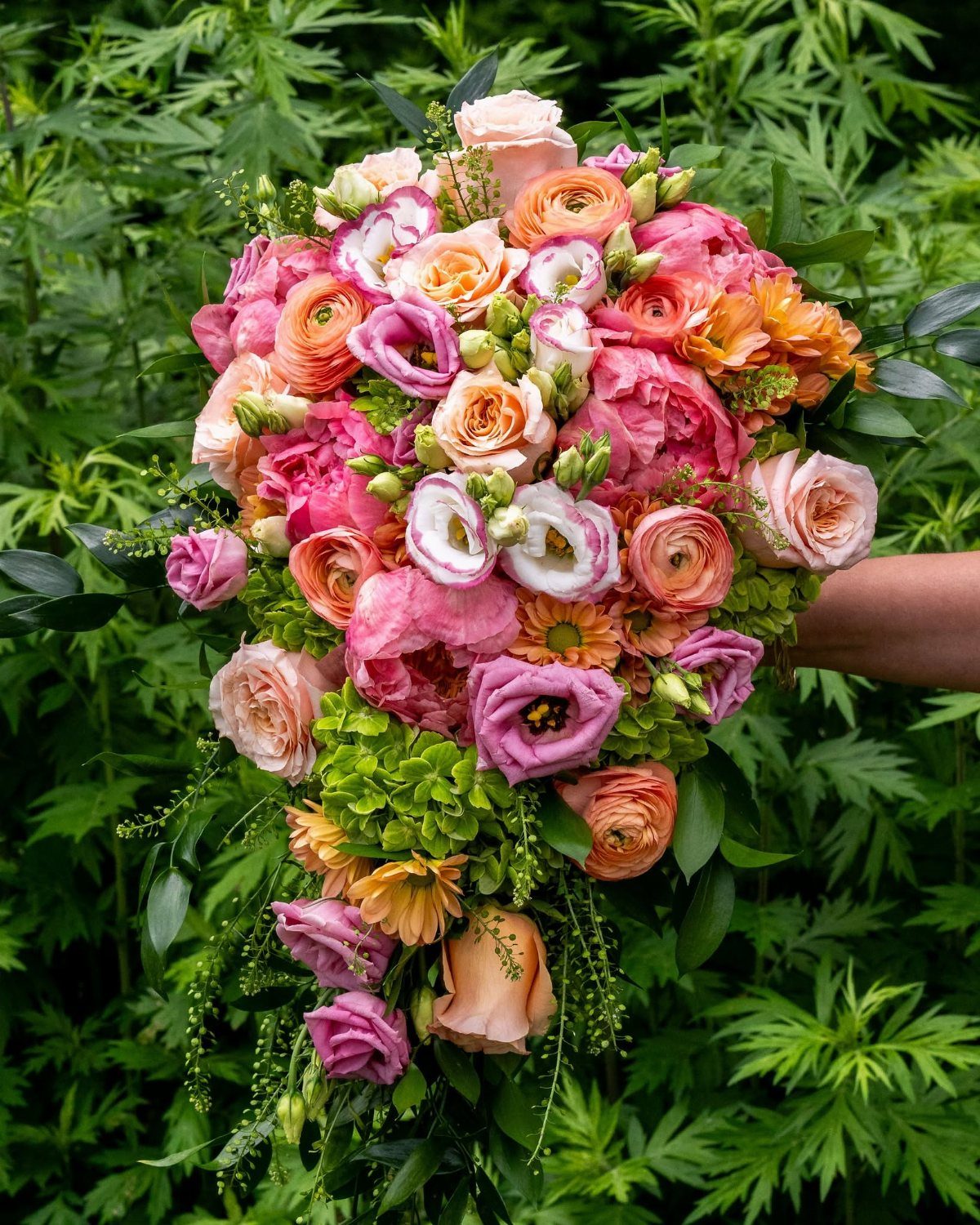
A cascade of blush, peach and white roses with trailing green vines gives you abundance without a heavy, round shape. The greenery does the falling, so the roses can stay a modest number.
Green hydrangea adds bulk between the roses for less than more roses would cost. I would hold the cascade low against a fitted gown so the vines read as a line, not a clutter.
12. Asymmetrical Wedding Bouquet
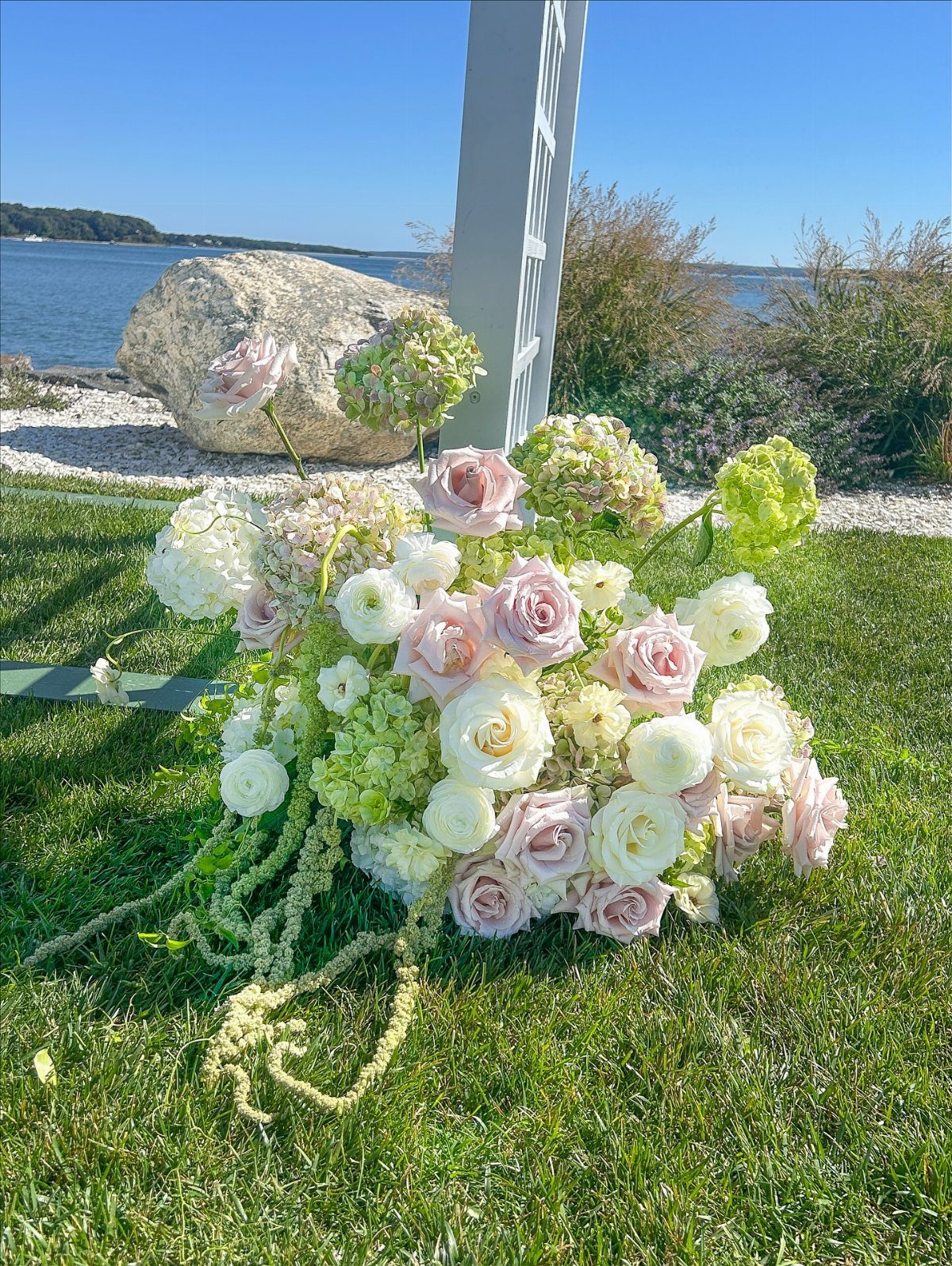
An asymmetrical bouquet puts the weight on one side and lets the flowers flow off the other, so it looks like it is moving even at rest. Pink and white roses with green leaves suit this shape well.
A hand-tied build with one clearly longer side works best here, and it looks right carried a little off-center. It photographs well outdoors, though the longer stems mean you should plan where to set it down during the reception.
13. Calla Lily Wedding Bouquet
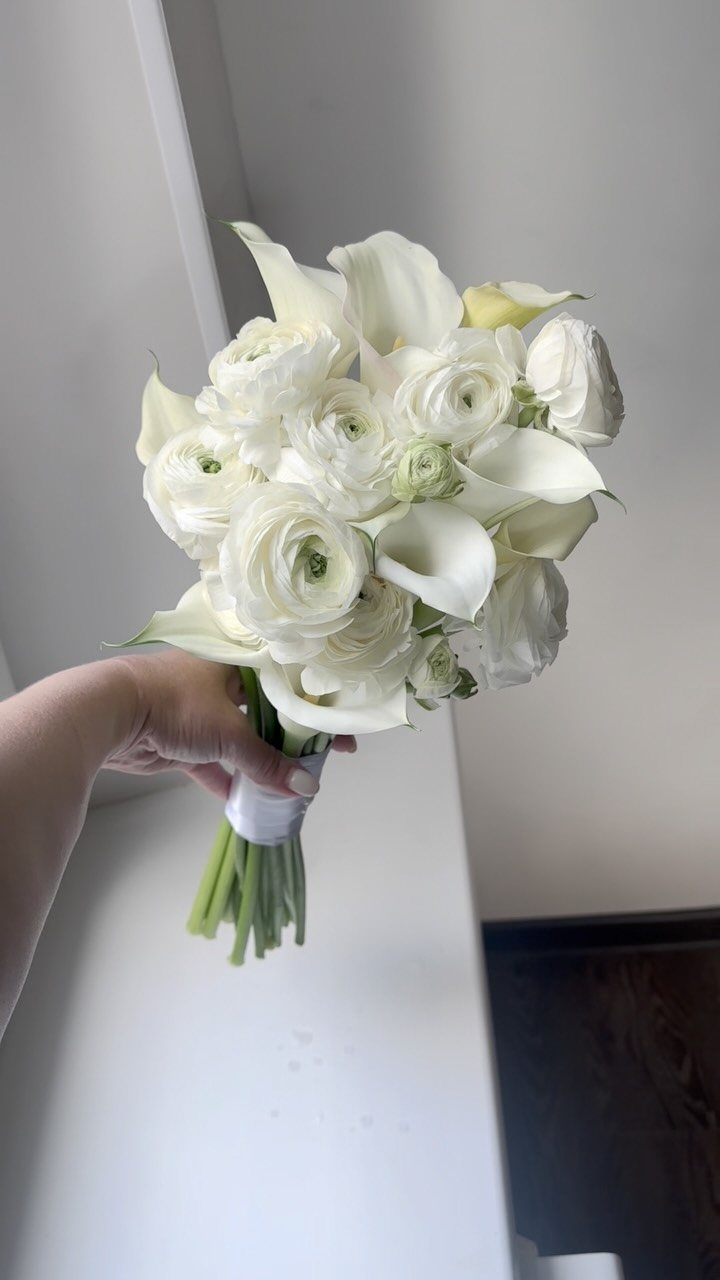
White calla lilies and ranunculus make a bouquet with 2 clear shapes: the smooth, trumpet-like callas and the ruffled, layered ranunculus. Against a plain white look, texture does all the work.
A ribbon tie in white keeps the handle clean and adds no extra flowers to the bill. I would ask the florist to set the callas a little higher than the ranunculus so their lines stay visible.
Because the palette is one color, a single-tone bouquet suits a bride who wants quiet over bold summer color.
14. Cascading Tulip Bouquet
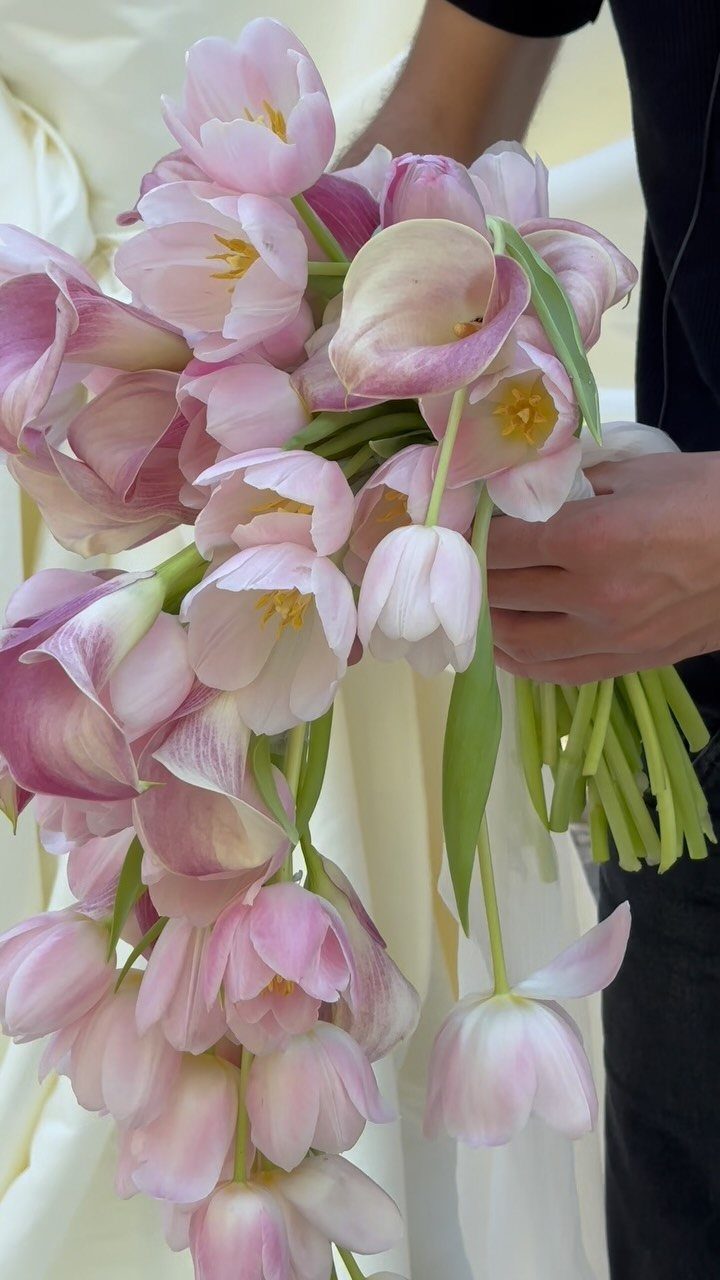
Tulips packed tightly into a cascade, light pink mixed with white, give a bouquet soft color and a long, falling line.
Dense arranging matters here: tulips are slim, so a loose build looks thin, and a full one reads as lush. Ask the florist how many stems the cascade needs, since a packed shape adds up in stem count.
Tulips are a spring flower, so check early whether your florist can get them for a summer date, and price the cascade against another option if they can’t.
15. Bridal Bouquet with Pearls
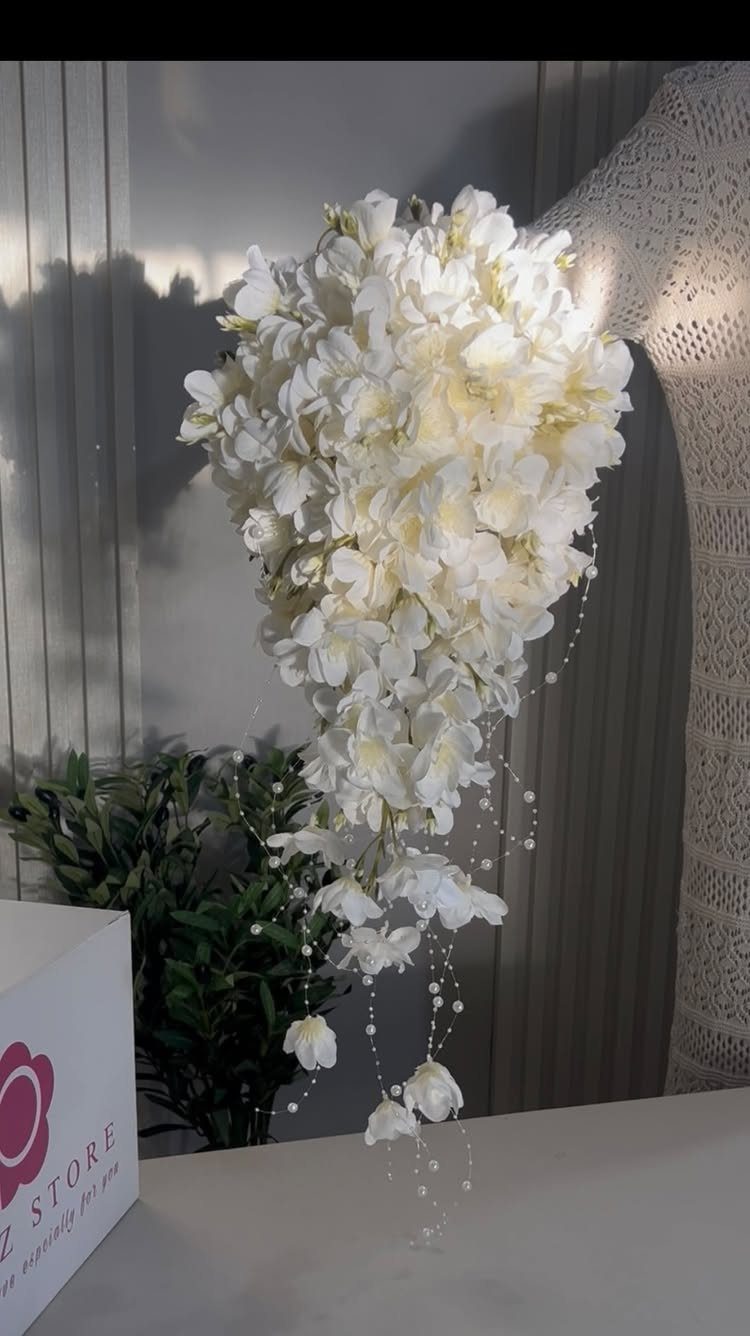
Strings of pearls hanging through an all-white cascade add movement and a little shine, so the bouquet works as jewelry as well as flowers.
Stick to white blooms only, as in this shape, so the pearls are the one detail the eye settles on.
Ask the florist to attach the strands securely at the handle, and have a price for the pearls listed separately from the stems, because the extra work changes the total.
16. Unique Rose Wedding Bouquet
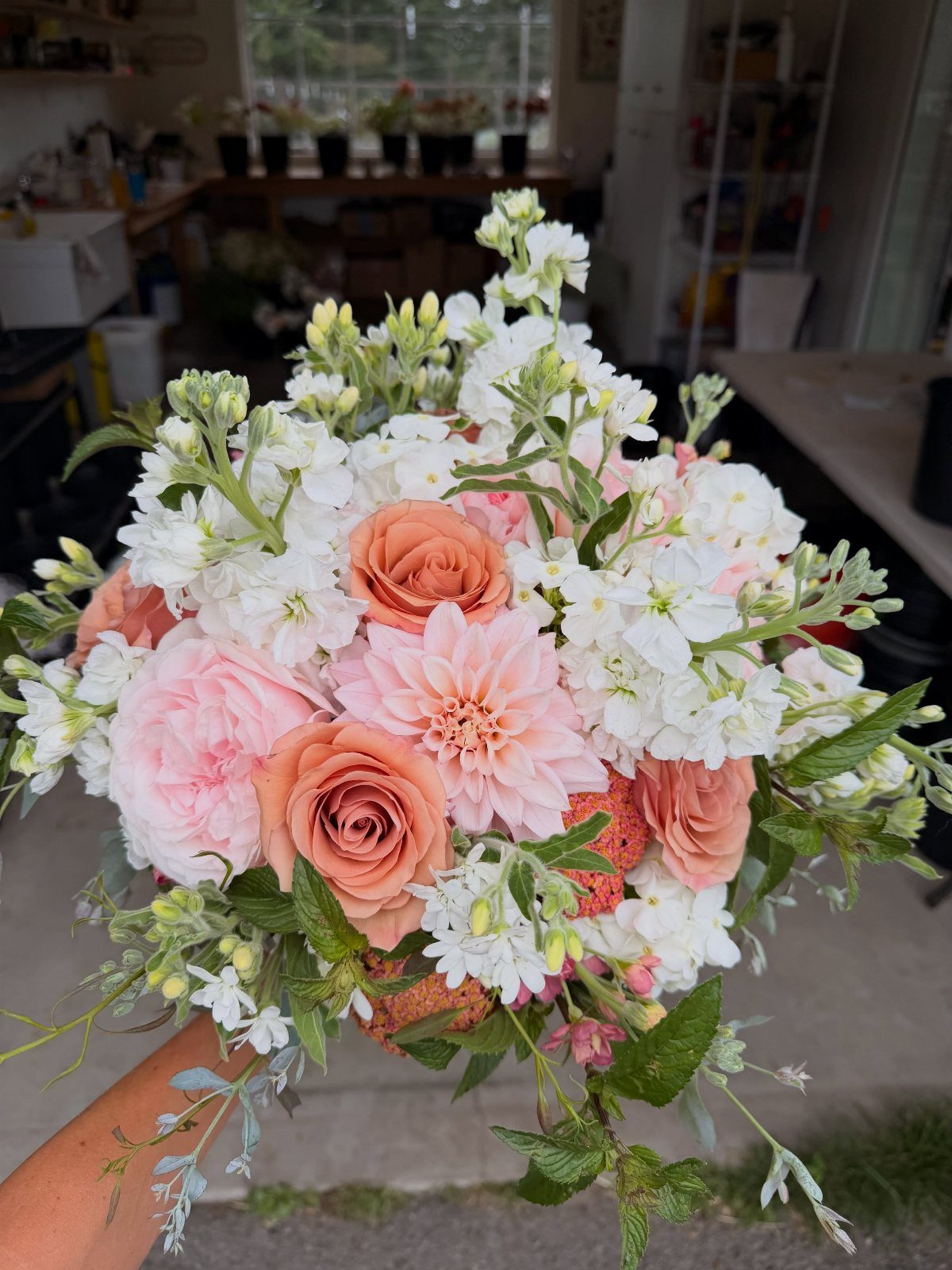
Pairing hybrid tea roses with garden roses and spray roses works in any season, because each type has its own size and form, so a single bouquet ends up with 3 different looks of bloom.
Peach and pink roses with dahlias and a few white flowers keep the palette warm and easy to match.
I would let the garden roses sit at the center, with the spray roses filling gaps between, since sprays cost less per stem than full blooms.
Ask your florist for a mock-up photo before the wedding so you can see the balance of colors.
Keeping Flowers Fresh
Heat is what wilts a bouquet, so plan the day around keeping it cool. Ask your florist to keep the stems hydrated until the last possible minute, and have a plan for water between photos and the ceremony.
Shade matters more than most couples expect. Hold bouquets and set arrangements out of direct sun whenever you can, and tell your wedding party to do the same while they wait.
Timing helps too. Ask for installations to go up as close to the ceremony as the venue allows, so the blooms spend as little time as possible in the heat before guests arrive.
Color Palettes for Summer
Summer gives you three palette directions, and you only need to pick one: sunset tones, bright citrus, or soft pastels. Each one is easy to build because the season is full of flowers in those shades.
Greens matter as much as the blooms. Eucalyptus or olive branch grounds a bold bouquet, while neutral filler calms one that feels too loud.
If you plan portraits at golden hour, lean bold. Evening light deepens rich colors, and it makes coral and hot pink look even stronger.
A bouquet of all white blooms with a little soft green stays crisp even in July heat, and it asks for the fewest stems of any palette.
A pastel mix of buttery cream, blush and dusty blue suits a romantic mood, and a monochrome pink bouquet gets a lift from one touch of white or bright coral.
Frequently Asked Questions
What is the 3-5-8 rule for wedding bouquets?
The rule calls for 3 types of flowers, 5 blooms of each, and 8 stems in total.
Treat it as a loose guide, since the math doesn’t quite add up and big flowers like sunflowers or hydrangea fill a bouquet with far fewer stems than slim ones like tulips.
What flowers are in season in July for weddings?
Sunflowers, zinnias and dahlias are popular July choices, and garden roses are especially lush in summer.
Peonies run only from May to early July, so ask your florist early whether your date falls inside the window. Seasonal stems are usually cheaper and hold up better in heat, which helps both the budget and the bouquet.
What are the current trends for wedding bouquets?
Bold color, loose freeform shapes and flowers that tolerate heat are the main directions for summer.
Right now, couples are choosing between 2 looks: a loose, just-gathered bunch with trailing greenery that seems cut from a garden that morning, or a tight single-flower bouquet of white roses or orchids that matches a clean, sleek gown.
Match the shape to your dress: a ballgown can carry a fuller bouquet than a fitted style.