Guest count decides how you build a long table: one unbroken Single Long Table suits 100 guests or fewer, and past that you split into sections, which is where Serpentine Tables or a California King layout come in.
Plan on 20 inches of table edge per guest at the very least, then measure your venue’s floor space before you commit to a layout.
1. Single Long Table
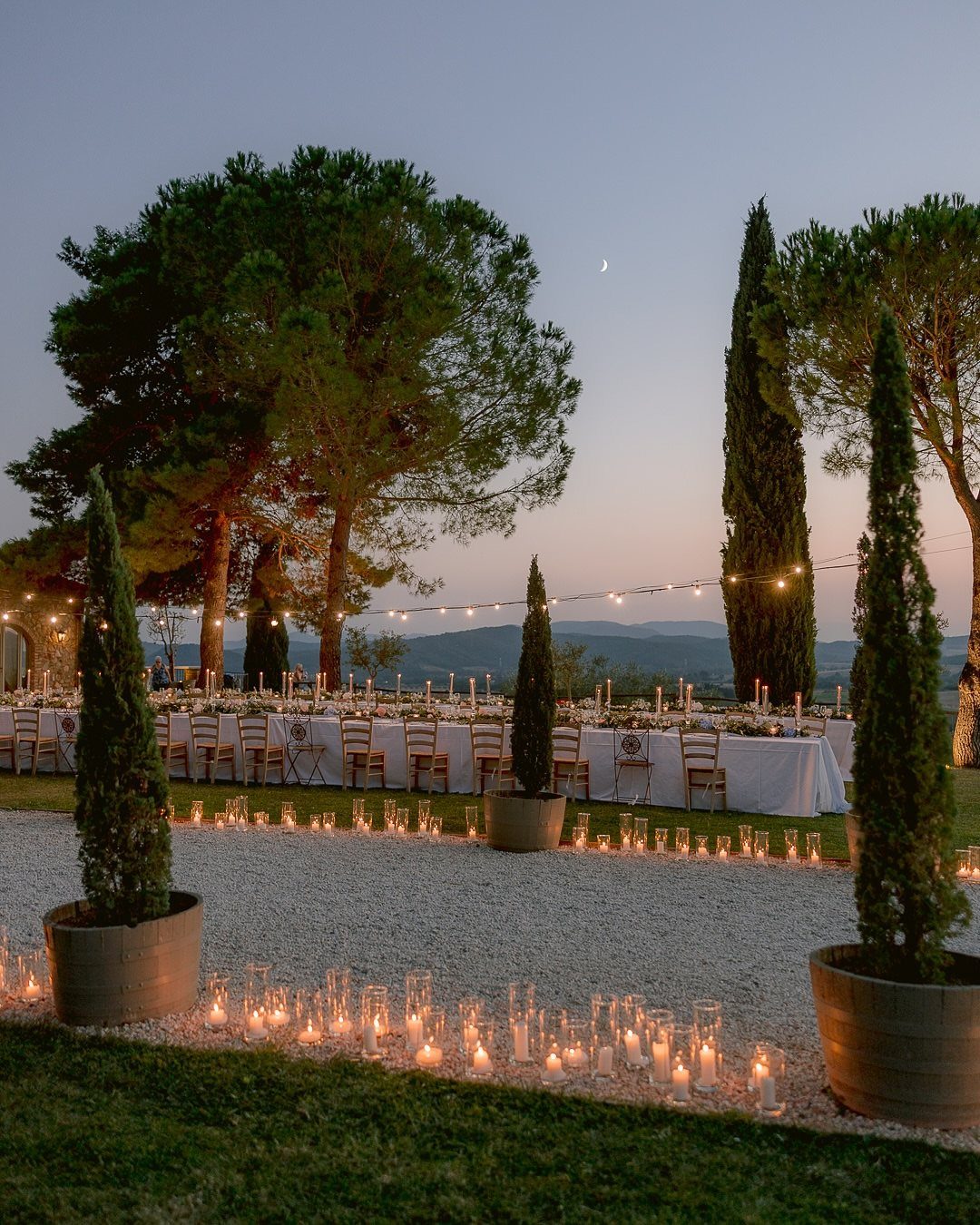
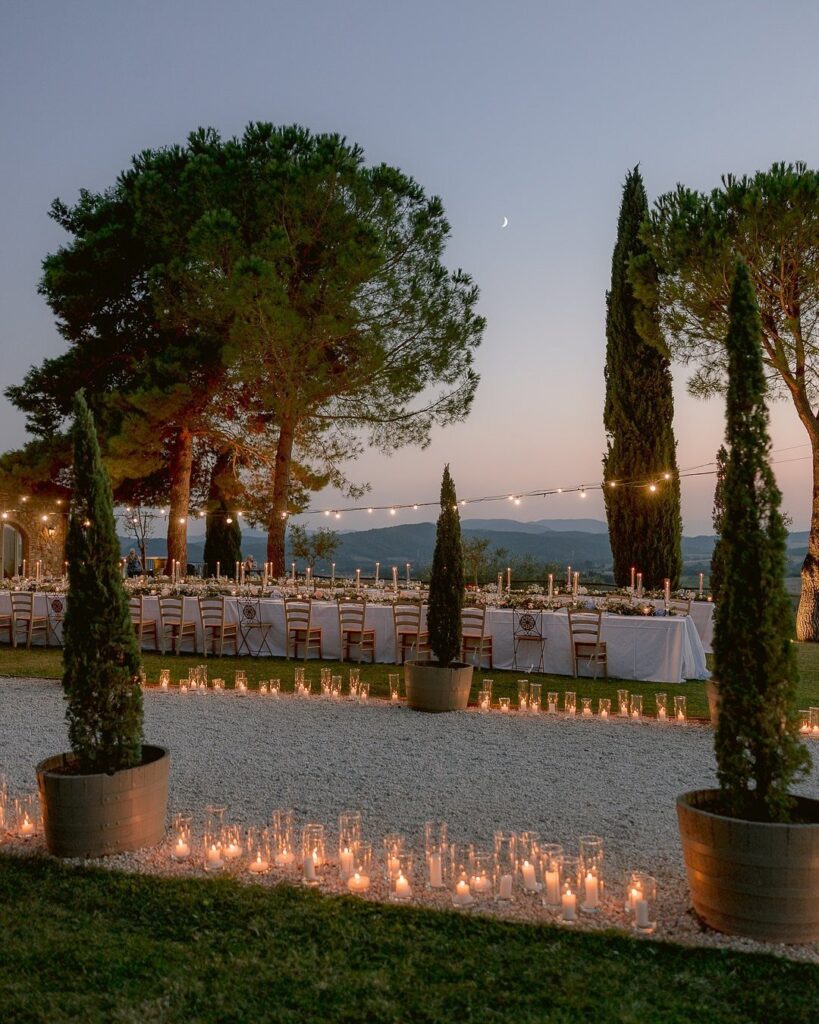
One unbroken table gives a reception a single focal line, and every guest sits inside the same picture. Few budgets cover rentals for a table this long, so price the linen and the chairs before you fall for it.
Keep the styling low and repeated: candles down the middle, and nothing taller than eye level so people can talk across.
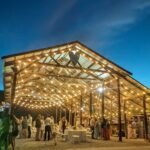
String lights hung overhead do most of the work at dusk, so plan on a warm 2200K bulb and enough strands to cover the full length of the table. Test them at the hour you will actually be seated.
2. Farm or Vineyard Table
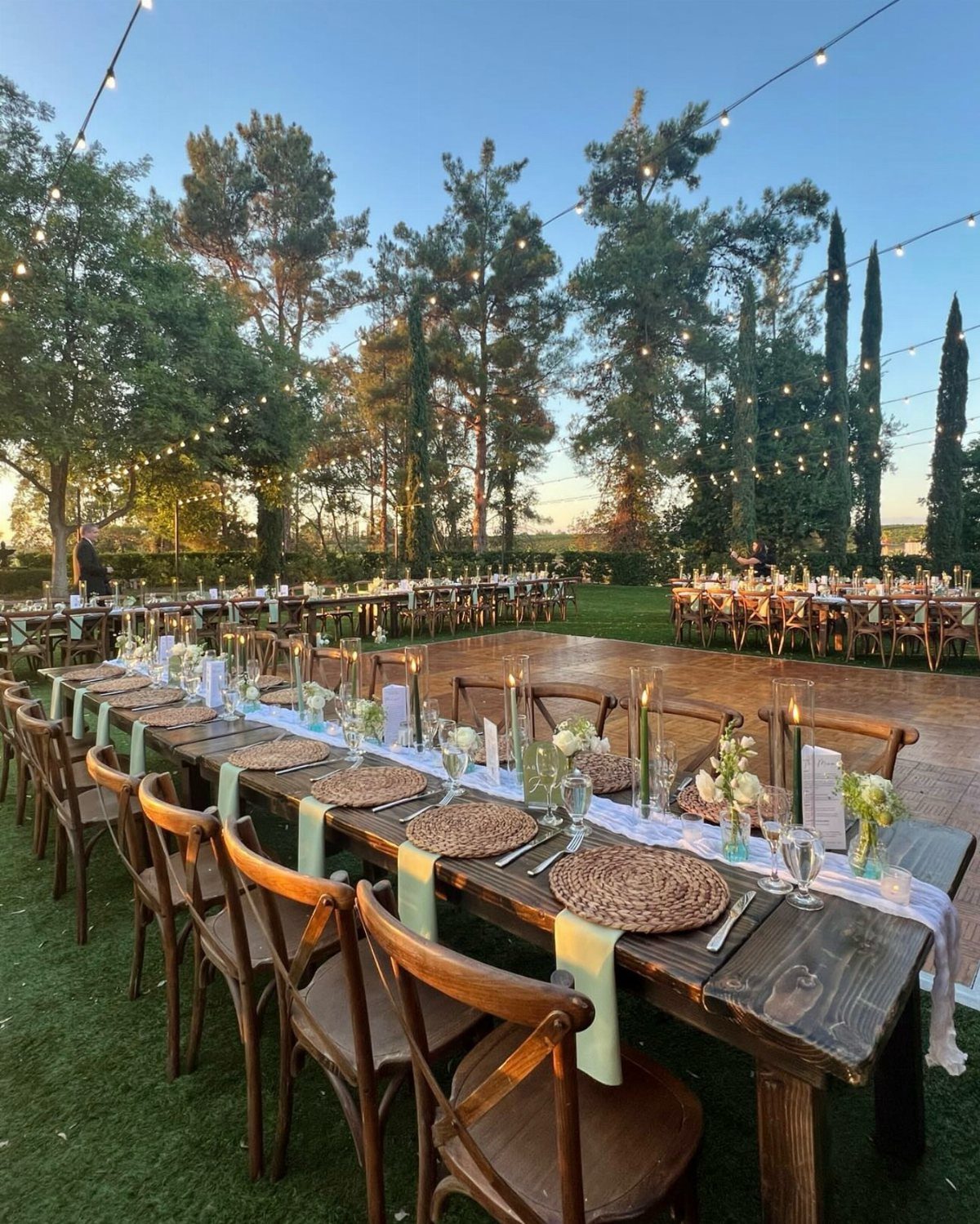
Dark wood tables on a lawn look best bare, so skip the full linen and let the grain carry the look with just a runner or napkins.
Skip the full cloth and use woven placemats, which add texture and keep the grain in view.
Greenery in place of flowers keeps the cost down, and I would choose it over a florist runner on a tight budget.
Pick a finish you like on the table itself, since a stain or a rental’s wear is what guests will see up close.
Put the dance floor within sight of the tables, so the party feels like one space.
3. California King Table
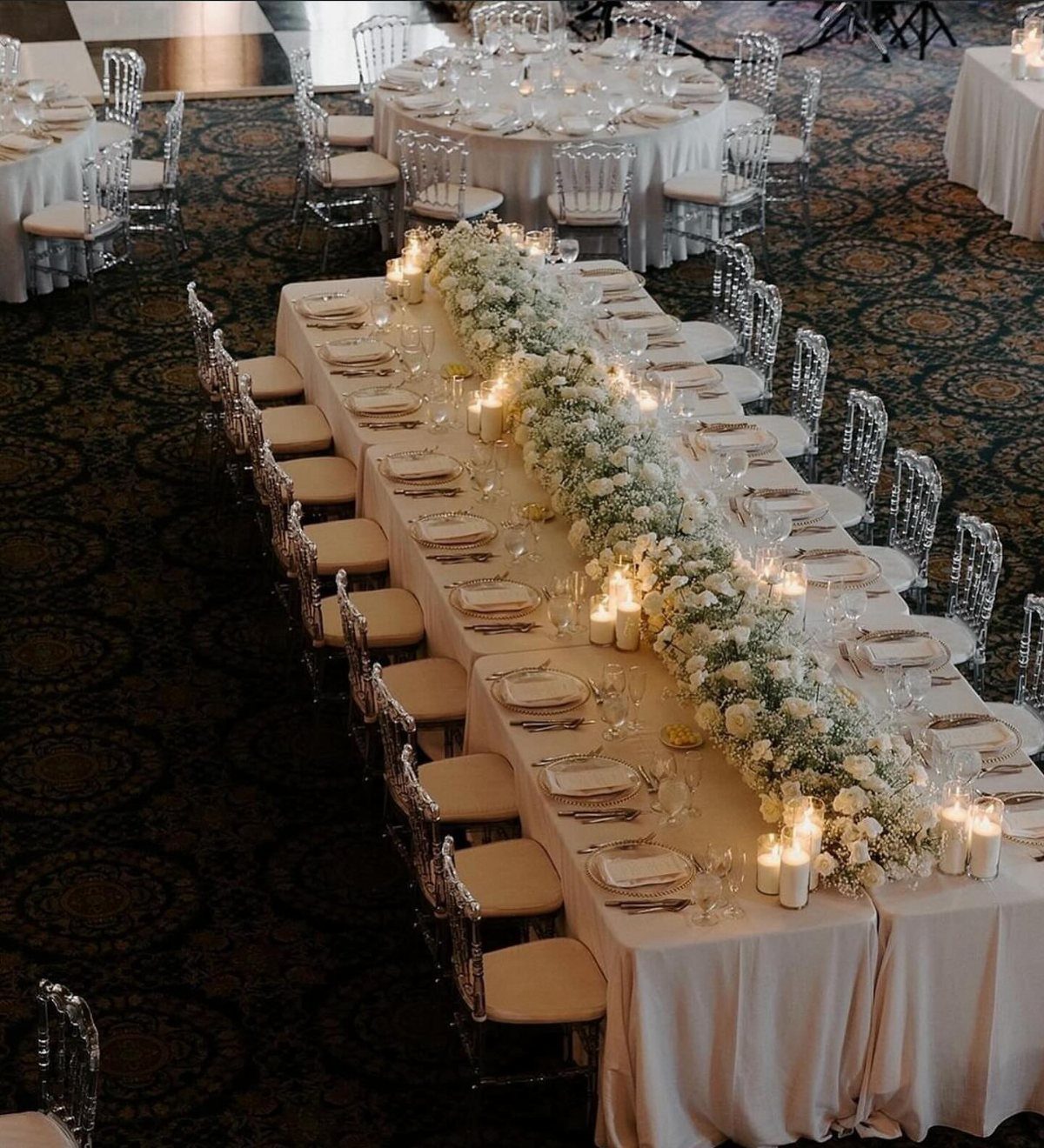
A California king is a long table with guests seated on both sides, facing each other across the length of it. It reads as luxurious because it is one long line with no corners.
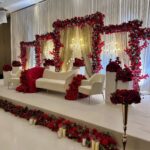
A thick floral runner and a row of candles give a wide table weight, and clear acrylic chairs keep attention on the guests instead of the furniture.
I like that pairing in a ballroom with busy carpet, since see-through chairs add no visual clutter.
Budget for the runner first; it is the most expensive stretch of flowers in the room.
4. Serpentine Tables
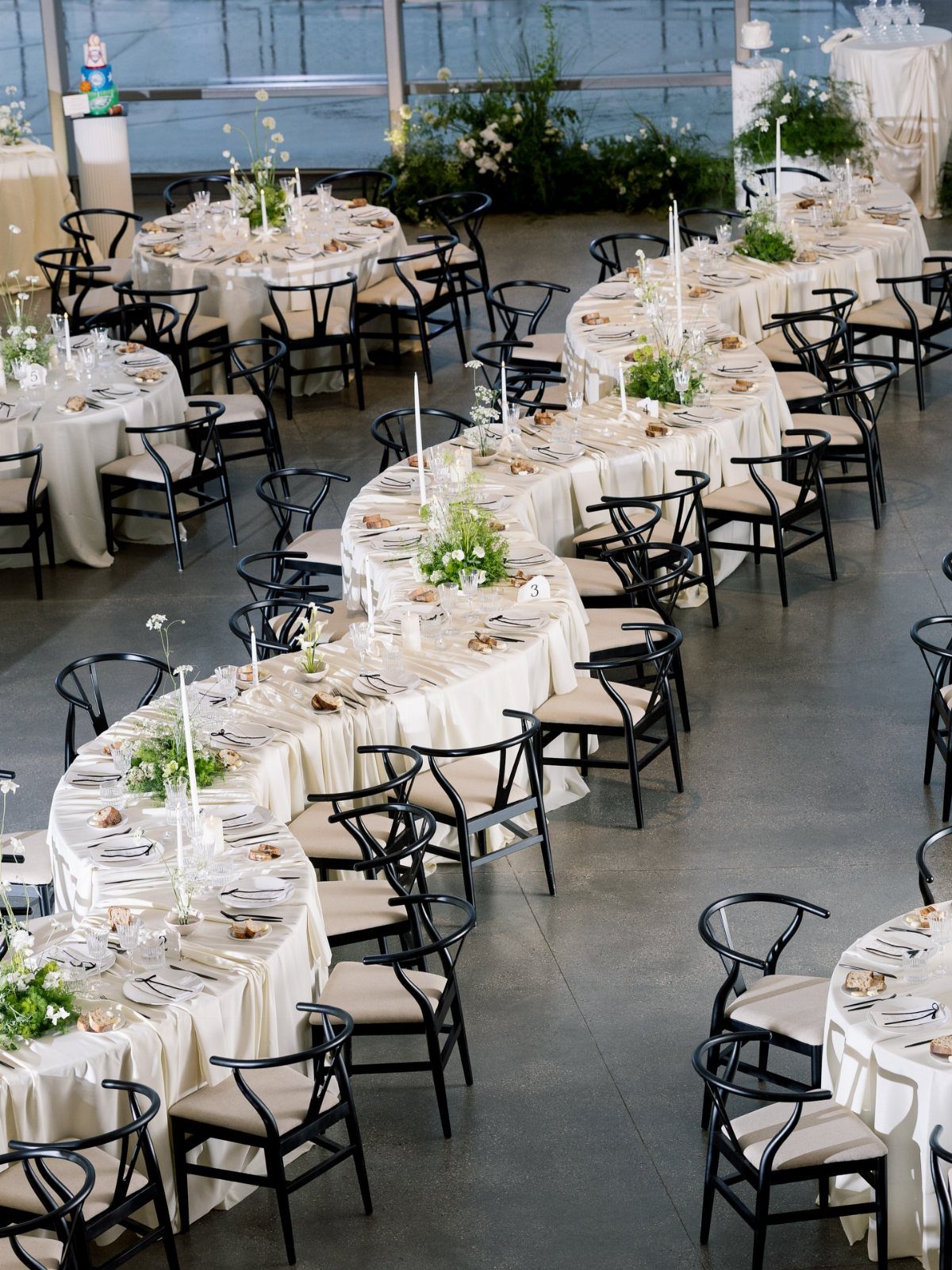
Serpentine tables are curved sections that join end to end into an S-shape, or sit apart as separate waves. They break up a square room better than straight rows do.
Cream linens keep the curves of a serpentine layout clean, and black chairs add contrast without needing any extra decor. Spacing the centerpieces evenly along each curve lets the shape do the decorating.
Ask your rental company whether curved sections are available before you plan the layout. Then sketch the floor plan with aisles wide enough for servers to pass.
5. Long Table Centerpieces
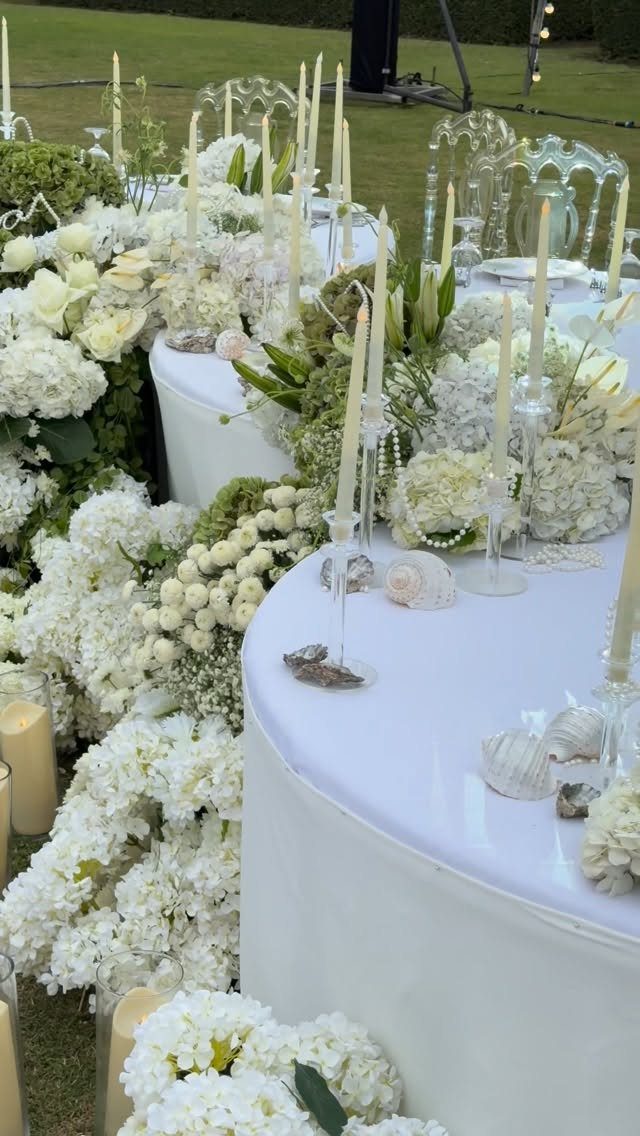
A long banquet table needs a runner of flowers, not scattered vases, and the cascade is what sells it. The venue here used hydrangeas, roses and baby’s breath, spilling down to the grass.
Tall white tapers rise above the florals and add height without hiding faces. Seashells tucked among the blooms are a cheap extra if the setting suits them.
Order flowers by the foot of table, and compare that quote with a greenery-heavy runner before you commit.
Choosing the Right Table Shape
Start with 3 numbers: your venue’s usable floor space, your guest count, and your rental budget.
Shape comes after those, because a table that looks great in a photo can swallow a small room or leave a big one feeling empty.
Check that the shape you pick leaves room for your centerpieces. A narrow table can’t hold a wide arrangement plus place settings.
You can also mix shapes in one room, such as a long table for the wedding party with smaller tables for everyone else.
Whether you’re considering long banquet-style tables or serpentine setups, it’s essential to research your options to find the perfect setting for your wedding style and guest count.
Decorating Long Tables
Long tables cost more to decorate than round ones, simply because there is more surface to fill. Plan your flower and greenery budget by the length of the table, not by the number of tables.
Before you talk to a florist, settle the details that shape the design: table size, linen or bare wood, whether place settings are set, and the type of food service.
A family-style meal leaves far less room for decor than a plated one.
Keep one thing in mind about layout too.
A single long table in the middle of a room forces guests to walk the whole length to reach the bar, the restrooms, or the dance floor, so leave a gap or an end open if you can.
Guest Seating Considerations
One long table suits a smaller party, and it saves you from building a seating chart. Everyone sits at one table, which is a big part of the appeal if your guest list is close.
Conversation is the cost. At dramatic lengths, guests mostly talk to the people on either side, so seat people who already know each other near one another.
Measure for your headcount. Count on a 6-foot trestle holding 3 or 4 people along each long edge, while an 8-foot table stretches to 4 or 5 per side.
Give each guest at least 20 inches of table edge, which is about 50 cm, or elbows will collide by the second course.
Single-table seating works best for 100 guests or fewer. Past that, split into two or more long tables.
Frequently Asked Questions
What are long tables at weddings called?
Banquet tables, farm tables and vineyard tables are the usual names, and the same setup also goes by family-style or king’s table.
Which name fits depends on the look, since dark wood on a lawn reads farm or vineyard while a linen-covered line in a ballroom reads banquet.
How many people sit at a long table at a wedding?
A 6-foot trestle table holds 3 or 4 guests along each long edge, and an 8-foot table holds 4 or 5 per side. Plan on 20 inches of table edge per guest at minimum.
Any tighter and neighbors will be bumping elbows before the second course arrives. Measure against your headcount before you choose a length.
How many long tables for 100 guests?
A single long table works best for 100 guests or fewer, so 100 is the upper limit for one table. Work out the count from the per-side figures: 3 or 4 guests per side on a 6-foot table, 4 or 5 on an 8-foot one.