Fall palettes in this list run from one color on a white tablecloth to a full velvet lounge with pumpkins, and what separates the cheap ones from the pricey ones is how many stems each needs.
1. Dusty Blue and Burnt Orange Floral Arrangements
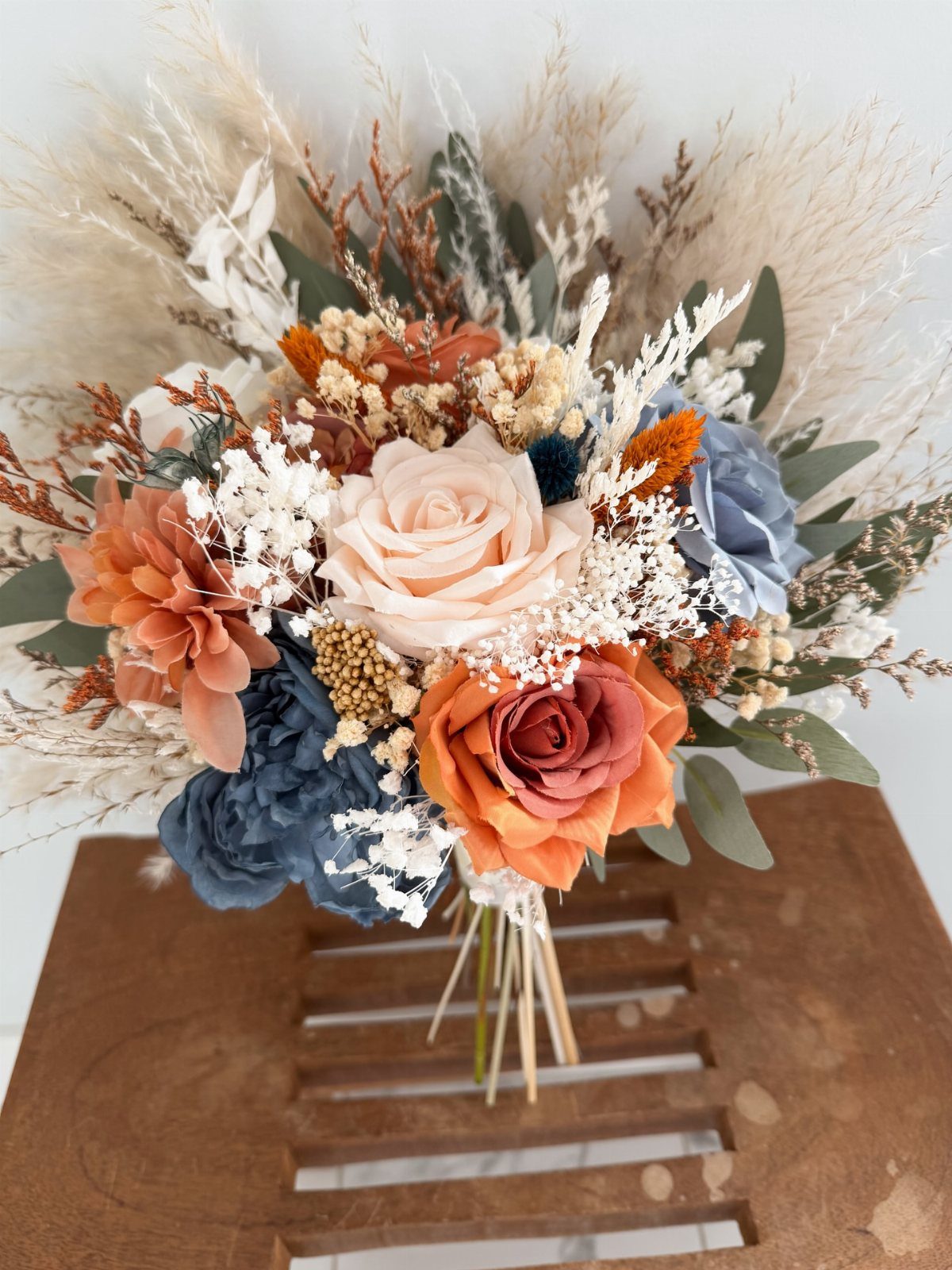
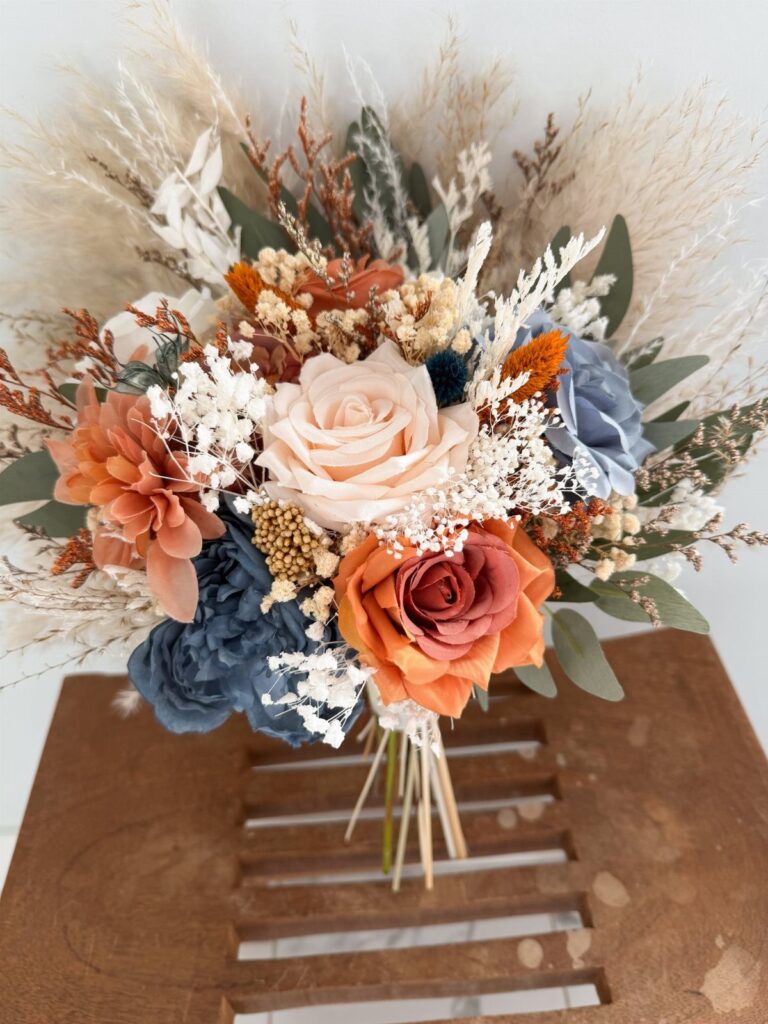
Burnt orange roses next to dusty blue ones is a bold pairing, and the white baby’s breath and dried pampas grass keep it from fighting itself.
The 2 colors sit opposite each other on the color wheel, so each makes the other look stronger.
I would let one color lead.
Make orange the main flower and use blue as the accent, or the reverse, rather than splitting the bouquet 50/50. Neutral filler like pampas calms the contrast and carries into boutonnieres and table arrangements.
2. Navy Blue
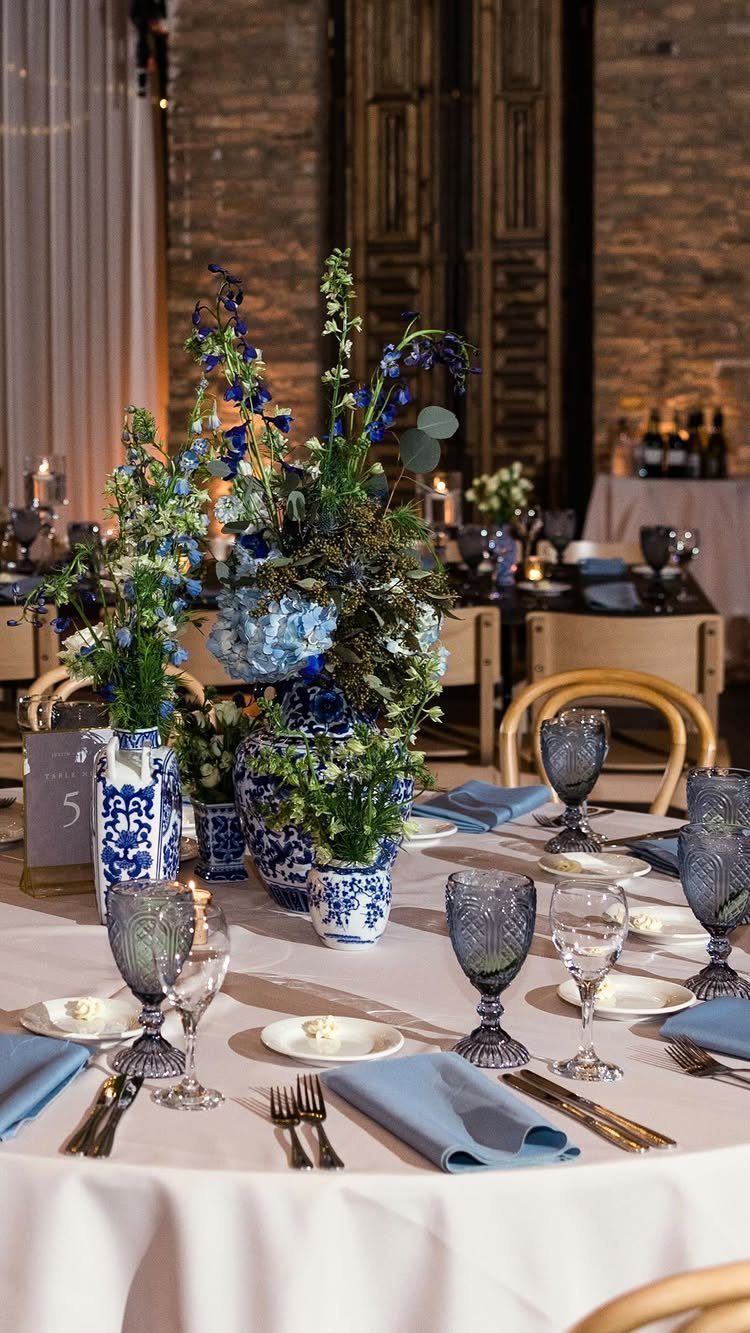
Navy reads as formal without feeling heavy, and it holds up beside pale tones in a way black rarely does.
A chinoiserie vase is a smart starting point for the palette: build around dusty blue, navy and cobalt, then add ivory and light green as accents, which is how the creator of this table described their own approach.
Navy napkins on a white cloth are the cheapest way in. Spend on the flowers and vases, where the pattern does the talking.
3. Mustard Yellow
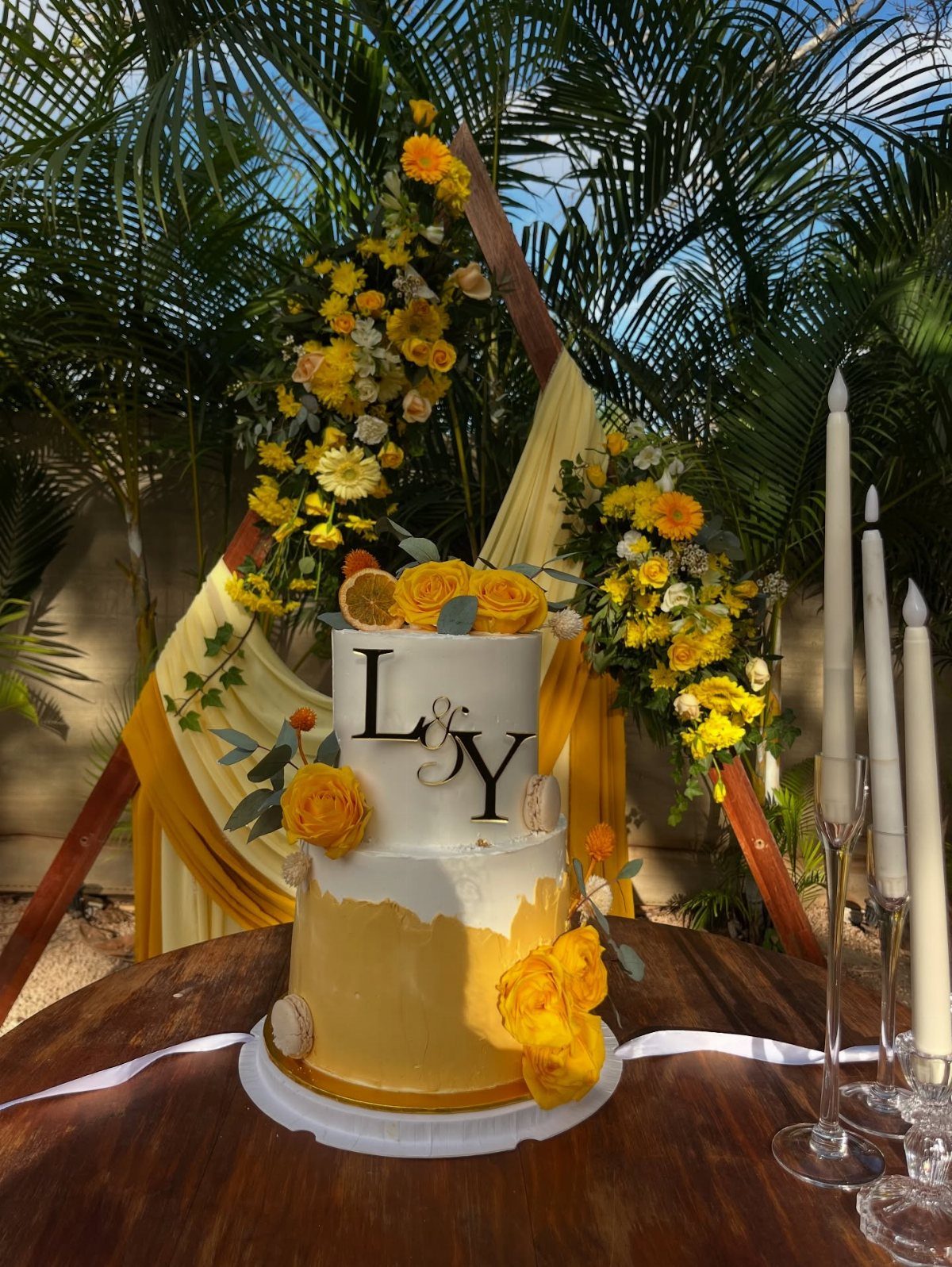
Mustard is the fall yellow that looks deliberate rather than sunny, and a cake is a low-risk place to try it. Yellow flowers and white candles repeat the color so the cake does not sit alone.
My advice is to keep mustard to a supporting role: cake, a few stems, maybe napkins. Paired with white and plenty of wood or neutral fabric, it warms a table without taking over.
4. Sage Green
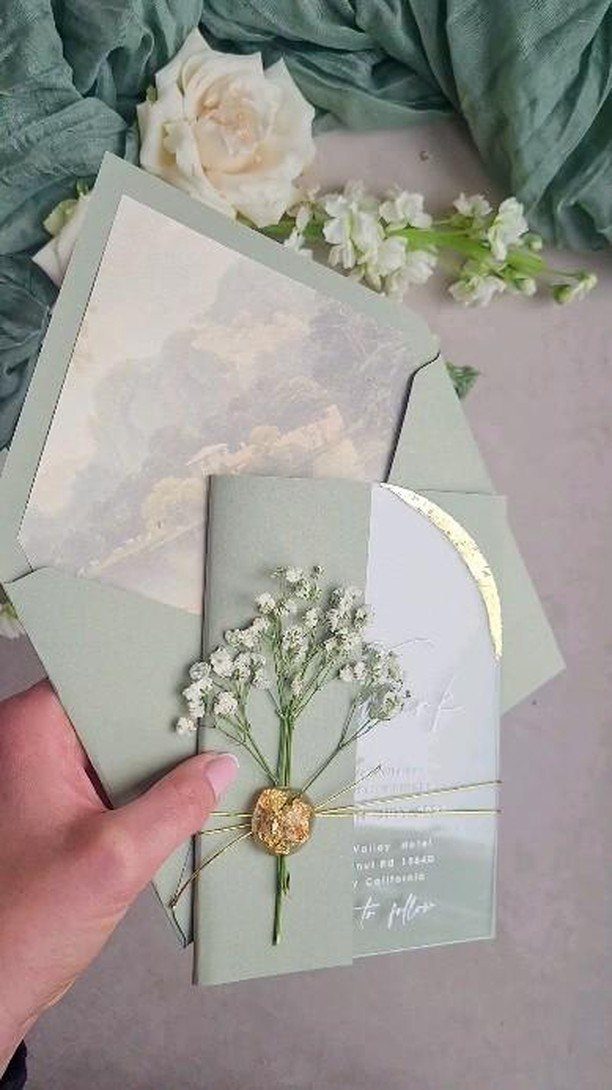
Sage green is gentle enough to work as a base color, and stationery is where it starts to show. An invitation in sage with a gold wax seal tells guests the palette before they arrive.
White roses and baby’s breath keep it soft. I would add gold in small touches, like the seal, rather than everywhere, so the green stays the quiet star.
5. Burgundy Florals and Reception Décor
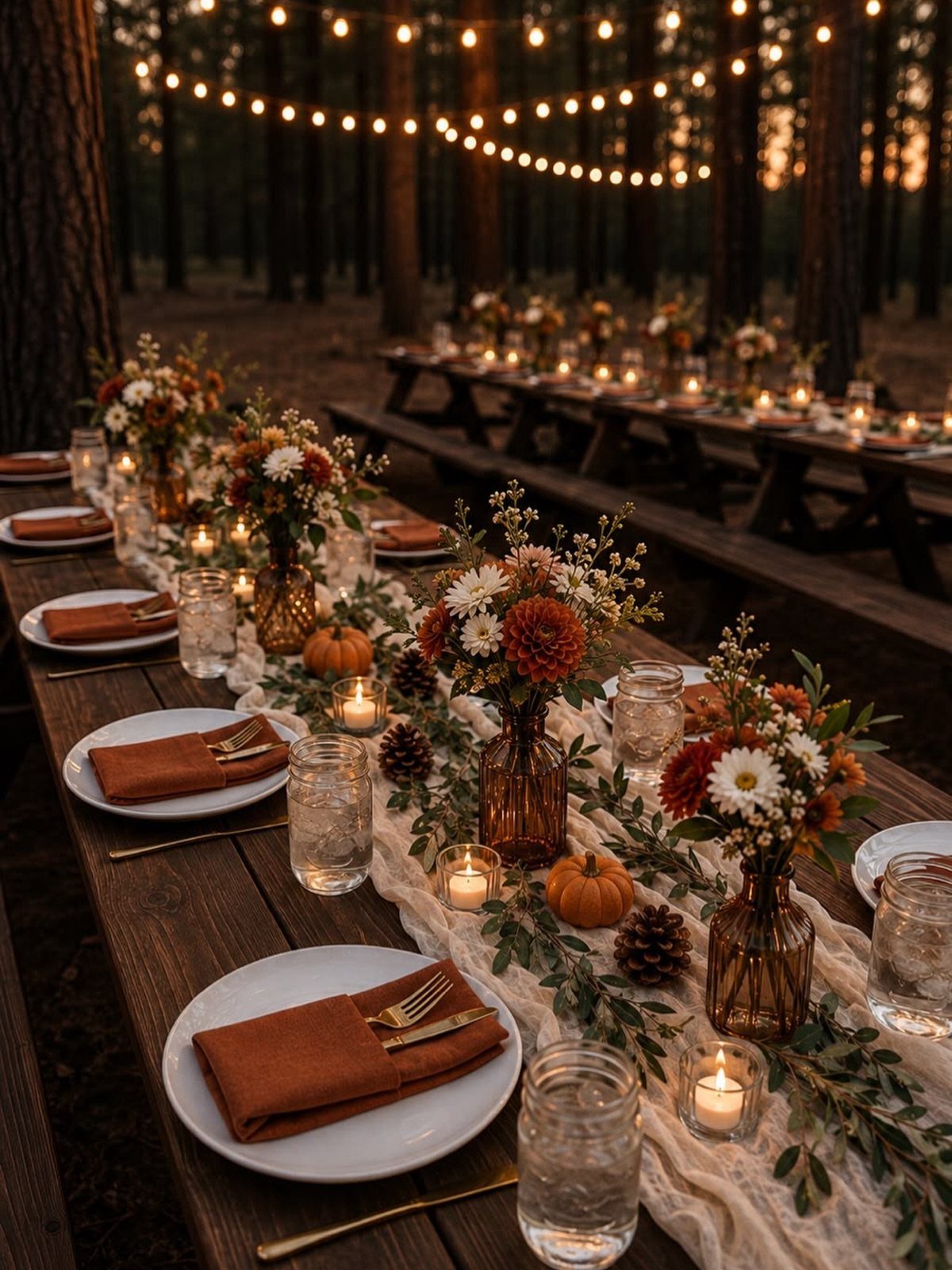
Burgundy gets its depth from contrast, so mix it with white blooms to keep a banquet row of seating from going dark and heavy. Pumpkins and candles add the harvest feel without extra flowers.
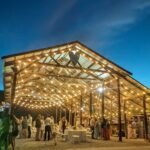
Orange or terracotta napkins warm the deep red, and string lights overhead do the rest after sunset.
Pumpkins run a fraction of what stems do, so let them fill the gaps in the table runner and save the florals for the center.
Deep colors, like a rich plum and beautiful burgundy, are bound to warm up any crisp fall evening.
6. Peach
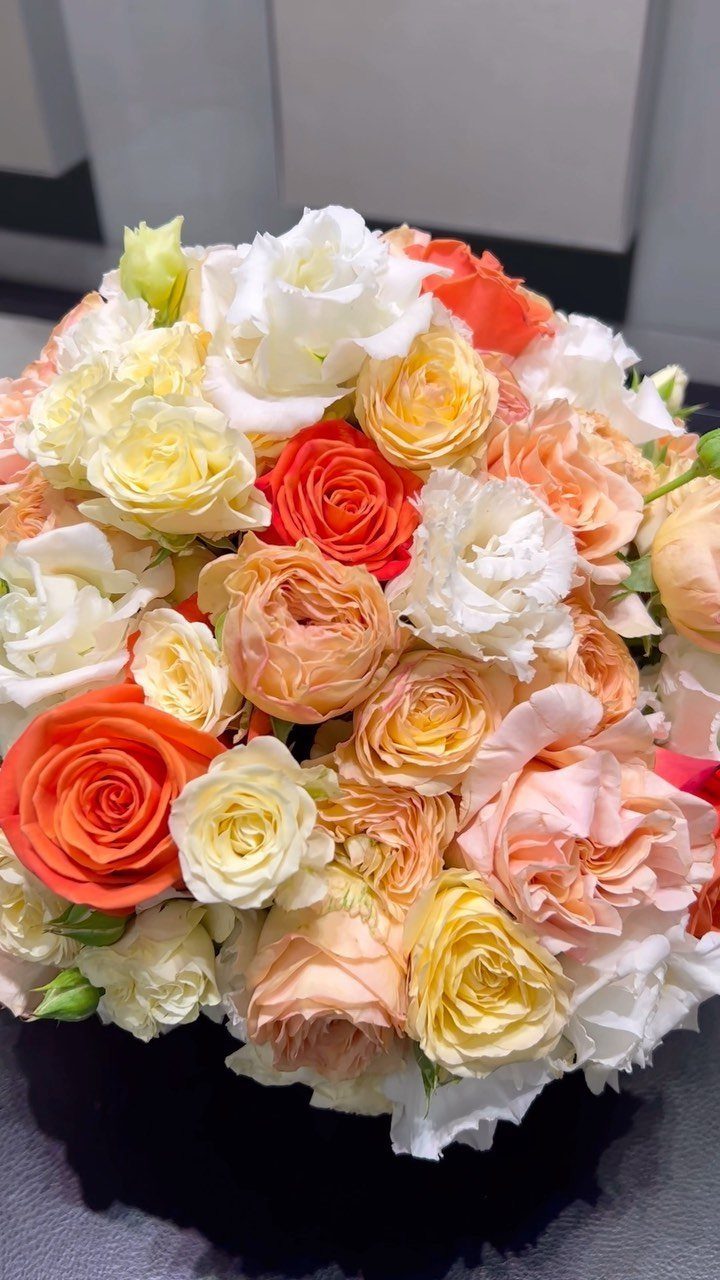
Peach is the softest way to bring orange into a fall wedding. Roses and lisianthus in peach, with touches of orange, yellow and white, give a bouquet that feels playful instead of heavy.
I like mixing several shades of peach rather than matching one exactly, because the variation looks natural and forgives a florist’s substitutions. Pair it with cream or white so it stays fresh and not sugary.
7. Cream
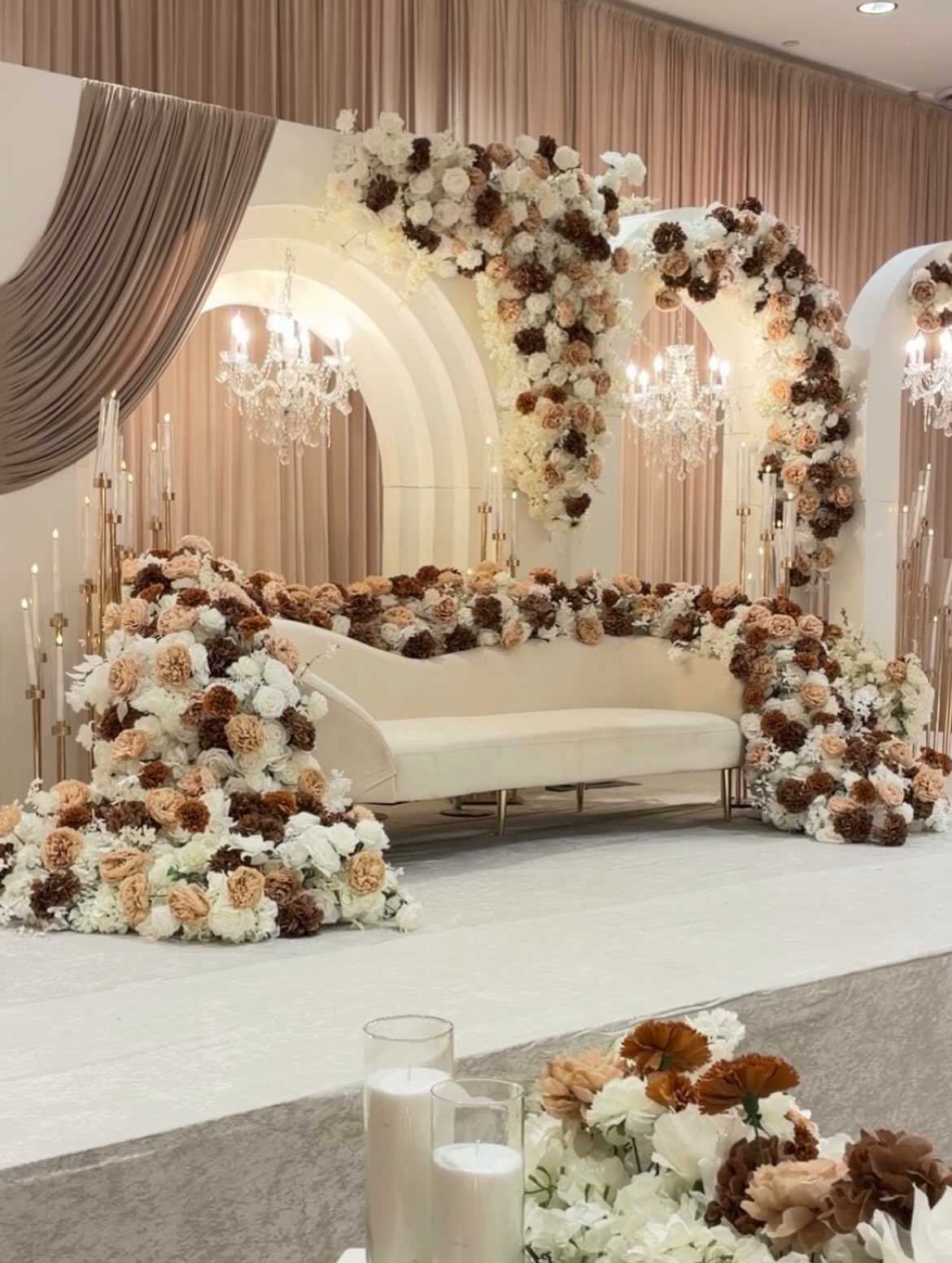
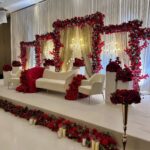
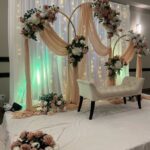
Cream is the neutral that lets a bold palette breathe, and a curved sofa in it gives a stage a focal point without adding another color to manage. Cream and brown florals keep everything in one warm family.
Use it as the base and let rust, burgundy or emerald do the shouting. I would pick cream over stark white for fall, since it sits softer next to candlelight and wood tones.
8. Emerald Green Bridesmaid Dresses
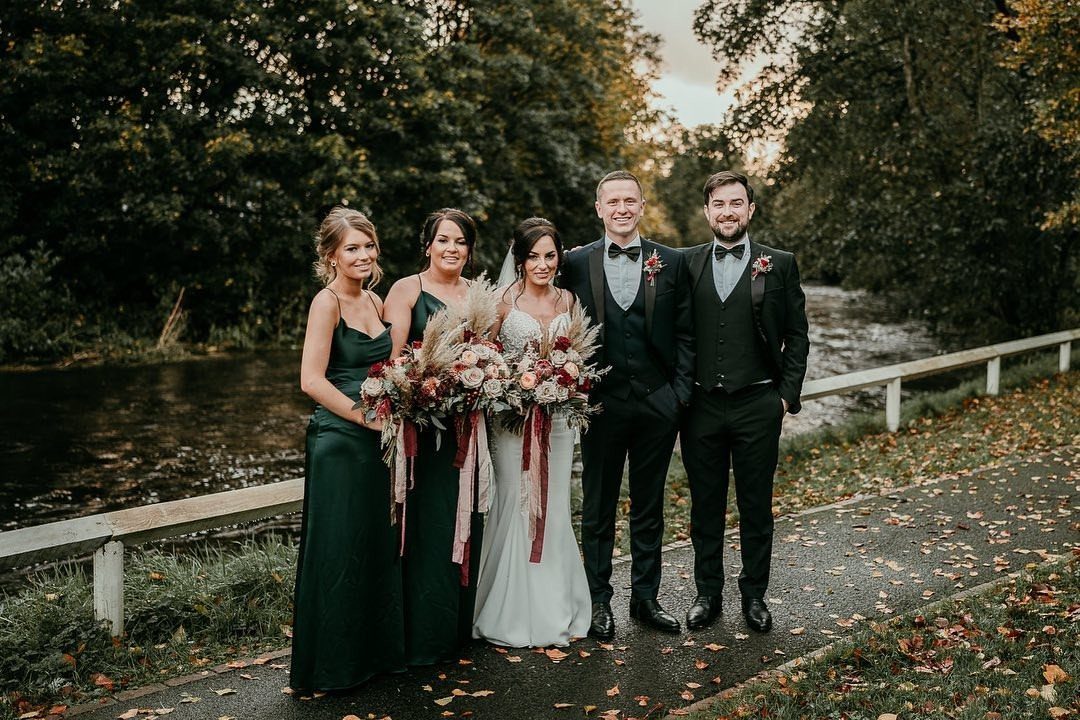
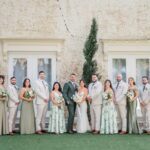
Emerald bridesmaid dresses are the easiest way to put a jewel tone in the wedding party, and dark suits on the groomsmen let the green stand out. Autumn leaves behind them make the color look richer.
Choose one shade and one fabric for every dress so the group reads as a set.
Floor-length gowns look best against dark suits. Keep bouquets simple, with white or cream blooms, so the green does the work.
9. Terracotta and Warm Tone Dresses
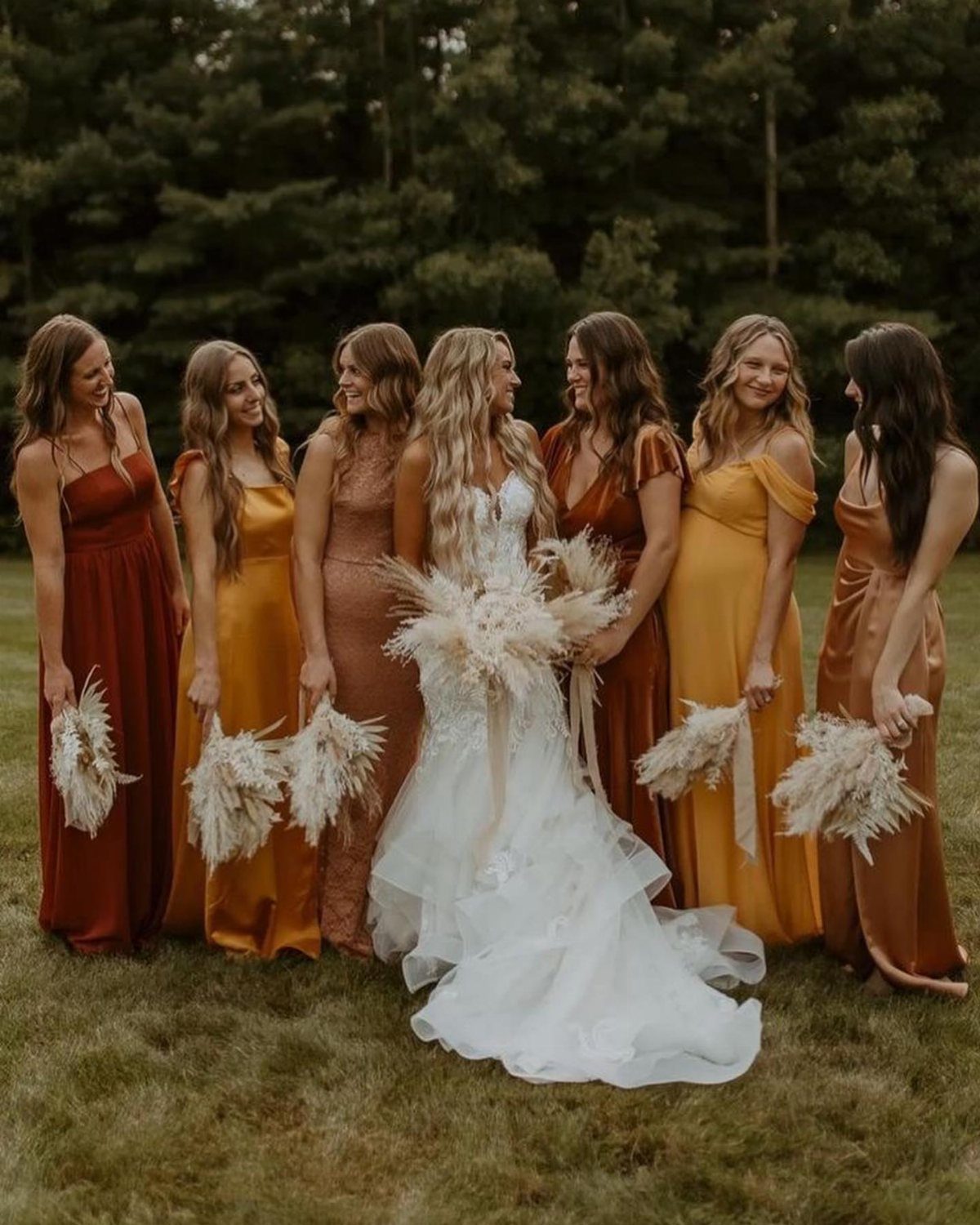
Mismatched dresses in burnt orange, mustard and terracotta give a bridal party the look of a fall field, and a bride in white stands out clearly among them.
Pampas grass bouquets tie the group together because their pale tan sits comfortably beside all 3 colors.
I would set the 3 shades in advance and let each bridesmaid choose her own, which keeps the mix intentional. Having everyone carry the same pampas bouquet keeps it from feeling random.
10. Autumn Pumpkin and Velvet Lounge
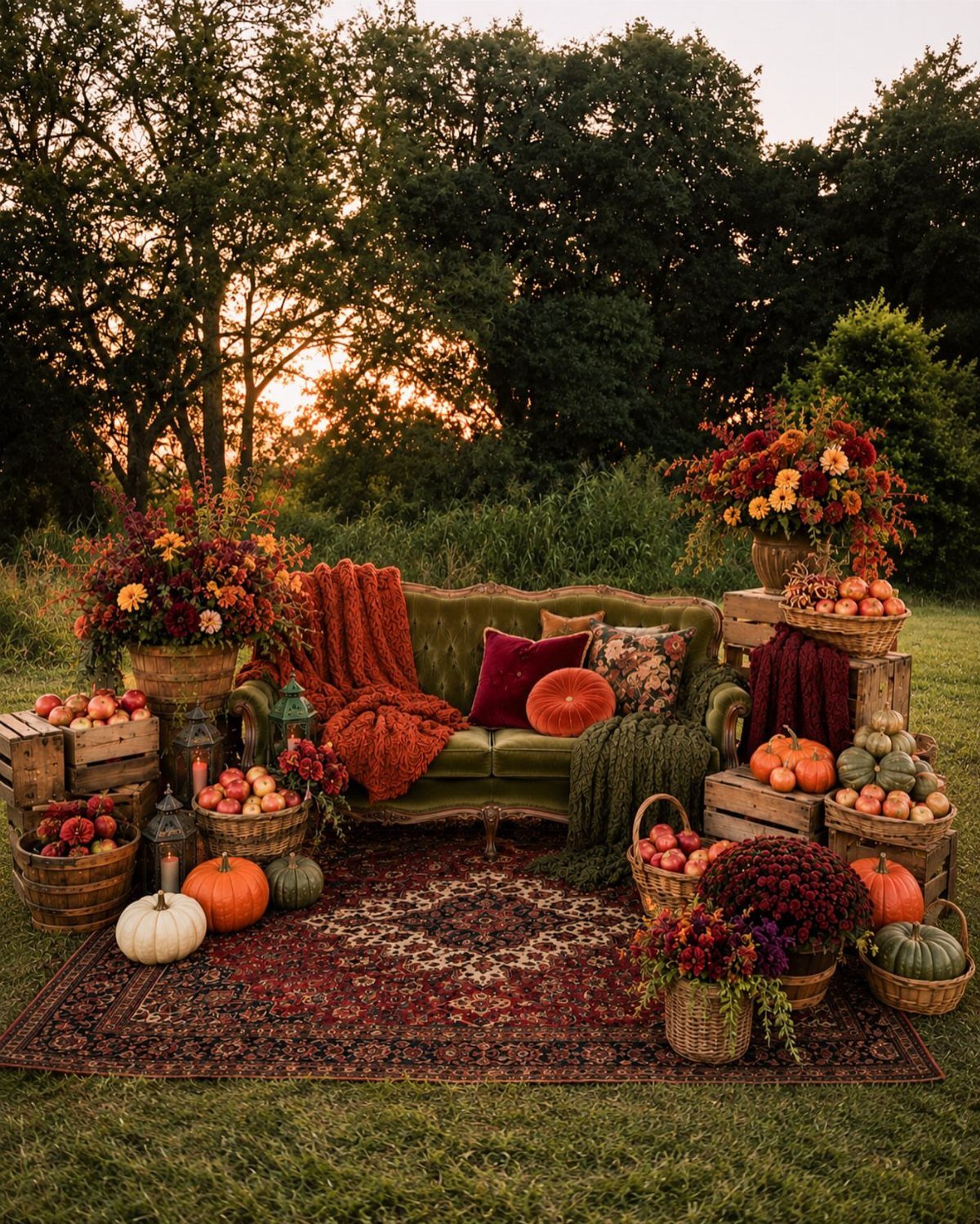
A velvet sofa on an ornate rug turns a corner of the grass into a lounge, and green velvet against red is a daring pairing that fall can carry.
Baskets of apples, pumpkins and orange florals fill the space around it.
Pumpkins and apples cost far less than stems, so let them do most of the filling.
Add lanterns for evening light. I would keep the florals to a couple of rich orange arrangements, so the sofa remains the focus.
Tips for Choosing Colors
Pair every deep shade with something light, and every warm shade with one cool note.
Texture does the rest. Velvet napkins, silk ribbon, wooden charger plates and metallic candlesticks make the same color look richer than flat paper or plain cotton can.
Carry the palette into the small stuff too: menu cards, escort cards, even the color of a signature cocktail. Three or four echoes of the same color look deliberate, and they run a fraction of what another flower order would.
Incorporating Colors
Pick the details guests handle, because those are what make a palette feel finished. Stationery, escort cards and favor packaging are cheap to print in your colors and easy to match.
A signature cocktail carries the color too. Spiced cider is one option, and a fig dessert can echo deeper tones on the plate.
Keep the repeats modest. Choose one shade for each item and let the colors recur, not multiply, so the day reads as one idea.
Seasonal Considerations
Choose flowers and food that already belong to the season, and the palette half-builds itself. Dahlias, ranunculus and mums come in autumn shades, so they sit naturally with the colors you picked.
Before settling on exact shades, check with your florist about which blooms are actually in season on your date. A color that grows locally in fall is easier to match than one forced out of season.
Extend the same thinking to the menu. Spiced cider cocktails and fig-forward desserts bring your colors to the table in a way guests can taste.
Frequently Asked Questions
What colors are acceptable for a fall wedding?
Deep reds, oranges, yellows and earthy browns are the classics, and burgundy, burnt orange, mustard, sage and emerald all work.
Pair each deep shade with something light, like cream or white, and add one cool note such as dusty blue or navy to balance the warm ones. That mix keeps a palette rich without turning dark or heavy.
What to wear to an autumn wedding?
Emerald gowns that reach the floor read best beside charcoal or black suits, since the dark jackets let the jewel tone stand out.
Another option is a mix of burnt orange, mustard and terracotta dresses, with each bridesmaid choosing her own from 3 set shades.