Dark greenery runs from a single stem laid low between candlesticks to paired ceremony pillars of dark red blooms and heavy foliage, and the price climbs with every flower you add.
The leaf-to-bloom ratio decides which idea is yours: if money is short, the garland and the fern-lined aisle let leaves carry the look, while a bigger floral line can cover the ceremony pillars.
1. Italian Ruscus
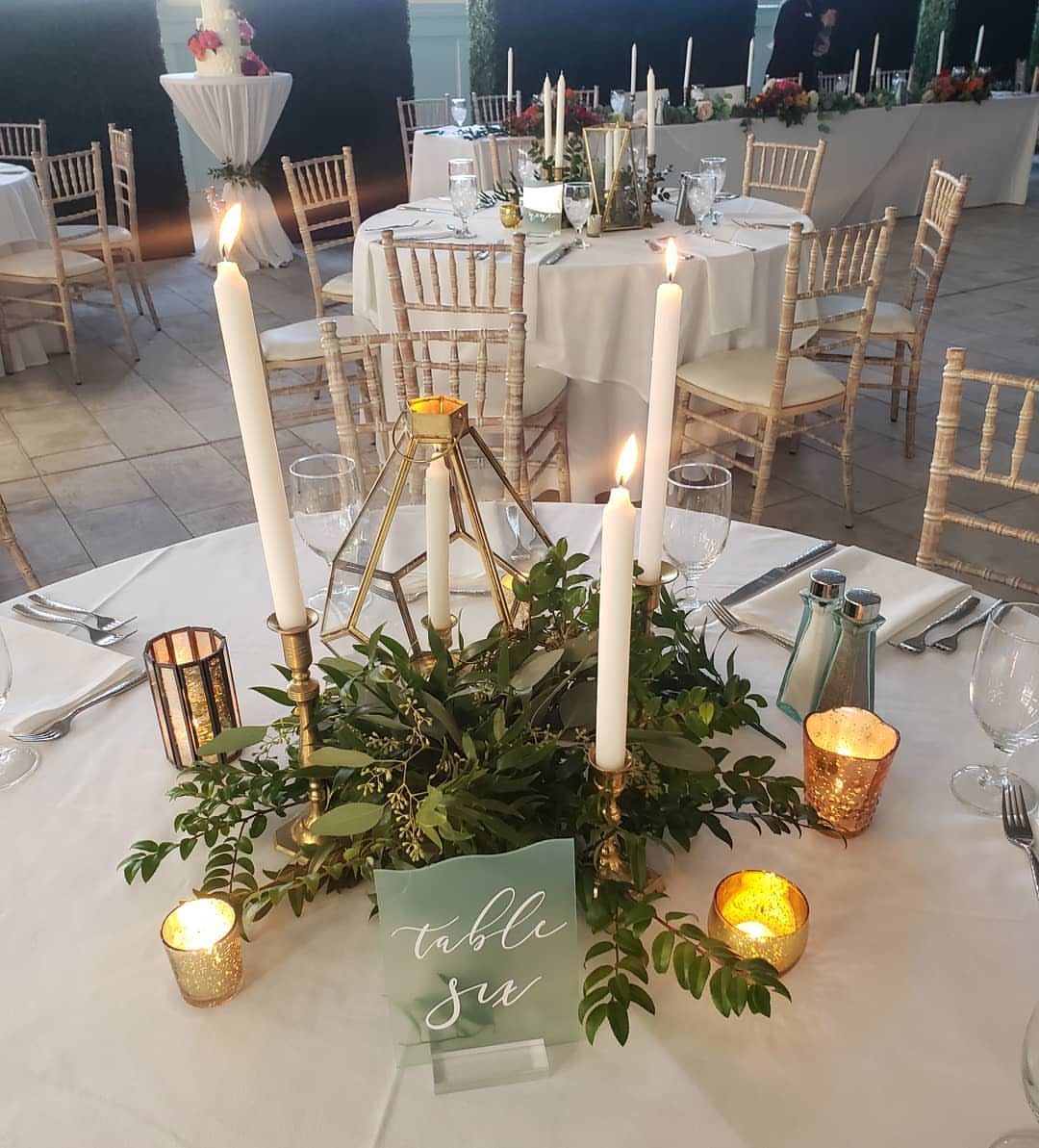
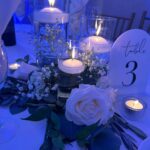
Italian ruscus has deep green, slightly shiny leaves, and that gloss catches candlelight in a way matte foliage cannot. Against white tapers and gold accents, it reads rich without costing much.
For a budget table, I would let the ruscus do most of the work and use only a few flowers. Lay the stems low and loose between the candlesticks so the leaves become the centerpiece itself.
2. Seeded Eucalyptus
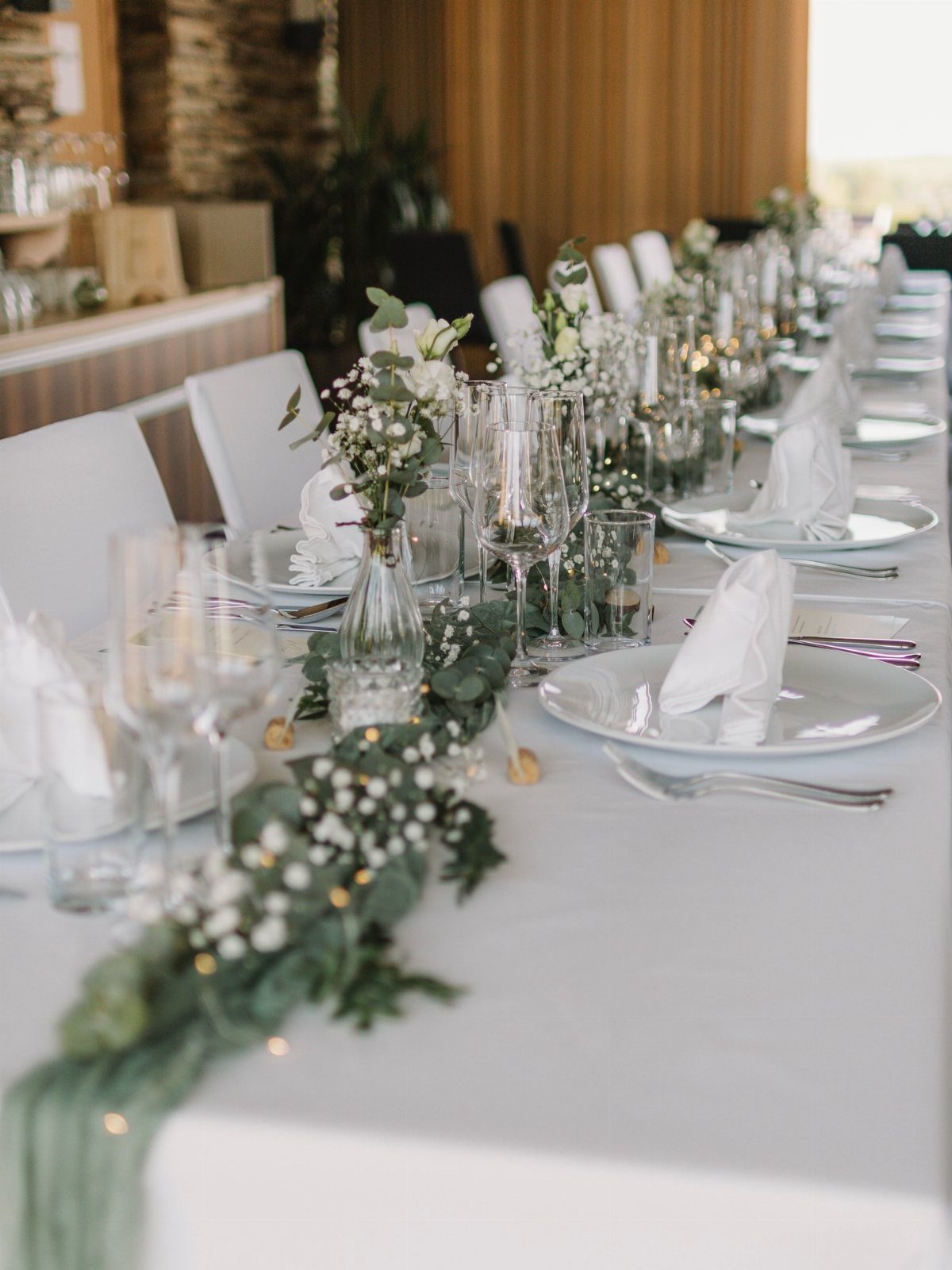
Texture is what seeded eucalyptus sells, and a long runner of it gives a plain white table plenty to look at. The seed clusters break up the line of the leaves, so even a thin strip reads full.
Tuck a few white blooms in rather than a lot, and the runner stays the star.
3. Dark & Moody Bouquets
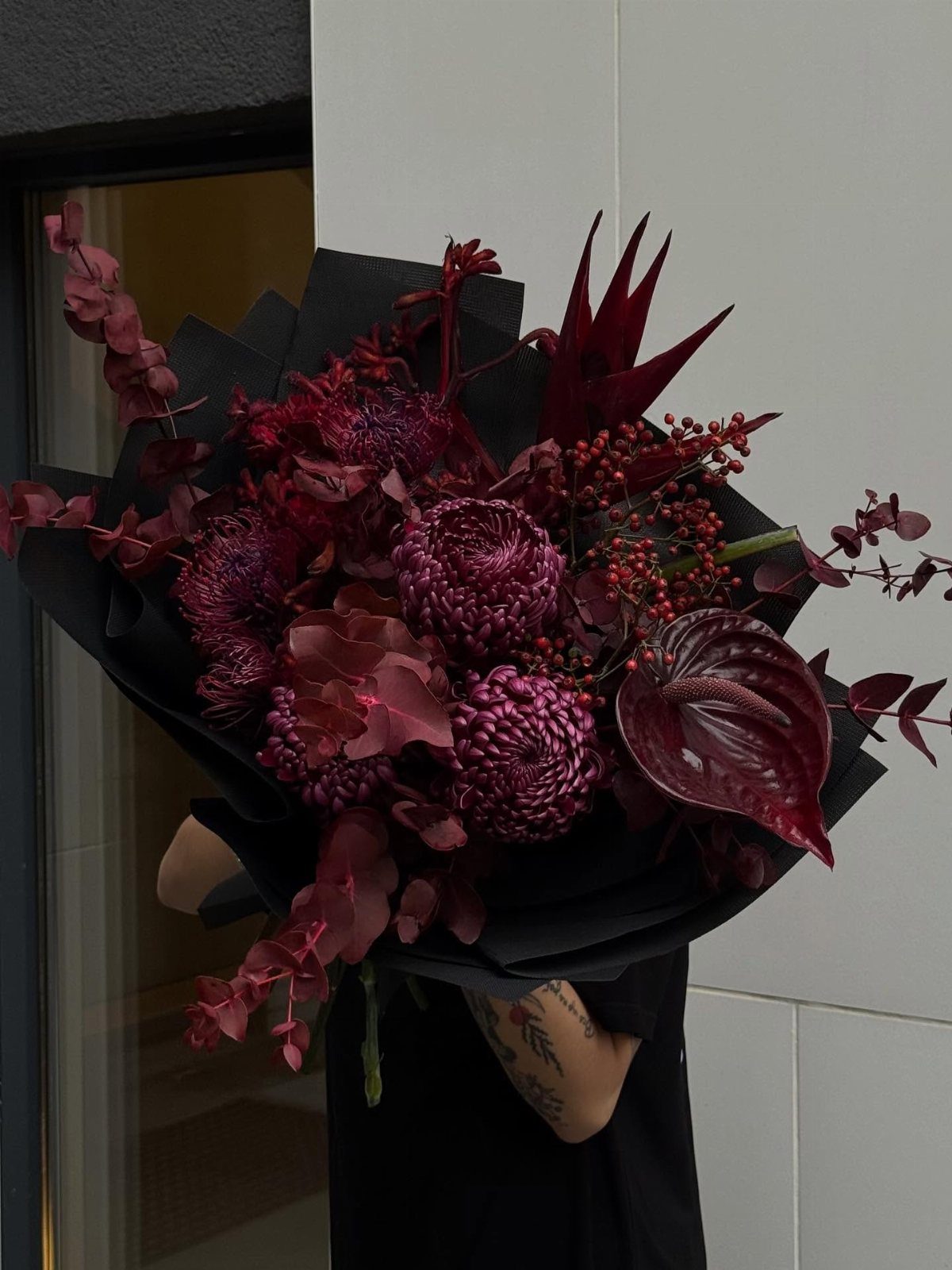
Burgundy and maroon blooms, wrapped in black paper, make a bouquet that feels like evening even at noon. Anthurium and chrysanthemums are the kind of sturdy, deeply colored flowers that suit this look.
Stay in one narrow range of shades so the bunch reads as a single dark mass. Black paper wrap costs little and finishes it, so I would spend the money on the blooms instead.
4. Eucalyptus
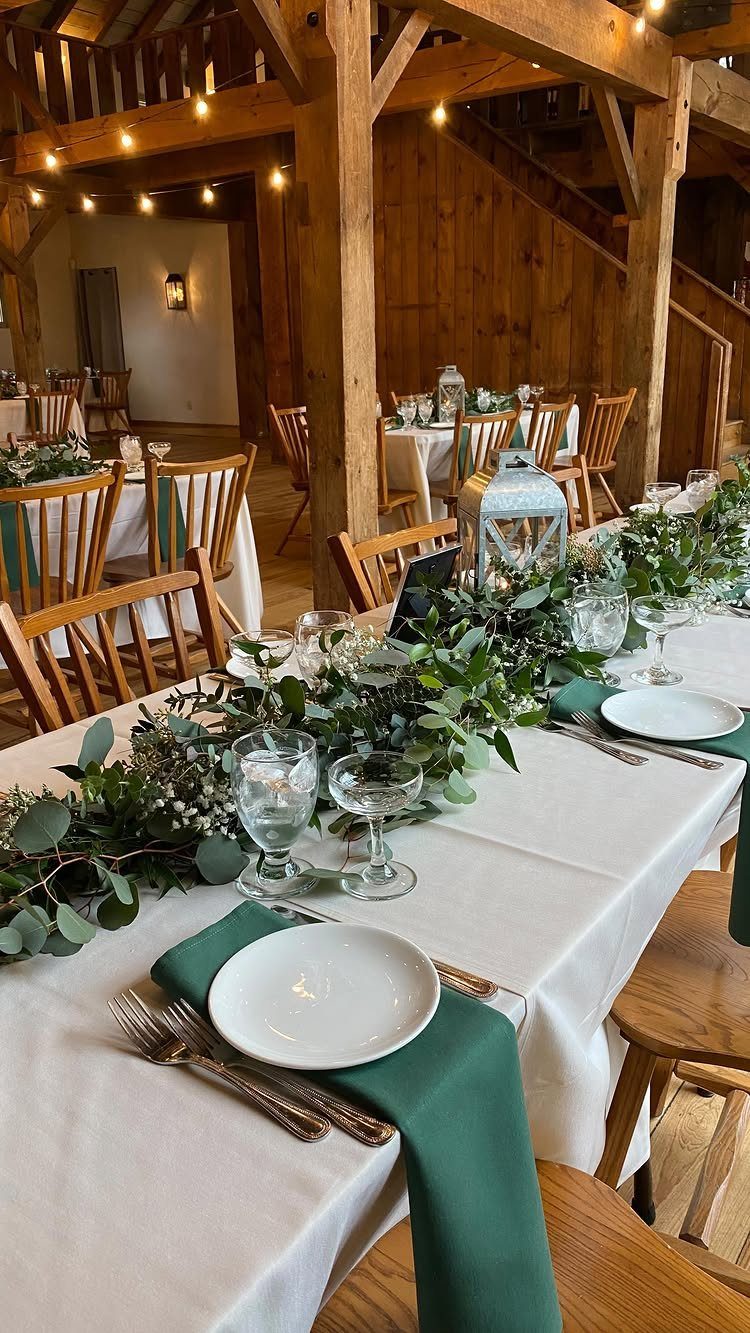
Common does not mean dull.
Dark green napkins pick up the foliage and tie the table together for almost nothing extra. A single lantern or a few small accents are enough; the greenery already fills the length.
5. Dark Greenery Table Garland
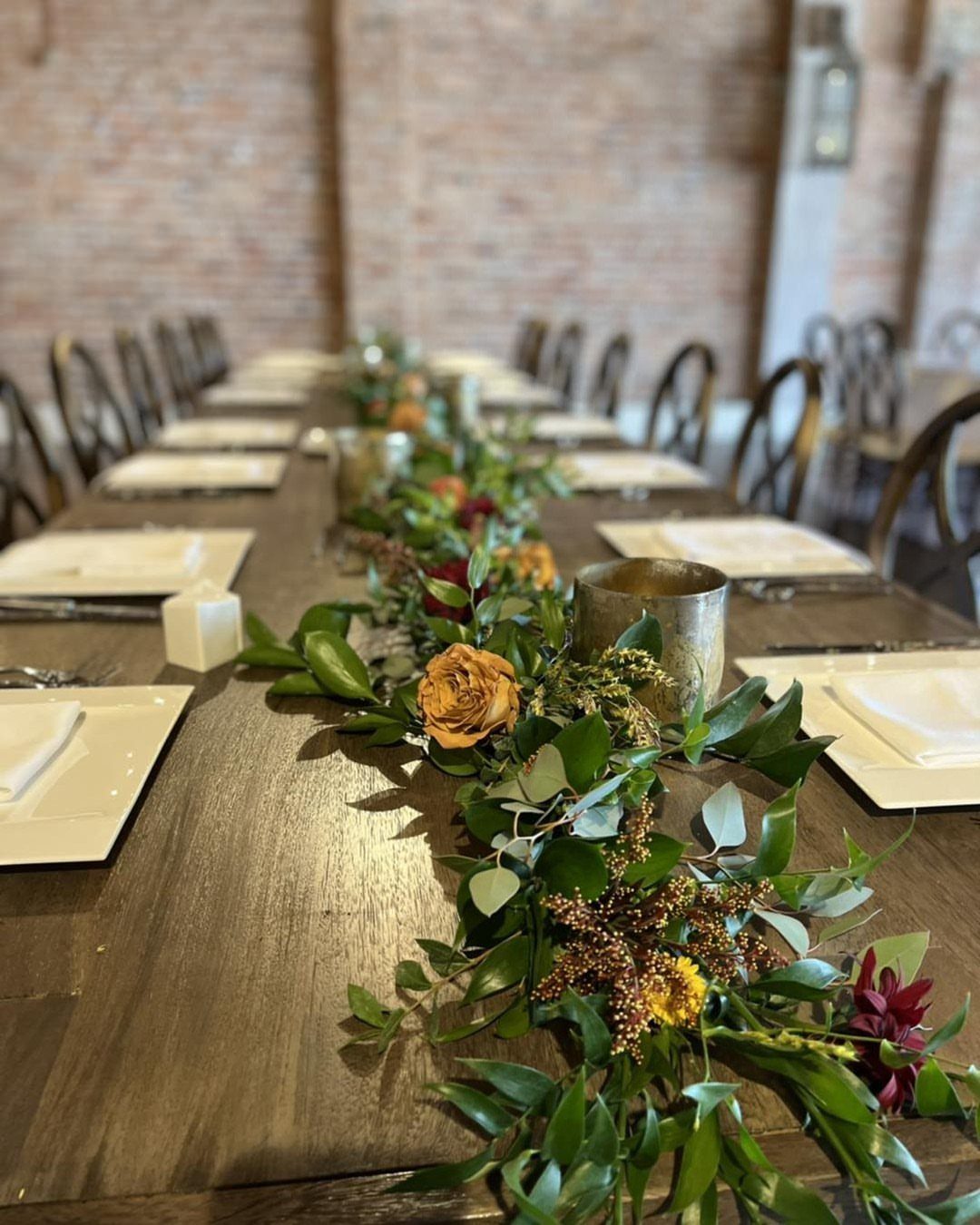
Warm flowers are what make dark foliage glow. A garland of dark green with orange and red blooms, run down a wooden table, gets its contrast from the color pairing rather than from volume.
I like this one for DIY couples: build the green base first, then add the blooms in small clusters, spaced out. Fewer flowers placed well beat many scattered.
6. Dark Floral Ceremony Pillars
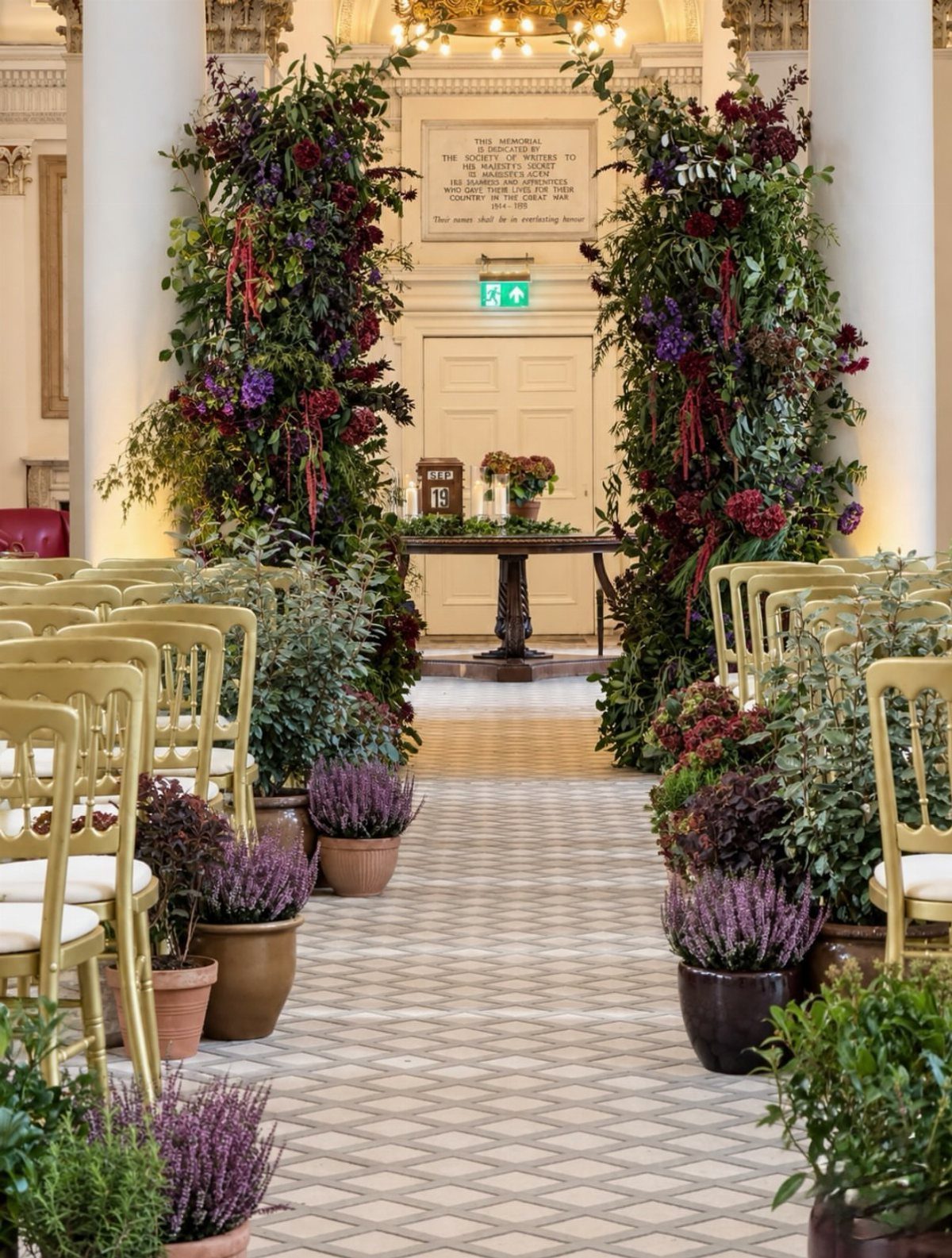
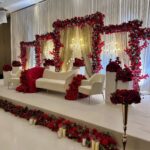
Pillars of dark red blooms and heavy greenery give an aisle height, and they do it in pairs so the frame feels deliberate.
Gold chairs sit well beside deep red flowers, since the warm metal picks up the red without competing with it.
Taller florals cost more than table pieces, so I would spend on the best flowers for the pair at the front and pack the greenery in thick. Matching both sides matters more than any single bloom.
7. Forest Aisle Lined with Ferns
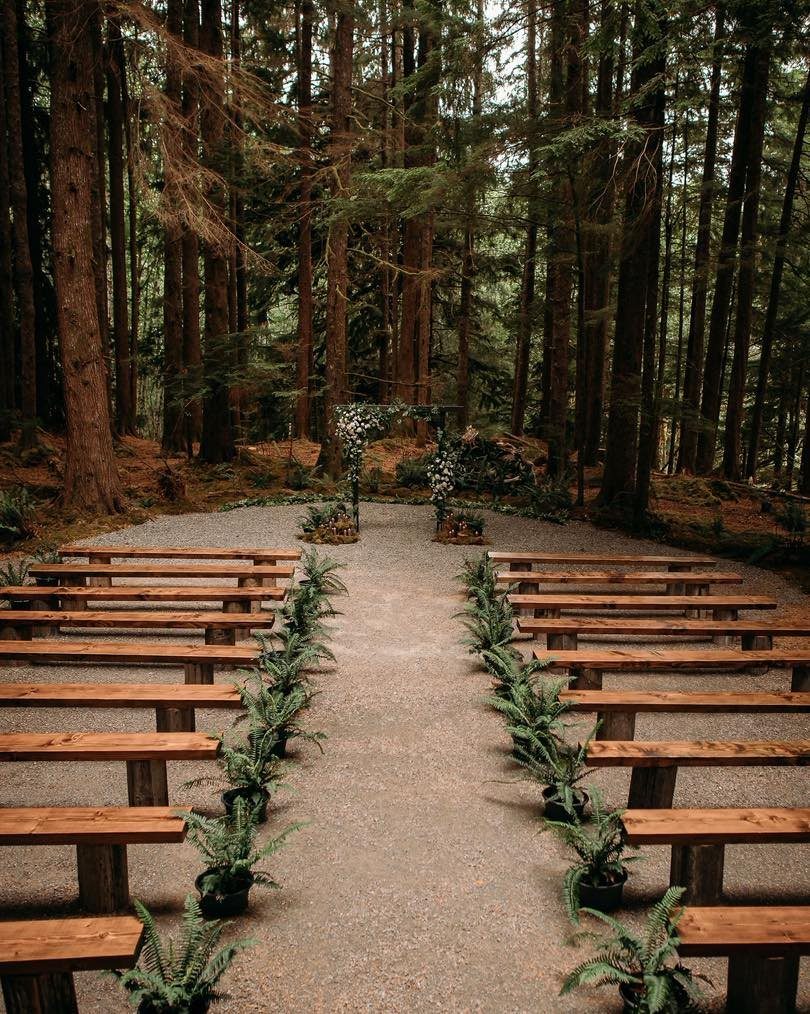
Potted ferns set along both sides of a gravel aisle turn a clearing into a ceremony space, and the greenery does most of the work before a single bloom appears.
Plain wooden benches are all the seating this aisle needs, since the trees around them already supply the decoration.
If money is short, I would put it into the arch at the end and trust the ferns to fill in along the sides.
Space the pots evenly, one beside each bench row, so the line leads the eye straight to the backdrop.
Potted ferns can often be reused after the day, which is a point in their favor over cut stems. Matching the pots keeps the border looking intentional.
Using Greenery in Bouquets
Start with the greenery, then add flowers to fill the gaps. Every extra bloom raises the price, so the ratio of leaves to flowers does more for your floral budget than any single variety you pick.
Build a bouquet with a generous base of foliage and a smaller number of focal flowers. Leaves add texture and depth, which means a bouquet with fewer blooms still looks full and layered rather than sparse.
If you are making your own flowers, buy the greenery first and test the proportions before ordering the pricier stems. You will know how many blooms you actually need, and that number is often lower than you expect.
Seasonal Considerations
Greenery varies by season and by what local growers have in the ground, so a variety you love in a photo may not be available for your date.
Ask a nearby grower or florist what is in good supply around your wedding date, before you settle on a look.
Choose the foliage that is plentiful for your month and build the palette around it. In-season stems tend to arrive fresher and cost less than something shipped from far away.
Online sellers do ship fresh greenery to your door, which helps if local choices are thin. Order early, and plan for a little extra time to let the stems settle and drink before you arrange them.
Frequently Asked Questions
What is the cheapest greenery for a wedding?
Italian ruscus is the budget pick I would reach for first, since its glossy dark leaves look rich and cost little. Seeded eucalyptus is a close second because its seed clusters make even a thin runner look full.
Whatever you choose, a generous base of foliage with fewer flowers keeps the floral total down, and in-season stems from a nearby grower usually cost less than ones shipped far.
What flowers are naturally dark green?
Few true flowers are dark green, so a dark green look usually comes from foliage instead.
For a true deep green, I reach for Italian ruscus, whose glossy leaves read almost black in low light, and for ferns, which hold their color well and cost little by the bunch.
For dark color in the blooms themselves, burgundy and maroon varieties such as anthurium and chrysanthemums sit well against the greenery.