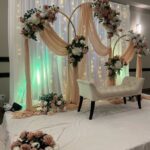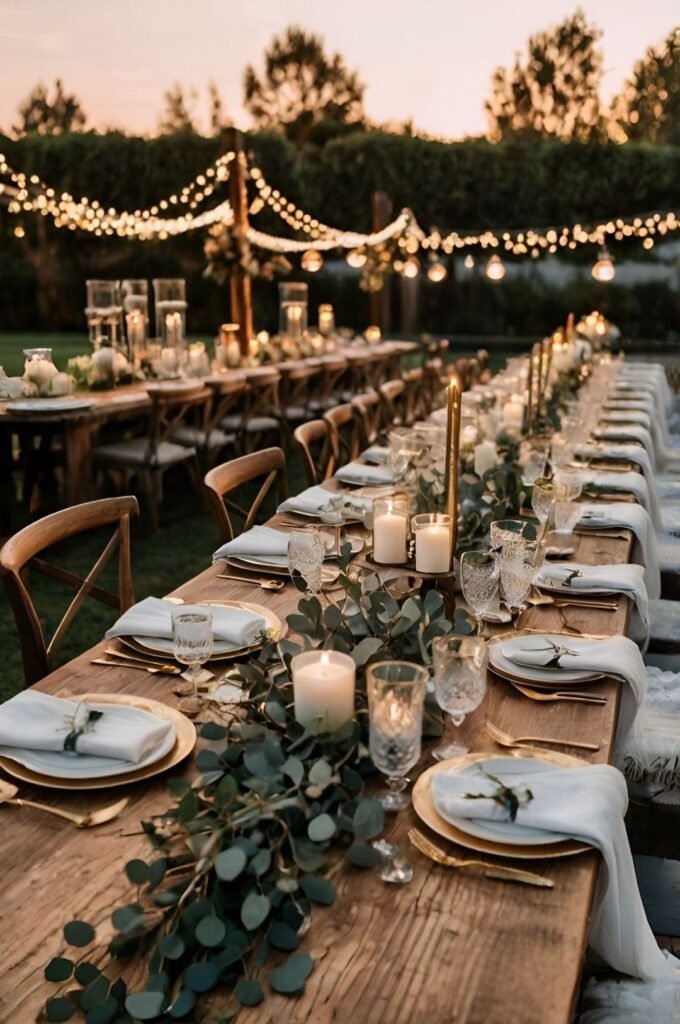
The range is wide: bottles, tins and jars saved over a few months cost almost nothing, while a full rental order of chargers, dinner plates and glassware for every guest sits at the other end.
Renting vs. buying comes down to budget and what happens to the pieces afterward, since buying leaves you storing them and a destination wedding makes renting the easier call.
1. Classic Candelabras
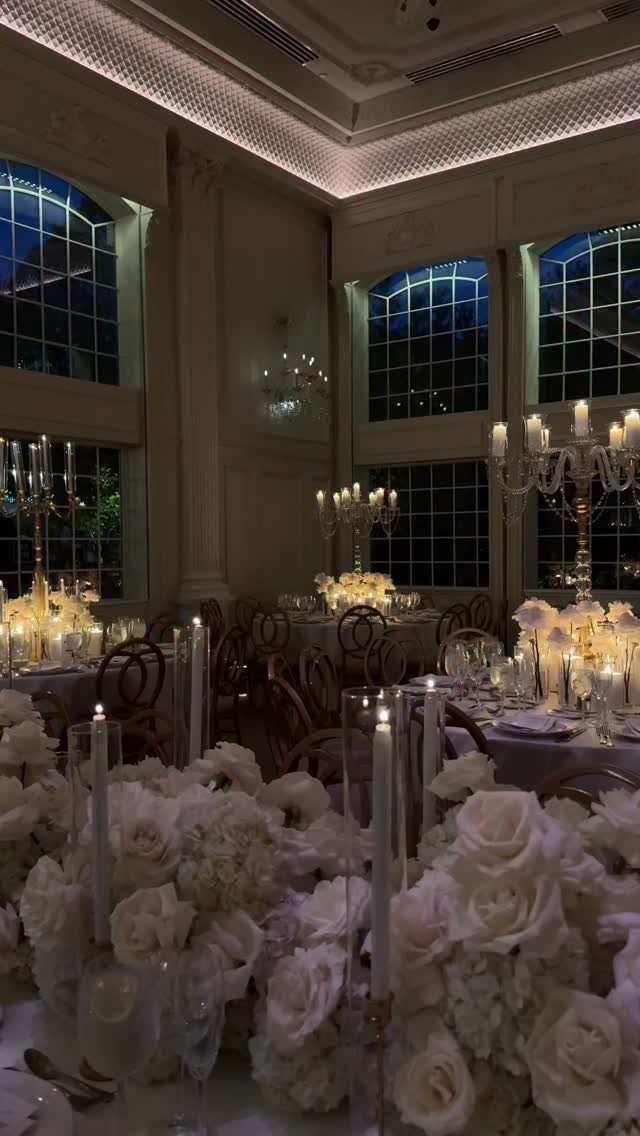
Tall candelabras pull the eye up and off the table, which leaves the tabletop free for low white roses and place settings.
Pairing them that way keeps sightlines clear, so guests can talk over the flowers to the people facing them.
Silver or gold both work; pick the metal that matches your flatware so the table reads as one set. Rentals usually cost less than buying, and the same pieces can repeat down every table.
A 300-guest reception was designed to feel like an intimate dinner party, and candlelight is a big part of how that works at scale.
2. Centerpieces with Fresh Blooms
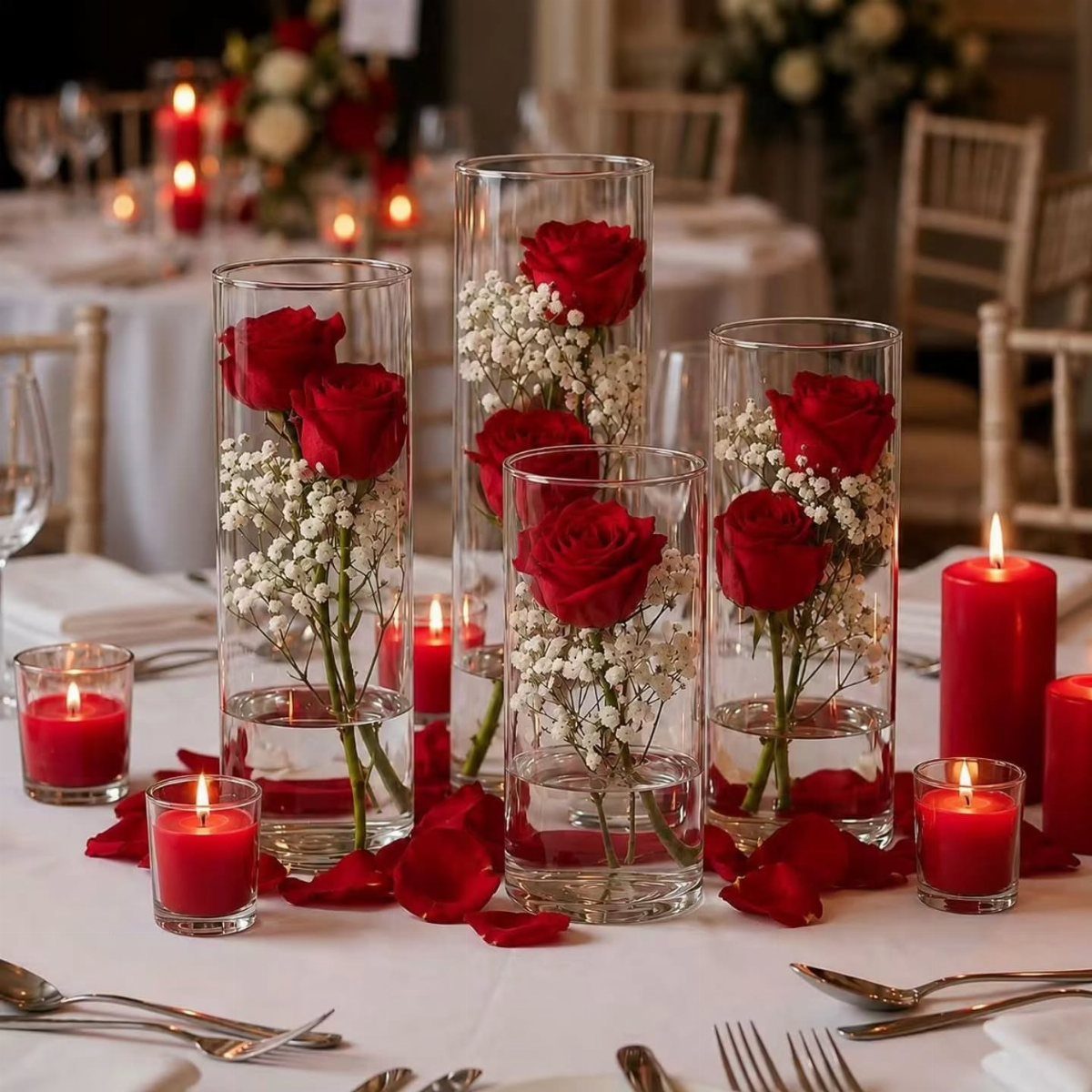
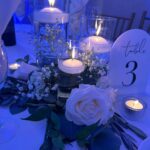
Grouping three cylinders at different heights reads as one arrangement, and it is easy to build yourself from grocery or wholesale stems.
Scatter a few petals and add red votives around the base. I would keep the baby’s breath generous, since it fills gaps and softens the red.
Glass cylinders also let you see the stems, so trim them clean.
3. Vases and Candles
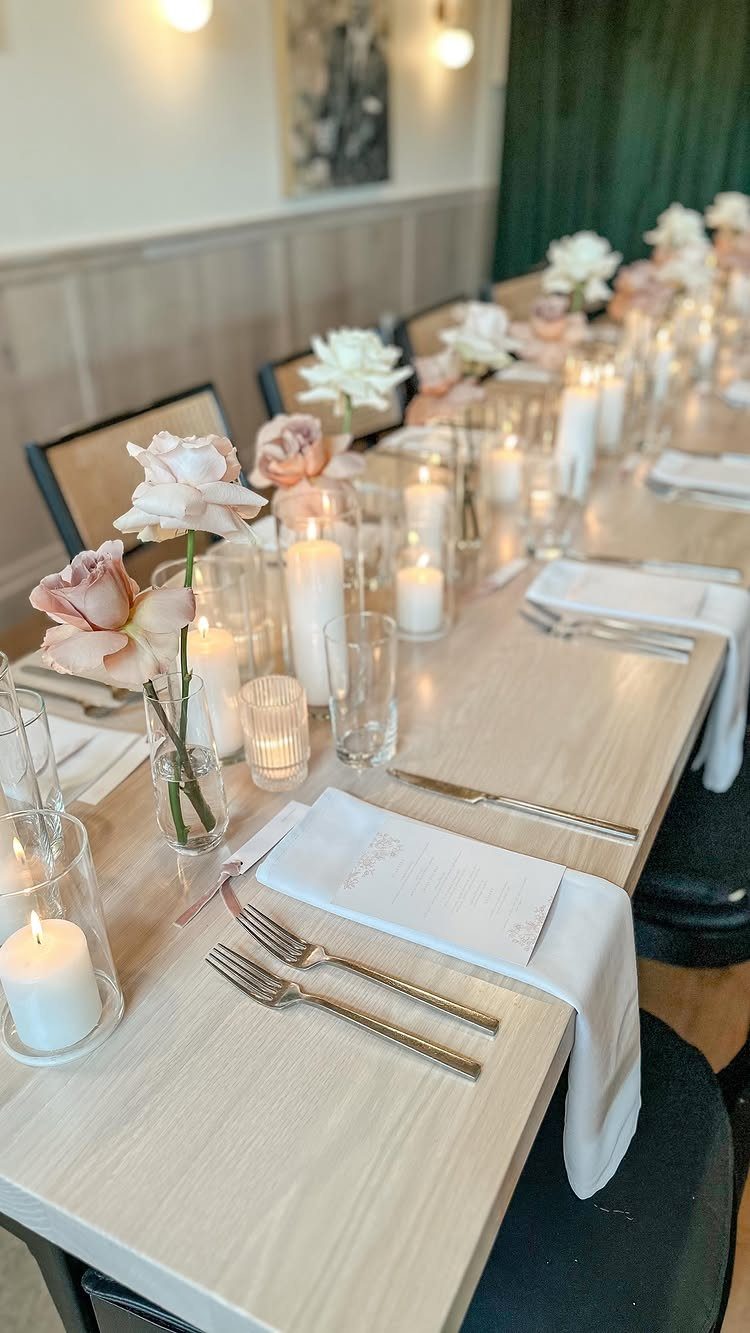
Pale pink roses in small glass vases, run down the center of a long table with white candles between them, is a setup I would pick for a tight budget.
A few stems per vase go a long way, and the candles do the heavy lifting once the room dims.
Vary the vase sizes slightly so the line looks collected, not rigid. Keep the candles in glass holders so they stay lit if someone walks past.
Leave enough bare table for plates and glasses.
4. Faux Greenery Garlands
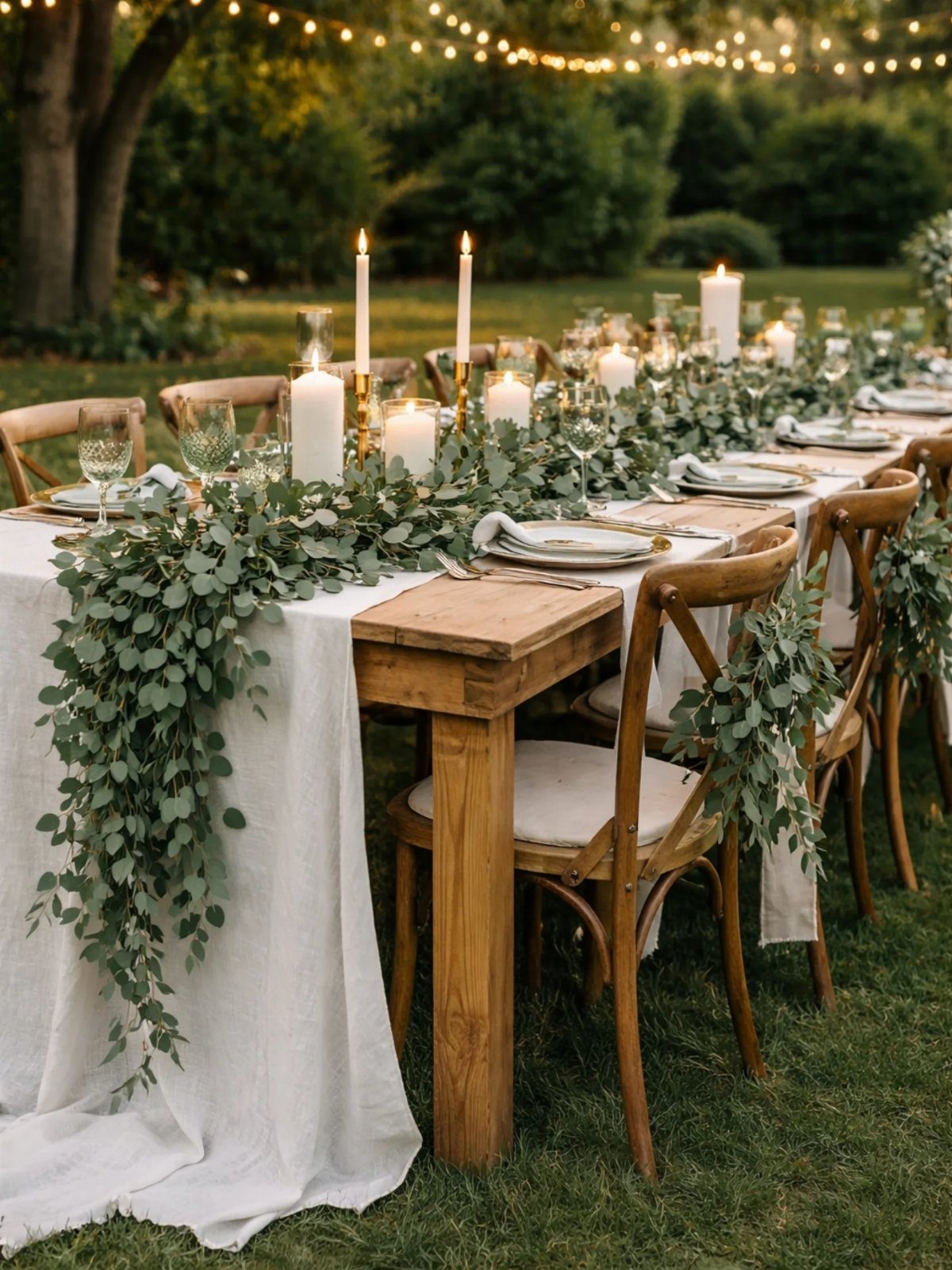
A faux garland is the one centerpiece you can make weeks ahead without watching it wilt. Faux greenery never wilts or fades, so it can sit on the tables, or be handled, long before the day.
Lay it down the center of the table, tuck white candles into the gaps, and fluff the leaves by hand so nothing looks stiff. Eucalyptus-style greenery against white linen is a clean, low-cost look.
A few fresh blooms tucked in will bring some scent.
5. Vibrant Color Palette
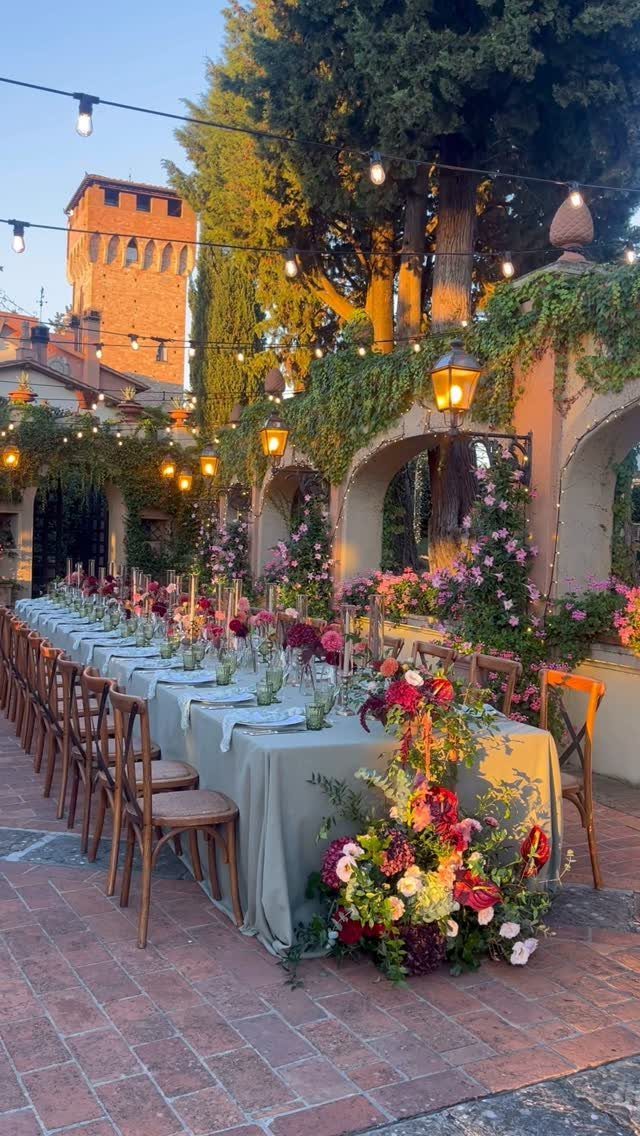
Let the neutral cloth and clear glassware carry everything else, and put all the color in the flowers.
Pick 2–3 shades and repeat them on every table so the palette feels planned, not random. Bright blooms often cost the same as pastel ones, so the budget risk is low.
I would skip colored napkins; the florals are enough.
6. Place Setting Details
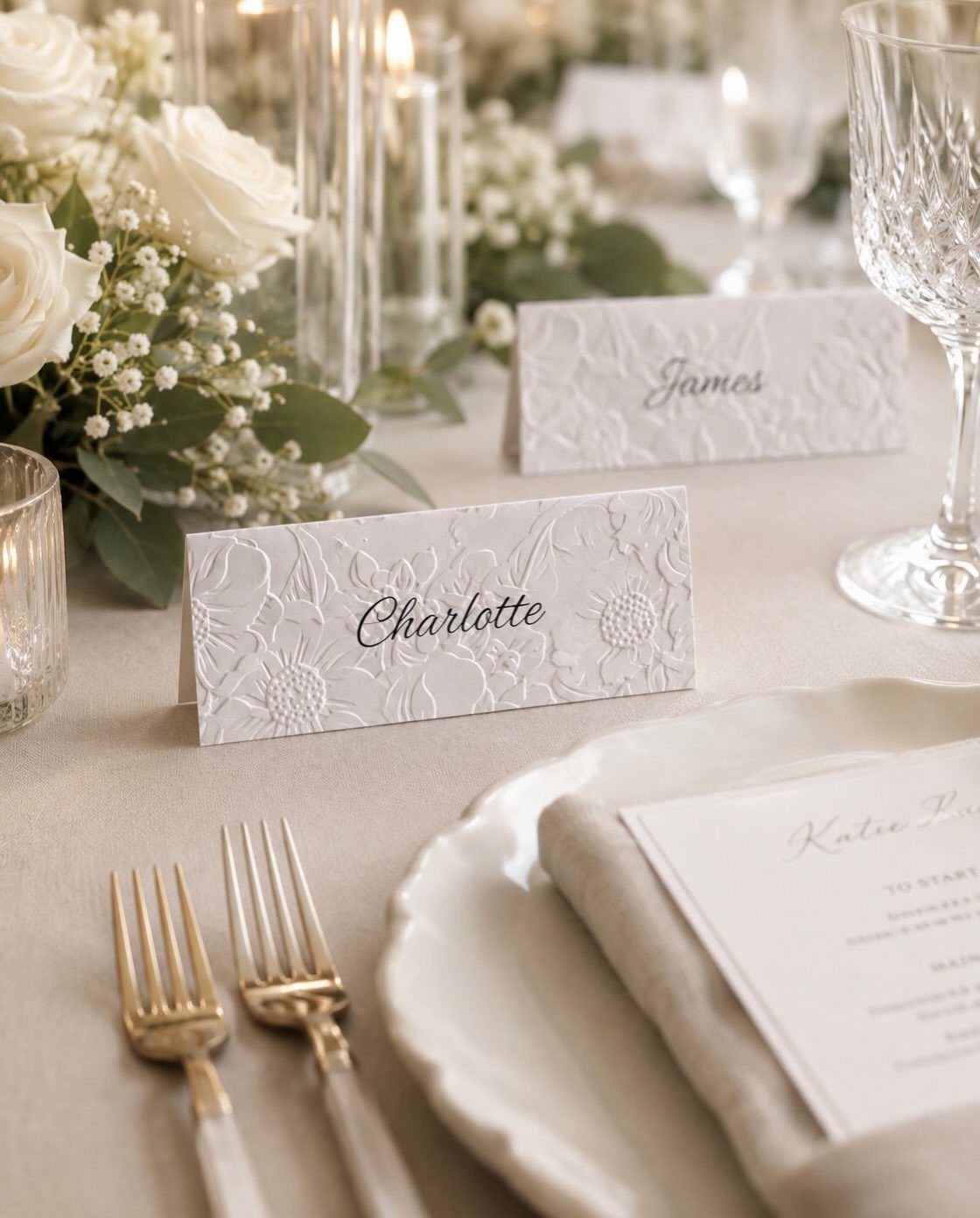
Place cards can be part of the decor instead of an afterthought. Embossed white cards with first names, set beside gold flatware and white flowers, add texture without adding clutter.
Keep the card color close to your plates so it stays quiet. Writing each name in the same style matters more than the paper itself.
Seating charts and nameplates can follow the same look, which ties the entry table to the dinner tables. A blank sample card is worth testing before you order a full batch.
7. Bottles, Tins and Jars
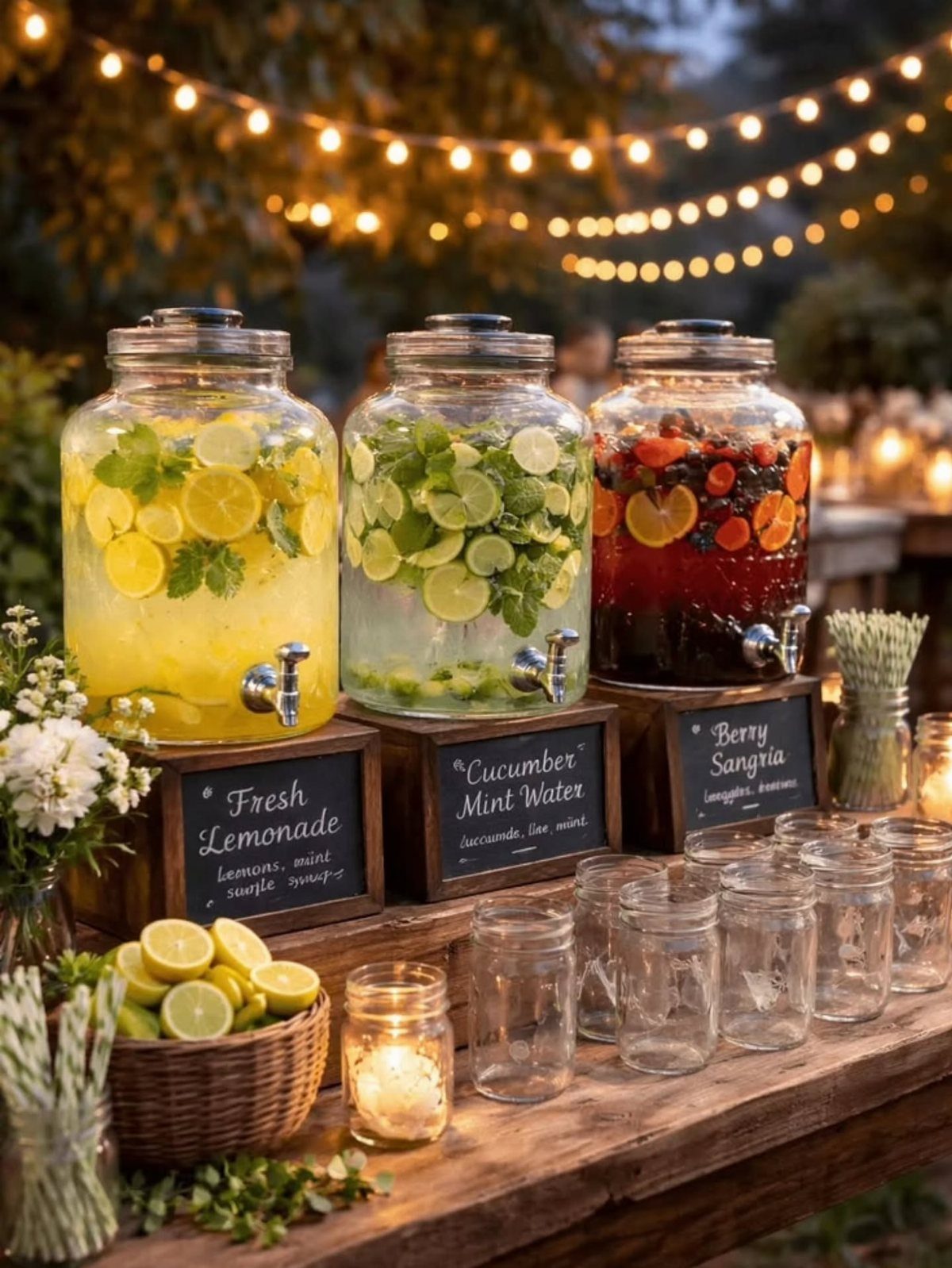
Wine bottles, mason jars and tins all hold a drink or a stem, which makes them the cheapest vessels on the list. Save them for months ahead and the table costs almost nothing.
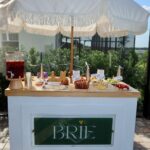
Soak off the labels, then keep the glass clear so the lemonade, cucumber water and sangria show their colors. Matching jars at one station looks planned; mixing shapes on the dinner tables looks collected.
Tins suit flowers better than liquids, so use them for stems and leave the glass for drinks.
I would pick one material per area and repeat it.
8. Charger Plates, Dinner Plates, and Glassware
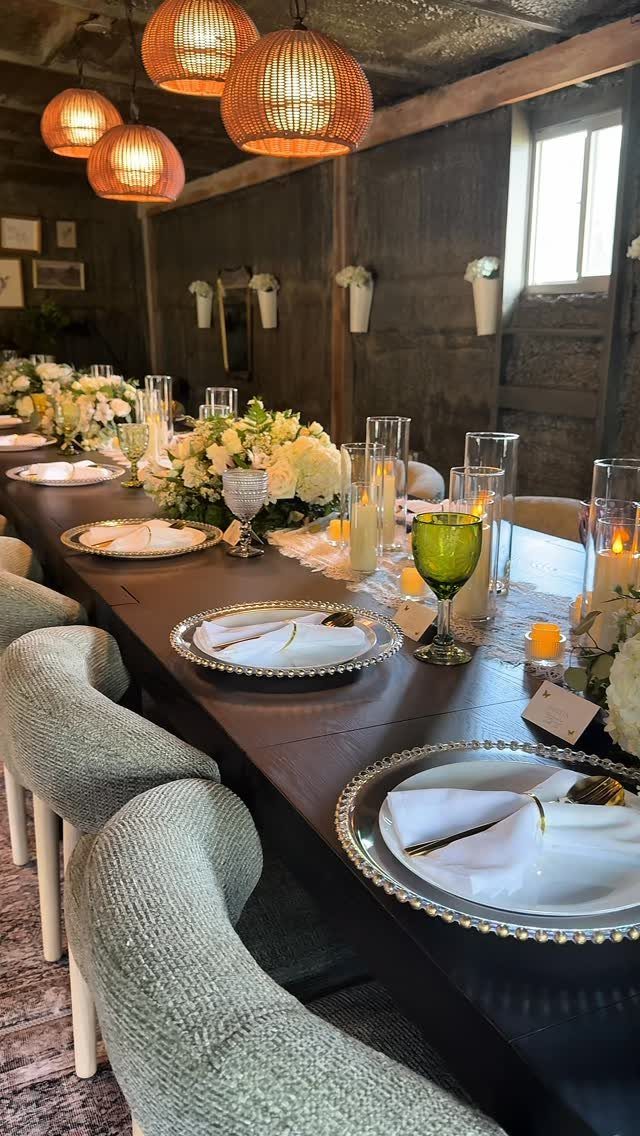
Chargers, plates and glassware decide how formal a table feels before a single flower goes down. Layer them in that order: charger, dinner plate, then napkin on top.
Silver chargers under white plates keep the base neutral, so green glassware can supply the color. Rentals usually cost less than buying for a full guest list, and glass is easy to match by the dozen.
Keep the charger a different finish from the plate, or it vanishes. Put a single sample glass at one place setting first, then order the full set once you have seen how it looks next to the plates.
Choosing a Theme
Pick the theme first, ahead of any plate purchase, since every table decision gets easier once you have that filter. A theme gives you a yes-or-no test for each napkin, vase and candle.
Treat the tables as the part of the day guests see longest.
They spend most of the reception there, talking and eating, and the reception photos will show it. Tables planned as an afterthought tend to look that way in the pictures.
Carry the theme from the venue through the florals to the place settings, so the room reads as one decision.
If an item fits the theme but not the budget, drop it; if it fits the budget but not the theme, drop it too.
Wedding table settings are arguably the most memorable part of a couple’s wedding decor, combining multiple visual elements that are reflective of the couple, their location, and their aesthetic.
— Vogue
Renting Vs. Buying Decor
Put the money into a handful of standout pieces and let everything around them stay plain.
Extra-tall vases in the center or one boldly colored table runner can carry a table, and concentrating money there usually costs less than decorating every inch.
2 things settle rent or buy: what the budget allows and where you would store the pieces afterward.
If you buy, decide now what happens to it all after the wedding: who carries it out, where it sits, and whether anyone will use it again.
For a destination wedding, rent. Not hauling tableware through travel saves real hassle.
Seasonal Considerations
Match the table to the month and you get a palette without much effort.
- Spring: tulips, sweet peas and daffodils in soft pink, light blue and pale yellow, with moss.
- For summer, I like sunflowers, daisies tucked into mason jars with lemon or lime slices, or blue hydrangeas when you want the table to feel cooler.
- Fall: mini pumpkins, wheat stems, deep red and orange flowers, and apples.
- Winter: white flowers, silver branches, pine and red berries, with clear glass balls and tiny lights.
When a holiday lands close to your date, a light nod works best, such as red roses near Valentine’s Day or pine cones around Christmas.
One small touch reads as a choice, while a full holiday theme can overwhelm the table.
Frequently Asked Questions
What is the proper table setting for a wedding?
Build each place from the bottom up: charger first, then the dinner plate with a folded napkin on top, with flatware on either side and glasses above the knife.
A silver charger under a white plate gives you a quiet neutral base, but pick a finish that contrasts with the plate or the two blur together.
What are the classic table settings?
A classic table pairs white linen with white flowers, white candles and gold or silver flatware. Tall candelabras over low white roses are one version, and a faux greenery garland against white linen is another.
Candelabra in the same metal as the forks and knives, whether brass, gold or silver, make the whole table look like it came as one set. For a full guest list, renting almost always costs less than buying.
Should I rent or buy wedding table decor?
Rent if you are having a destination wedding, since you skip hauling tableware through travel.
Otherwise the budget and your storage space settle it. Buying means settling a few things early: who hauls the pieces out at the end of the night, where they will be stored, and whether anyone will actually use them again.
How do I choose a wedding table setting for my season?
Let the month steer the table. Summer suits sunflowers or daisies in mason jars, fall suits mini pumpkins and wheat stems, and winter suits white flowers, silver branches and pine.
If a holiday falls near your date, add one small nod, like red roses near Valentine’s Day, rather than a full holiday theme.