Formats in this list run from a self-serve Pasta Bar to Plated Pasta and a Live Cooking Station with a cook tossing each order, and the price climbs with every server or cook added.
Guest count decides the format: a Live Cooking Station or Fully Staffed Pasta Station makes sense for 75 or more, while a smaller or tighter crowd is better served by a Chafing Dish Pasta Buffet or a Rustic Tabletop Buffet.
Plated Pasta and a Fully Staffed Pasta Station belong to the larger budgets, where labor is already part of the plan.
1. Pasta Bar
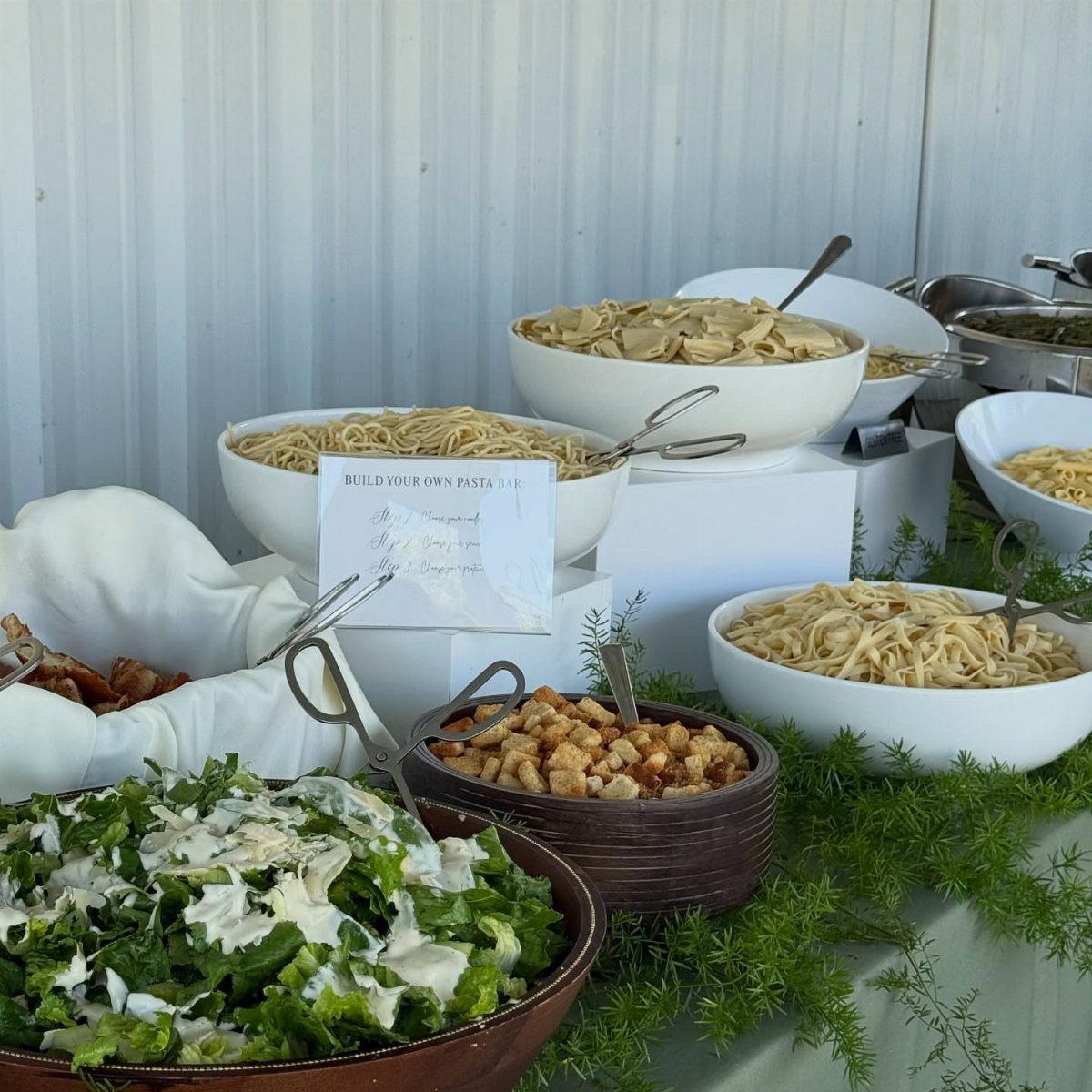
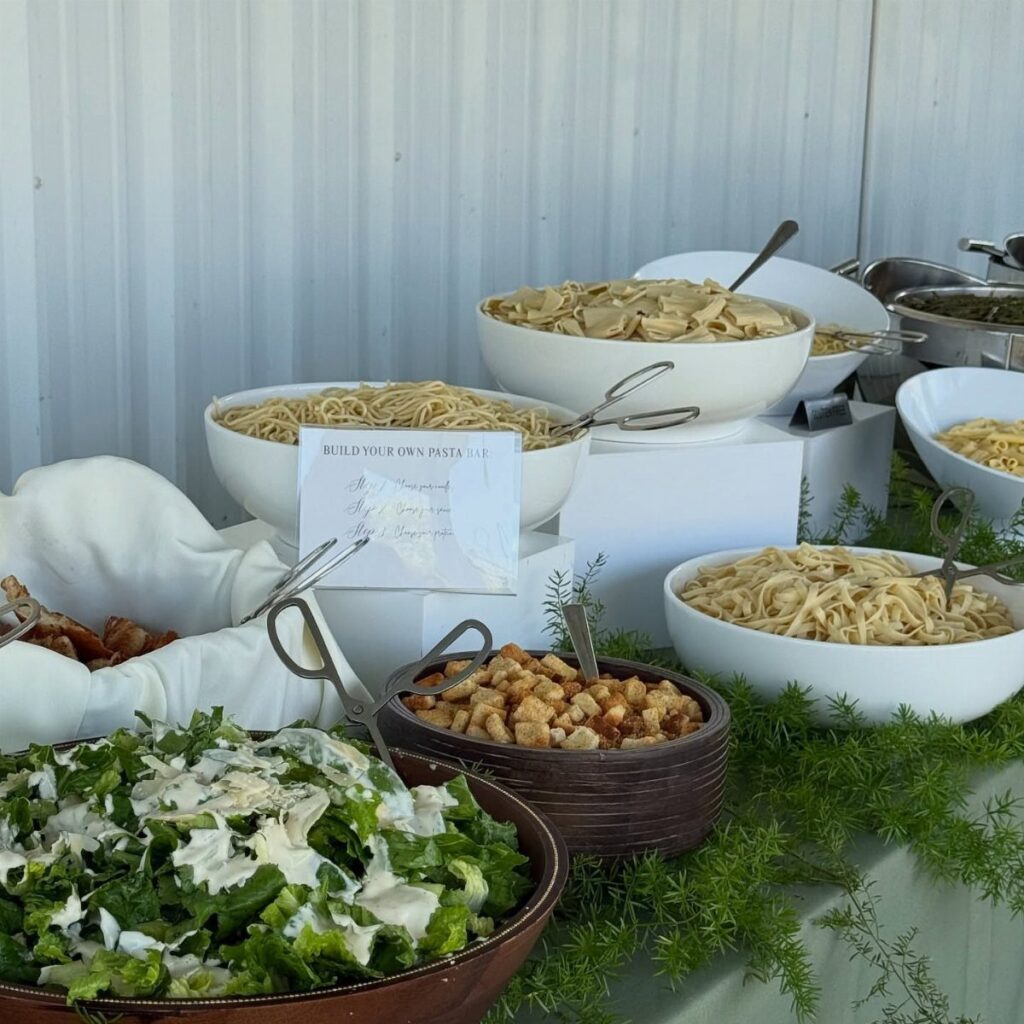
A build-your-own setup puts the decisions in guests’ hands, which is why it works for a crowd with mixed tastes. Picky eaters, vegetarians and kids all find a plate they like without you collecting special requests.
Pasta in bowls, a fresh salad and a bowl of croutons on one table keeps the line moving. I’d label every bowl clearly, since a sign like the one on this table does half the job of a server.
On a modest budget, this is a low-fuss way to feed people well.
2. Live Cooking Station
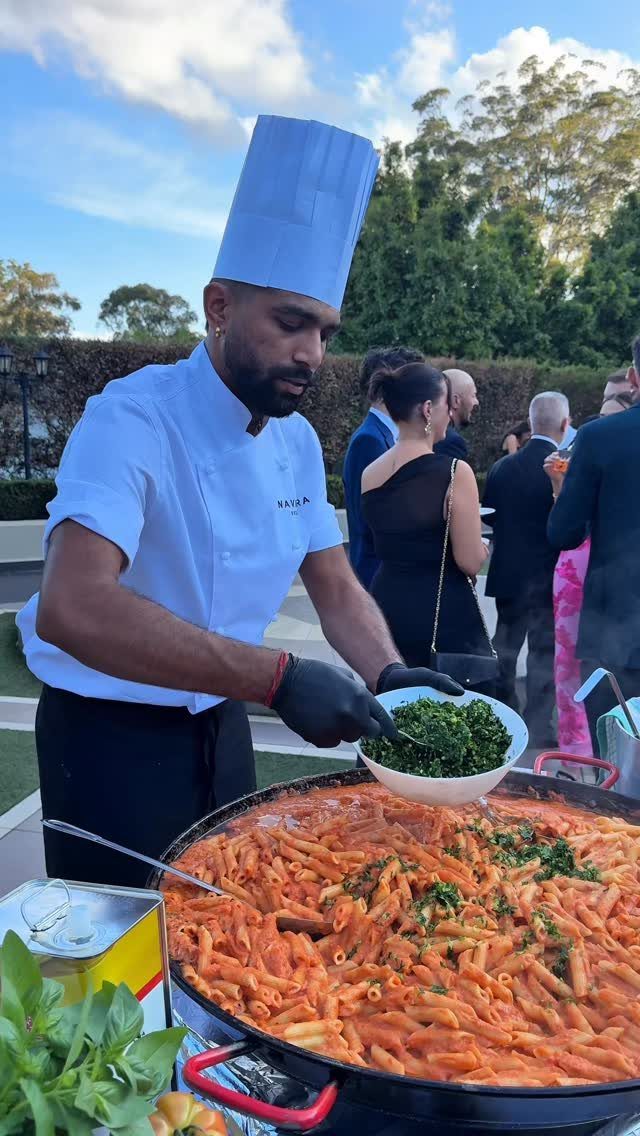
Pasta tossed in a big pan while guests watch turns dinner into the entertainment. A chef finishing penne a few feet from the cocktail crowd gives you a focal point that no buffet line can match.
Expect to pay more than for pans delivered ready to serve, because you are hiring skilled labor on site.
Ask the caterer how many guests one cook can handle per batch, and add a second cook if your list runs long.
Outdoors, confirm where the burners will sit and how the wind affects them.
3. Variety of Pastas
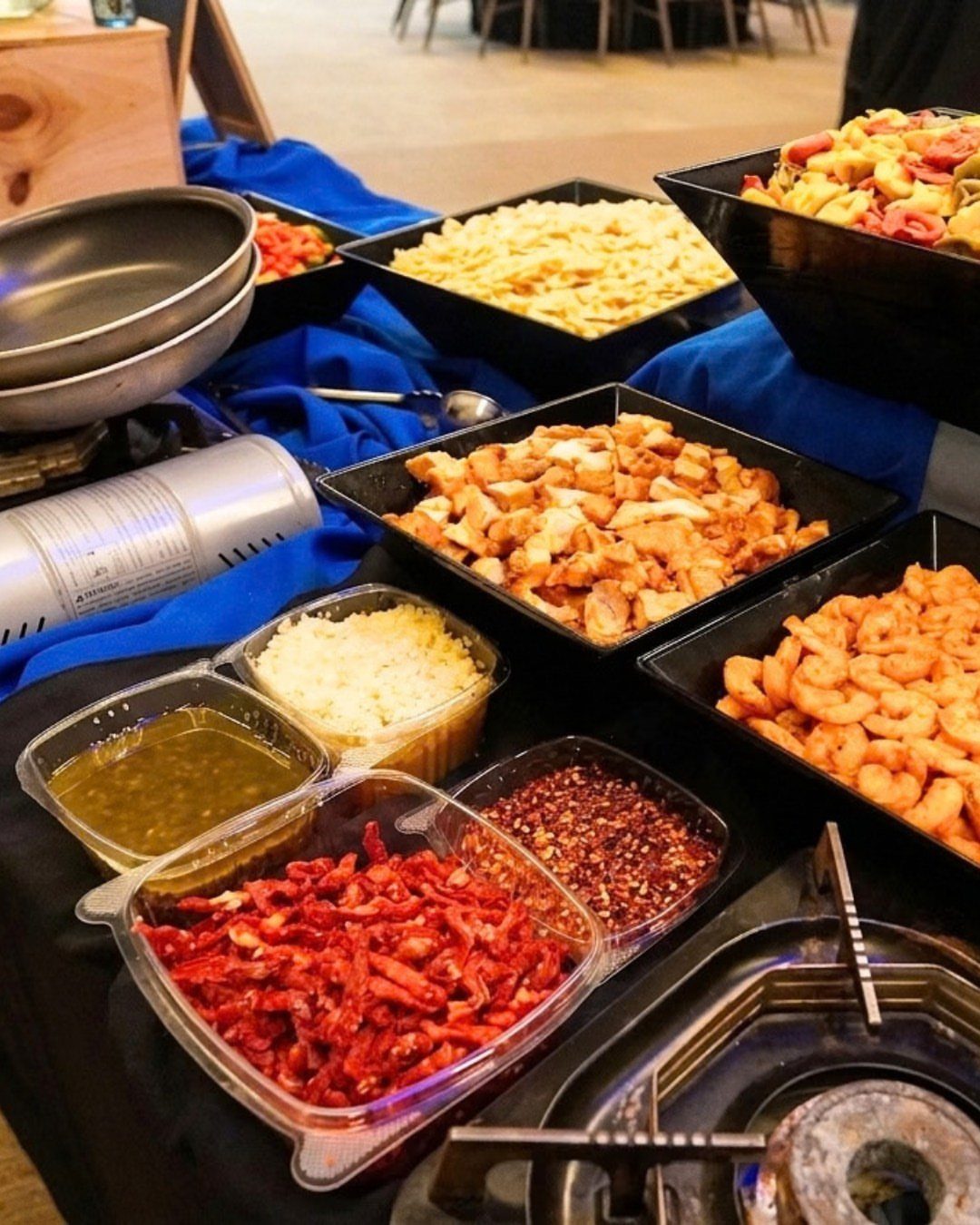
Offering several pasta shapes, a protein like shrimp and a spread of toppings lets each guest build a plate that suits them.
Two or three shapes is enough to feel generous, and I’d pair them with a cream sauce and a red sauce so the choices actually differ.
Shrimp costs more per serving than vegetables or chicken, so keep it to one protein if the budget is tight.
A portable stove at the end of the table, as in this setup, keeps pasta warm and lets you refresh pans as they empty.
Label allergens on every container.
4. Plated Pasta
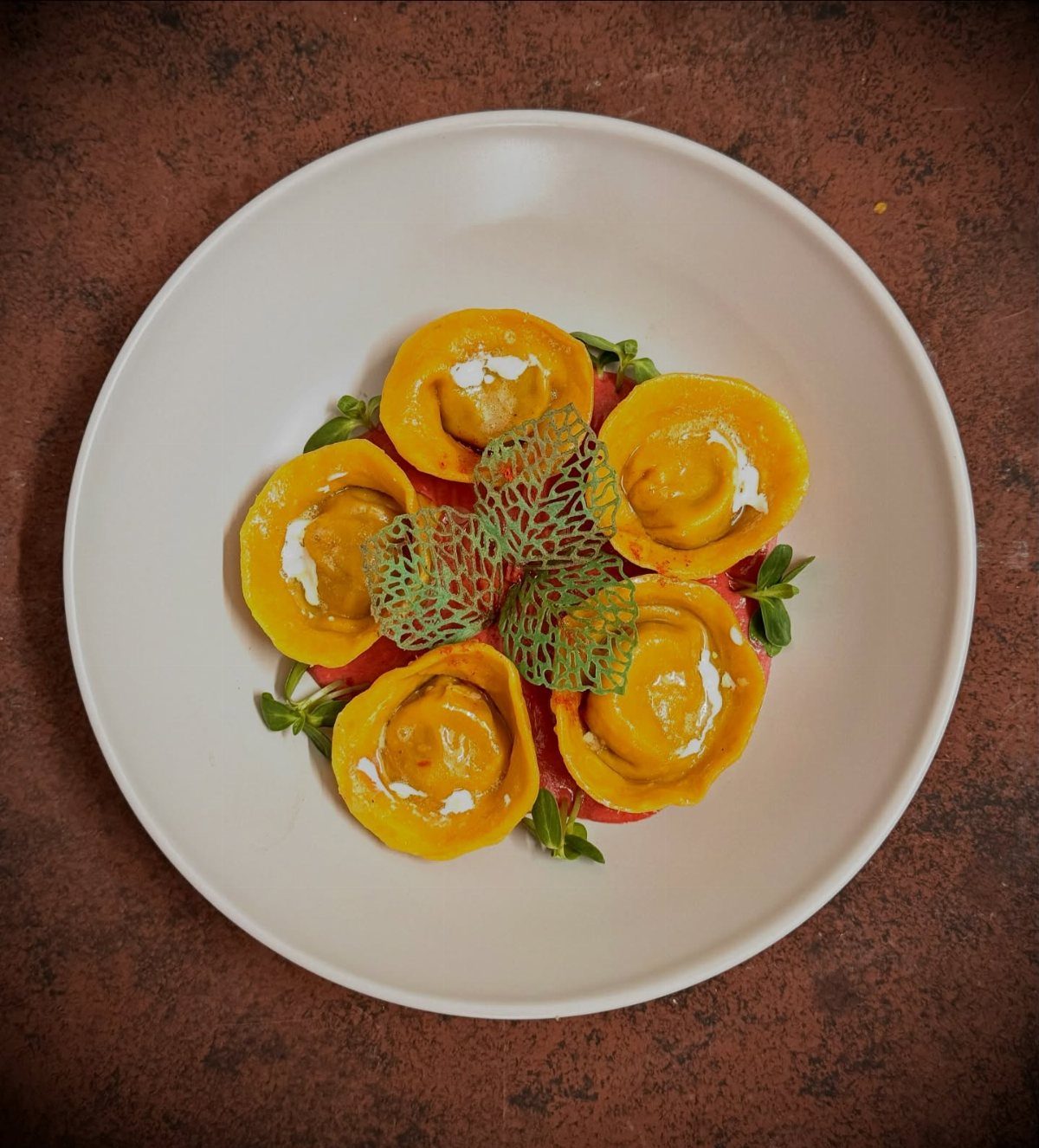
Plated pasta is the formal route: one portion, one bowl, set in front of each guest.
Filled shapes like ravioli or tortellini hold up best here, because a neat portion with sauce and a green garnish looks finished without much fuss.
Plating costs more than a buffet because it needs more servers and tighter kitchen timing. Ask your caterer to plate a tasting portion first, so you can judge sauce amounts and how the dish looks on a white bowl.
Choose one entrée option for guests with dietary needs and collect meal choices with your RSVPs.
5. Fully Staffed Pasta Station
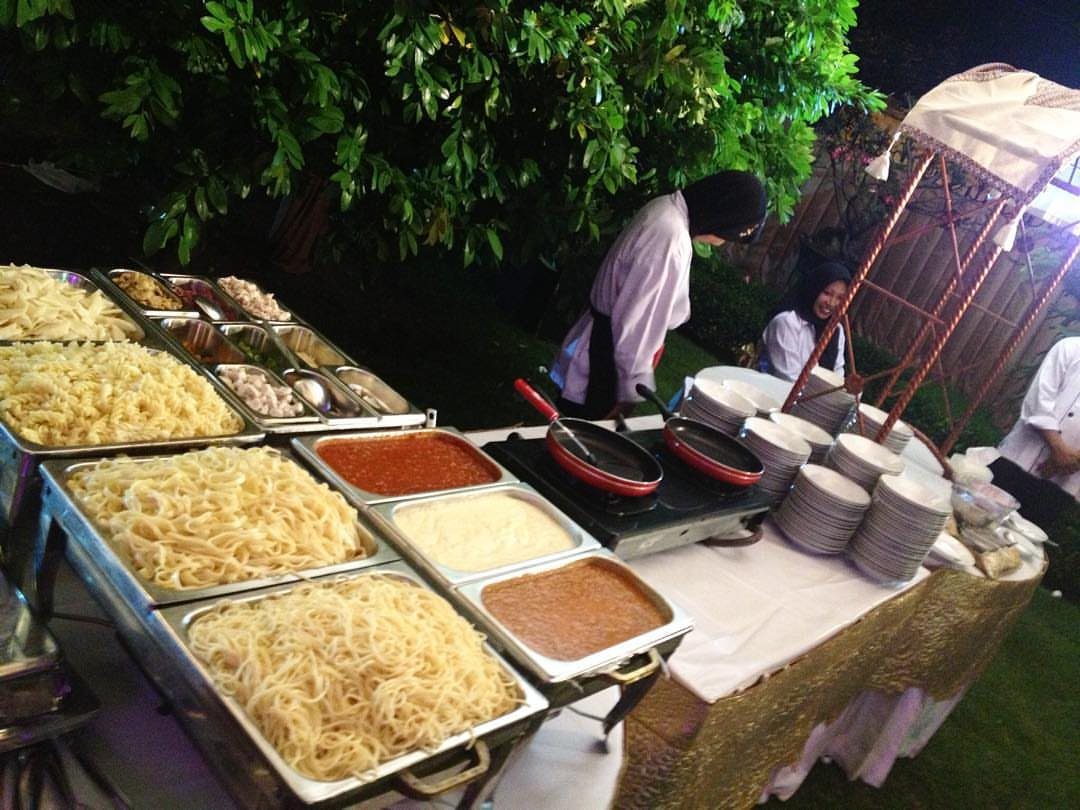
2 servers in white uniforms behind chafing dishes make a buffet feel like a real station. Guests point, staff plate, and portions stay consistent, which keeps the line fair and the food from running out early.
Staffing adds to your catering bill, so ask what the per-server fee is and how many servers your guest count needs.
In my view it is worth paying for when the line is long, since self-serve tables slow down and get messy.
At a night reception, put a canopy and good lighting over the station so the food is visible.
6. Pasta Bar Food Truck
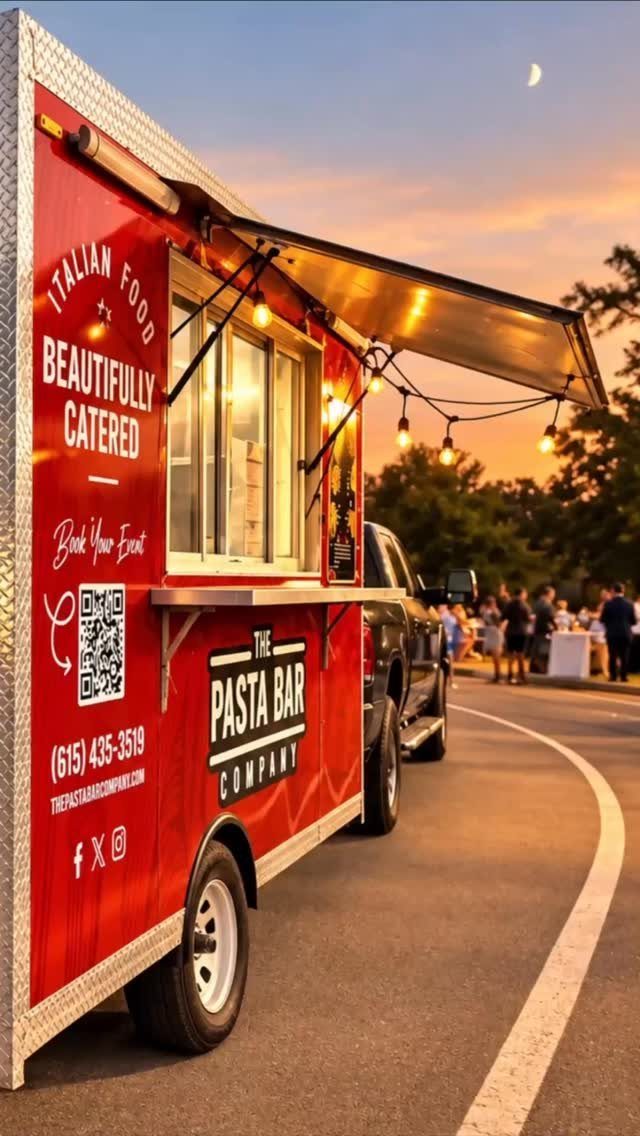
A food trailer parked at the edge of the party can serve fresh pasta from its window while string lights give the whole scene a glow at dusk.
It frees you from renting a kitchen setup and suits an outdoor venue with a flat, open spot to park.
Check with your venue about access, power and parking before booking. I would schedule service for cocktail hour into dinner, so guests can wander over in small groups instead of one long line.
Ask if the trailer brings its own lights, or plan to add some.
7. Fresh Pasta Display Station
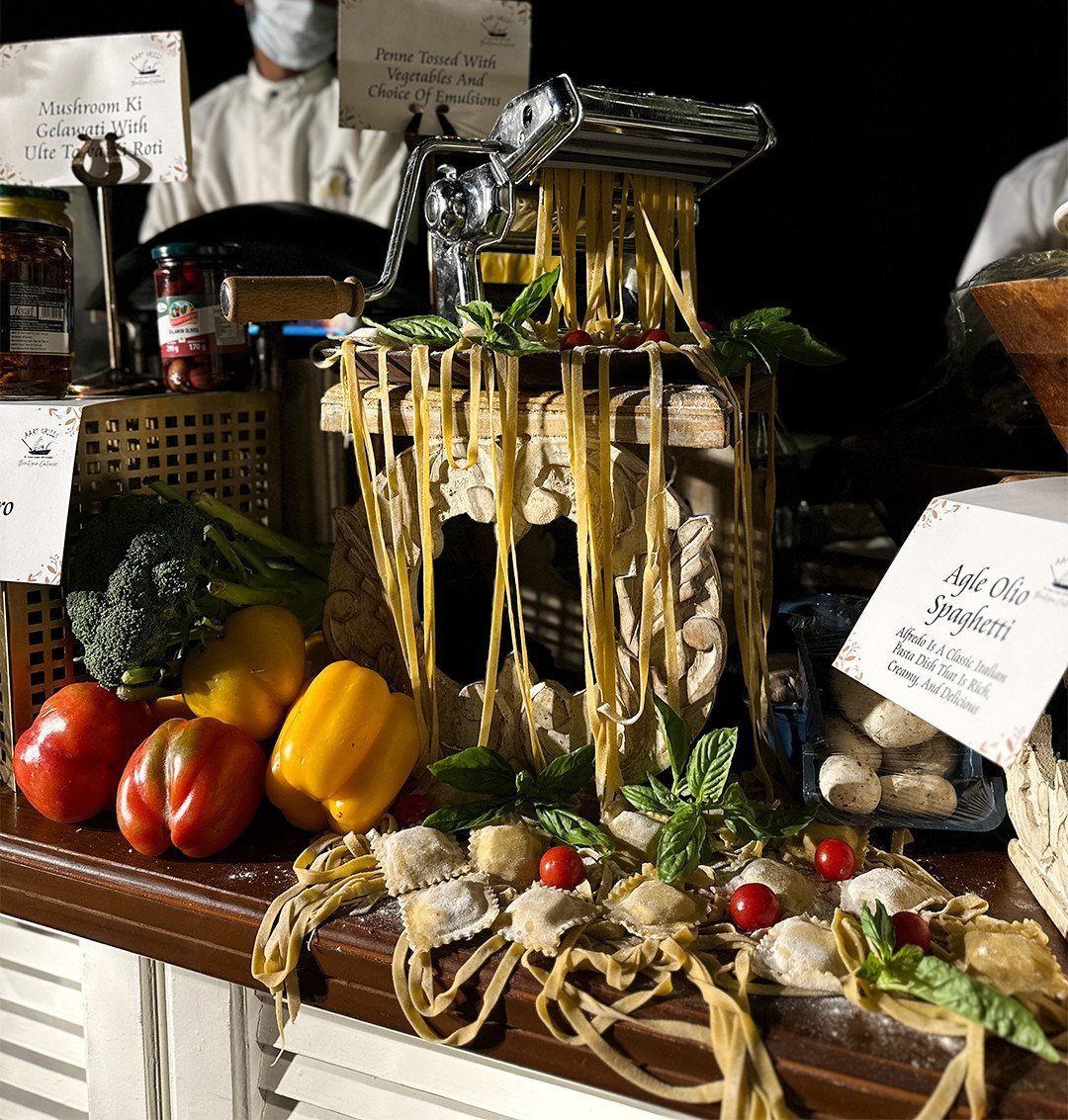
Noodles pressed that day and hung on a wooden stand make the pasta itself the decoration. Peppers, broccoli and ravioli around the machine tell guests what is going into the pan before anyone orders.
Signs like "Penne Tossed With Vegetables" and "Aglio Olio Spaghetti" keep the choices short, and a short menu keeps a line moving. I’d stick to two or three dishes rather than a long list.
Ask your caterer whether the display noodles are the ones guests eat or a prop beside the cooked pasta. Fresh vegetables left out under reception lights also need a plan for how long they sit.
8. Rustic Tabletop Buffet
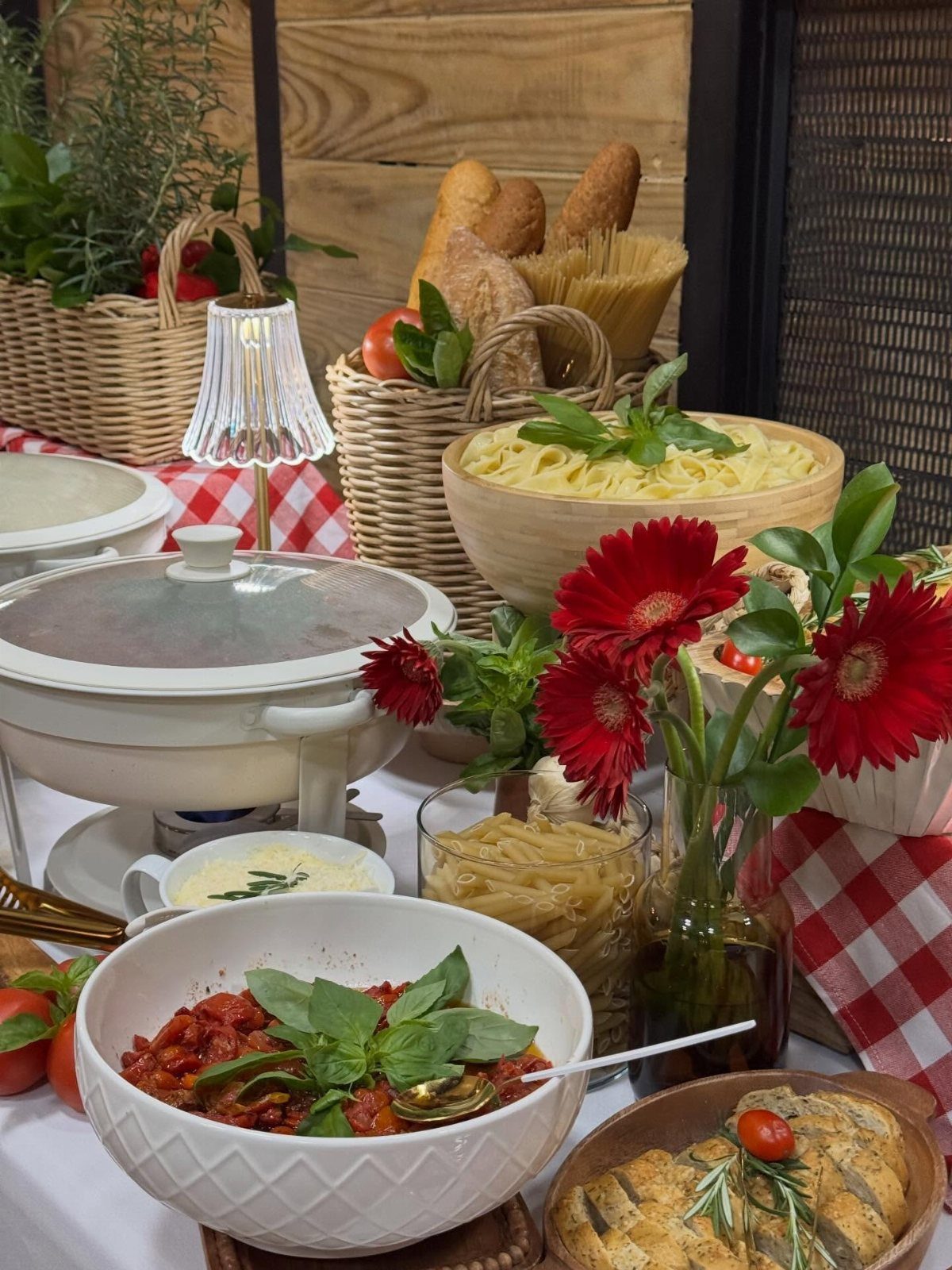
Red checkered cloth, bread baskets and a wooden wall give a pasta buffet the feel of a family table. Red sauce over plain noodles in bowls, with fresh herbs and red flowers tucked between them, costs very little to style.
Raw noodles in a basket are a cheap prop, and you can borrow them from the kitchen order.
I’d keep one chafing dish for the hot sauce and let the rest sit in bowls, since the look depends on the bowls rather than steel pans.
Ask your venue whether a wooden backdrop is available, or hang boards behind the table.
9. Chafing Dish Pasta Buffet
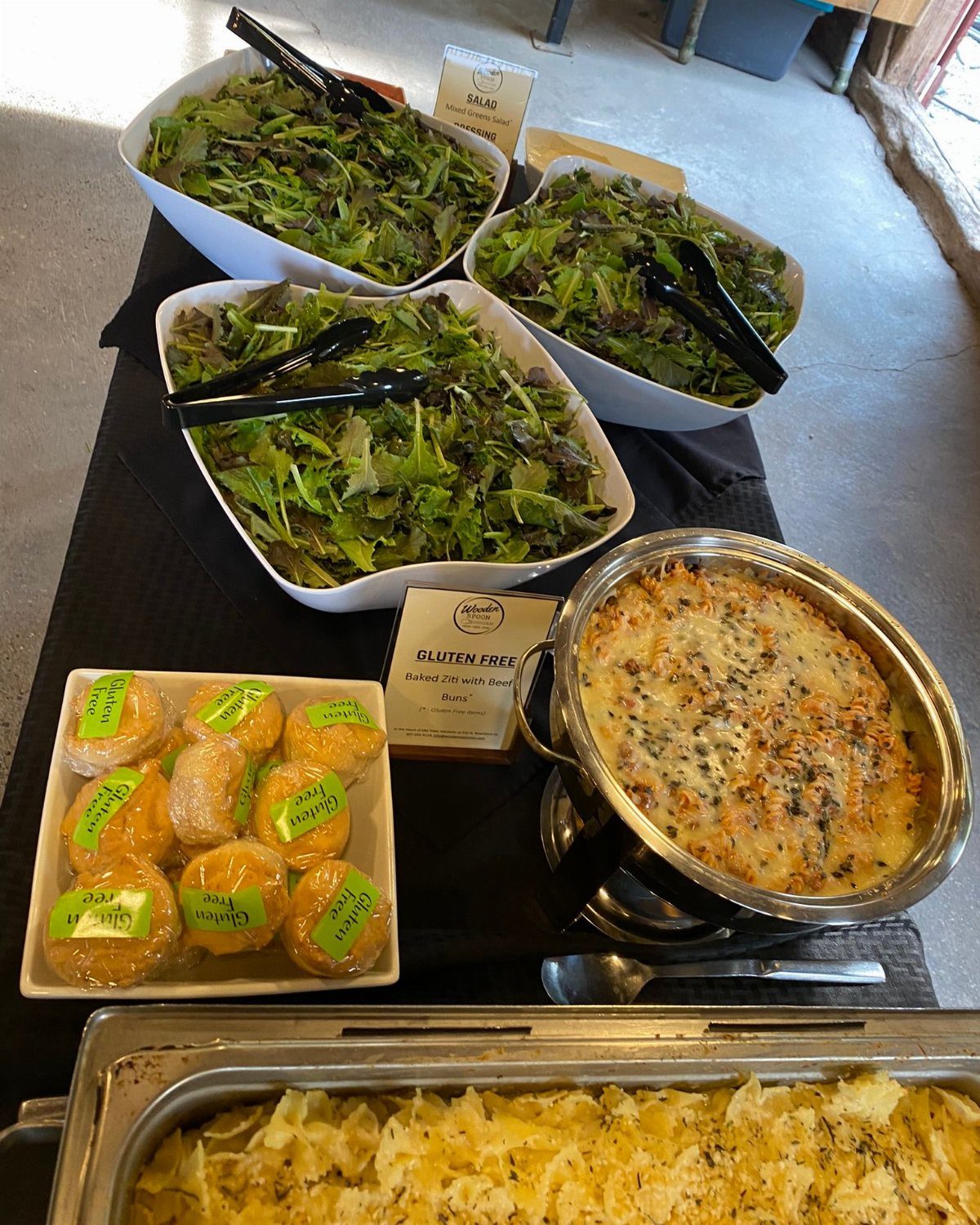
Baked ziti in a chafing dish is the easy, dependable version of a pasta buffet: heat stays steady while guests come through at their own pace.
3 bowls of green salad beside it lighten the plate and stretch the pasta further.
Wrapped rolls labeled "Gluten Free" are the detail I’d copy. Individually wrapped bread keeps those guests safe from crumbs in the shared basket, and the label saves them asking.
A second pasta dish in a metal pan gives a choice without much extra work. Set serving spoons in each dish, one per dish, so the sauces stay separate.
Catering Experience
A live pasta station works because guests talk to the cook.
They choose the noodles and sauce, and the dish is cooked to order and handed over hot. That gives the room a moving center during dinner.
A station like this suits a wedding where you want warmth and a little theater without a plated meal. Before signing, find out if the cooks stay at the station for the whole meal or leave after the first hour.
Customization Options
Customization lives in the numbers, so ask your caterer for the exact choices.
One Utah caterer’s pasta bar offers 3 pastas (linguine, colored rotini and bowtie), 3 sauces (marinara, Alfredo and creamy roasted bell pepper) and 18 vegetable and meat toppings, cooked fresh in front of guests.
That is a useful benchmark. Eighteen toppings is plenty, and I’d trim a list that long if your line will be slow.
Pricing varies by format.
The same caterer lists a pasta combination at $19.95 per person, and the live station is for groups of 75 or more, with extra costs below that. Ask about a minimum guest count before you fall for a station.
Service Style
Pasta can be served 3 ways, and the style changes both the cost and the feel of the night.
A plated dinner arrives at each seat as a set meal: salad first, then an entrée with 2 sides, and warm buttered rolls on the table.
Buffets let guests build their own plate from a spread with the same pieces. Stationed receptions work more like small plates, mixing hors d’oeuvres, a pasta bar and perhaps a carving station.
If your budget is tight, I’d pick the buffet. If you want variety and a lot of mingling, a stationed reception fits better, but ask how many stations your guest count needs so no line grows too long.
Frequently Asked Questions
How do I do a pasta bar for a wedding?
Pick a format first: a self-serve buffet, a staffed station, or a live cooking station where a chef tosses each dish to order.
For a crowd, I would cap the menu at 2 or 3 shapes, one red and one cream sauce, and a handful of toppings, each in a bowl with a clear label.
Fewer choices speed up the line, and whether you serve family style, buffet or a live station decides both the price and the mood.
What is included in a pasta bar?
A typical pasta bar has a few pasta shapes, several sauces and a spread of toppings.
Most packages round it out with a salad, bread and butter, a drink and a small dessert, so check what the quote covers before you add sides.
What is the cheapest way to feed 100 people at a wedding?
A buffet is the budget pick among the pasta serving styles. Guests build their own plates, and you skip the extra servers and tight kitchen timing that plated dinners need.
Stick to a single protein, because shrimp runs higher per plate than chicken or vegetables, and pass on a cook-to-order station, since a chef on site adds labor to the bill.