Sage is a gray-green that drifts from dye lot to dye lot, so the one fact that decides every idea here is whether you can hold a swatch next to the rest of your palette in daylight before ordering.
The list runs from cheap fabric moves like napkins, table runners and chair sashes at one end to florals, cake, attire and a sage ceremony backdrop at the other.
If your budget is tight, put the sage on the fabric and keep the flowers white.
1. Sage Green Wedding Attire
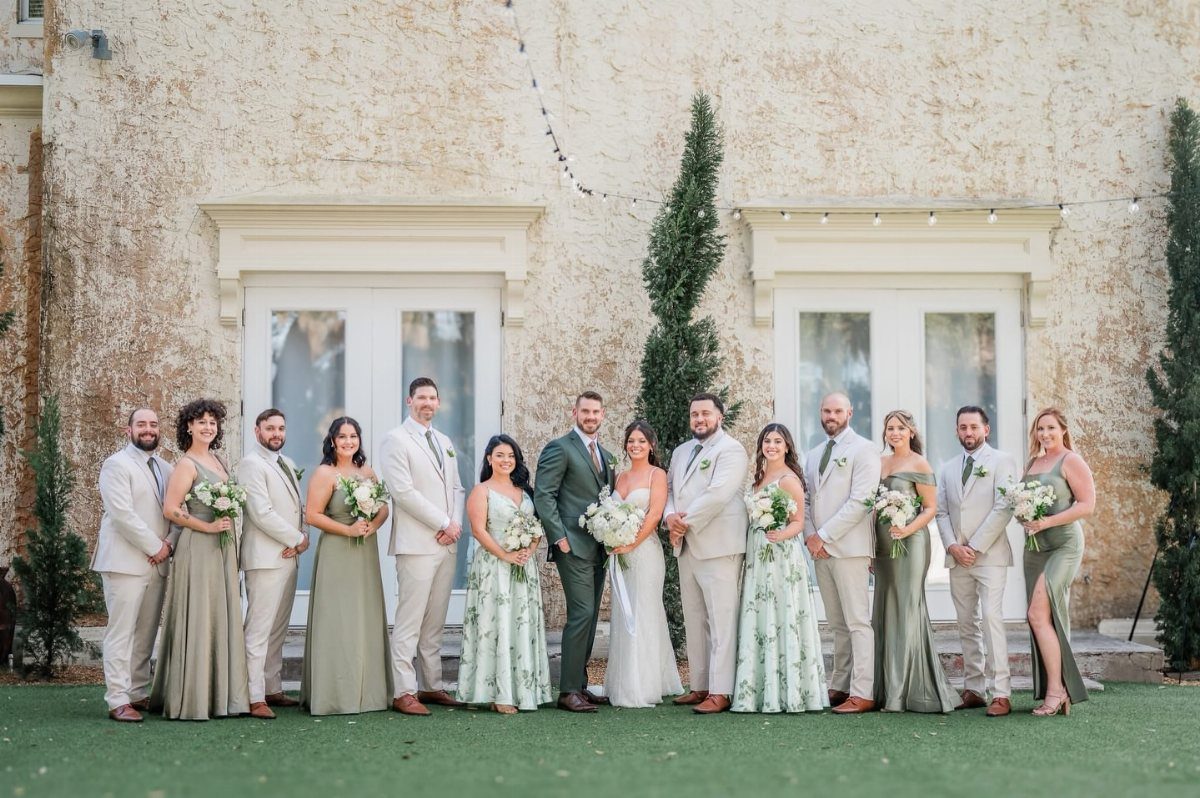
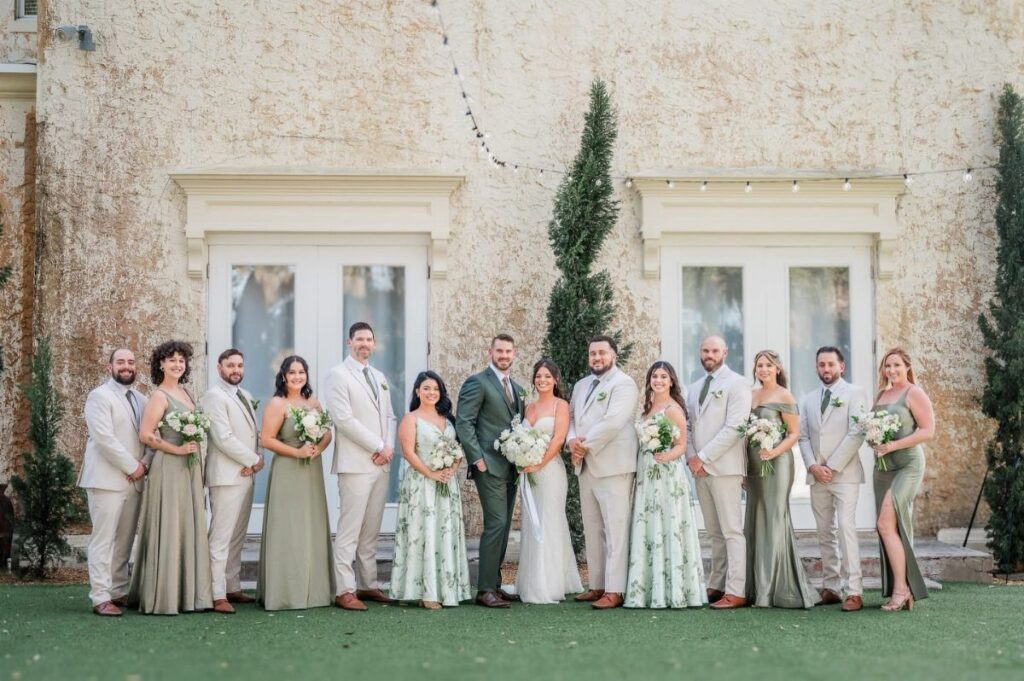
Matching the whole party to one green makes the group read as a single palette, and the bride in white stands out without any effort.
Dresses and suits in the same sage family look best when the fabrics have a similar sheen, so check swatches side by side in daylight before anyone orders.
Sage has a gray undertone that varies a lot from dye lot to dye lot. Order every piece from one batch where you can.
2. Blush & Sage
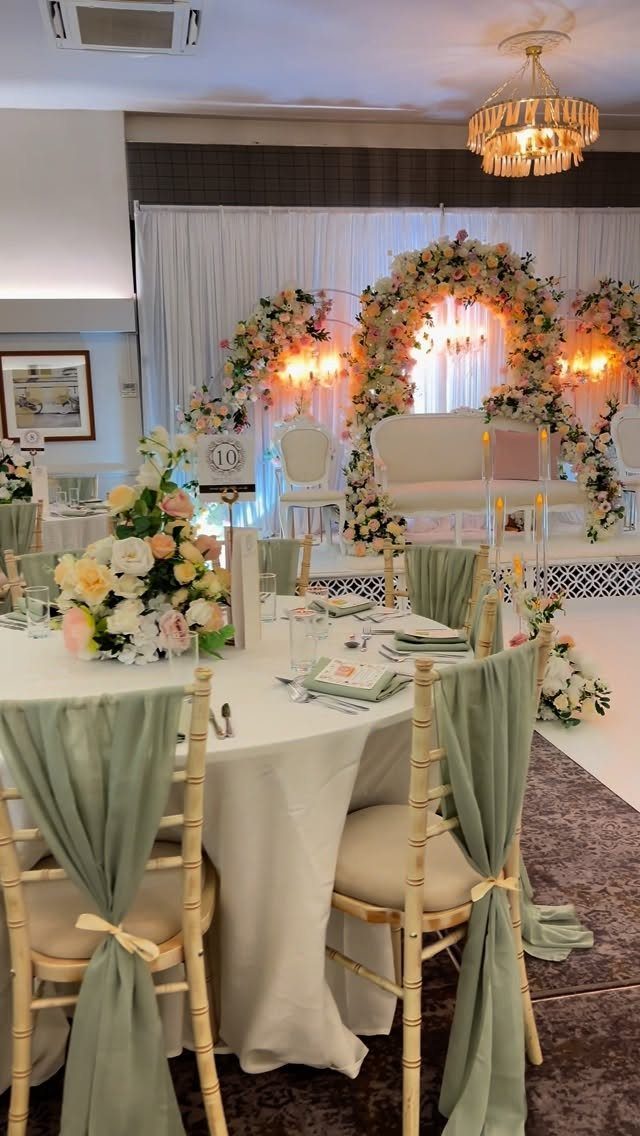
Blush and sage share a muted, dusty quality, which is why they sit so calmly together. Neither shouts, so the table reads soft instead of sweet.
I would let sage carry the fabric, like chair sashes, and keep blush for the flowers.
That split gives you a clear main color and an accent, and the pink stays quiet. Two or three blush shades in the arrangements add depth without crowding the green.
3. Sage Green Bridesmaid Dresses
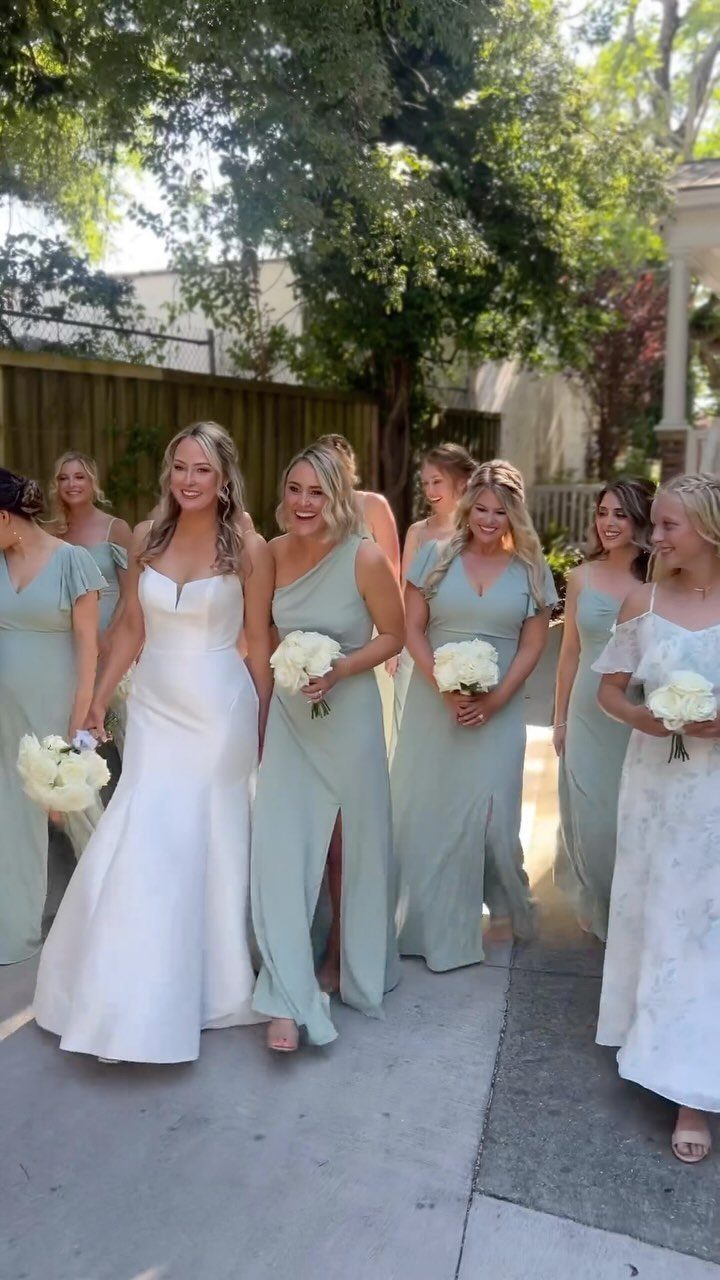
Sage flatters a wide range of skin tones, which makes it one of the easier bridesmaid colors to settle on. 7 friends rarely agree on anything, so that matters.
Let each bridesmaid choose her own silhouette in the same shade; it keeps everyone comfortable and the group still looks coordinated.
White bouquets against sage keep the bride clearly in front. Confirm the exact shade across brands before anyone buys, since sage runs from gray-green to almost olive.
4. White & Sage
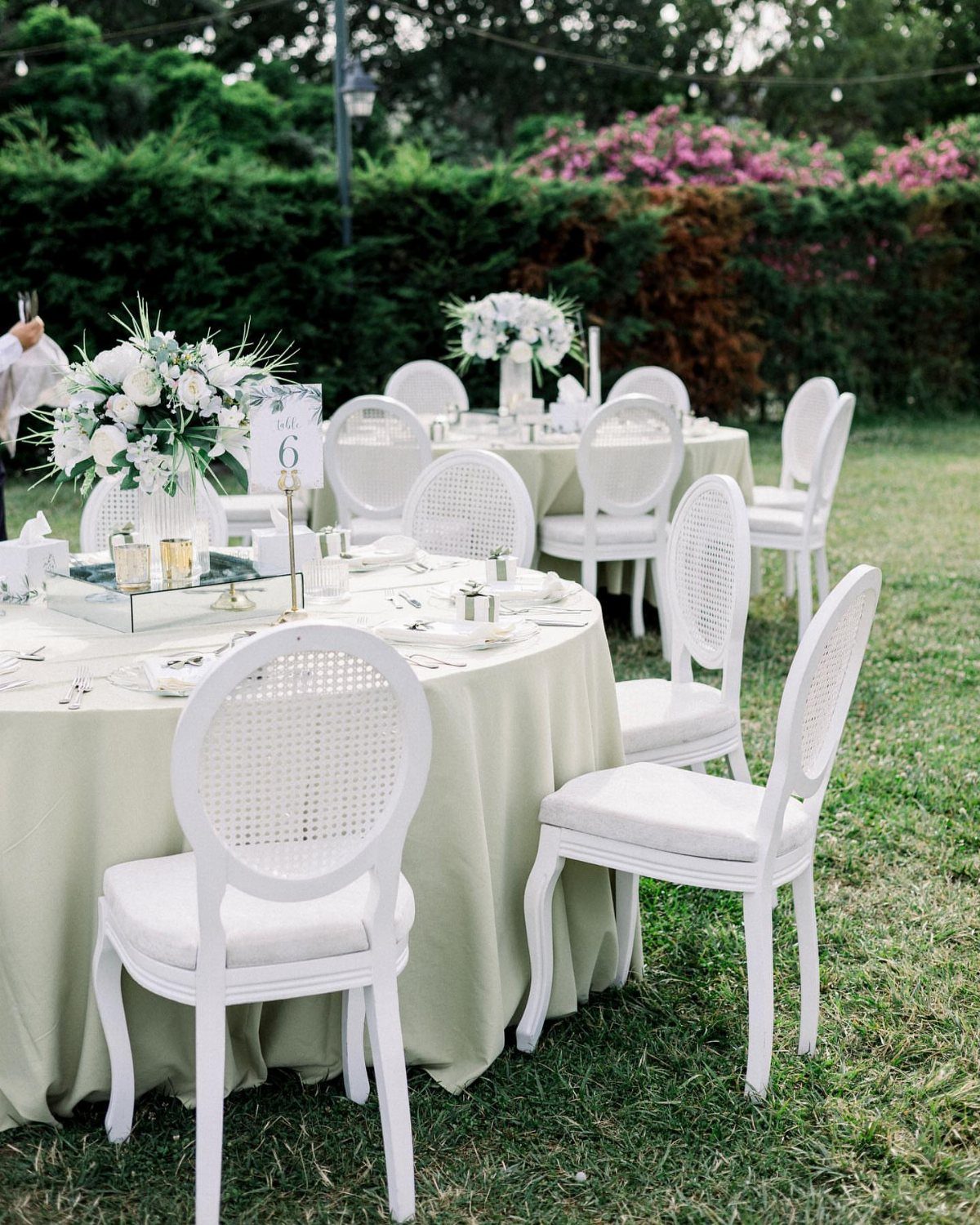
Sage linens with white chairs and white flowers give you a palette of 2 colors, and that restraint is what makes it timeless. Nothing competes, so the green does the work.
Put the sage on the tablecloths, where it covers the most area, and keep florals white.
A simple numbered card, like "Table 6," is enough signage. On a lawn, this pairing looks natural against the grass, though a slightly grayer sage keeps it from blending in.
5. Sage Green Floral Arrangements
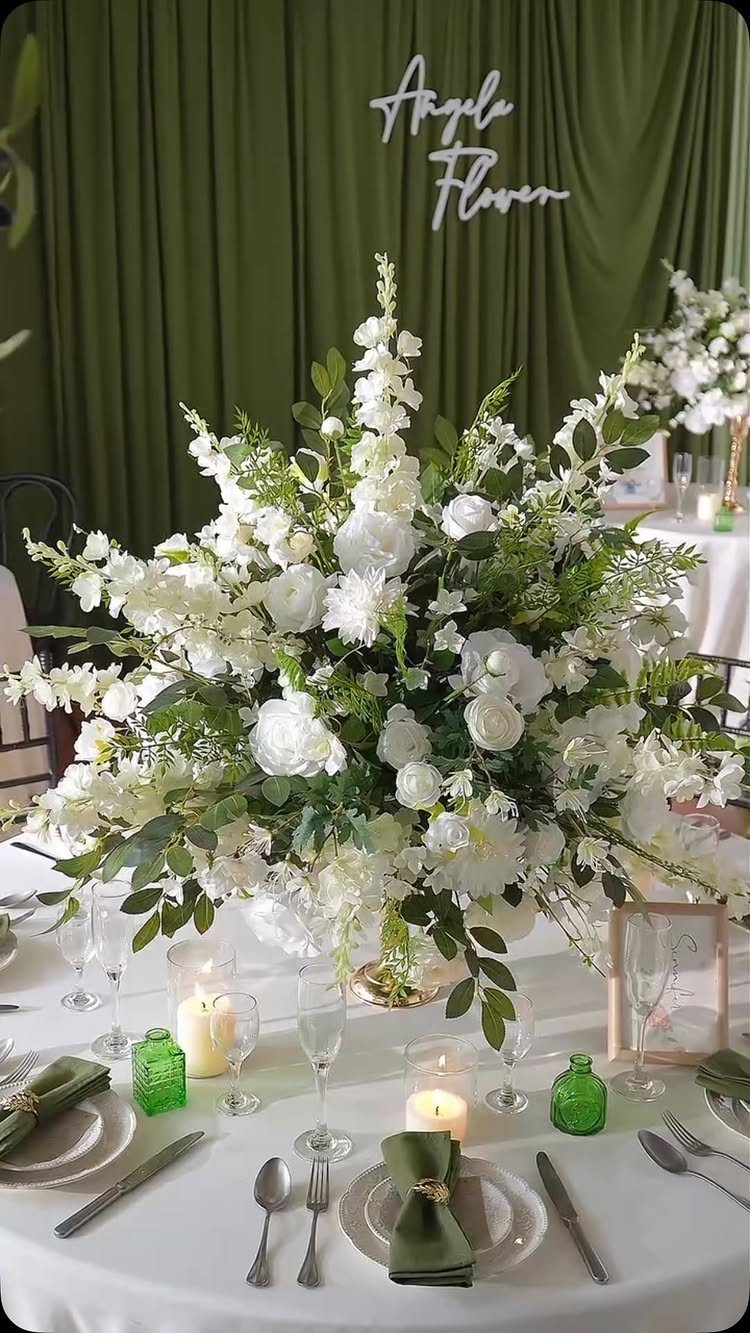
Eucalyptus and white roses make a centerpiece that works with sage without matching it exactly. The silvery leaves bring the gray-green tone, and the roses keep the arrangement crisp and full.
I would go heavy on the greenery and use the roses as the focal points.
That lets the florist stretch the budget, since foliage usually costs less than blooms. Ask for several eucalyptus varieties so the leaf shapes and tones vary a little, which looks more natural than one repeated stem.
6. Sage Green Napkins
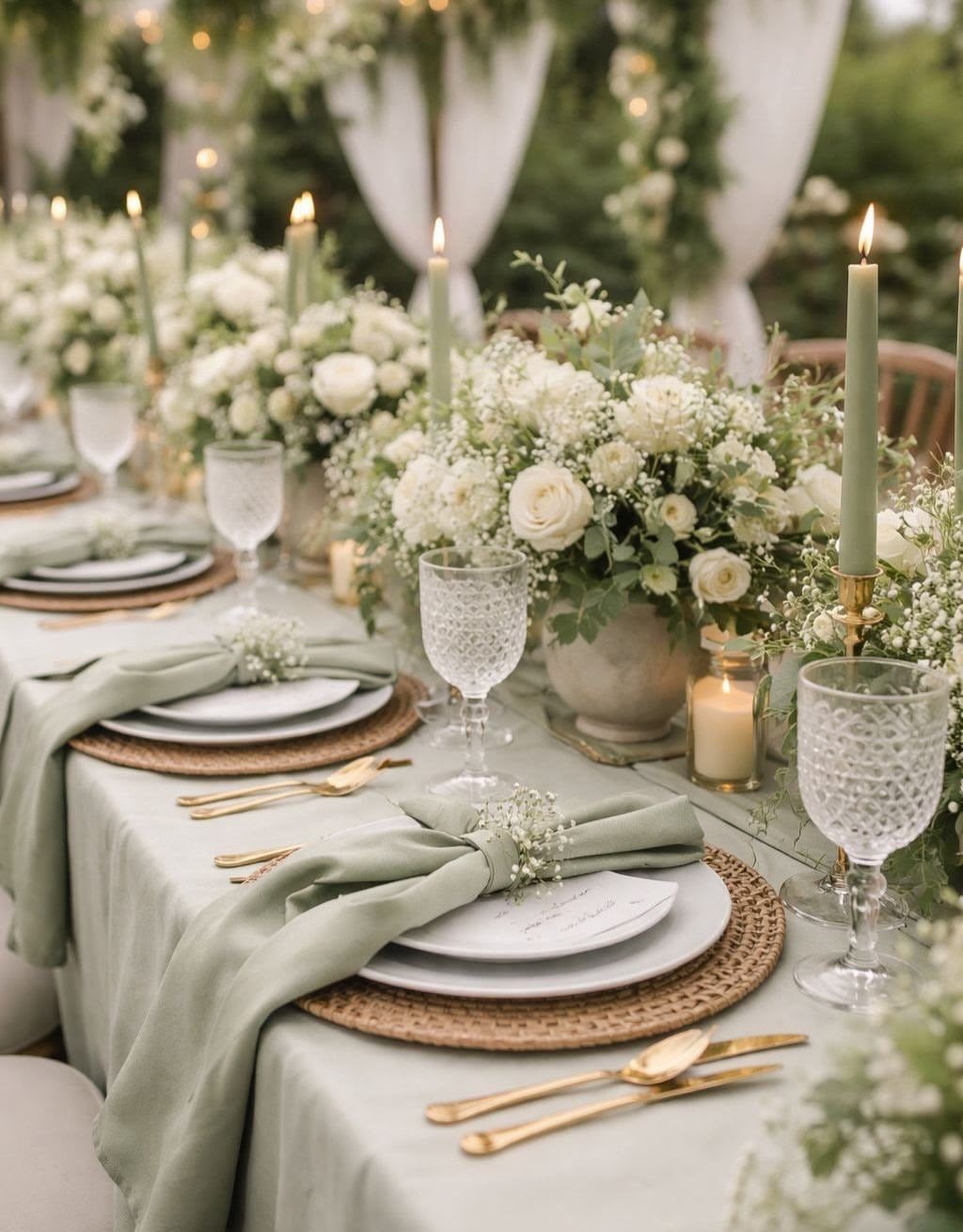
Napkins are the cheapest way to bring sage to a table, and they sit right at eye level on a white cloth. Tie a sprig of baby’s breath into each one and you add texture for pennies.
Gold cutlery and candles warm up the green nicely. If your budget is tight, this is a good place to spend little: rent or buy napkins in sage and let the white flowers and tableware handle everything else.
7. Sage Green Wedding Cake
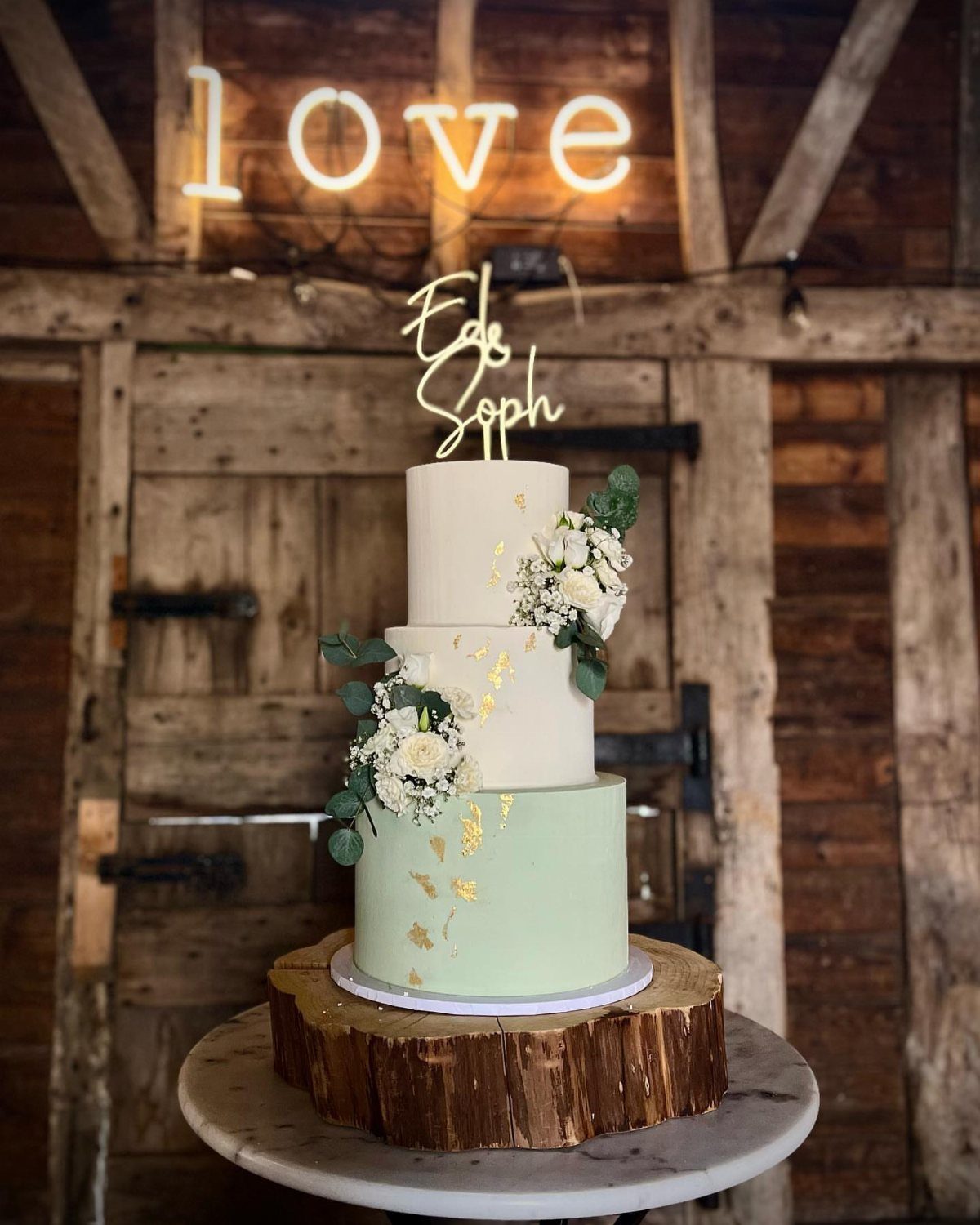
A sage bottom tier under 2 white tiers puts the color where the cake is widest, so it reads from across the room. White flowers on the green keep it crisp.
White flowers work best here, with the sage kept as a plain, smooth finish on the cake itself.
Ask your baker to match the frosting to a napkin or sash swatch before the final order.
8. Sage Green Wedding Signage
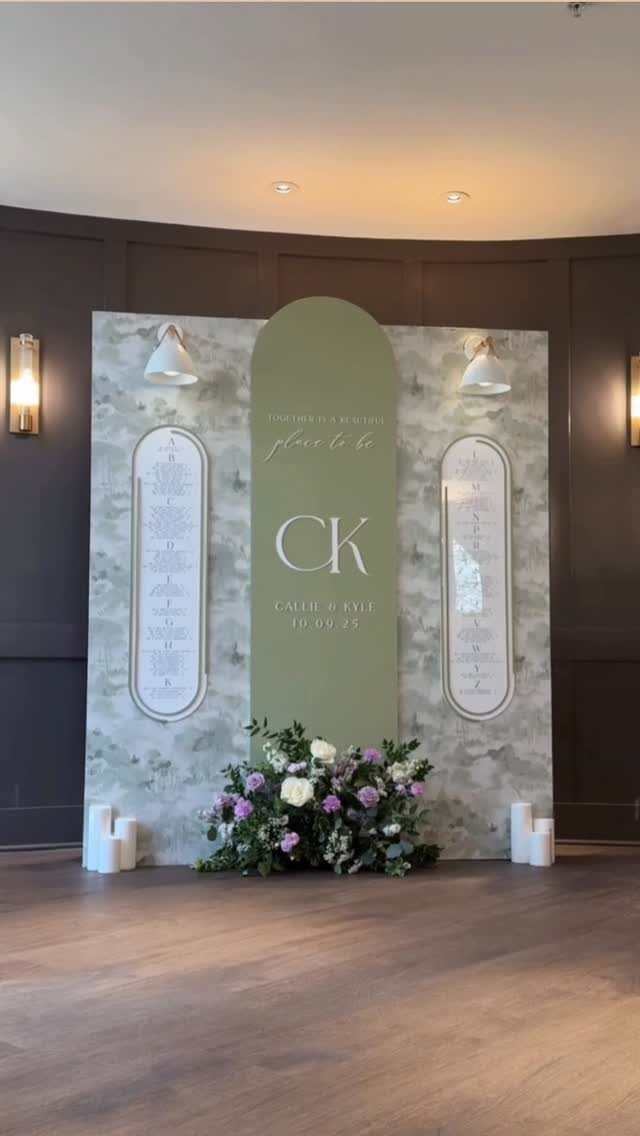
An arched sage sign with the couple’s initials, names and date makes a strong anchor, and seating charts set on either side turn it into the first thing guests walk toward.
Keep the lettering to a few lines: initials, names with the date, and one short phrase. Florals at the base tie it to the rest of the room.
Pick flowers in one accent color, so the sage stays the main color and the charts stay easy to read.
9. Sage Green Wedding Rings
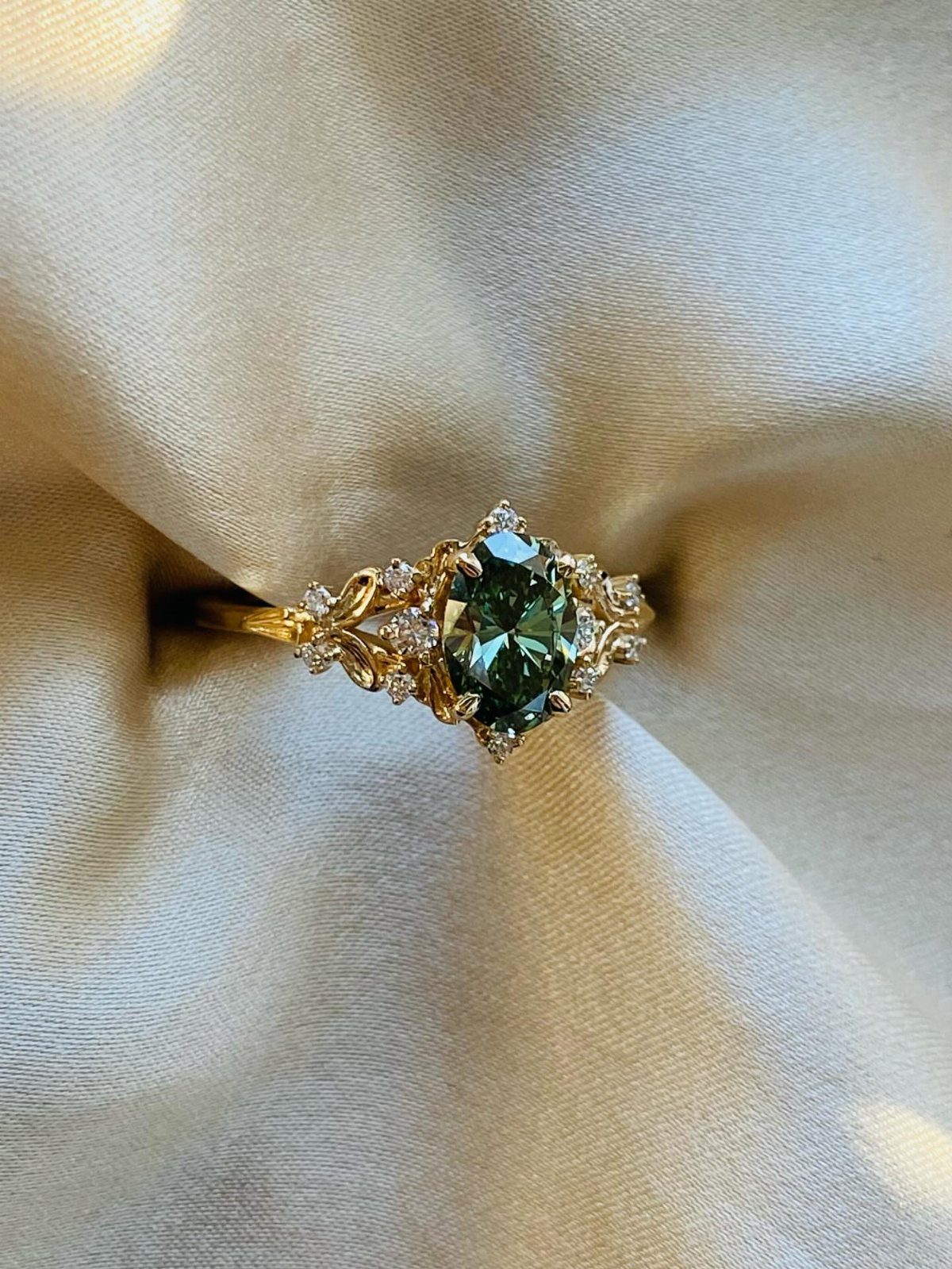
A sage green oval stone set in gold, with small diamonds beside it, brings the color into something you wear every day. It is the quietest way to carry the theme.
Gold suits the gray-green tone, and a champagne or cream satin makes a soft surface for the ring box shots.
Sage varies so much that it pays to hold the stone against your dress or a napkin swatch in daylight first, since a stone that reads gray indoors can turn green outside.
10. Green Wedding Candles
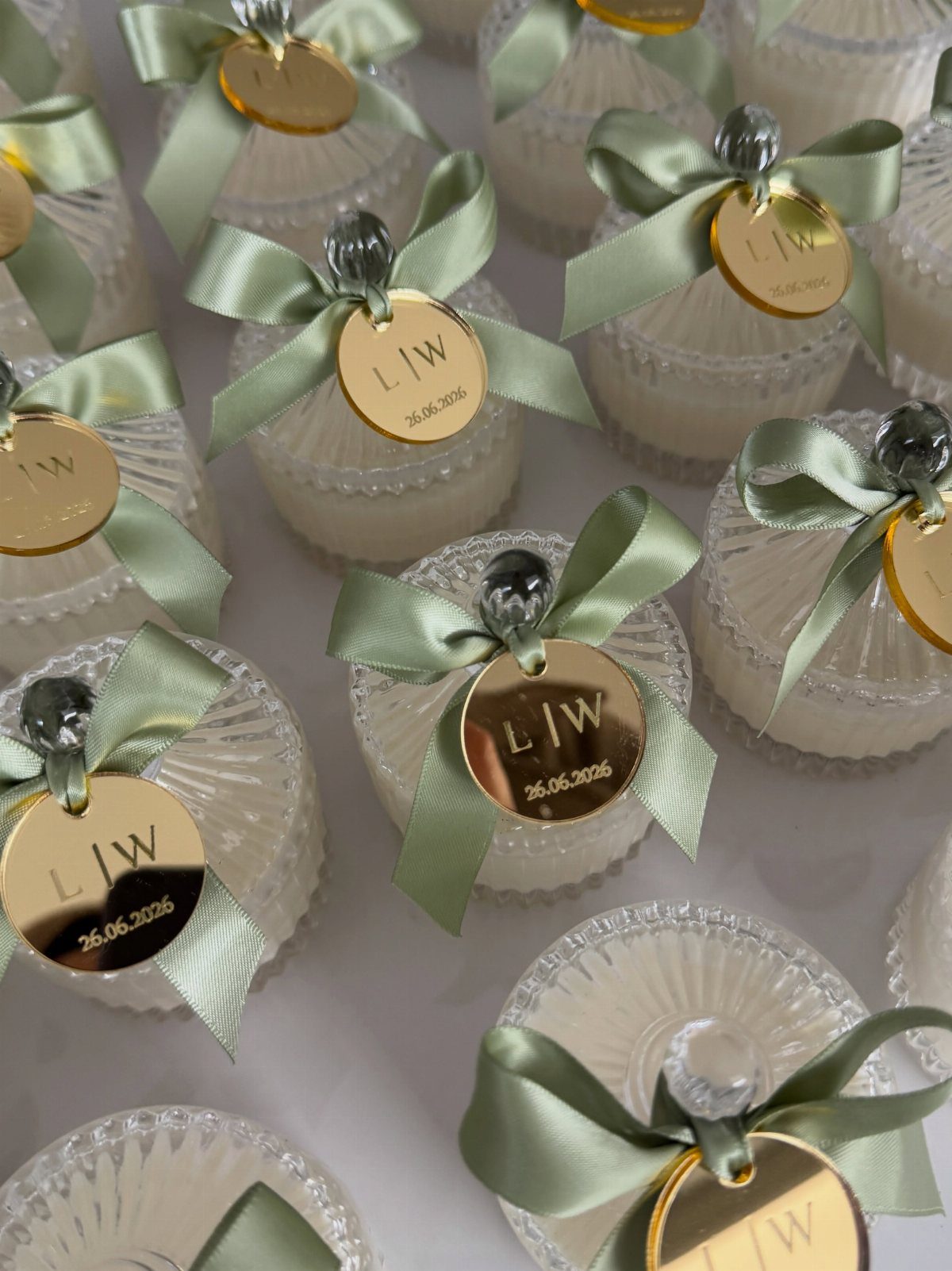
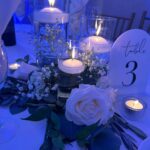
Small white candles in ribbed glass jars give a table a low, warm glow, and a sage ribbon around each one ties them to the palette without a single extra flower.
I like clustering them in groups of several down the table rather than spacing them evenly; the cluster looks fuller and costs the same.
11. Sage Green Groomsmen Attire
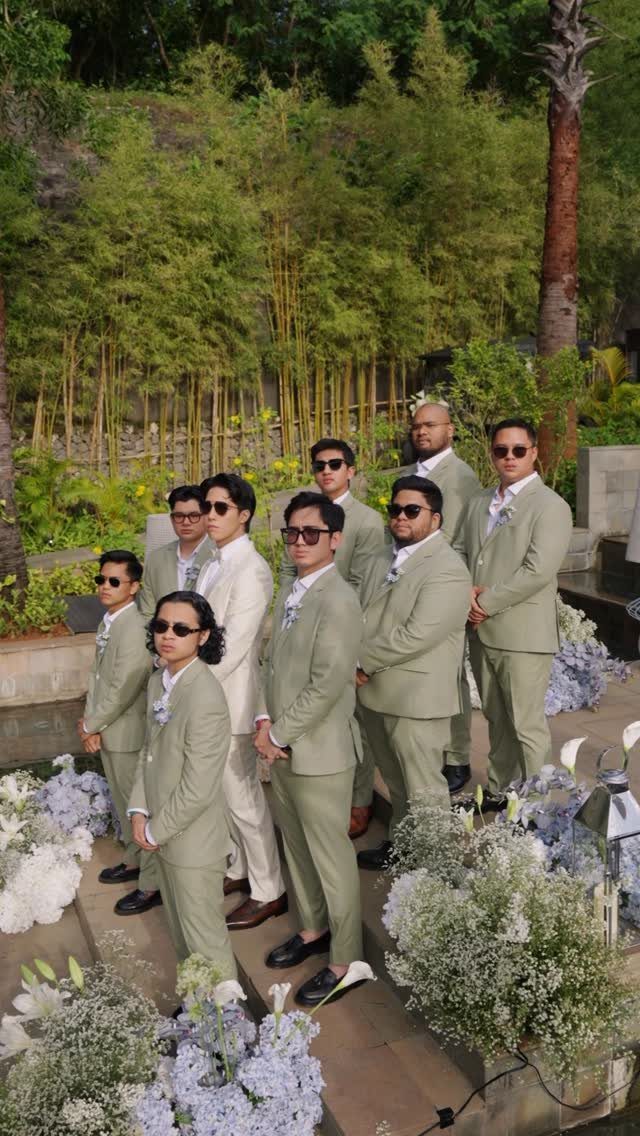
Groomsmen in sage suits can be mixed with white ones, as here, so the group looks coordinated without a row of identical jackets. Sage jacket with white trousers, or the reverse, is an easy split.
Match the shade to the bridesmaids’ dresses and the napkins by checking swatches together, since sage drifts between gray-green and olive. Have everyone order from one source if you can.
12. Sage Green Wedding Guest Dresses
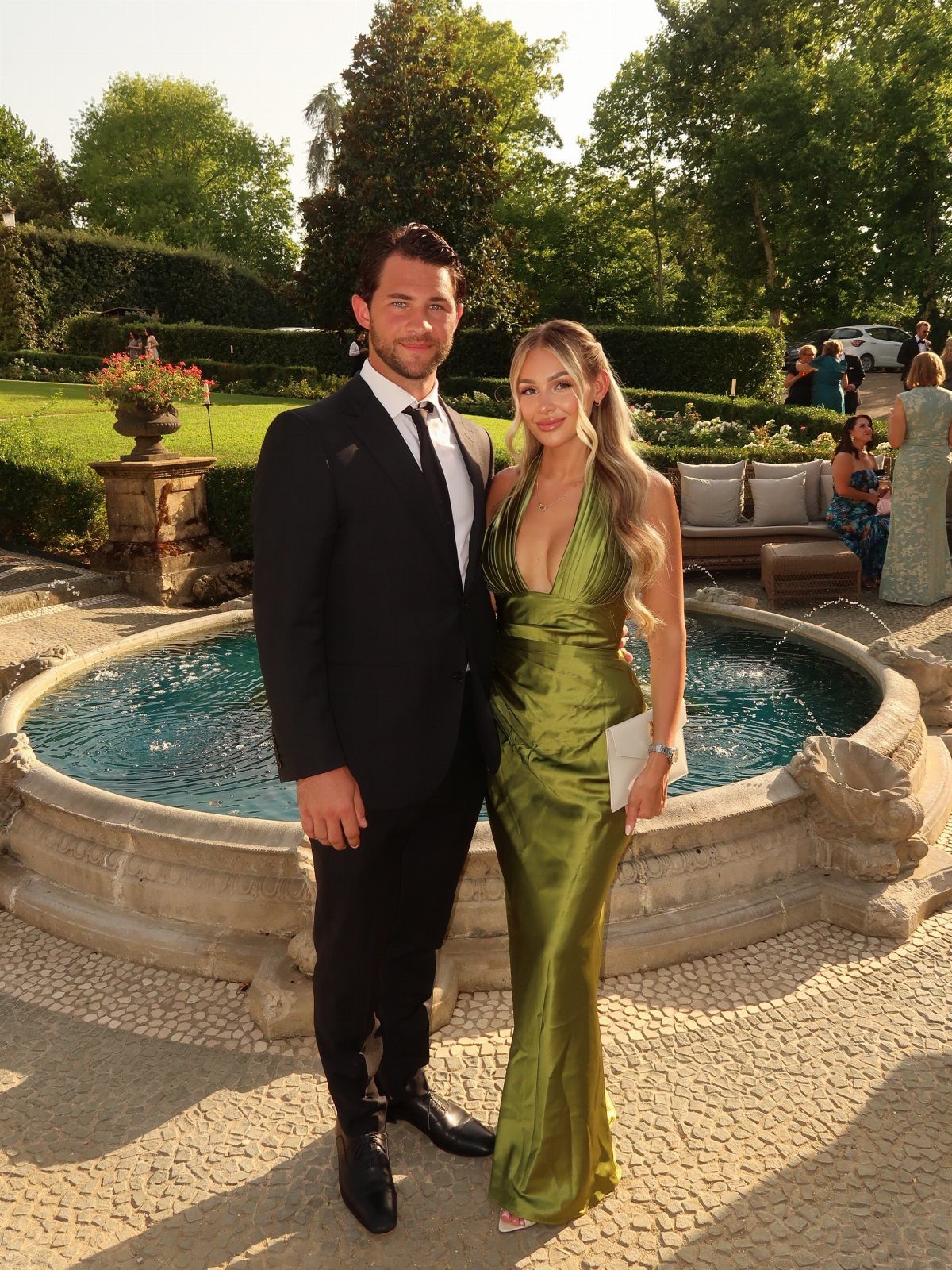
A satin gown in sage looks polished at a garden wedding, and it photographs well against greenery without competing with the bride in white.
A guest looks best in one soft shade with simple accessories: gold jewelry, neutral shoes. A flowing silhouette suits garden parties, fall weddings, bohemian days and rustic barns.
If the bridesmaids are in sage, ask the couple first, so you do not end up matching the wedding party.
13. Sage Green Wedding Favors
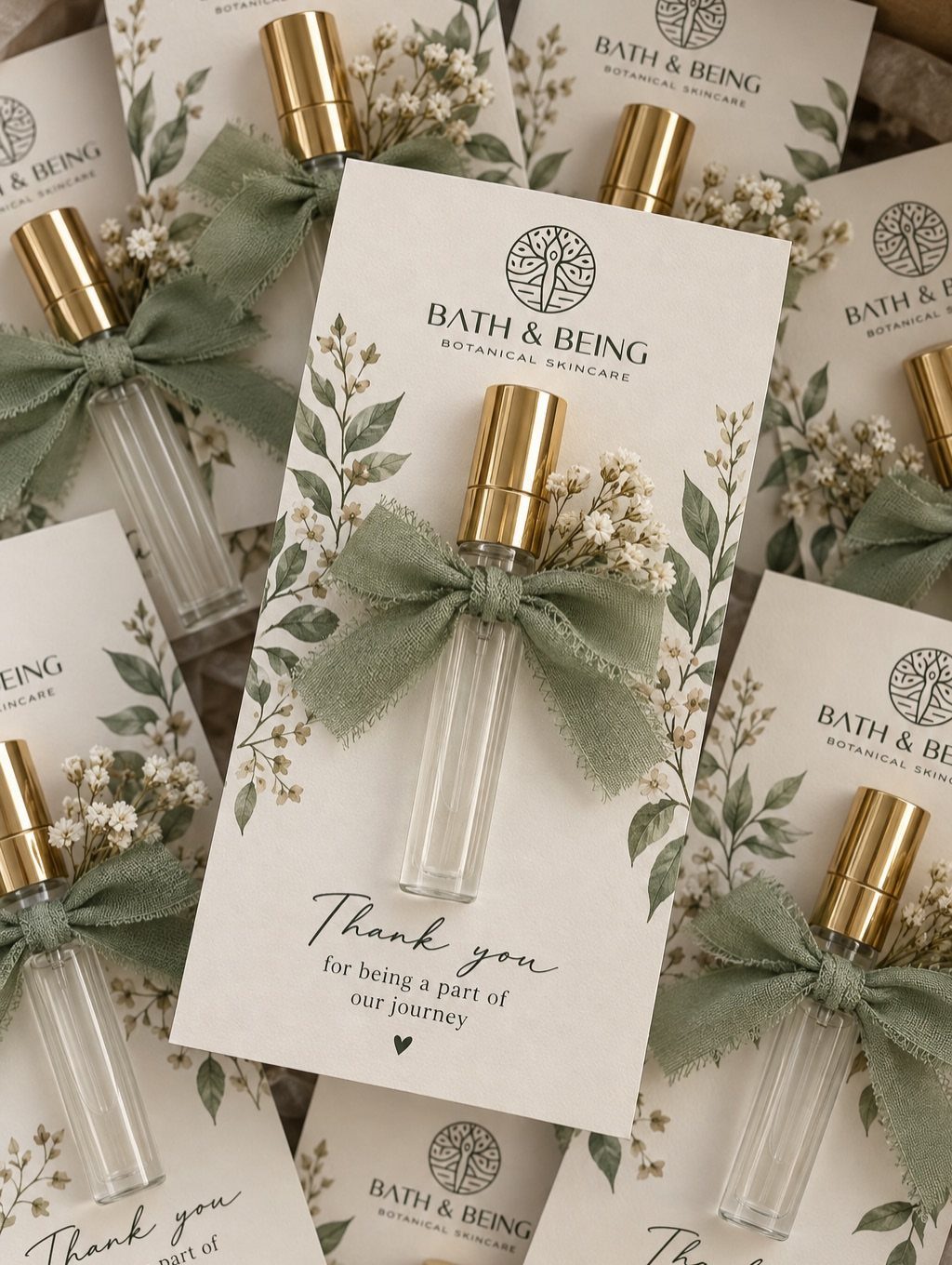
Small glass vials with gold caps and a sage bow turn a thank-you into something guests actually carry home. The bow is the only green you need; the gold caps match the cutlery and candles already on the table.
Tie each vial to a small card with a short line of thanks, and print or stamp it on heavy cotton stock so the botanical look carries through to the guest’s hand.
A single product in one size keeps the cost predictable, and the ribbon is cheap to buy by the spool.
14. Sage Green Invitations
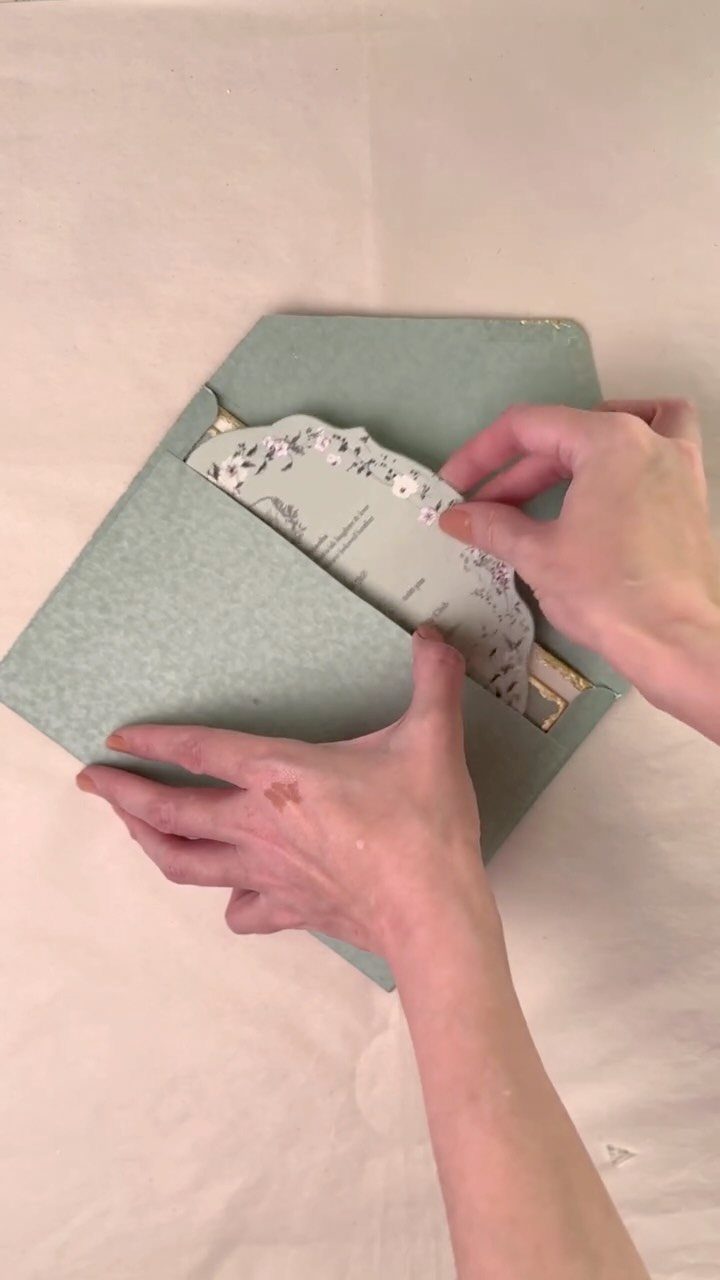
A sage envelope tells guests the palette before they reach the ceremony. Choose a textured paper for it, since the tooth of the stock gives the green some depth.
Keep the card inside white with a floral border, so the names stay easy to read and the envelope does the color work.
Order a sample first and hold it next to your napkin or sash swatch in daylight; sage drifts, and paper can print grayer than it looks on screen.
15. Sage Green Ceremony Backdrop
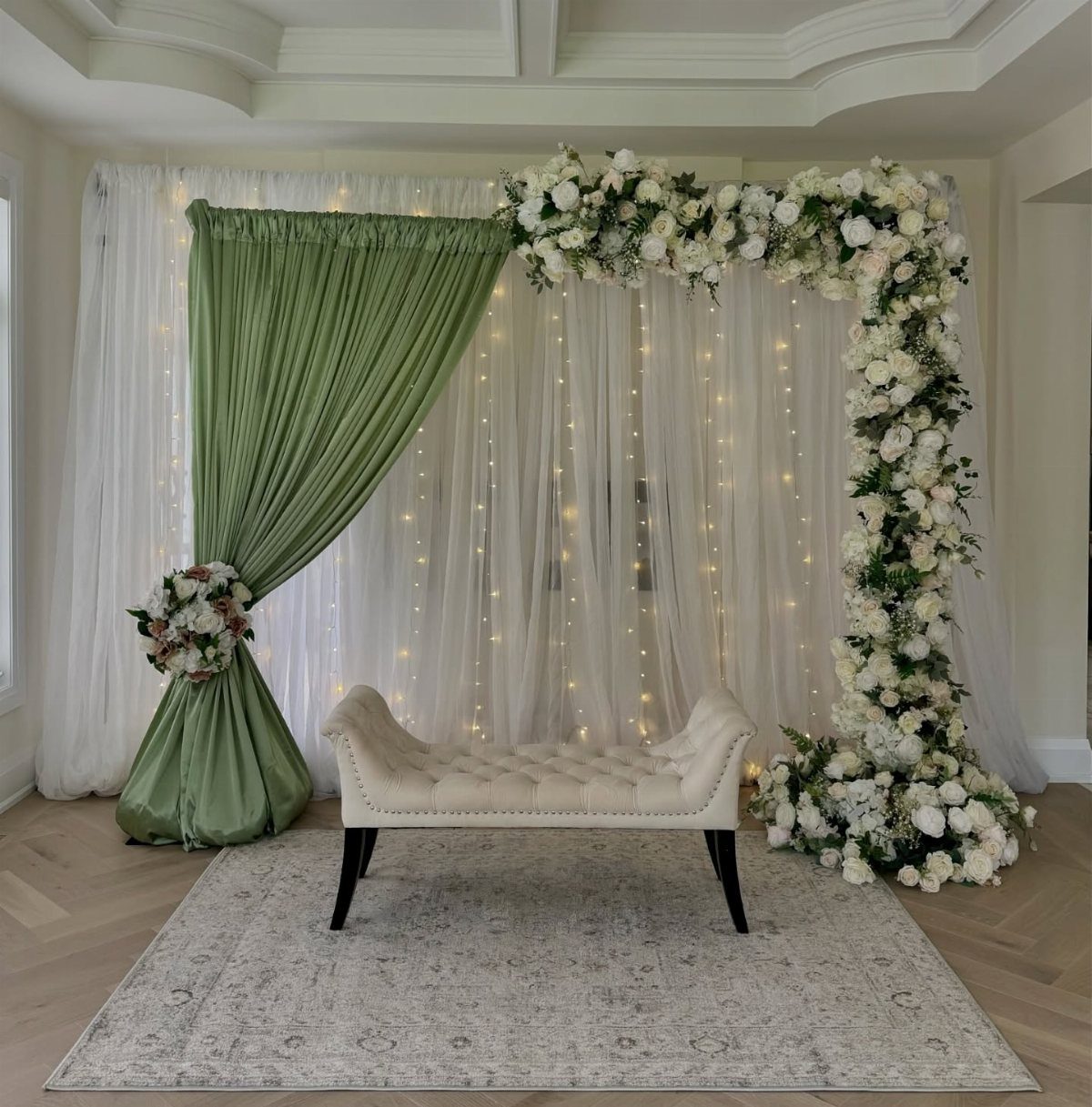
Draped sage fabric behind a white floral arch gives the ceremony one clear place to look. Fairy lights woven through it add glow without extra flowers, which helps when the florist’s quote is already high.
I would keep the flowers white against the green so the arch reads from the back row. Fabric is the cheaper half of this setup, so spend there first and add blooms only where the budget allows.
16. Sage Green Wedding Macarons
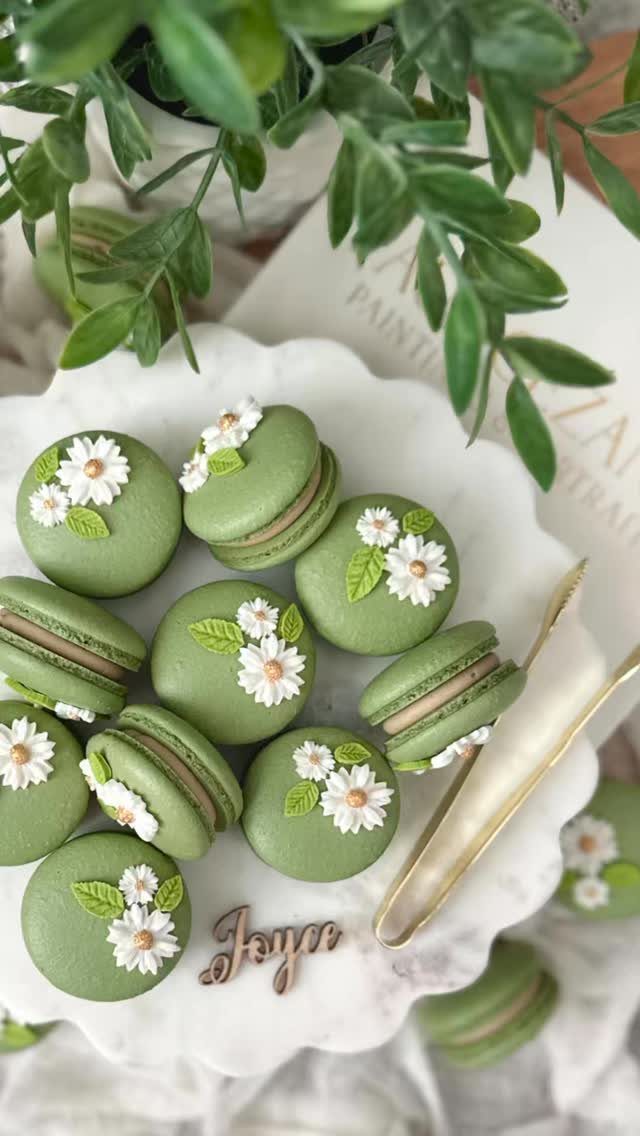
Sage macarons topped with small white flowers give the dessert table a color match you can eat. Set them on a white scalloped plate so the green is the only thing that stands out.
Add a pair of gold tongs and a small name tag, and guests know how to serve themselves.
Send the baker a swatch of your napkin or sash fabric, because sage food coloring drifts from batch to batch and the shells will only match if she mixes against a real sample.
17. Sage Green Wedding Photo Booth
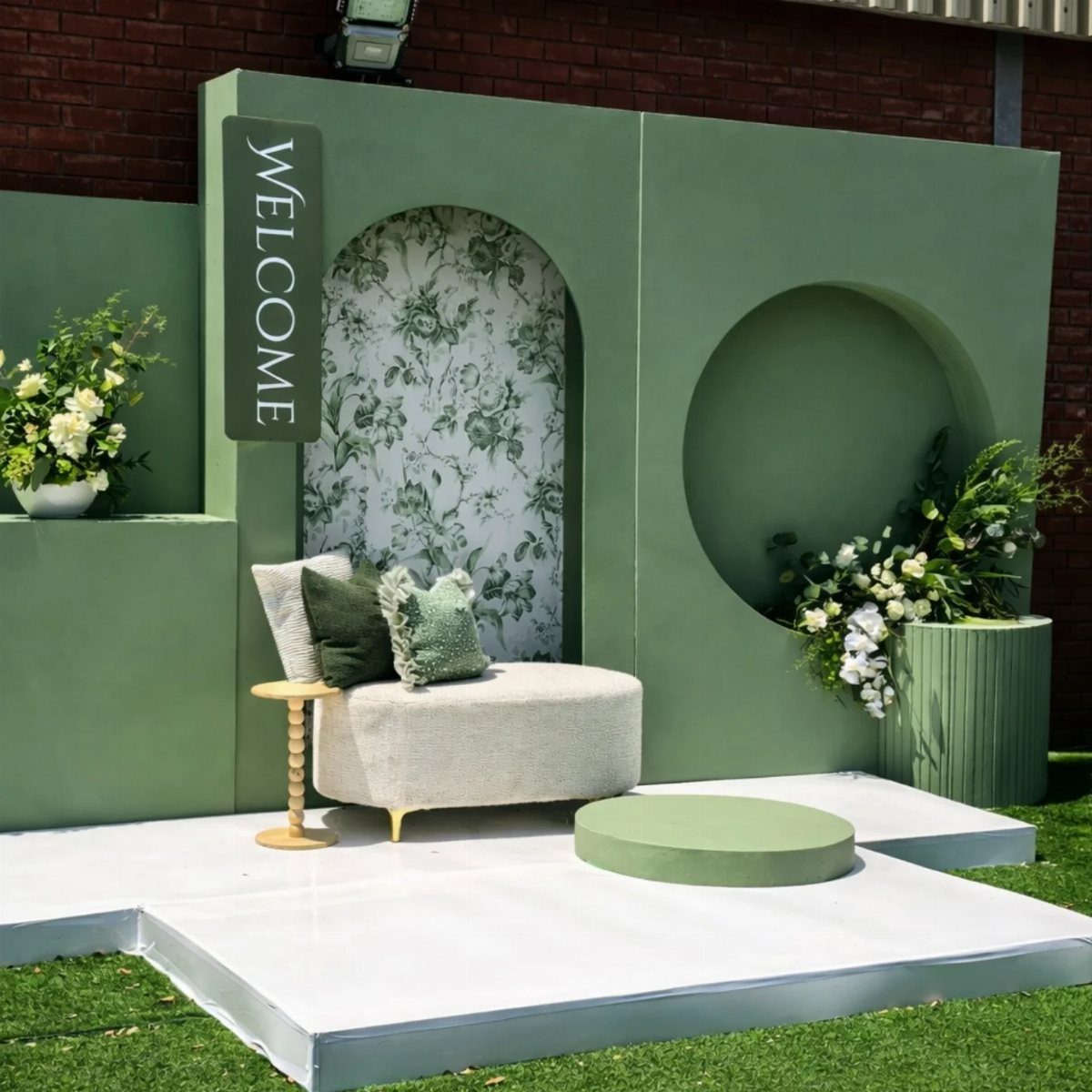
A sage backdrop with a floral arch, a white lounge seat and a small table of flowers sets up a photo corner guests will line up for. A welcome sign on the platform lets it double as an entrance spot.
Keep the props to a minimum: one seat, one table, one sign. Put it where the light is even, so faces stay clear against the green and nobody squints.
18. Sage Green Wedding Place Cards
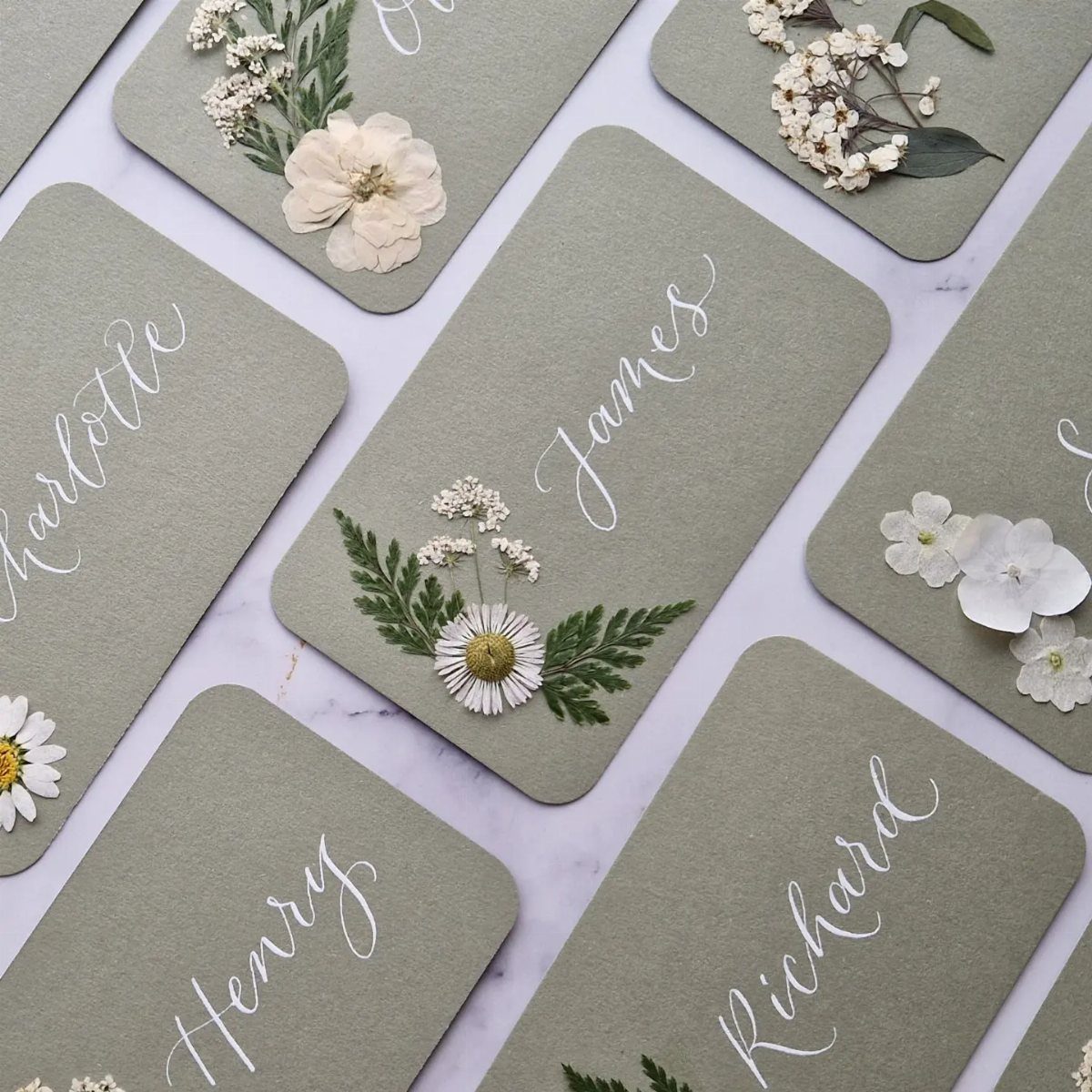
Sage cardstock with white calligraphy names is a small, low-cost way to carry the color to every seat. Pressed dried flowers on each card add texture without the price of fresh stems.
Choose cursive in white ink for the names and keep any extra detail off the card, so each name can be read at a glance. A calligrapher charges per card, so a guest list trimmed early saves real money.
19. Sage Green Table Runner
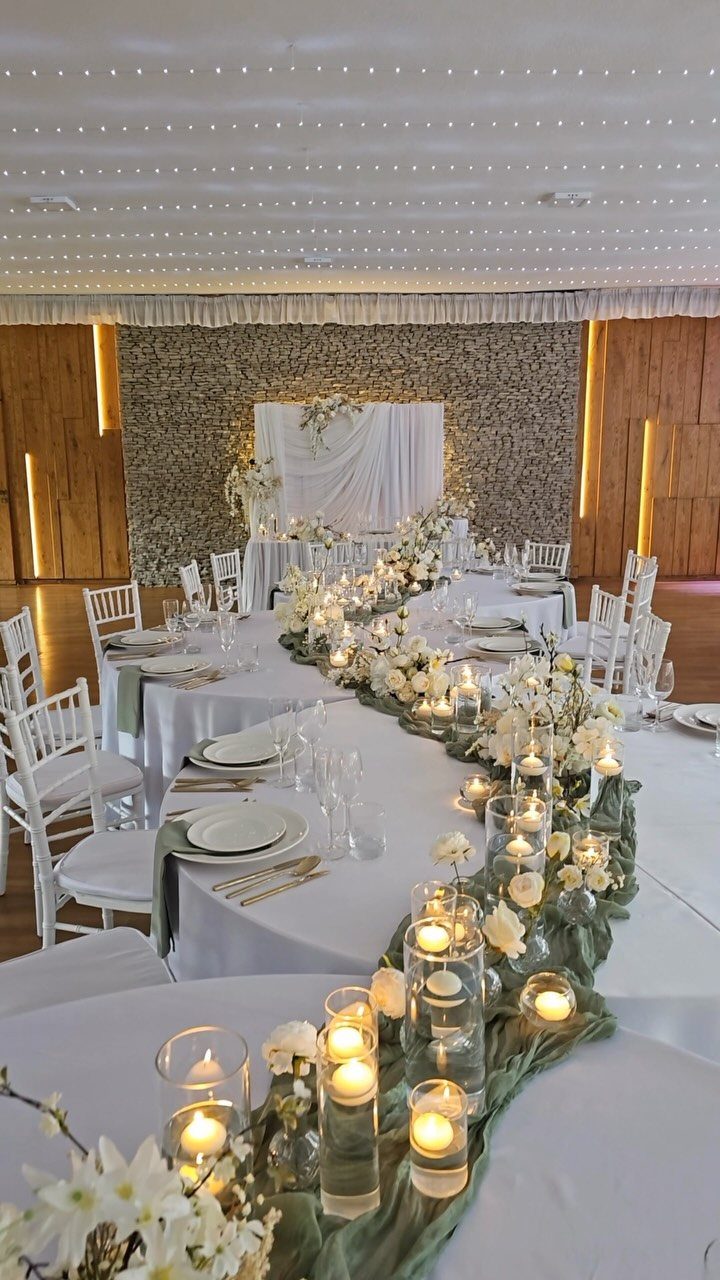
A textured sage runner down the center of a white-linen table puts the color along the full length of the room, so one long strip does the work of a dozen small accents.
Texture matters more than shade here.
A linen or woven finish catches the candlelight and keeps the green from looking flat against the white cloth. White flowers and pillar candles set directly on the runner finish the look without extra décor.
Runners are cheap compared with full sage tablecloths, which makes them the better pick on a tight budget.
20. Sage Green Chair Sashes
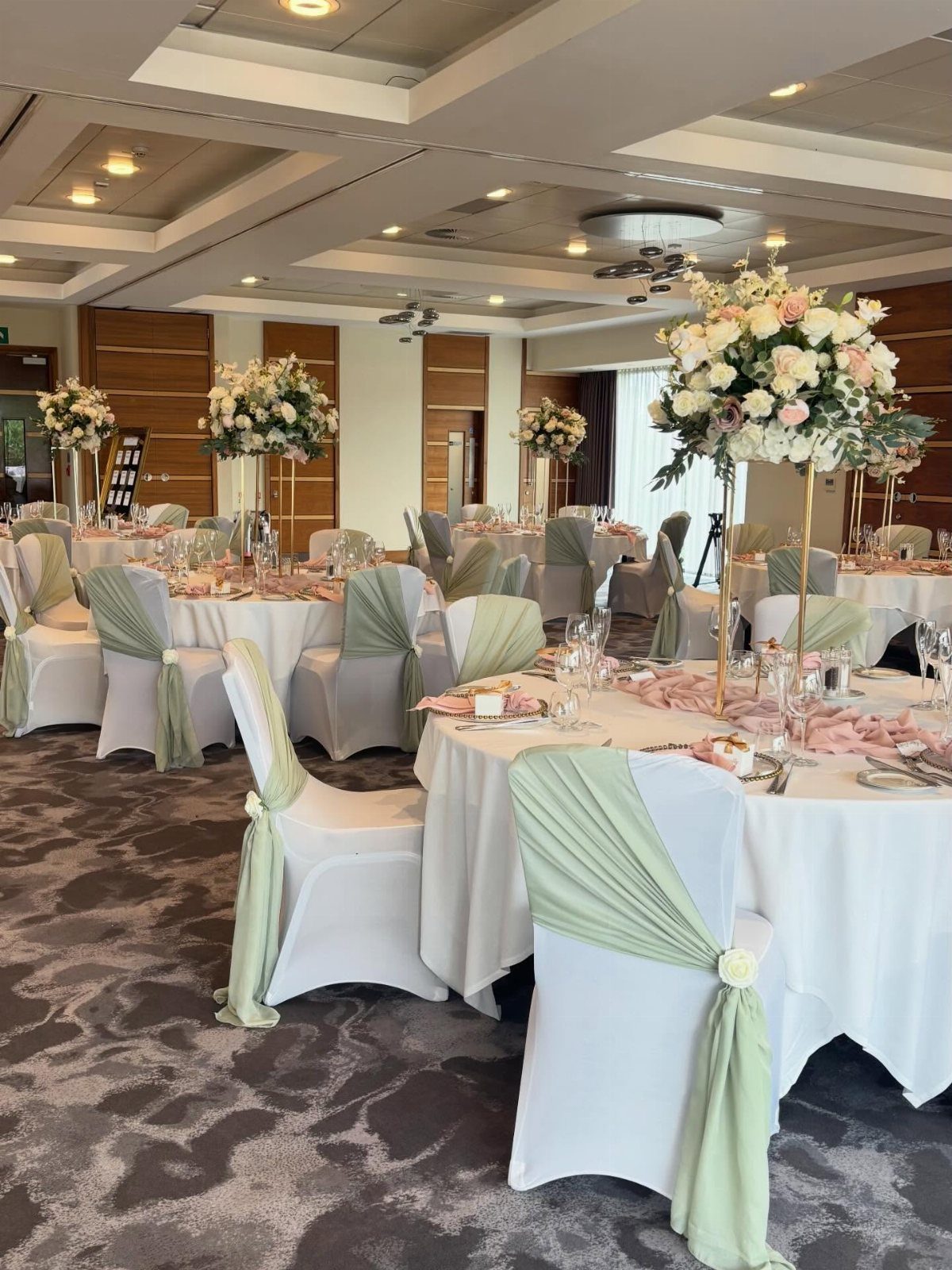
Soft sage sashes on white chairs add color at the one level of the room that florals never reach. Guests sit beside them all evening.
Chair sashes cost more in labor than in fabric, since every chair needs a tied bow or knot.
I would pick a fabric with some drape, because stiff ribbon tends to look like a gift wrap. Keep the tablecloths and centerpieces white so the sashes stay the single green note.
Tie a sash on one chair first and look at it from across the room, then buy the rest.
21. Sage Green Balloon Arch
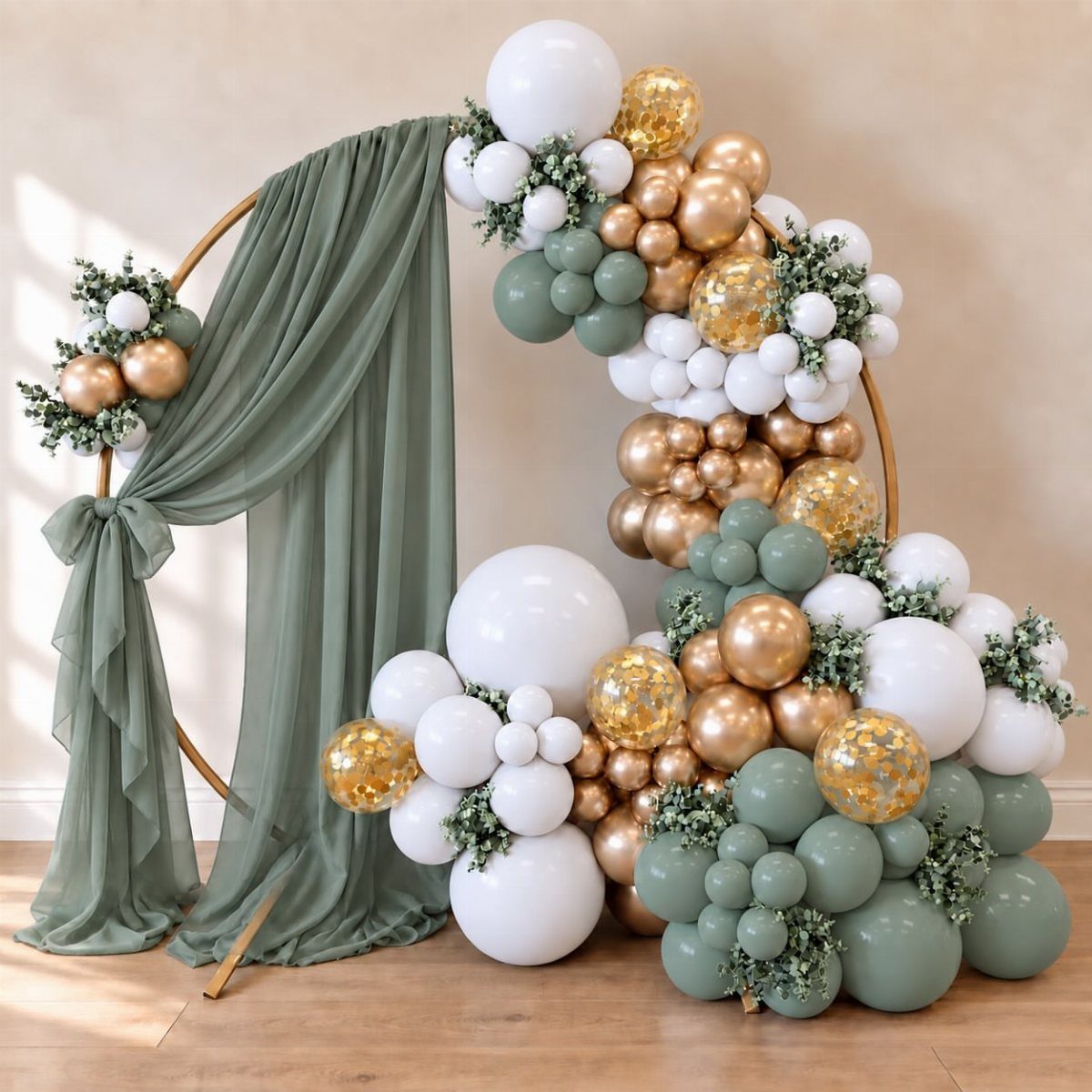
A gold circle frame draped with sage fabric gives balloons something to cling to, and the metal keeps the whole piece looking intentional instead of party-store.
Mix 3 colors only: sage, white and gold.
Cluster the balloons on one side of the ring, in different sizes, rather than spacing them evenly around it. The fabric hides the gaps and adds the soft drape that balloons alone lack.
Balloons suit a photo corner or a sweetheart table better than a formal ceremony, where fresh flowers read as more polished.
22. Sage Green Accent Boutonniere
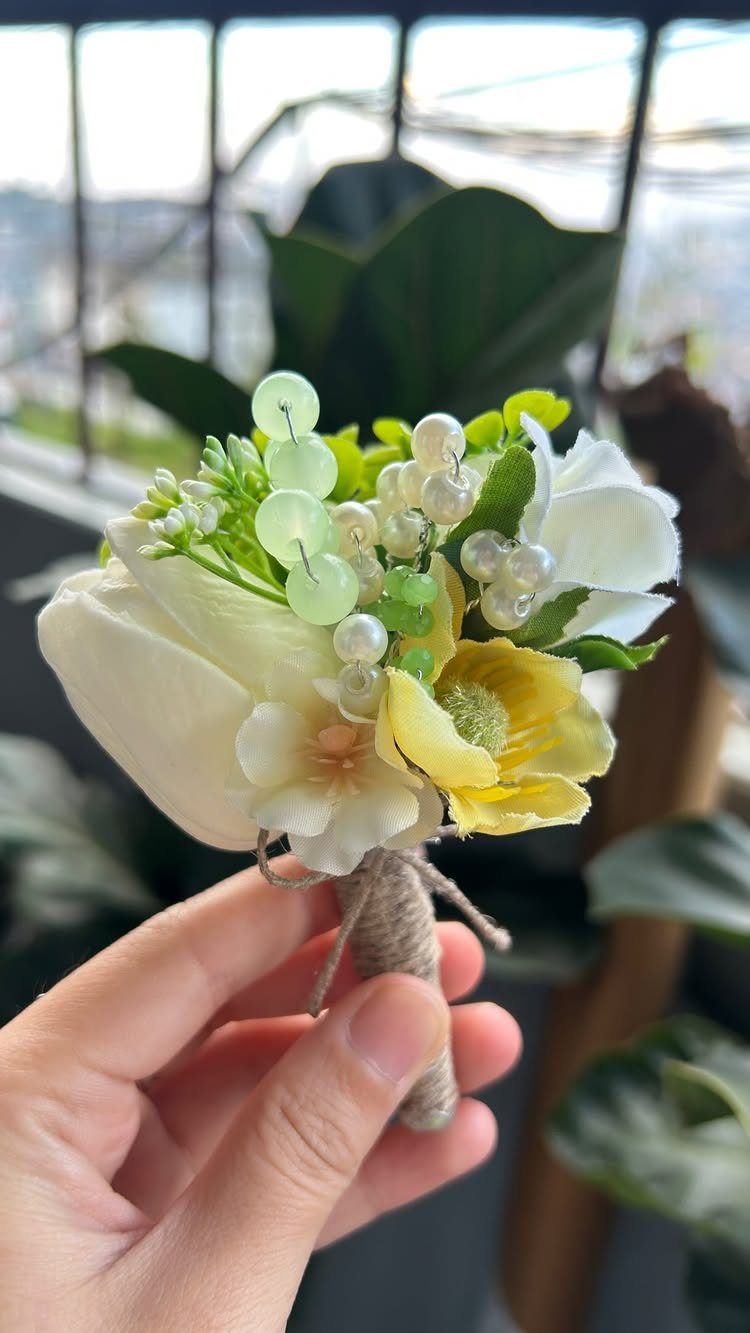
White blooms with sage green berries and a twine-wrapped stem make a boutonniere that feels picked from a hedgerow. The berries carry the green, so the flowers can stay simple.
I like twine for the stem because it looks casual next to a suit and costs almost nothing. Match the berry tone to your sage swatch in daylight, since greens shift between gray and olive.
A touch of yellow in the blooms adds warmth if the groom’s suit is dark, though white alone keeps it closest to the rest of the palette.
Why Sage Green Is Popular
Sage reads as wisdom, balance and peace, which suits the start of a marriage and is a quiet reason to choose it over a louder green.
That softness is also why it adapts so easily. Blush, ivory, dusty blue, gold, taupe and terracotta all sit well beside it, so you can build around pieces you already own or love.
Wood accents and textured fabrics bring out its natural tone. If your venue has a wood floor, beams or a rustic table, you may need less added decor than you think.
Sage Green’s Seasonal Adaptability
Sage works in every season, but the partners you pair it with should change.
In spring and summer, pair it with pastel florals and airy fabrics, which keep the mood light. In fall and winter, sage becomes a cool, grounding tone, and warm companions balance it: terracotta, earthy browns and gold details.
Beige, gray and light brown also sit well beside sage, and they are easy to find in linens, wood and stationery.
If you are marrying in a season where flowers are scarce or pricey, leaning on those neutrals keeps the palette intact without extra blooms.
Sage Green’s Symbolism
Sage feels romantic without being sugary.
Pair it with a clean modern table and it looks fresh, and set it against heirloom china and candlelight and it feels settled; either way, couples who find ivory and beige too flat get color without losing the calm.
Lighting does a lot of the work. Soft light, delicate textures and neutral accents let the green carry the mood instead of fighting for attention.
White and sage carry most of the room in this version, and a few terracotta accents in the bouquets and on the bridesmaids’ dresses add the warm, earthy note that keeps it from feeling too polished.
Keep the terracotta to accents so the sage stays the lead.
Frequently Asked Questions
What color goes with sage green for a wedding?
White is the easiest partner: sage linens with white chairs and white flowers make a two-color palette where nothing competes.
Choose one partner color to carry the palette, then let the rest show up only in small touches like napkins, ribbon or a few stems, so sage stays in front.
Is sage green out of style in 2026?
Nothing I have seen suggests it is.
Sage is a muted, adaptable shade that works in every season, so it tends to hold up better than a louder color. Pairing it with timeless partners like white, ivory or gold keeps it from looking tied to a trend.