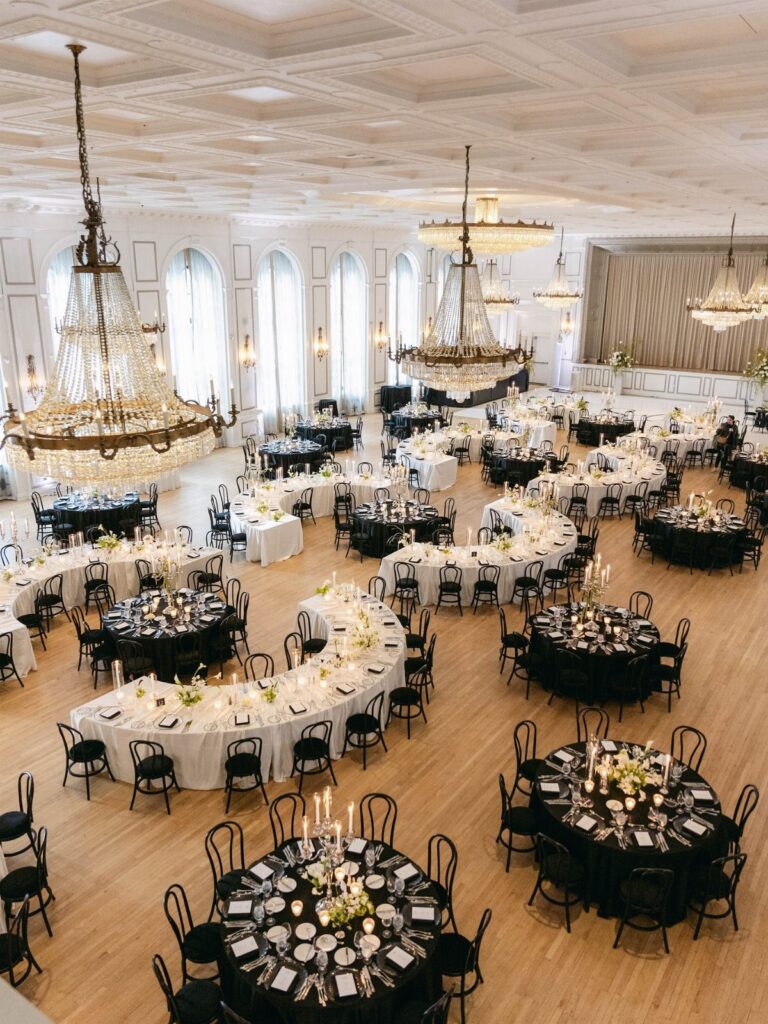
The ideas below range from Open Seating with no chart at all to a seating chart design built around guests’ faces, and from a single QR Code Seating Sign to an Alphabetical Seating Chart Display that needs about 20 business days for flat foil.
How much control you want over who sits beside whom decides the idea: if families and elderly guests need specific spots, you need escort cards, place cards or a chart display, and if the priority is a loose party, Open Seating saves the work.
Whatever you choose, lock the final version about 7 days before the wedding.
1. Seating Integrated with Familiar Faces
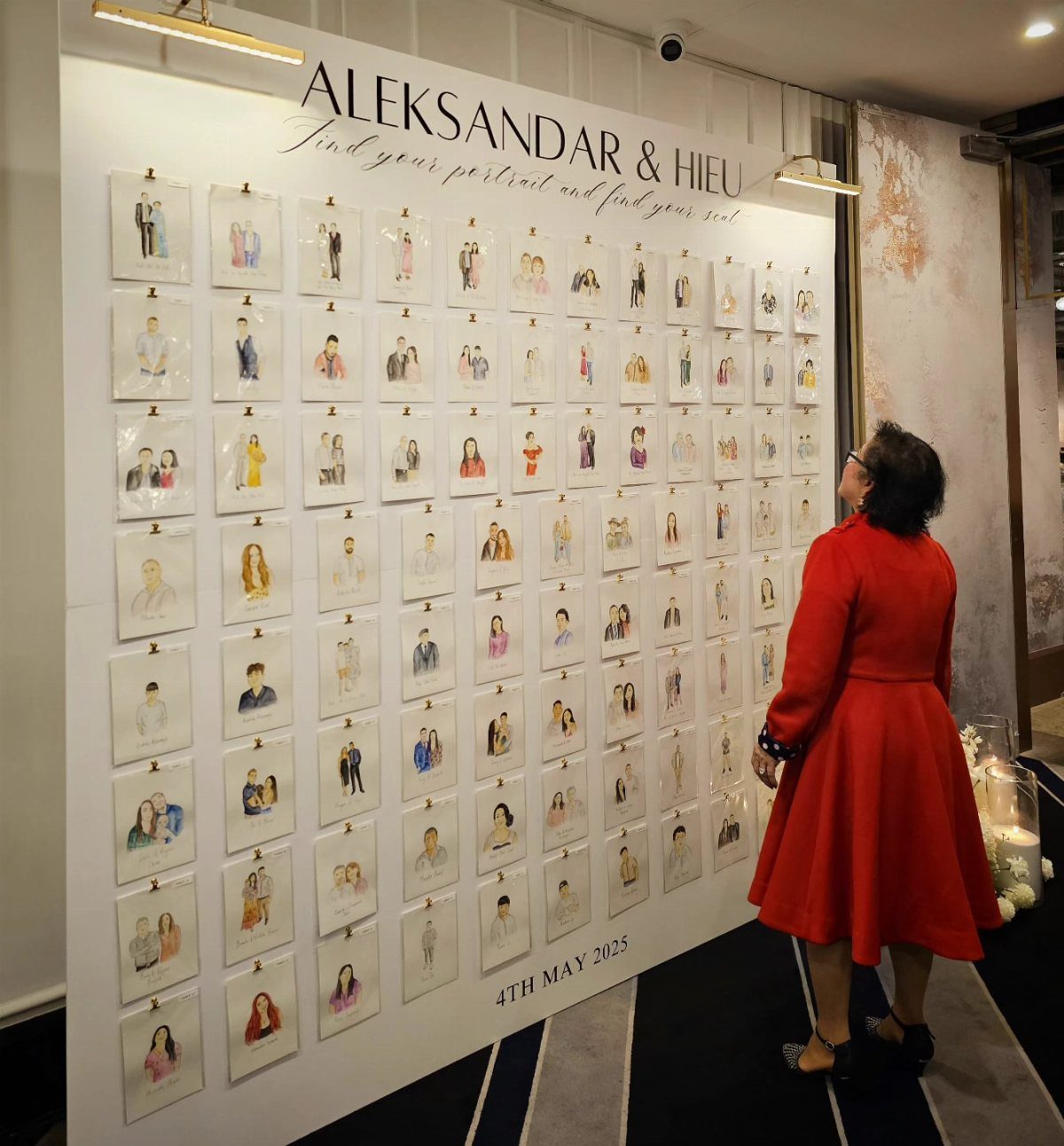
A chart built from illustrated guest portraits turns finding your seat into a small game. People scan the wall for their own face first, then hunt for the faces they know around it.
That makes it a good fit when many guests are strangers to each other, since neighbors get a built-in conversation starter.
Commissioning one portrait per guest takes lead time and adds cost, so I would save it for a smaller guest list.
2. Seating Chart Design
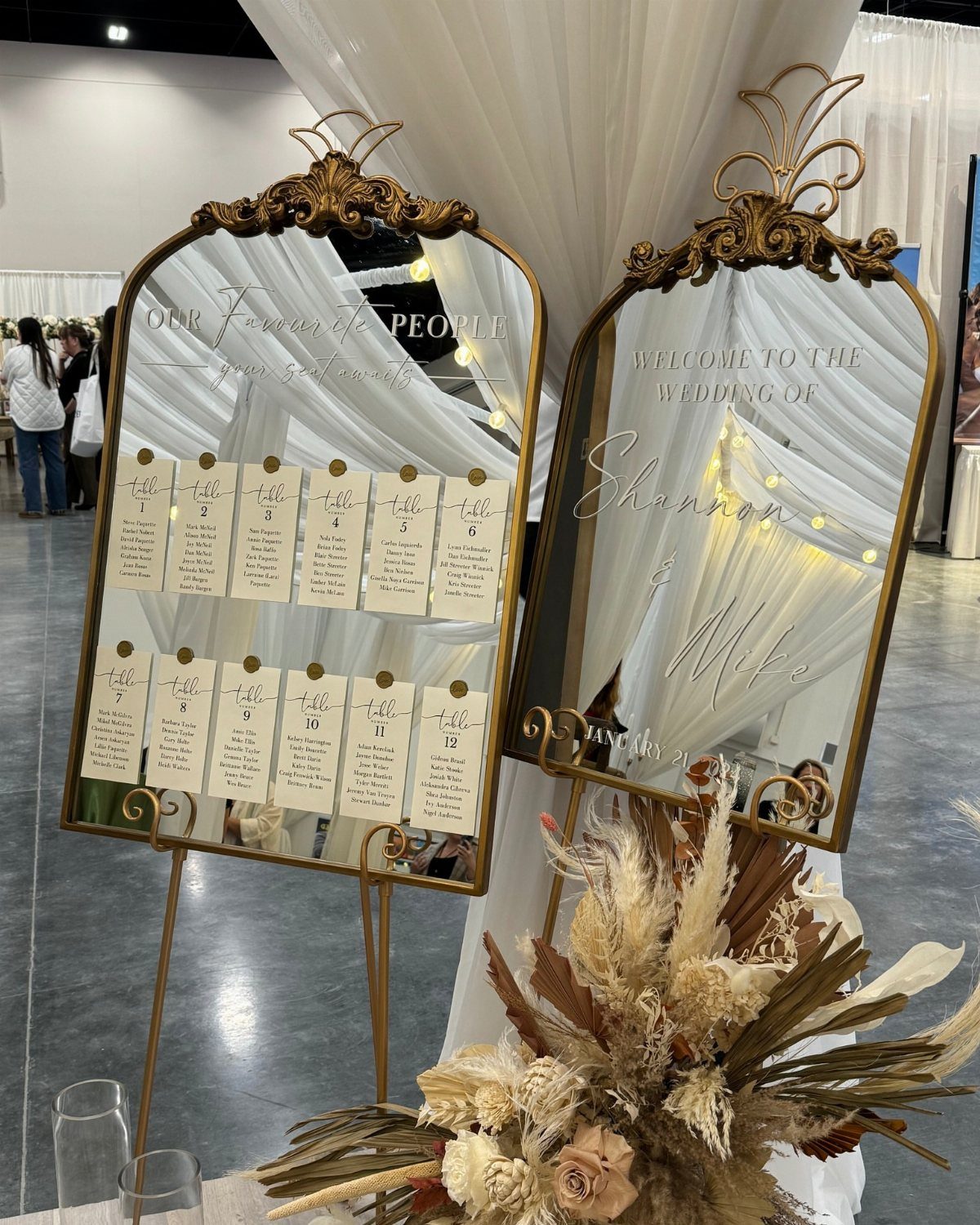
One mirror can carry the welcome and the other the table lists.
Dried flowers at the base tie the chart to your tablescape without extra signage.
Keep names in a single column per table and use a legible script, because guests will read it from a few feet back while holding a drink.
3. Kids’ Table
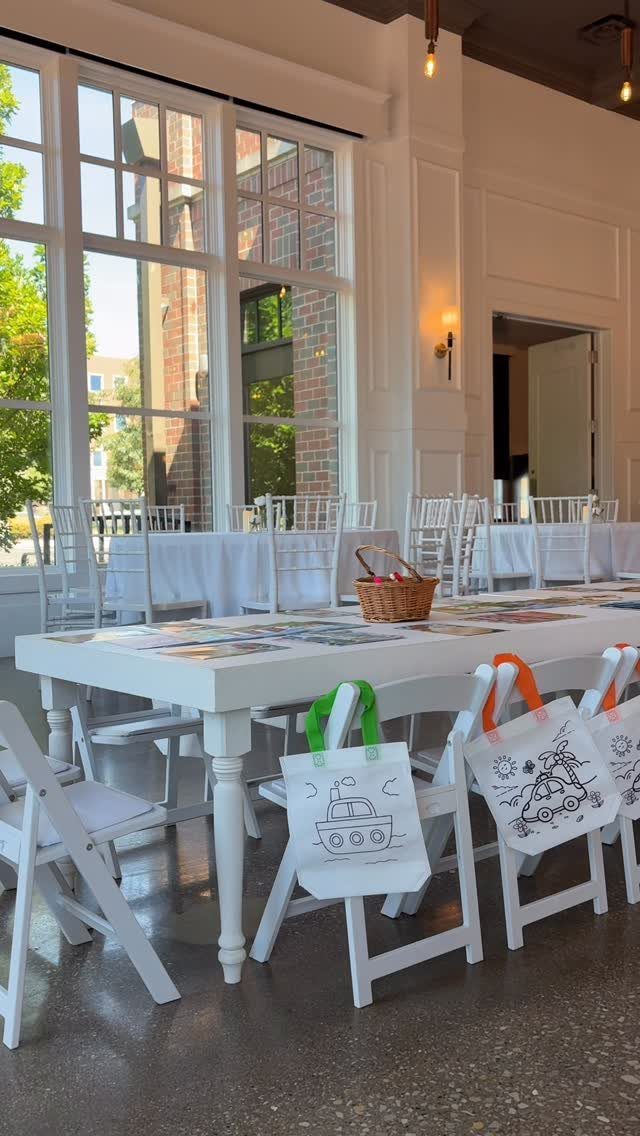
Seating children together at their own table gives parents a break and keeps the little ones within sight of the adults. Put it near the families’ tables, not across the room.
Activity bags hung from the chair backs mean the table is ready the minute kids sit down. Coloring sheets are the easy fill, and plain white folding chairs keep the cost low.
4. Escort Cards and Place Cards
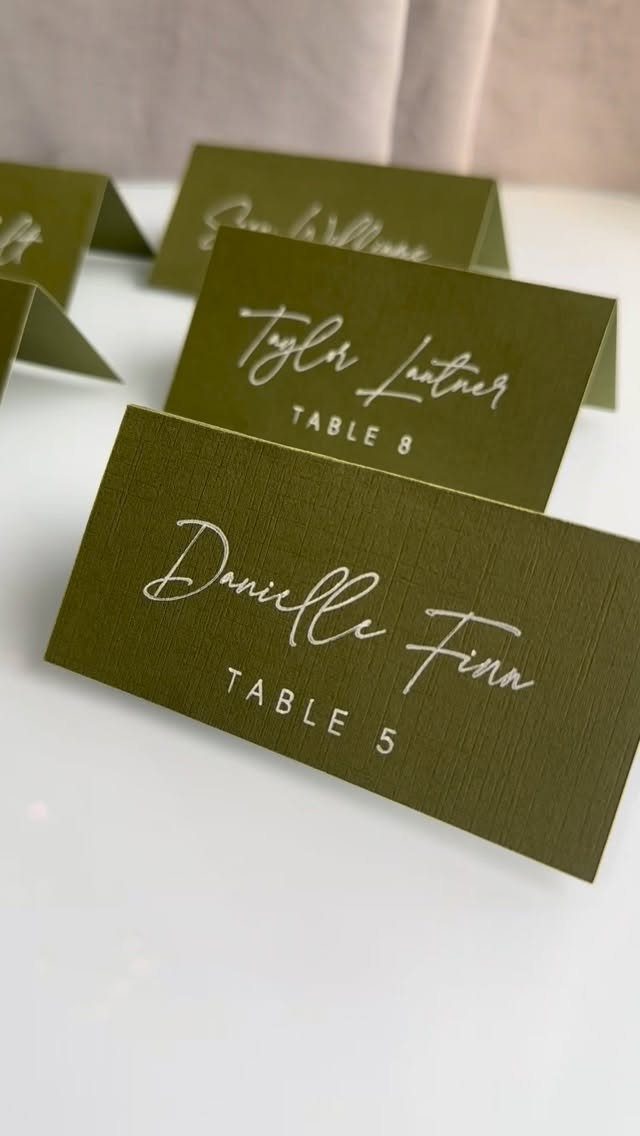
Escort cards and place cards are different jobs.
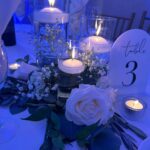
An escort card, like the folded cards with a name and table number, tells a guest which table to head to; a place card sits at the seat itself and names the exact chair.
Use escort cards alone if guests may choose their own seat at the table. Add place cards only when you want to control who sits next to whom, which doubles your paper and your setup time.
5. Sweetheart Table
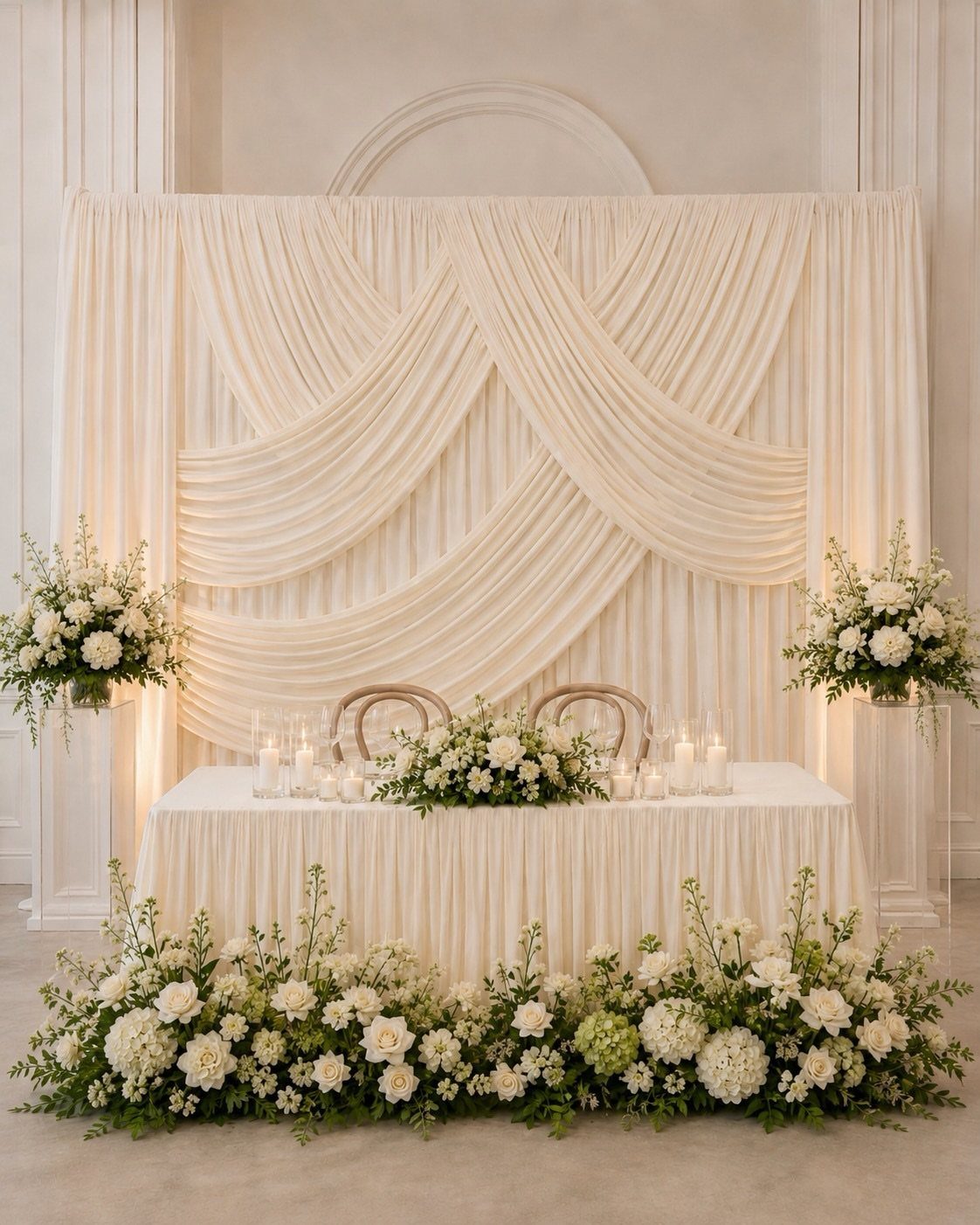
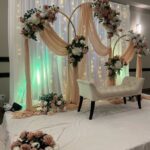
A sweetheart table seats just the two of you, and it is the simplest way to keep the couple front and center. Draped fabric behind it makes a small table look like a stage.
I like it for couples who want a quiet meal together, and florals plus candles give it presence at a small size.
Sitting at a sweetheart table puts you apart from family, so plan time after dinner to visit each table.
6. Head Table
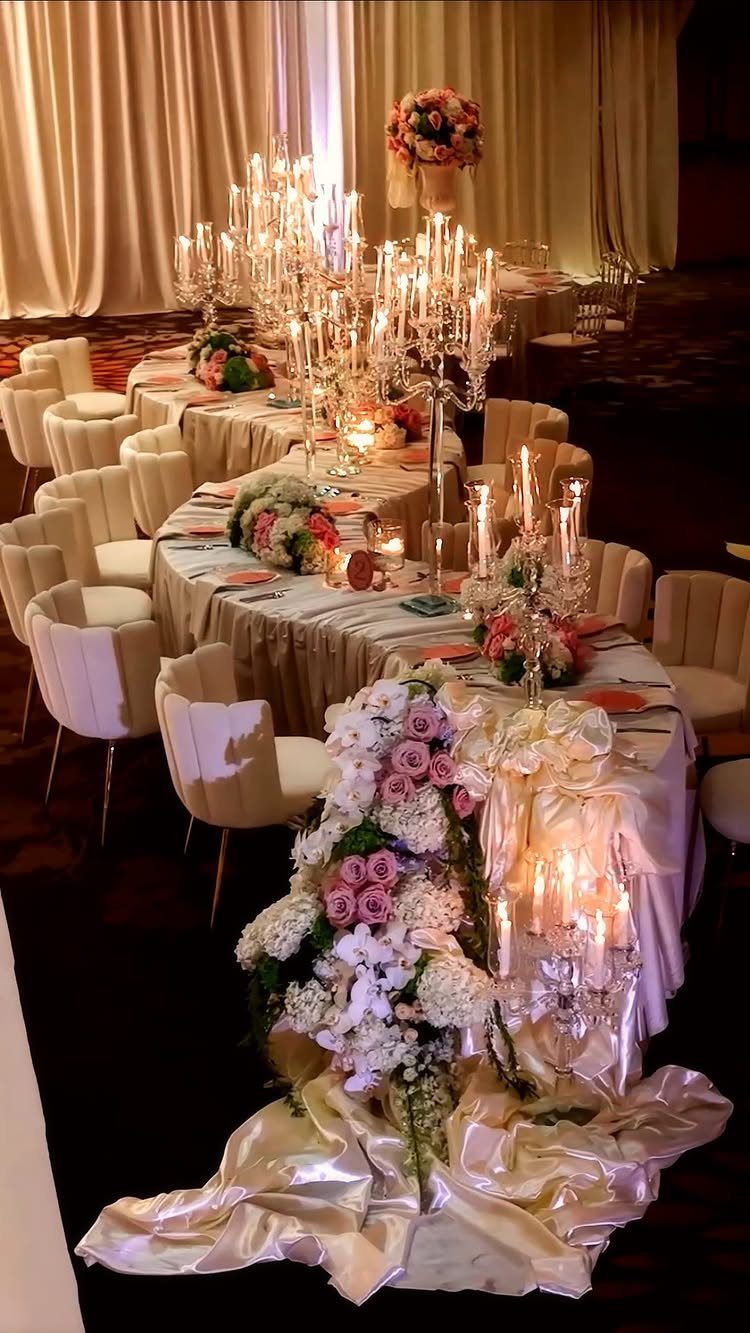
Seating the couple and the wedding party along one long table puts everyone who stood up with you in a row, facing the room. Long linens, candelabras, and low florals keep it dressed without blocking sightlines.
The downside is that everyone sits on one side, so conversation runs side to side and not across. Keep the centerpieces low so guests can still see the couple.
7. Round and Rectangular Tables
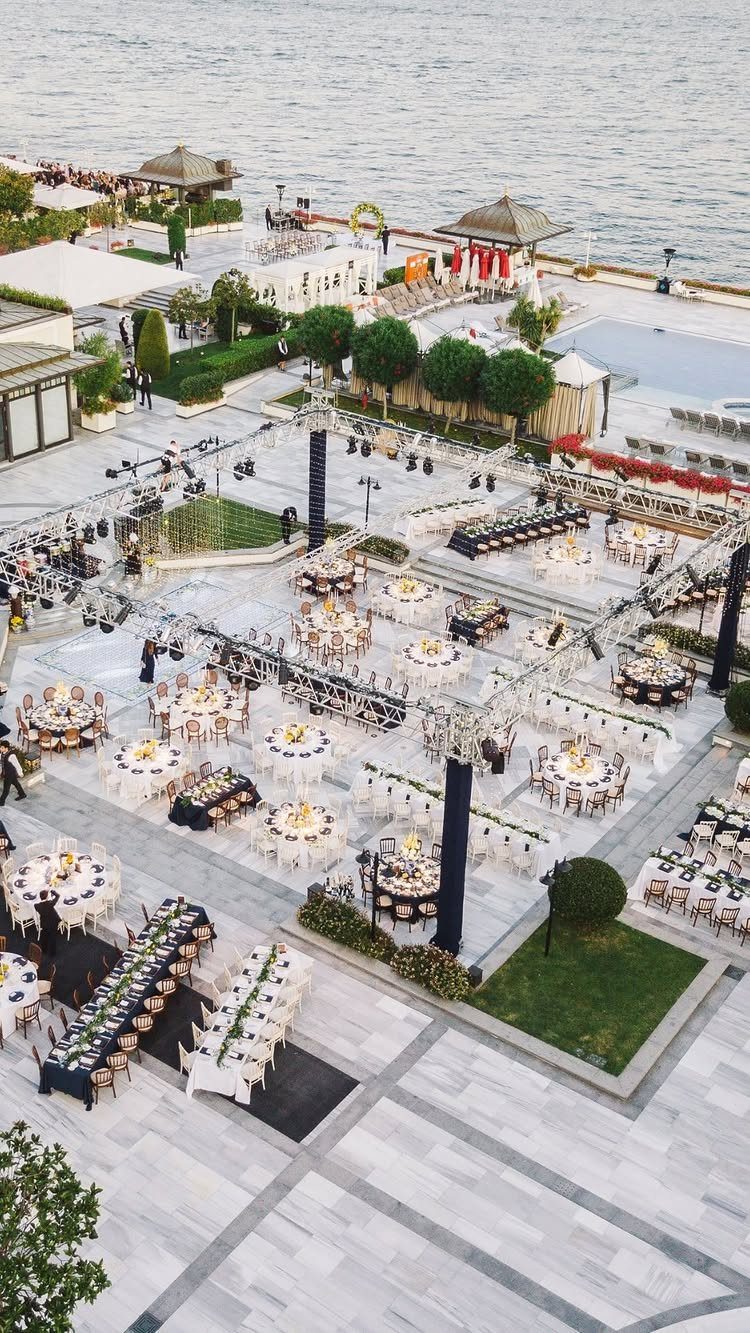
Round tables put every guest in view of everyone else at the table, so conversation spreads easily. Long rectangular tables, like the ones mixed in here, seat more people along a line and read as a banquet.
I lean toward rounds for guests who don’t know each other, since nobody is stuck talking only to the person beside them.
Pick rectangles when you want a communal feel and a cleaner look from above. A mix works too, as long as each shape has room around it for chairs to pull out.
8. Alphabetical Seating Chart Display
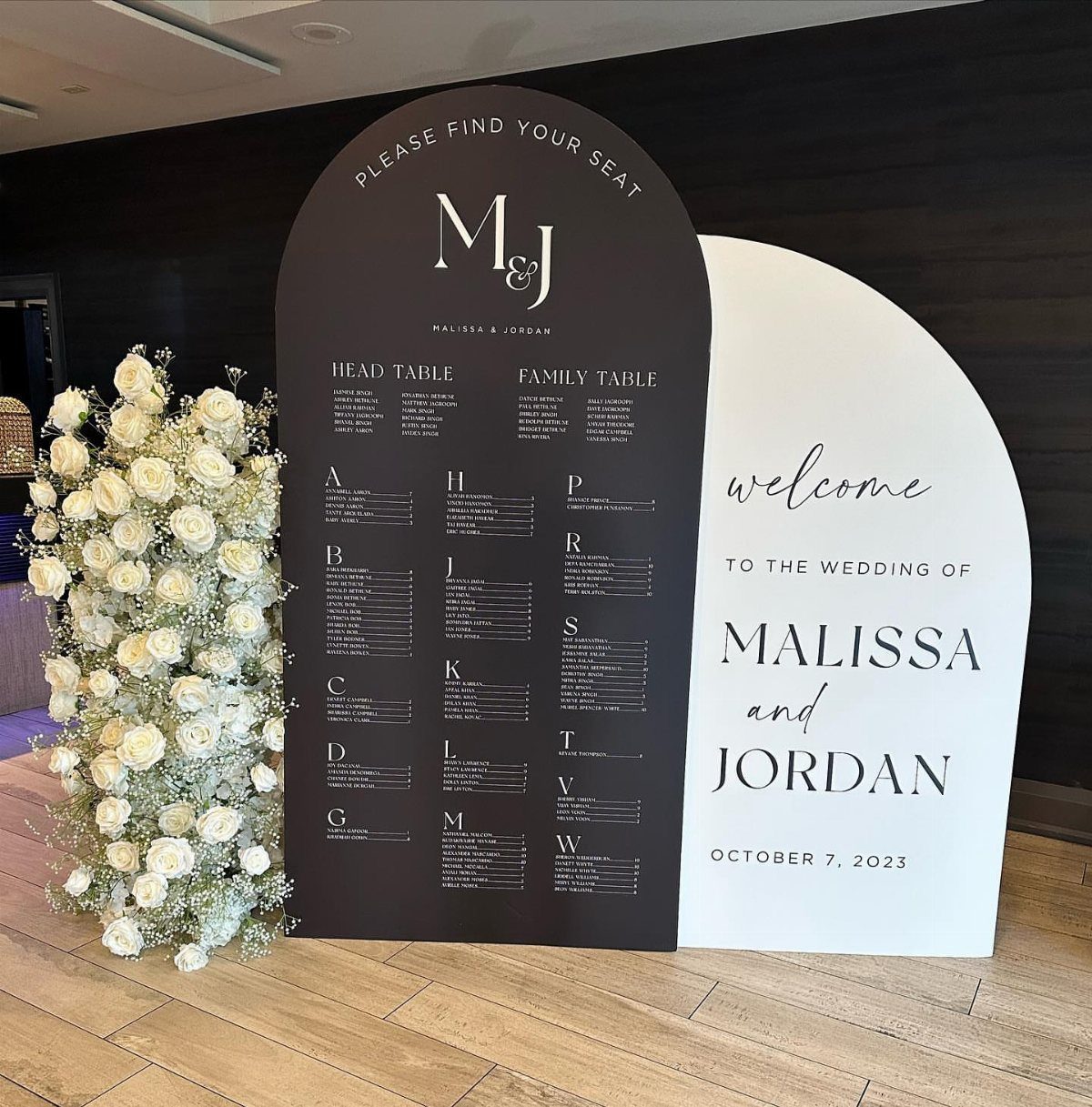
An alphabetical chart lists guests by last name instead of by table, so a guest finds their name the way they would in a phone book.
Pair it with a welcome sign in the same style so the entrance looks planned.
I like it because nobody has to scan the whole room of tables to spot one name.
Print the names large and in a single clean typeface, and keep any flowers off the lettering. Set the chart where guests can step back and read it without blocking the door.
9. Open Seating
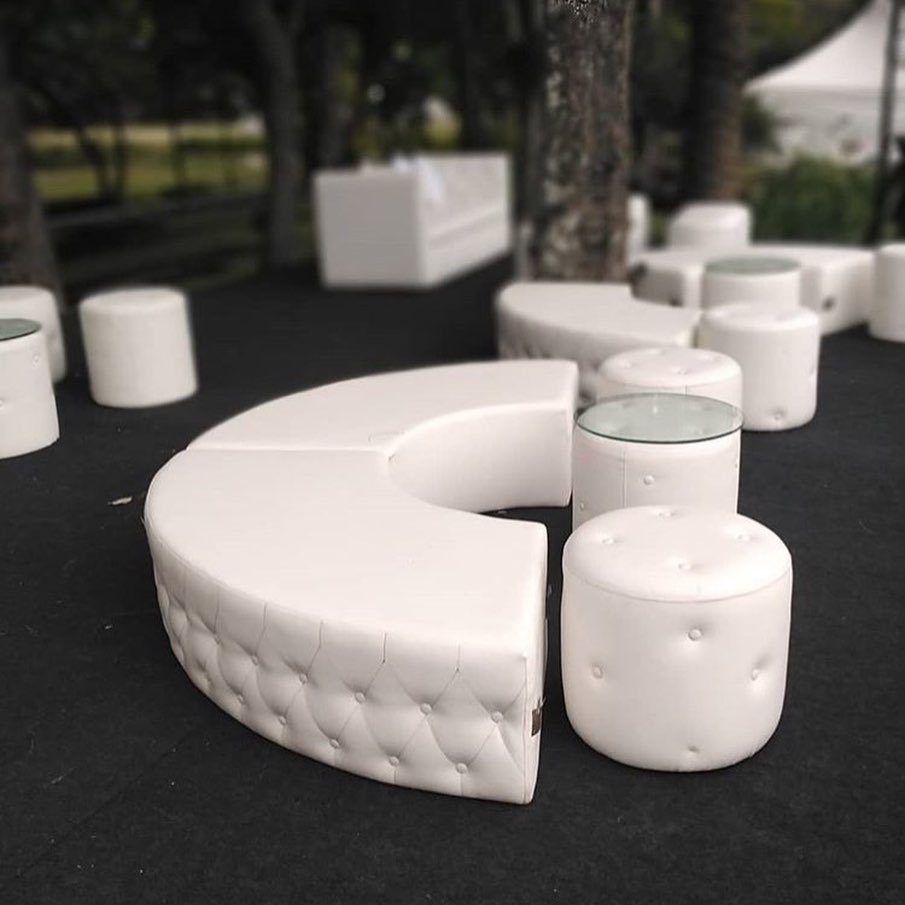
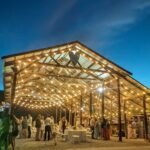
Open seating means no chart at all: guests sit wherever they like, and lounge pieces like tufted sofas and ottomans turn the room into a party instead of a plated dinner.
It saves you the hours of arranging names, which counts for a lot when money is limited and the deadline is close.
Mix low glass tables among the sofas so guests have a place to set drinks. The cost is control: you can’t keep families together or guarantee elderly guests a good spot, so reserve a few seats near the front.
10. QR Code Seating Sign
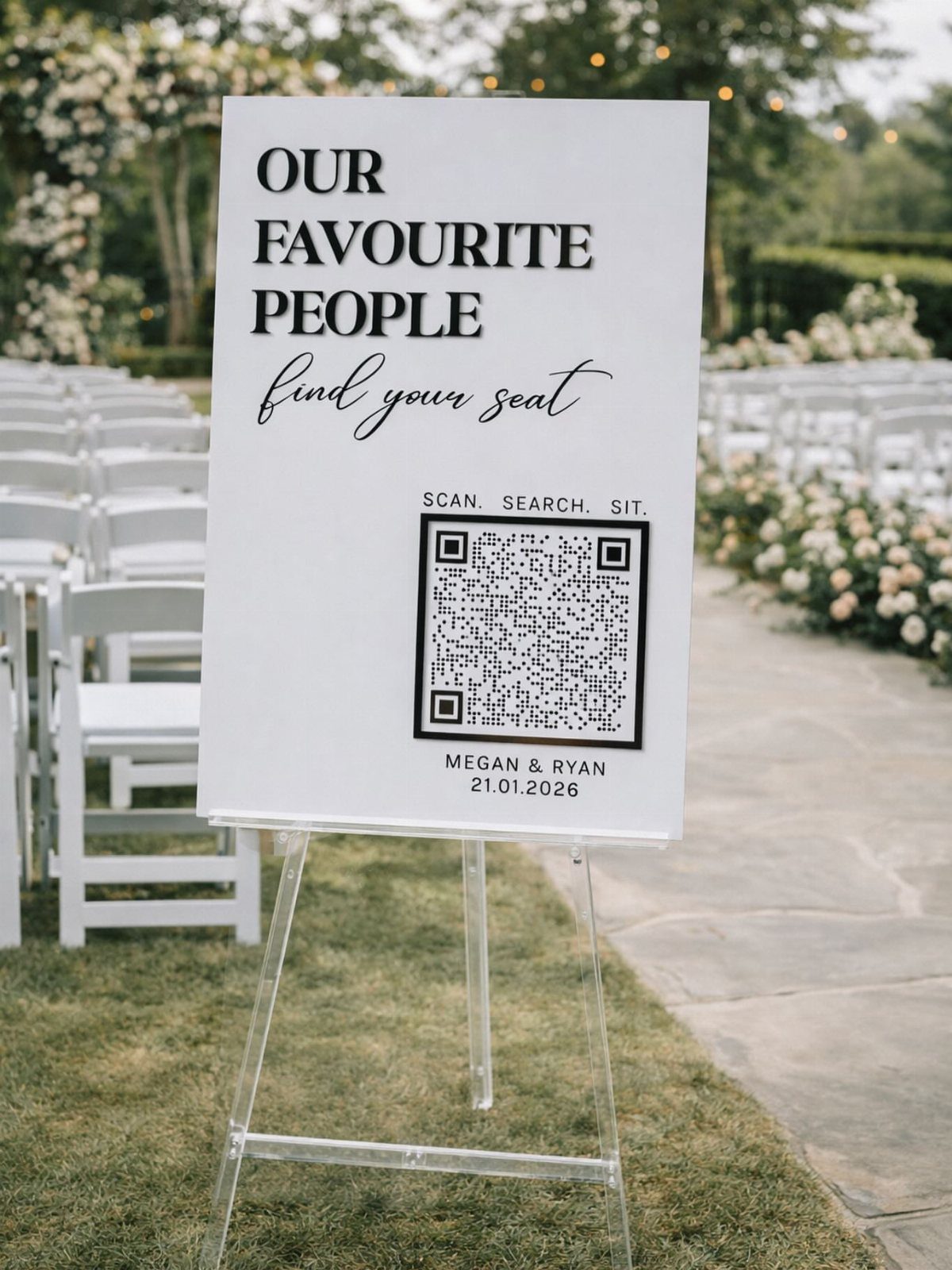
A QR code sign swaps a printed chart for a quick scan. Guests point a phone at the code, search their name, and see their table.
Keep the wording short and the code large, black on white, so it scans from a step away. Test it on both iPhone and Android before the day, and make sure the link works with weak signal outdoors.
I would still put a small printed backup nearby for guests who don’t carry a phone, or whose battery has died.
11. Memorial Reserved Chair
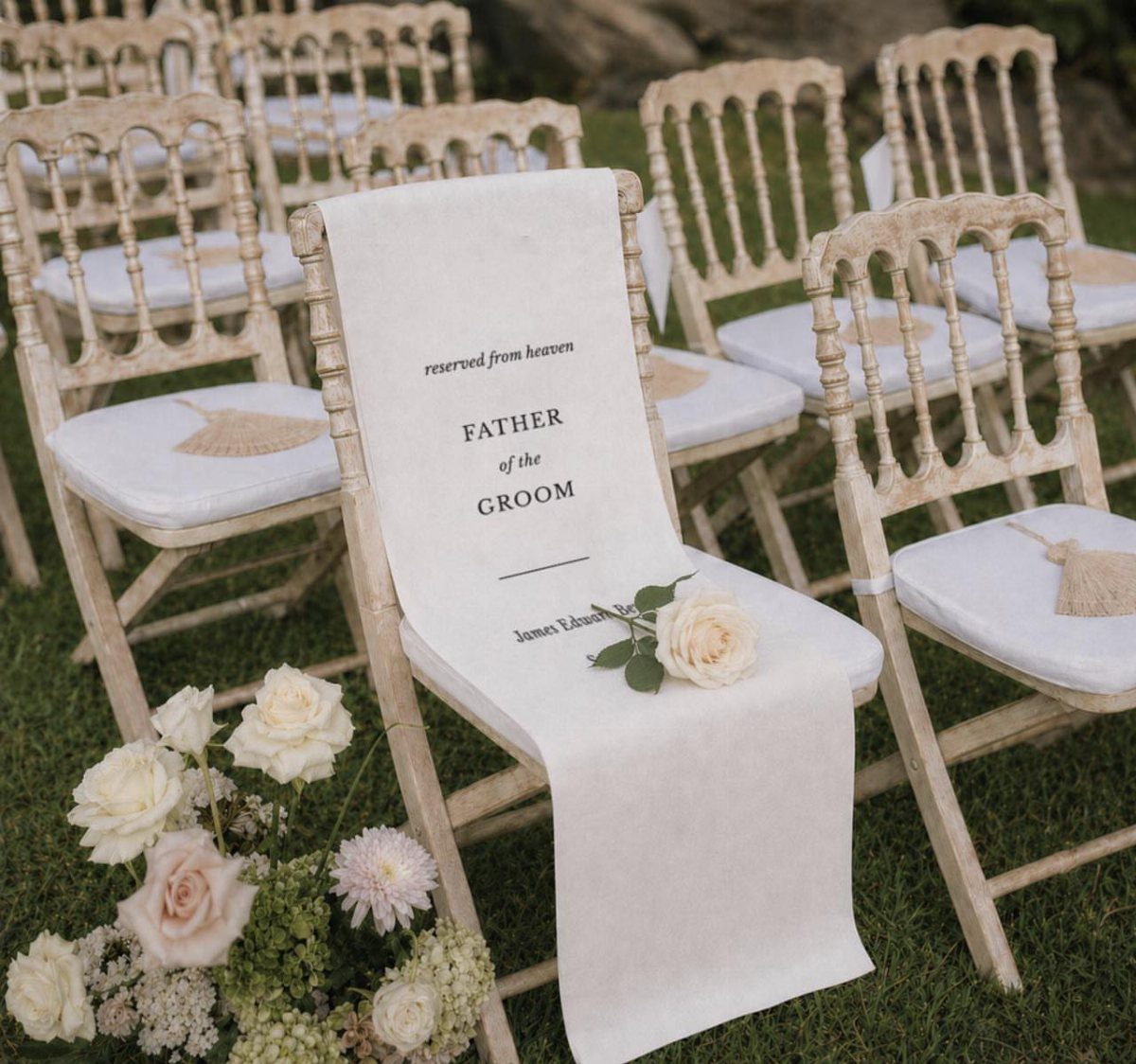
A reserved chair draped with a fabric sign gives a missing loved one a place at the ceremony. Add the person’s relationship, full name, and a single rose, and the chair says what words would struggle to.
Put it in the front row, on the aisle side, where family would have sat.
Order the drape early since it’s personalized, and check the spelling of the name twice. Tell your officiant or a close relative beforehand, so no guest sits in the chair by mistake.
Seating Chart Creation Timeline
Start building the chart 3–4 weeks out, which gives you time to move people around before anything gets printed. By then your guest count has mostly settled, and you still have room to absorb the changes that always arrive late.
Printing sets the real deadline. Digital print runs take about 8–10 business days, and flat foil designs take about 20 business days, so order printed pieces a few weeks ahead of that final week.
Lock it about 7 days before the wedding, after the last RSVP is in and the headcount stops moving. Leave 2–3 seats open on purpose, so one late yes or a surprise plus-one slots in without a full redo.
Communicating Seating Arrangements
A guest holding a drink should find a name in seconds.
Place the chart where it is easy to find and reachable for everyone, and tell guests where it is. A sign at the entrance works, and so does a line in the program.
Assign one person, a friend or a family member, to stand near it and answer questions. Guests walk from cocktails to dinner without stopping to ask where they sit, and you skip answering that question in your gown.
Handling Last-Minute Changes
Expect surprises. Someone may cancel with the flu or a family emergency, and a friend invited solo may show up with a date.
Go over the chart the night before and mark every change you know about. Keep a couple of seats open for late RSVPs and surprise additions, and spread them across tables so no one table is crowded.
Tuck a handful of blank escort cards and a reliable pen into your day-of bag, so you or a helper can rewrite a card on the spot. Handwriting one card cleanly beats leaving a guest standing at the chart.
Frequently Asked Questions
Where do people sit at a wedding reception?
Guests are usually seated by how close they are to the couple, with close family nearest the front and the couple at a head table or sweetheart table.
A chart is how you control this, while open seating lets guests pick any spot. With open seating, hold a few tables near the front for grandparents and families with small kids, so they never end up at the back.
Who usually sits at table 1 at a wedding?
The couple usually takes the main spot, either at a head table with the wedding party or alone at a sweetheart table.
A sweetheart table seats just the two of you and keeps you front and center. Sitting apart from family also means you will want to build in time after dinner to stop at every table.
What is the difference between escort cards and place cards?
Think of an escort card as directions to a table, and a place card as the label on the chair itself. If guests can pick any chair at their table, escort cards are all you need.