Choices in this post range from a few glow sticks in a basket to a custom vinyl monogram wrap that can start around $3,000, with LED panels, checkered and patterned floors, cold sparks and a low fog cloud in between.
Your venue picks first: a dark hall suits an LED floor, grass calls for an outdoor floor with a level base, and many indoor rooms have their own rules on cold sparks and fog.
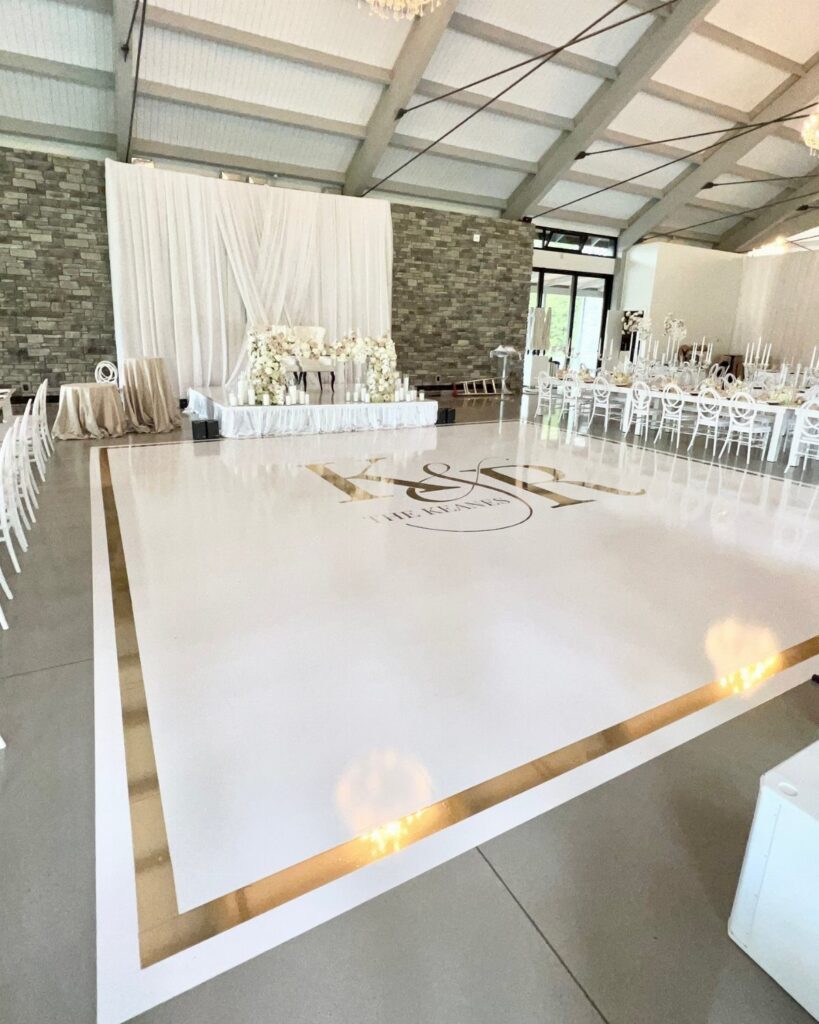
1. Custom Monogram Dance Floor
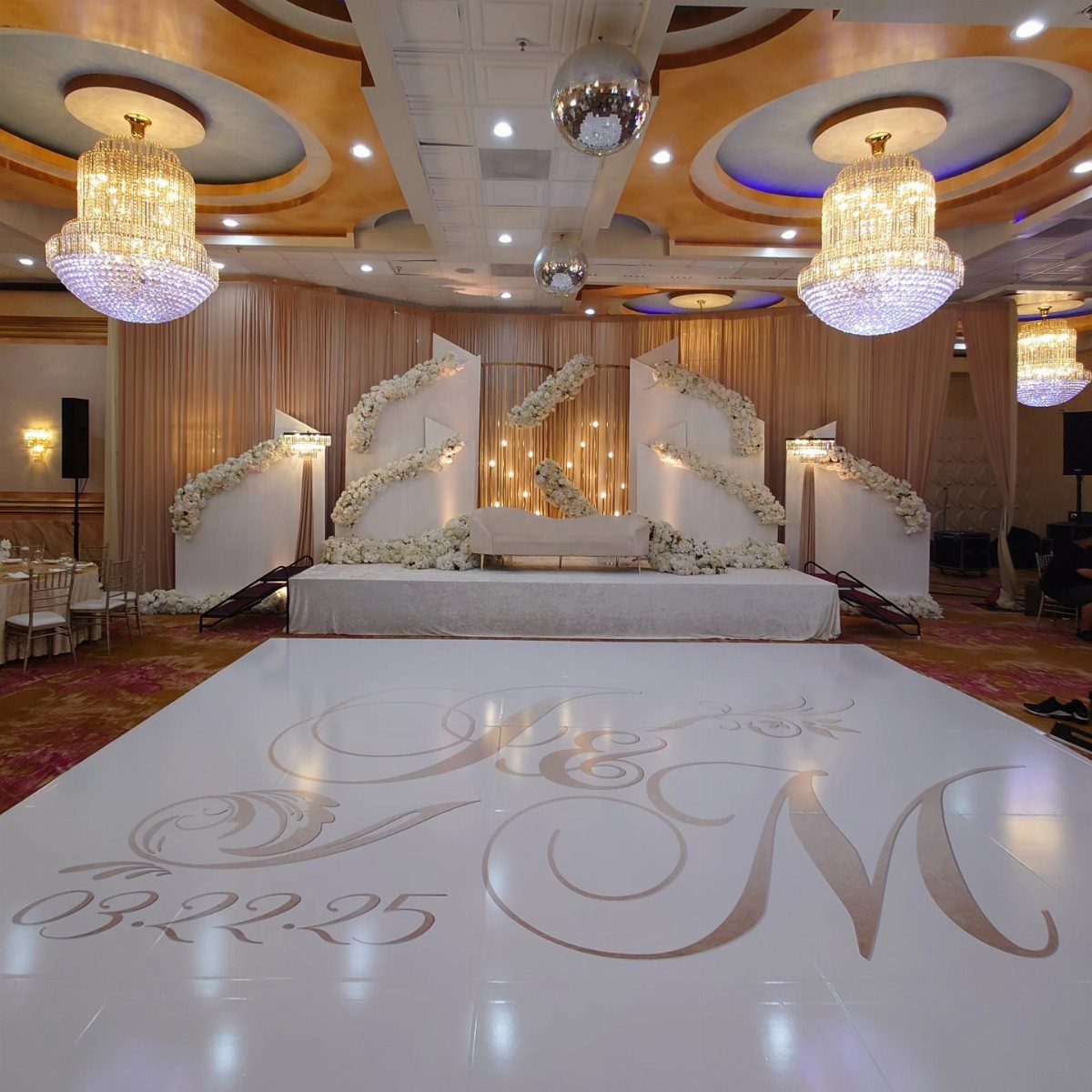
A vinyl wrap turns a plain white floor into a custom one, and initials with a date are the simplest version.
Keep the design to a monogram and one line of text. Anything busier gets lost once guests are standing on it, and a floor full of people hides most of the artwork anyway.
Ask the rental company whether they apply the wrap or whether you supply the file, since that changes who does the design work.
2. LED Dance Floor
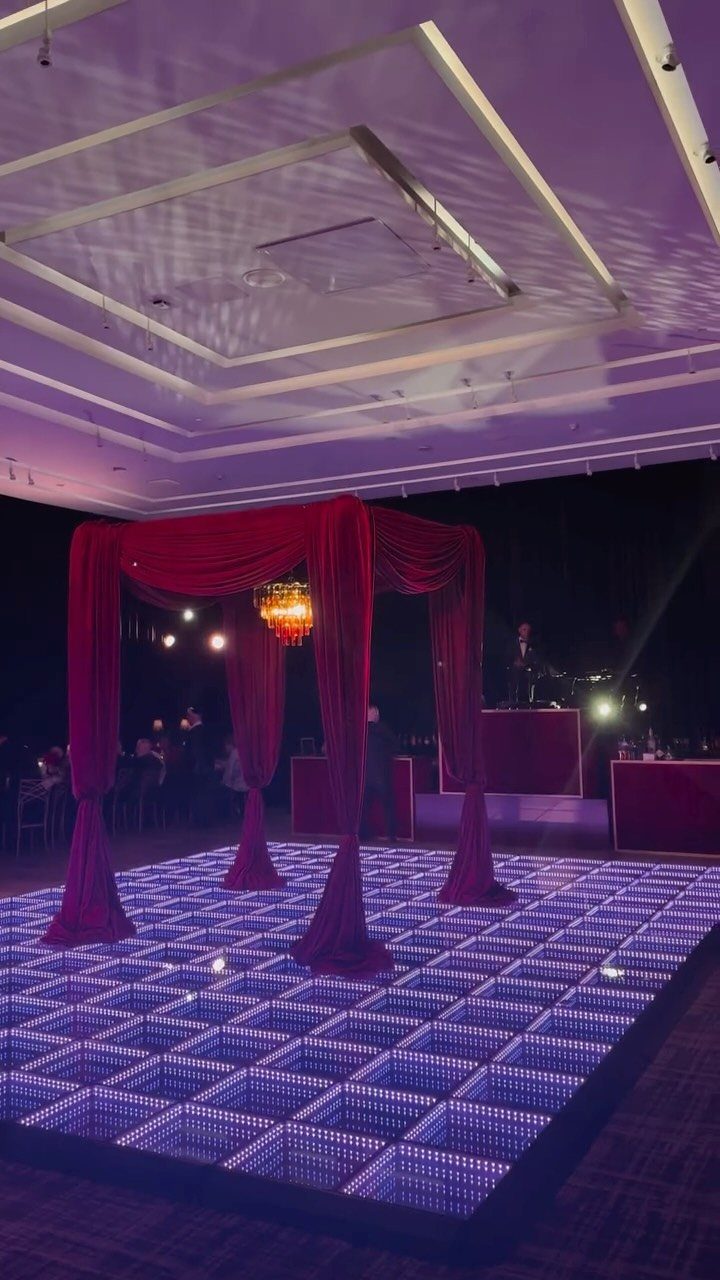
An LED floor glows white in a grid and does half the lighting work for you, so a room can get by with fewer uplights and less rented fixture time.
It pulses and shifts with the music, so a DJ can change the mood without touching anything else in the room.
I like it best in a dark hall, where the glow has something to push against. In a bright room it fades.
LED floors are a rental, and the price is usually higher than a standard dance floor, so get quotes early.
3. Interactive Props
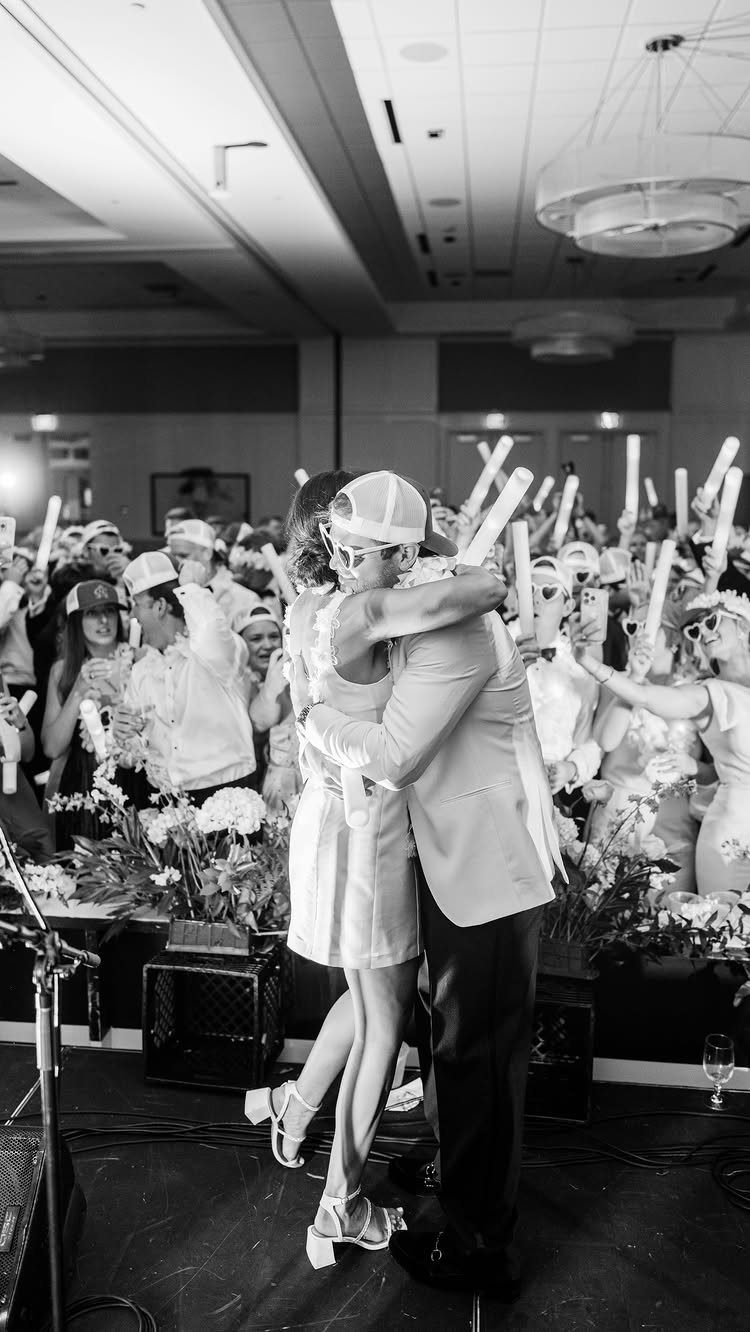
Glow sticks in guests’ hands give a dance floor a reason to fill up. People who would stand at the edge of the room will take a prop and walk out with it.
Hand them out right before the first big song, not at the start of the night, so they feel like an event. A basket by the floor works, or a bridesmaid passing them around.
Props are cheap compared with flooring, which makes this the easy pick for a modest budget.
4. Thematic Dance Floors
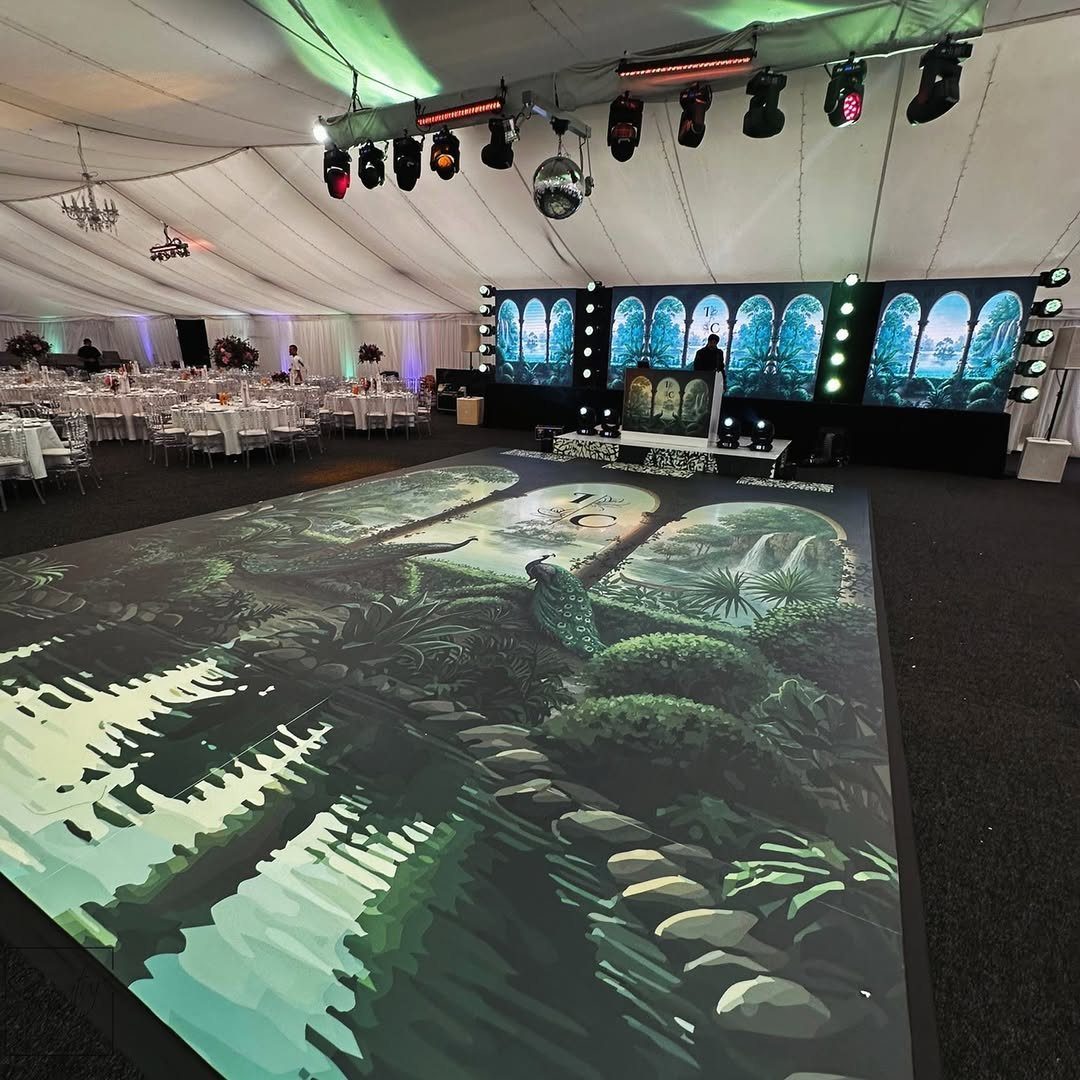
Printed flooring lets the theme carry underfoot, and a jungle landscape across a whole tent floor is about as bold as it gets.
Match it to a wedding whose decor already leans that way, or the floor will feel like it belongs to another party.
Choose a print that suits the venue and your palette, then keep the tables and linens quieter so the floor stays the star.
A full print costs more than plain white, so decide early whether it is worth the budget.
5. Checkered Dance Floor
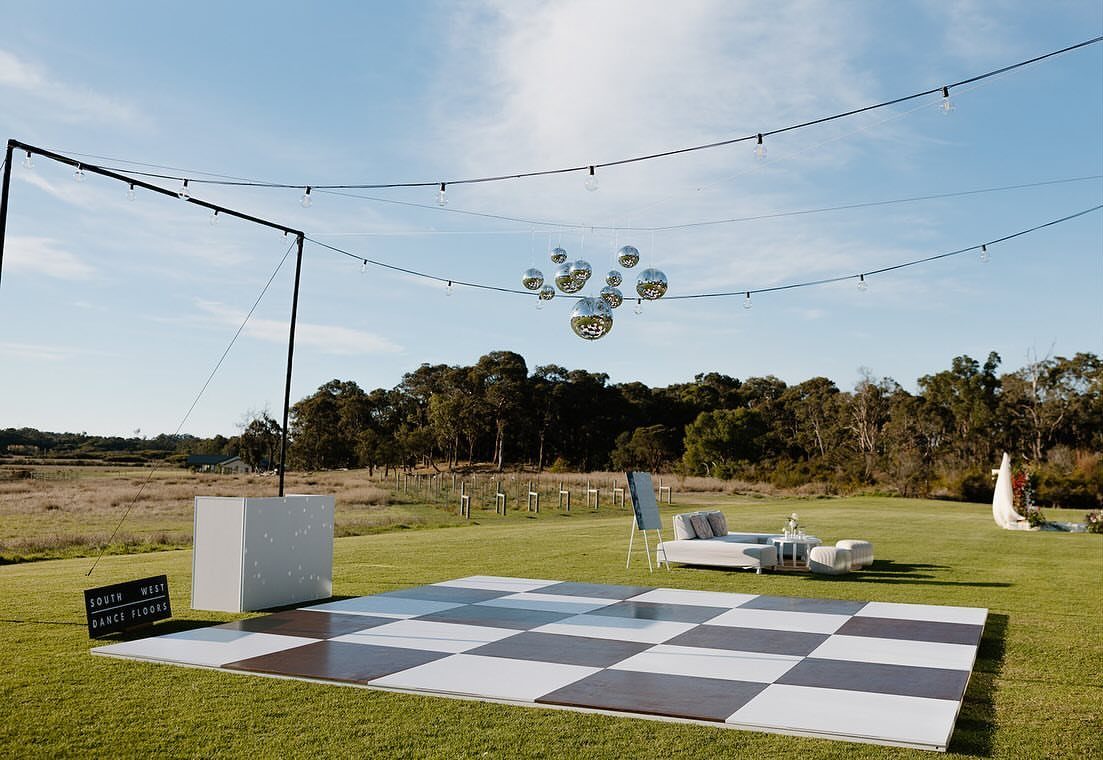
Black and white checkers never date, and they suit almost any palette because they bring their own contrast.
I would choose this when the decor is simple, since the floor supplies the graphic punch. Pair it with plain linens and let the lights do the rest.
On grass, ask the rental company about a level base so the squares sit flat.
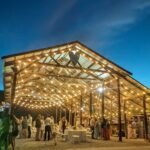
6. Outdoor Dance Floor
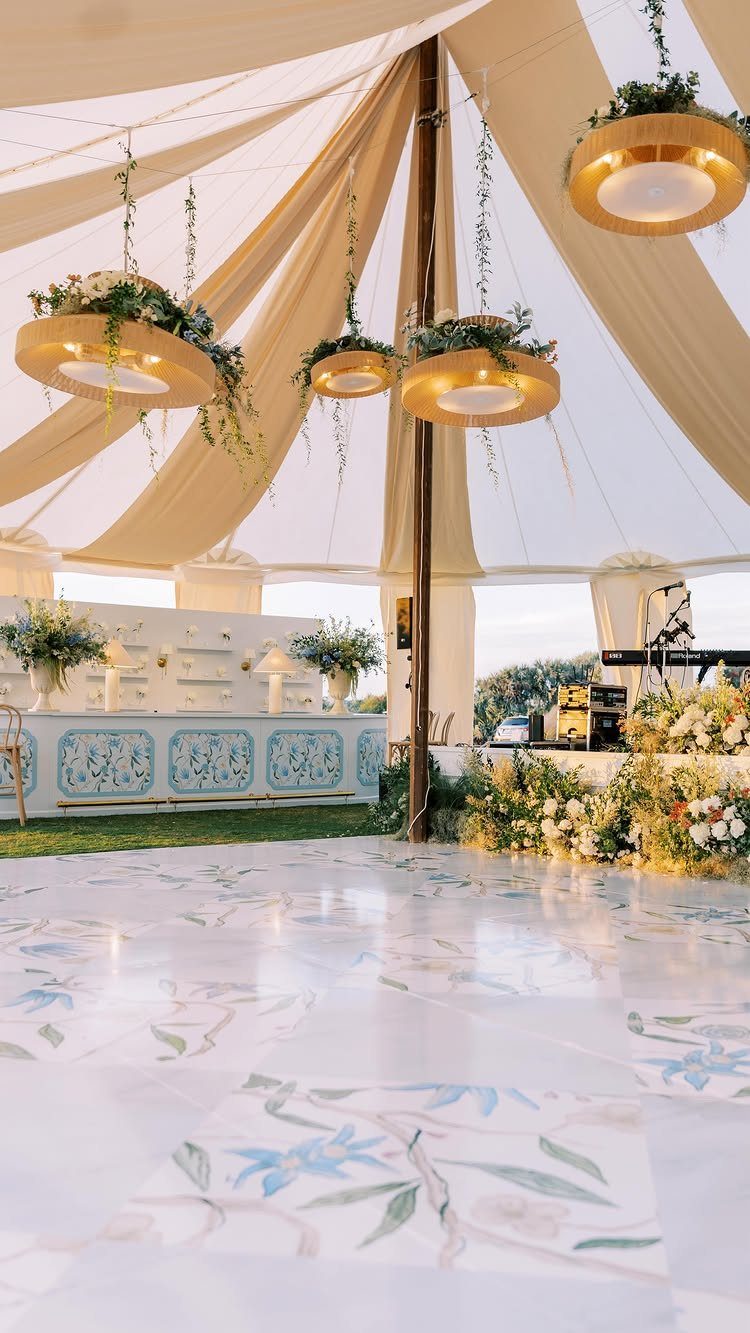
An outdoor party needs a floor built for the setting, because bare grass or uneven ground makes dancing hard. A proper rental floor gives guests stable footing, and a pattern like white florals makes it feel designed.
Book a floor made for outdoor use and ask how they level it on your site. Soft ground is the main thing to ask about.
7. Cold Sparks Effect
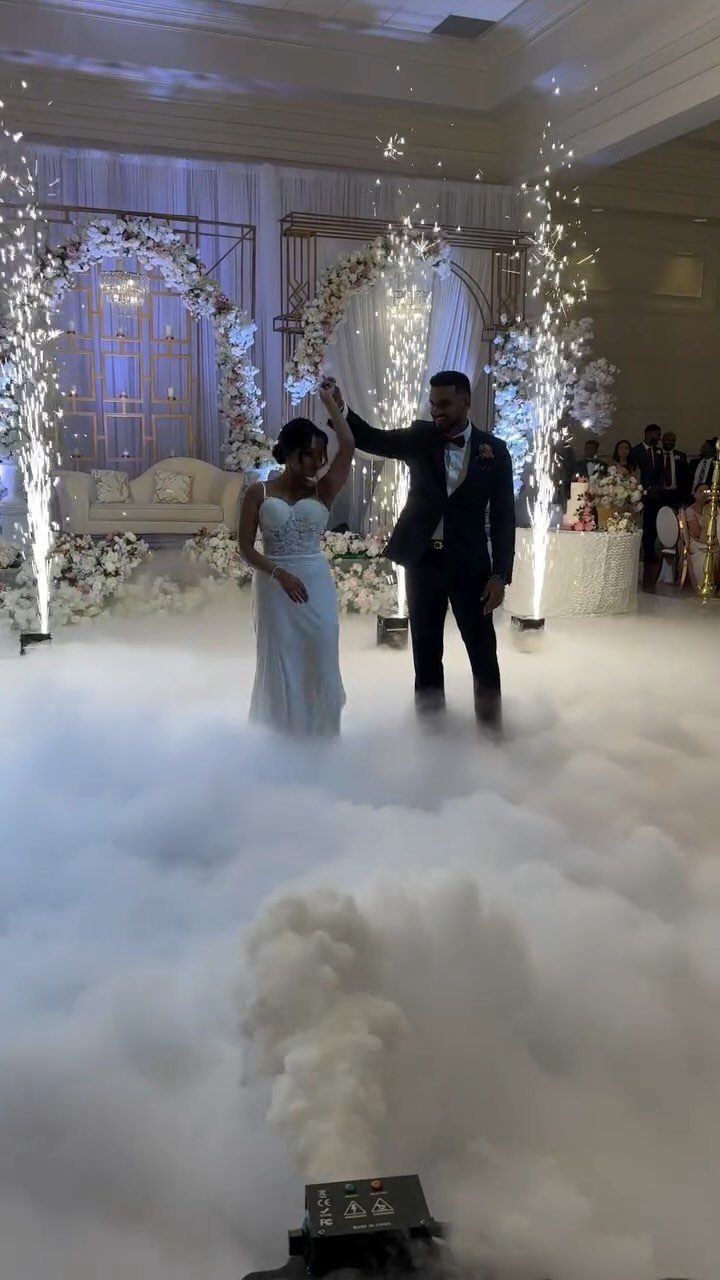
Cold spark fountains throw a shower of sparks that give off no real heat, and a low layer of fog sits under them beautifully.
Time them to the last chorus of the first dance, or to the moment the two of you walk onto the floor.
Ask the venue before booking anything, since many have their own rules about effects indoors. Keep the setup short, a song or two, so the moment stays special.
8. Dancing on a Cloud
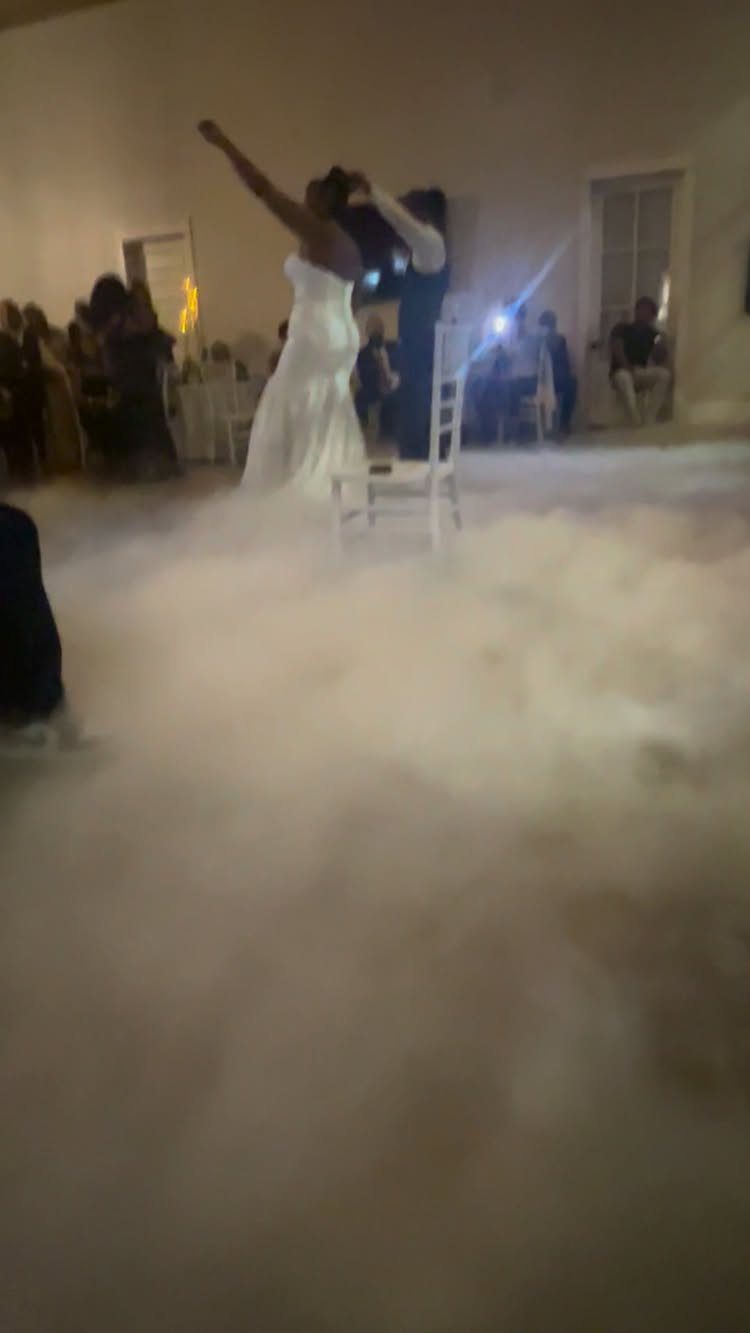
Low-lying fog across the floor makes a slow first dance look like it’s happening on a cloud. It suits a slow song best, because fast footwork just stirs the fog away.
Pick a soft palette for the room so the white stays the focus. Ask the venue about fog before you book, and confirm it is allowed indoors.
This is a first-dance effect rather than an all-night one, so it costs little compared with new flooring.
9. Round Dance Floor
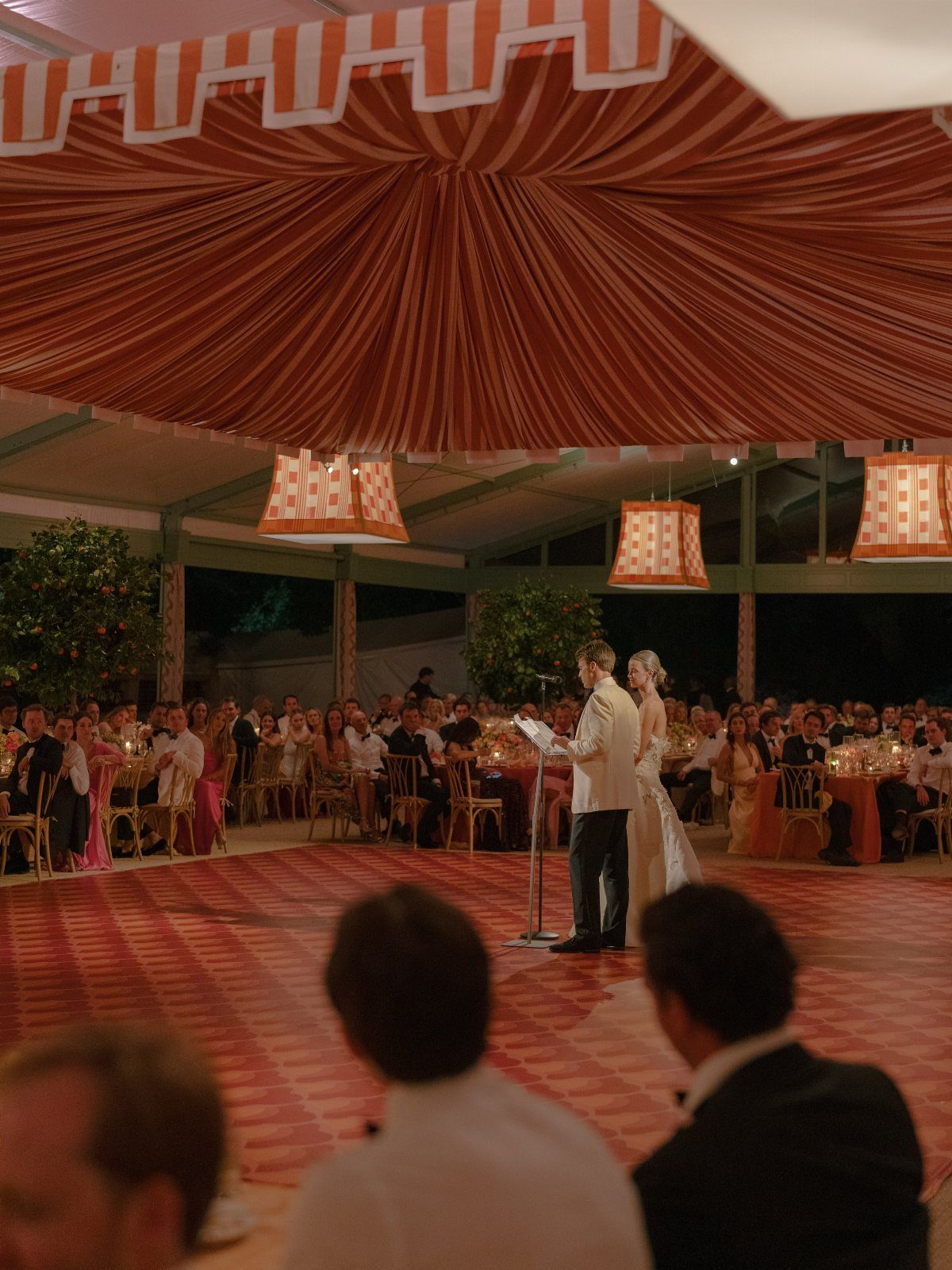
A round floor changes how a room feels: guests gather in a ring instead of lining up along a rectangle, and everyone ends up closer to the couple.
I like it for a first dance, when the circle keeps the focus in the middle.
Check the size against your guest count, since a circle fills up faster than you would think. Tables set around the edge will frame it nicely.
Ask the rental company which diameters they stock before you plan the layout.
10. Glossy White Dance Floor
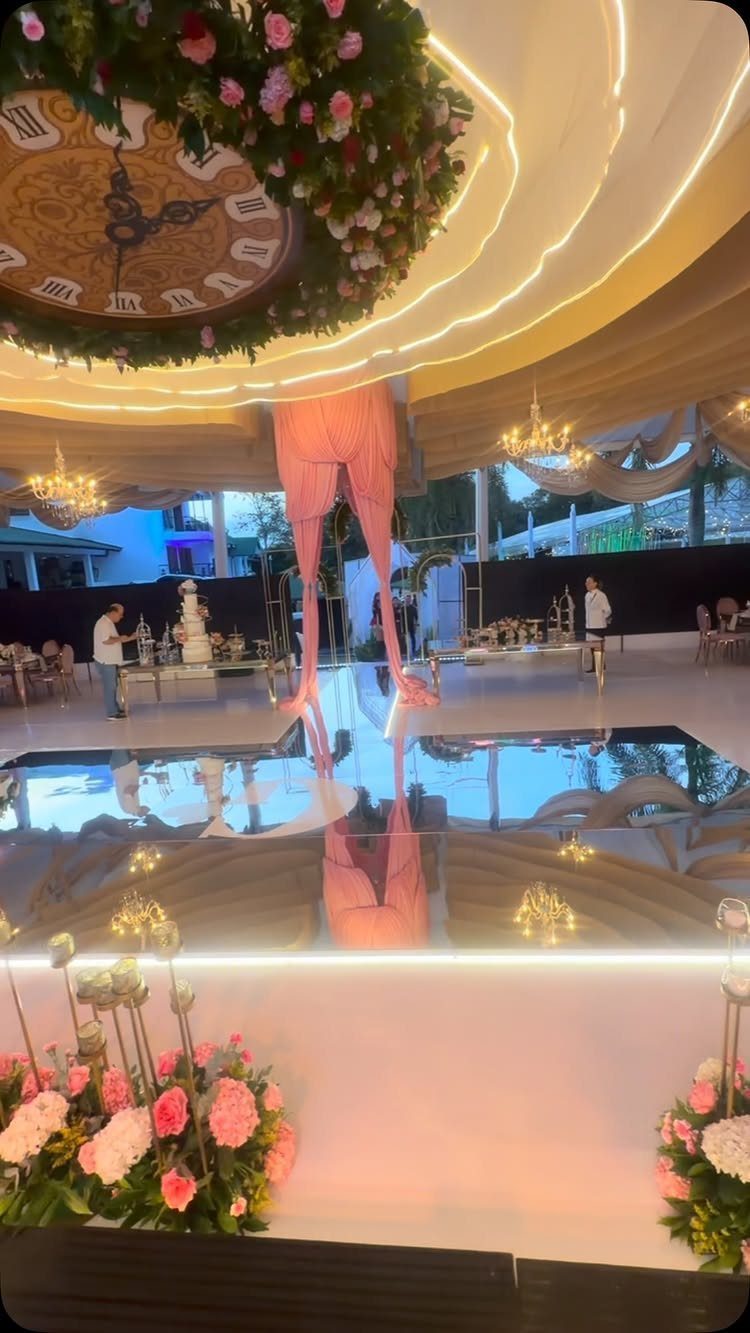
High-gloss white works like a mirror, so the ceiling drapery, the lights and the flowers all show up twice. That means the room itself becomes the decor, and you can spend less on the floor design.
I would choose it for a space already full of color or soft lighting, since the floor picks it up. Keep the lighting warm and the reflections look softer.
Gloss shows scuffs and footprints, so ask the rental company how they keep it clean through the night.
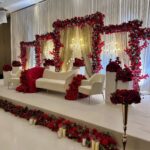
11. Patterned Red Dance Floor
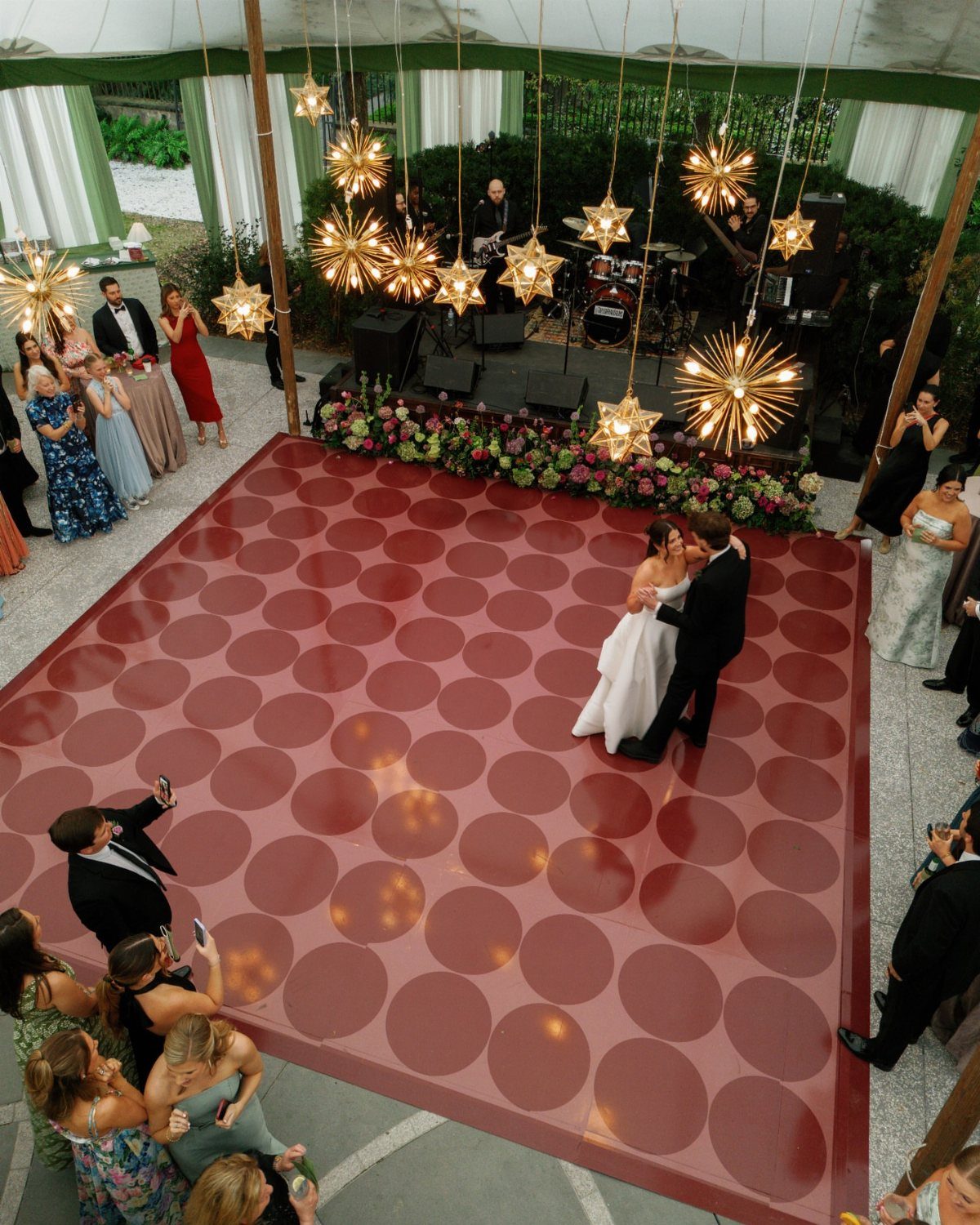
Red reads bold, and a lighter circular pattern keeps it from feeling heavy. It works best when the rest of the room is quiet: neutral linens and simple centerpieces let the floor carry the color.
Hanging pendant lights overhead give the red a warm glow at night. Choose a red that suits your palette, since it will dominate every photo.
A printed floor costs more than plain white, so collect a few quotes first and see where the number lands.
Budget Considerations
Dance floor costs vary widely, so set your number against 2 things first: how many guests will dance and how much design you want.
Size is the easiest lever. A 16′ x 16′ floor is typically enough for a wedding reception, and a smaller floor costs less than a larger one.
Guests rarely all dance at once, so size to the crowd you expect on the floor, not to your full guest list.
Design is the second lever.
The more elaborate the artwork, the higher the price, while a simple monogram can still make a big impact on a modest budget. Full-color graphics, metallic accents and unusual shapes all push the quote up.
A custom floor wrap can start around $3,000. Venue location matters too, since distance and setup complexity can change the final quote, so tell the company where you’re marrying when you ask for pricing.
Dance Floor Placement
A floor that guests can see from their seats feels like the heart of the party, and people are more likely to walk out onto it.
Avoid a far corner. A floor tucked away feels separate and looks empty, even when it’s full of people.
Guests waiting for drinks and servers crossing the room will cut through the dancing and break the mood.
Frequently Asked Questions
What is a dance floor called?
People usually call it a dance area or dance space, and a rented one is often just called a dance floor.
Styles carry their own names, such as an LED floor, a custom monogram floor, a checkered floor or a glossy white floor.
How much does a custom dance floor cost?
A custom floor wrap can start around $3,000. Distance and setup complexity at your venue can also change the final number.
What is the most popular dance at weddings?
The first dance is typically the most popular. It also pairs well with effects like low fog or cold sparks timed to the last chorus.